Weaving mātauranga Māori into teaching and learning at Upper Harbour Primary
Through five years of developing its approach to teaching and learning, including a three-year partnership with Te Kawerau ā Maki, Upper Harbour Primary School has woven local pūrākau, mātauranga Māori and authentic action into every classroom, helping students develop a deeper connection to place, purpose and community.
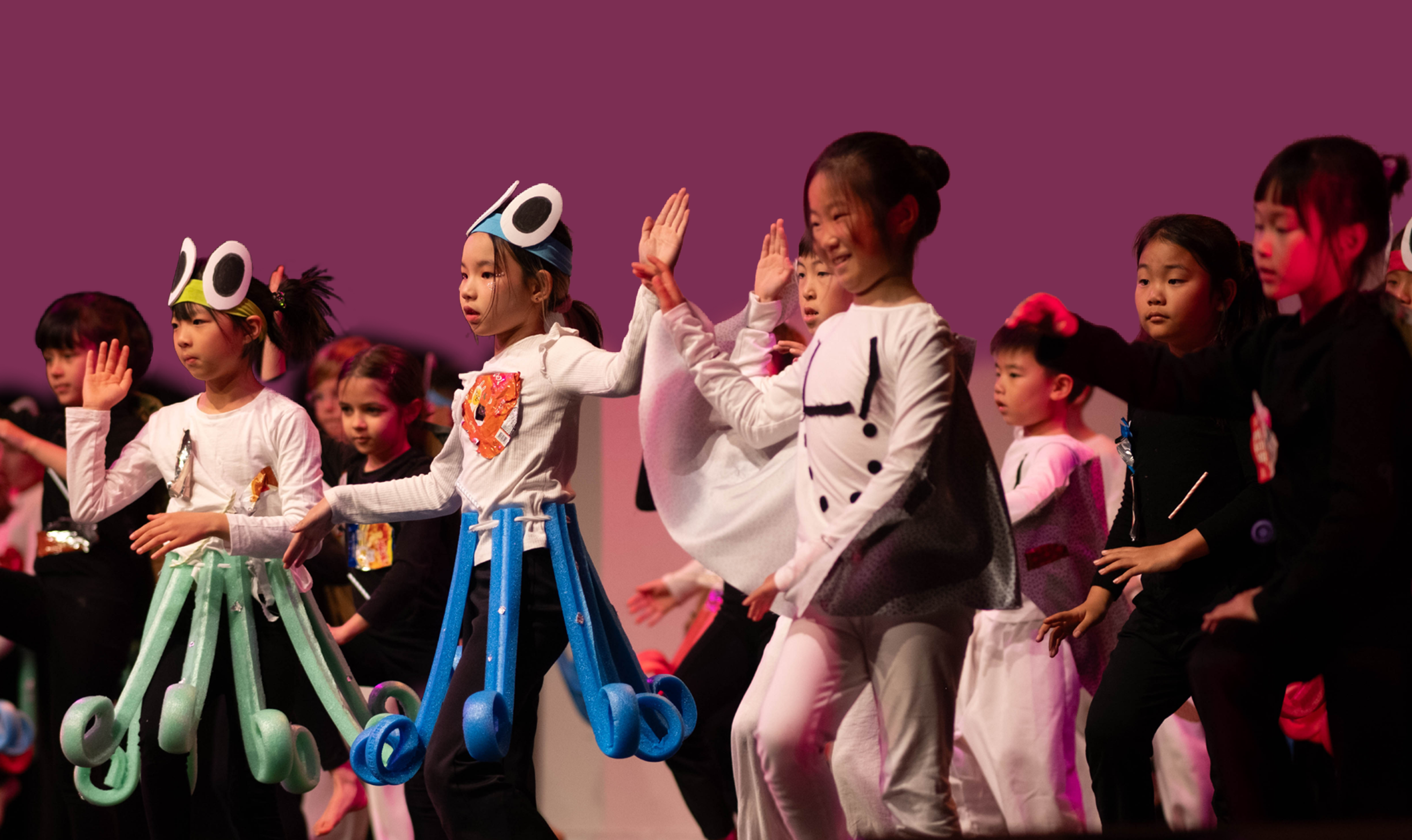
Nearly 400 students at Upper Harbour Primary took centre stage during a school production to share their learnings about Aotearoa New Zealand’s ocean health.
From Te Wao Nui ā Tiriwa Waitākere Ranges that dominate the horizon on Auckland’s North Shore, a strong sense of place has long shaped learning at Upper Harbour Primary School.
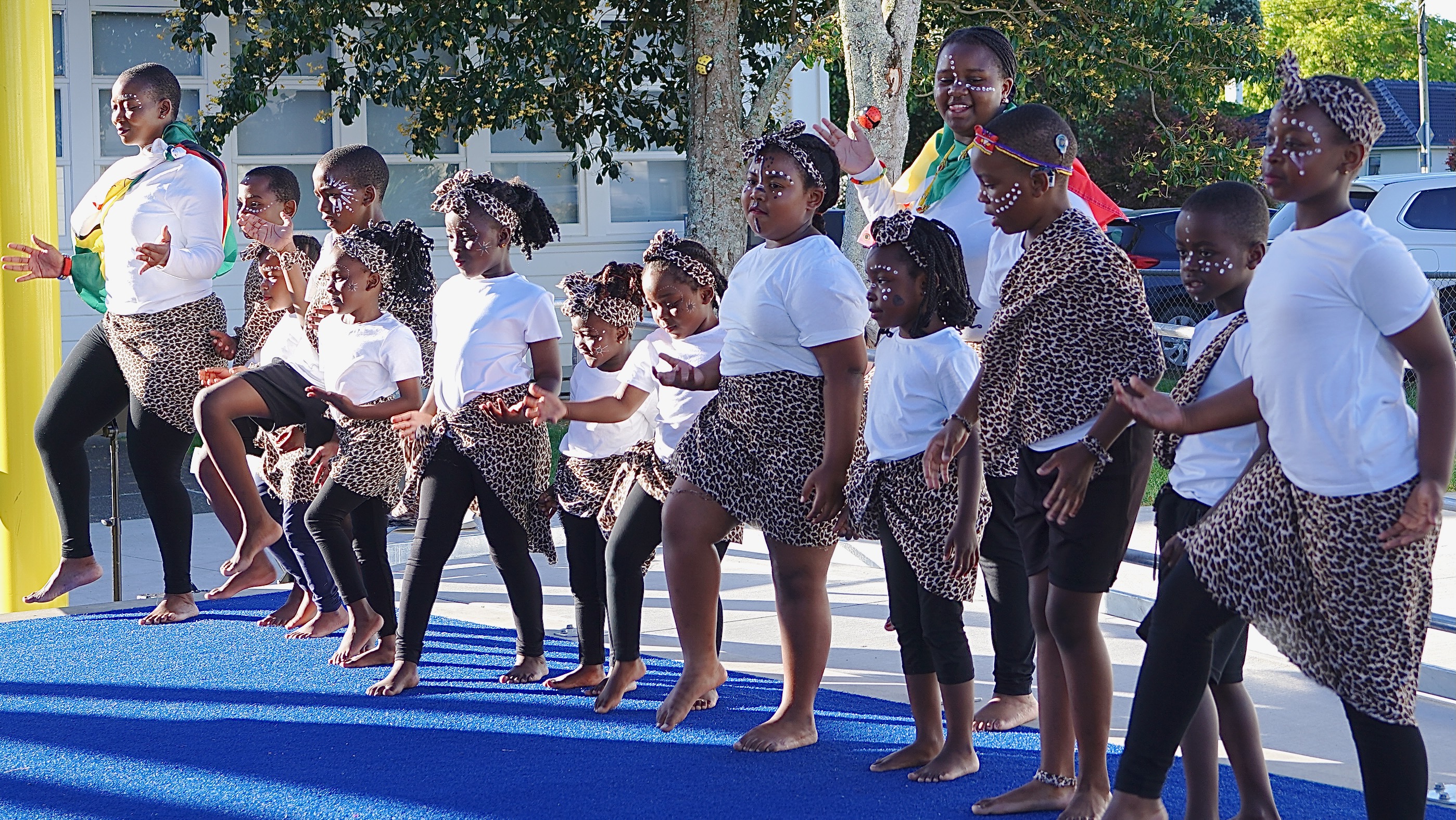
Located in Greenhithe, Upper Harbour Primary caters for students from Years 1 to 6. While more than half of its students identify as Asian and only a small proportion identify as Māori, the school believes local mātauranga Māori and mana whenua knowledge are fundamental to every child's education in Aotearoa.
Kirstin Douglass, deputy principal at Upper Harbour Primary School, says the school’s approach to learning has evolved over several years through conversations with teachers, students, whānau and community organisations.
Together, they explored the experiences, values and local stories that mattered most to their community, helping shape learning that reflected both local aspirations and the unique environment surrounding the school.
“This allowed us to see what our learning community wanted more of and the experiences that were uniquely ours.”
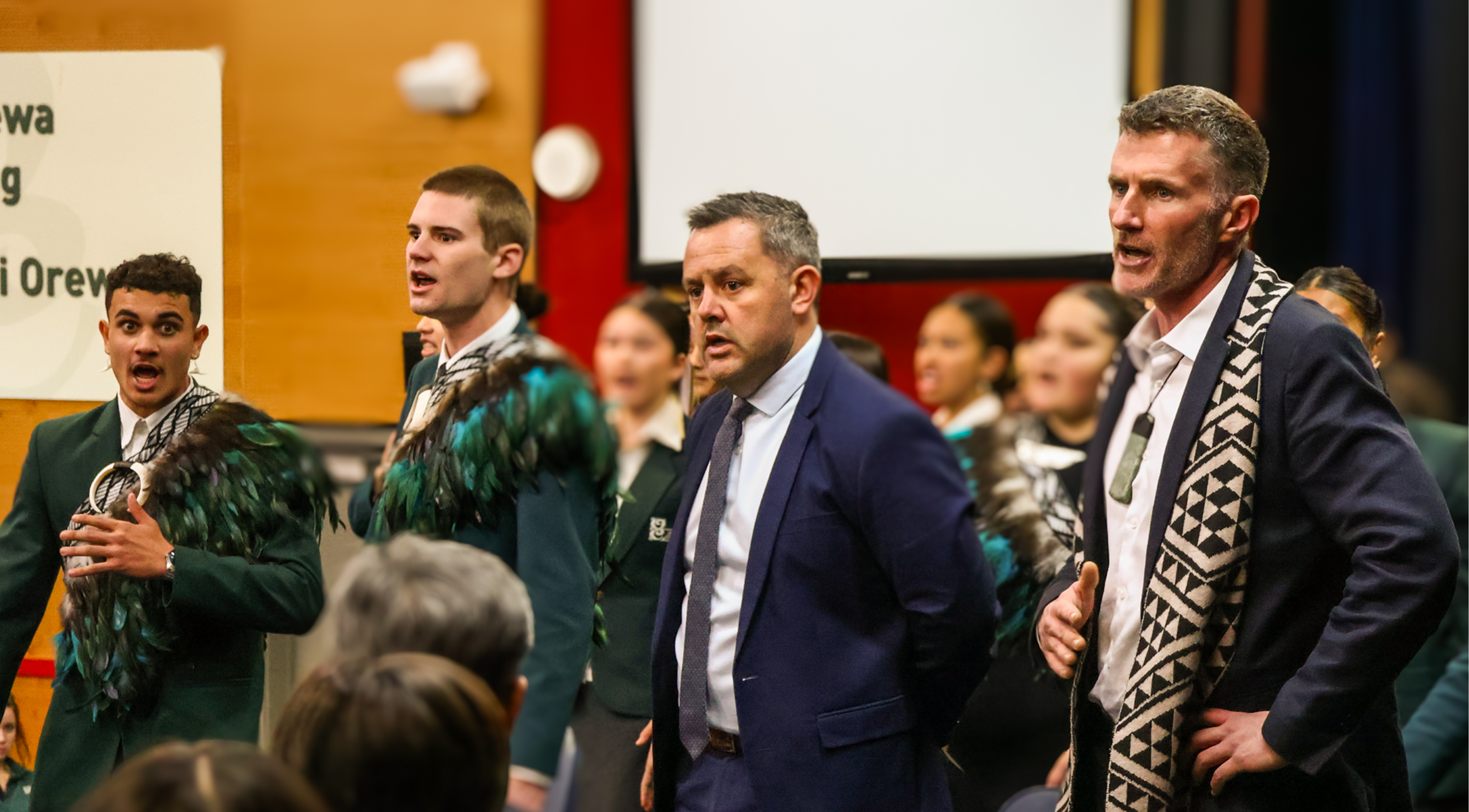
Once that foundation was established, the school began working alongside Te Kawerau ā Maki through the Mana Kura initiative to connect learning with local iwi histories, pūrākau and ancestral knowledge.
“For our mātauranga team, the Mana Kura initiative’s intent is firstly about building a genuine relationship and long-term collaboration with schools,” says Josie Wall, education lead at Te Kawerau ā Maki.
“As kaiako ourselves, we understand the many other conflicting priorities that our partnership schools may have, which is why we co-design the programme in an organic way that fits each school’s individuality, location in Aotearoa, and unique histories.”
Memorable and meaningful
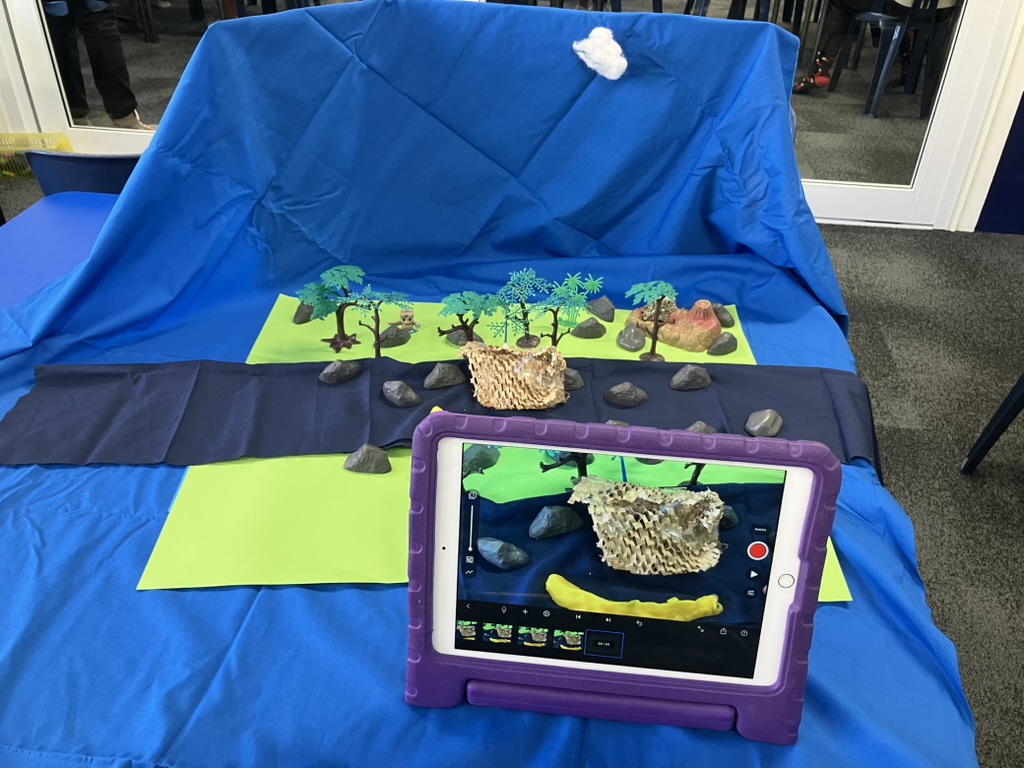
Today, students revisit a series of te ao Māori concepts throughout a two-year learning cycle, with each concept providing a meaningful context for learning across reading, writing, science, social sciences and outdoor education.
“Teaching and learning is grounded in mātauranga Māori, but the concepts themselves are timeless, transferable and universal,” says principal James Wheaton.
Each term begins with a local pūrākau that introduces the concept students will explore.
Nearly 400 students at Upper Harbour Primary took centre stage during a school production to share their learnings about Aotearoa New Zealand’s ocean health.
One story that has resonated strongly with students is that of Te Au ō Te Whenua, whose diplomacy brokered peace between two iwi. Through this pūrākau, students explore the concept of whakawhanaungatanga and the importance of building relationships.
Months after learning the story, students encountered the word ”diplomat” during a reading lesson and immediately connected it back to Te Au ō Te Whenua.
“That showed they understood the story so well they could transfer that understanding to a completely new context,” says Kirstin.
“Storytelling makes learning memorable. That’s how young brains are wired. Te Kawerau ā Maki gifted us with the knowledge of our local iwi histories as taonga to educate this new generation, and our students treat them as taonga as well.”
A defining feature of Upper Harbour Primary School’s approach is encouraging students to put their learning into action. Whether improving their environment, advocating for change or contributing to their community, students are expected to apply what they have learned in meaningful ways.
Current learning demonstrates kaitiakitanga in action, with younger students establishing a worm farm in the vegetable garden, middle-school learners leading replanting projects, and senior students installing predator tracking tunnels throughout the school’s nature trail.
“Reading materials across our curriculum align with students’ learning across all year levels, while writing tasks always have an authentic purpose,” says James.
“Our children care about what they’re writing because they’re knowledgeable about it through their reading. This has led to accelerated progress in reading outcomes.”
Strengthening connections to people and place
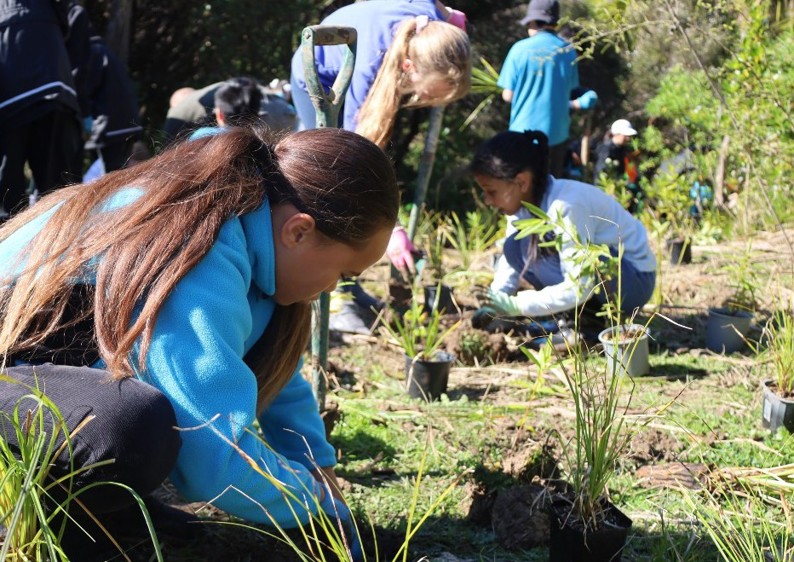
Upper Harbour Primary School students putting kaitiakitanga (guardianship) into action at a local reserve.
Working alongside Te Kawerau ā Maki has also strengthened relationships between the school, whānau and the wider community. Through local pūrākau and shared learning experiences, students are developing a deeper understanding of their role as kaitiaki of their local environment.
One of the concepts explored through stories shared by Te Kawerau ā Maki is kaitiakitanga, including what it means to care for the local ngahere.
“We co-design the programme in an organic way that fits each school’s individuality, location in Aotearoa, and unique histories.”
Over the past two years, several classes have participated in Auckland Council’s Adopt-a-Park programme, helping care for a reserve beside the school through weeding, planting and monitoring predators that threaten native wildlife.
The work has given students authentic opportunities to contribute to their community while strengthening connections with whānau and local organisations.
Another example of this learning in action was last year’s whole-school production exploring the health of Aotearoa’s oceans.
“The message was incredibly strong,” says Kirstin. “Parents couldn’t get over how knowledgeable the children were, and even at home students were advocating for changes like using shower timers because they felt empowered to make a difference.”
The school has also seen students sharing their learning with whānau in practical ways.
Last term, Year 4 to 6 students learned about kauri dieback disease before visiting the Arataki Visitor Centre to see its impact firsthand in Te Wao Nui ā Tiriwa, the Waitākere Ranges.
The experience inspired many students to educate their whānau about the disease and the simple actions people can take to help prevent its spread.
Students created posters and shared their learning during student-led conferences, encouraging families to clean footwear before and after entering the bush and to stay on designated tracks.
The partnership has also strengthened students’ connection to the local landscape and the stories embedded within it. During the recent visit to the Arataki Visitor Centre, students immediately recognised carvings representing ancestors they had learned about in class.
“It was almost like they’d come home. Our students were saying things like, ‘they’re the ones we’ve been learning about,’ and they wanted to tell the educators the stories they had learnt,” says Kirstin.
She has also noticed local place names becoming part of students’ everyday language.
“We recently asked the children to complete a writing sample, and many of them independently referred to the forest as the ‘ngahere’ and the Waitākere Ranges as ‘Te Wao Nui ā Tiriwa’,” she says.
“It was exciting to see these names becoming part of the children’s everyday language and understanding of the place they call home.”
Building authentic partnerships takes time
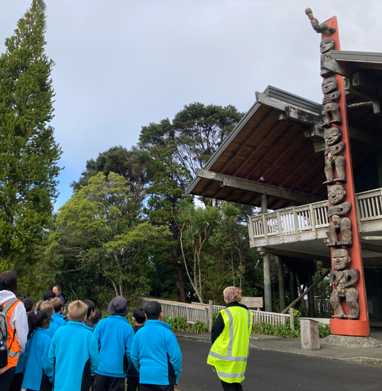
Upper Harbour Primary School connects classroom learning with local history at Arataki Visitor Centre, based in in Te Wao Nui ā Tiriwa, the Waitākere Ranges.
For James, seeing students embrace local iwi history has been one of the greatest rewards of the partnership with Te Kawerau ā Maki.
“To see such a diverse school community embrace local history and sacred iwi mātauranga has been a privilege to see develop.”
Having worked alongside the school throughout its mātauranga journey, Josie shares in that pride.
“Upper Harbour Primary have treasured our pūrākau, and we looked at how the stories of our tūpuna can be embedded in the classroom.”
The school’s approach to teaching and learning, and the framework they developed to guide it, demonstrates this.
Looking back, James believes meaningful change takes patience.
“My advice for our school principals wishing to embed te ao Māori into teaching and learning is to go slow and bring your stakeholders with you – your children, your teachers, your whānau and your iwi.”