A principal returns home to keep the ahi kā of te reo Māori burning
From morning greetings and student-led mihi whakatau to a growing Māori-medium pathway, te reo Māori and tikanga Māori are becoming a natural part of daily life at Ōrewa College. For principal Wiri Warriner, that journey is deeply personal.
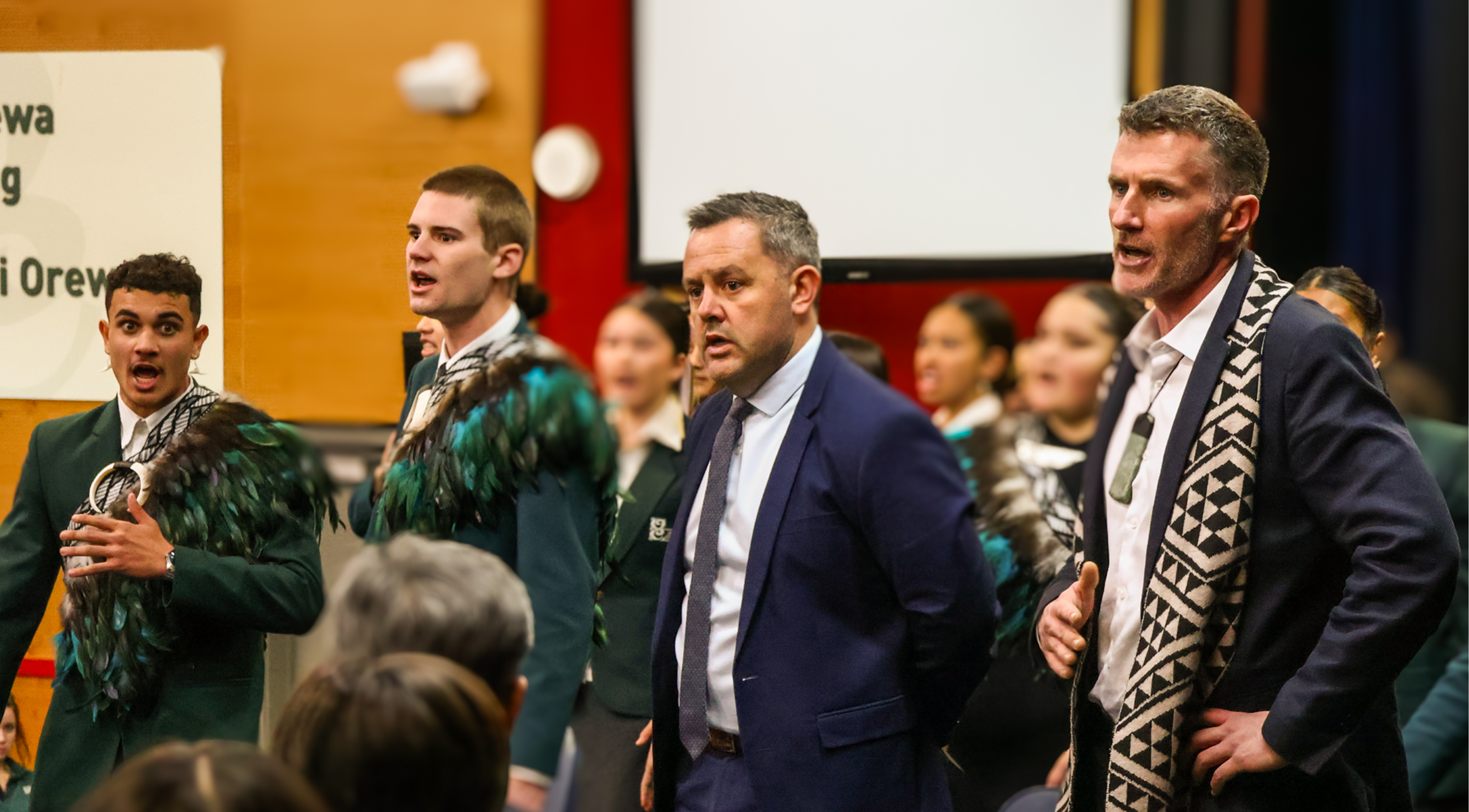
A pōwhiri marks the signing of an agreement between Fukuoka City mayor Mr Takashima and Ōrewa College principal Wiri Warriner (centre right), cementing a 40-year partnership as sister cities.
When Wiri Warriner walks through the gates of Ōrewa College each morning, he does so as principal, but also as someone whose connection to the school stretches back decades. The classrooms have changed, the opportunities available to students have expanded, and the place of te reo Māori and te ao Māori within the life of the kura has evolved significantly since he was a teenager.
Yet for Wiri, returning to Ōrewa College has never simply been about coming back to a familiar place. It has been about contributing to a community that helped shape him, and helping create opportunities for the next generation.
“I feel incredibly privileged and honoured to be back where it all started,” says Wiri.
“My roots on the Hibiscus Coast go back close to four decades, so it does feel somewhat surreal to have found a career I am incredibly passionate about; supporting youth, our next generation, and helping people to grow, and then to be able to do that by giving back to the community that once served me.”
That sense of service has long been part of Wiri’s story. His parents left dairy farming when the family moved to the Coast, retraining while working and raising two children.
His mother worked in rest homes and youth centres before becoming a professor, while his father built a career in the mental health sector and later became the CEO of a mental health organisation.
“I hope they remember that their school helped plant a seed, or gave them an experience that shifted their thinking.”
“In different ways, service has always been part of what our family does,” says Wiri.
Just as influential were the many events his parents took him to while he was growing up.
“Mum and Dad would also take us to hui, blessings, openings and kaupapa Māori events across the Coast. “Although we are Ngāti Whātua, we would be there supporting others who were creating kaupapa Māori opportunities locally.
There were fewer of those opportunities then, and a smaller group of people involved, so it was important to our whānau to turn up and support.”
The growth he sees today did not happen by accident, he says, but through the commitment of people who consistently showed up.
“For me now, there is something quite special about being in a position to continue that work; helping create opportunities so they are easier to come by, and so those experiences become a natural part of our community where people feel comfortable engaging.
“The Hibiscus Coast is in a really positive place at the moment in that respect and that is a credit to the leaders who have been the ahi kā (burning fires) over many years.”
A return with purpose
While Wiri’s commitment to te reo Māori and te ao Māori is now a visible part of his leadership, he is the first to admit that his own journey has not been a straightforward one.
As a student at Ōrewa College in the late 1990s, he took junior Māori and enjoyed it, but the pathways available at the time were limited.
“I took junior Māori as a subject here in the late 1990s, but when I wanted to continue, I ended up having to do the rest by correspondence because there was a shortage of teachers.”
Years later, after travelling overseas and playing sport in the United Kingdom, he returned to Aotearoa and began his teaching career at Massey High School.
It was there that an unexpected opportunity became a turning point. As his fixed-term contract drew to a close, another position became available if he was willing to, as he puts it, “dabble in teaching junior Year 9 and 10 Māori”.
What began as a practical career decision quickly became something much more significant. Wiri still remembers the feeling that he was entering unfamiliar territory at his first department meeting – all in te reo Māori.
“It was a large department with a full immersion programme, Te Reo Mahanahana. I remember thinking, ‘I’m in the deep end here. I can’t speak fluent Māori, let alone follow everything that is going on’.”
Rather than being deterred, he found himself energised by the challenge and “then very quickly it became, right, let’s figure this out”.
Teaching te reo Māori and working alongside immersion pathways exposed him to different approaches and opened his eyes to the opportunities education can create.
“I absolutely loved it. It challenged me and gave me a whole new appreciation for different ways of teaching and learning, and for making things like retrieval and rote learning fun and engaging.”
A particularly powerful influence came from the students in the rumaki classes where te reo Māori was their first language.
“I was also teaching two rumaki health and PE classes where te reo Māori was the students’ first language. That was probably where I saw first-hand something I really envied. They had their language.”
The experience helped crystallise something that continues to motivate him today. Around the same time, he watched leaders such as principal Bruce Ritchie advocate publicly and authentically for te reo Māori.
“As a non-Māori principal, I would see him sitting in whānau hui genuinely advocating for the revitalisation of te reo Māori. You could tell he meant what he said, and that had a profound impact on me.
“It made me think beyond just being a teacher, or aspiring to be a great teacher. It made me think about the bigger picture and the influence you can have across a community.”
Where belonging becomes visible
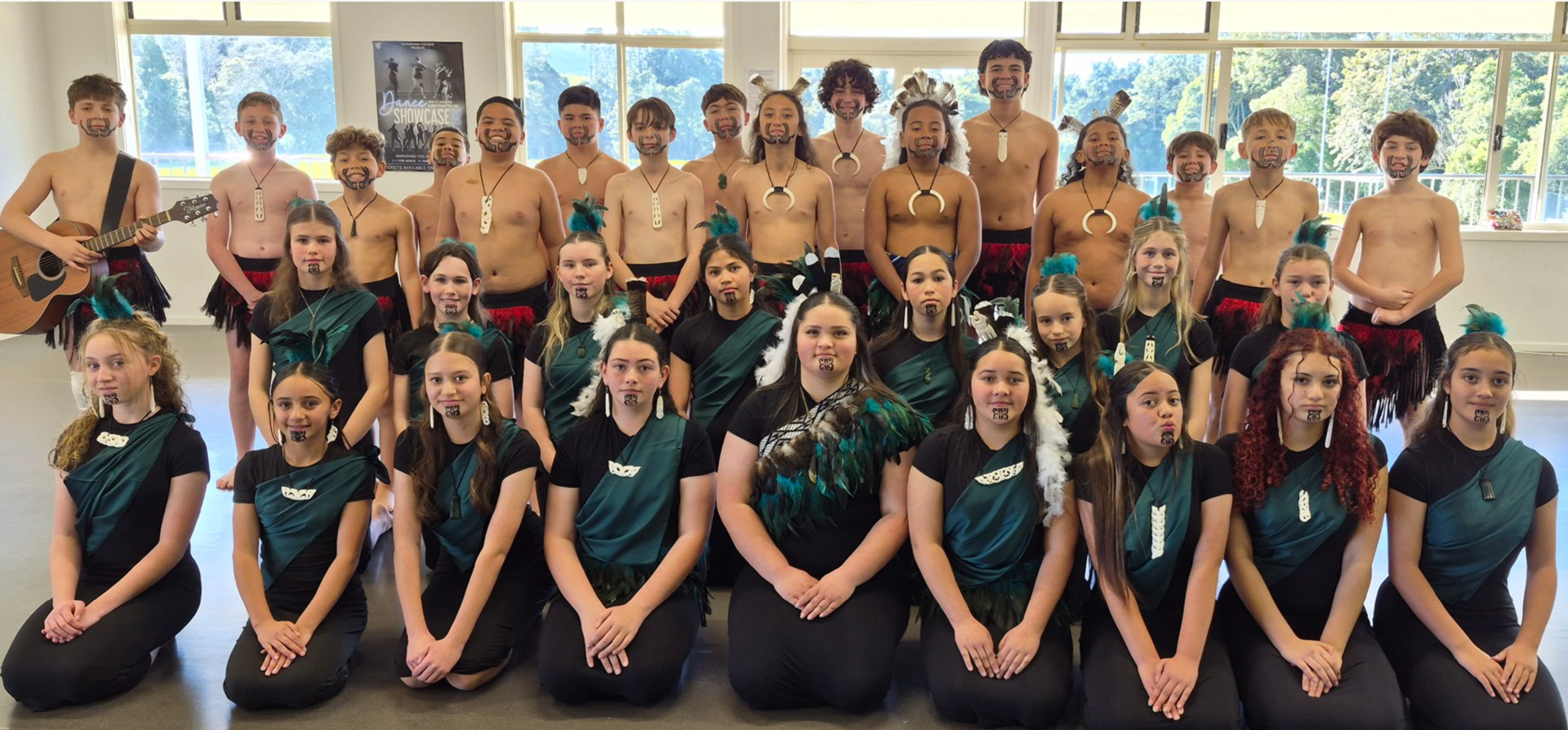
Students in the Rumaki Reo programme “Taipari” attending the Matariki Festival at Mahurangi College.
Today, Wiri believes one of the clearest signs of progress is not found in a strategic plan or a roll number. It is found in the everyday life of the school.
If a student were arriving at Ōrewa College for the first time, he hopes what they would encounter would feel welcoming, natural and unforced.
“I would hope that a student walking through the gates would first see smiles on the faces of students and staff, followed by a teacher saying, ‘Kia ora’ or ‘Mōrena’. Nothing big, nothing too put on.”
The significance of those moments lies in their ordinariness. They signal a culture where te reo Māori and tikanga Māori are increasingly part of the everyday rhythm of school life.
“Even something as simple as hearing our receptionist greet people with such manaaki, with a ‘Kia ora’ or ‘Mōrena’, tells you something. Those simple things start to become the norm.”
That sense of confidence is becoming increasingly visible in students themselves. Wiri recalls a recent series of visits from local primary schools, where Year 6 students were given the opportunity to experience life at Ōrewa College before deciding where they would continue their education.
“We are now at a place where our students can lead mihi whakatau confidently, with mana and care. We had strong whaikōrero from our Year 7 students, followed by waiata tautoko.”
What followed was an unexpected reminder of how much had changed across the wider community.
“Every feeder primary school responded with whaikōrero and waiata tautoko, unprompted.
It wasn’t directed or led by their teachers. The students just knew the process.”
For Wiri, the moment demonstrated the cumulative impact of years of collaboration and intentional effort across schools.
“That was amazing to see because it reflected the immense, deliberate and intentional work our network of educators had done over many years, particularly around kaupapa Māori. We are now starting to see the fruits of that labour.”
As he walks around the school, he sees similar signs everywhere.
For Wiri, that normalisation matters because, as he says, “When small things become normalised, that leads to it becoming revitalised”.
He also believes great practice extends beyond language learning alone.
“For us, it is not just about learning the language.
It is also about understanding the why.”
He says the deeper students’ connection to place, culture and community becomes, the more likely they are to develop a sense of pride, purpose and belonging.
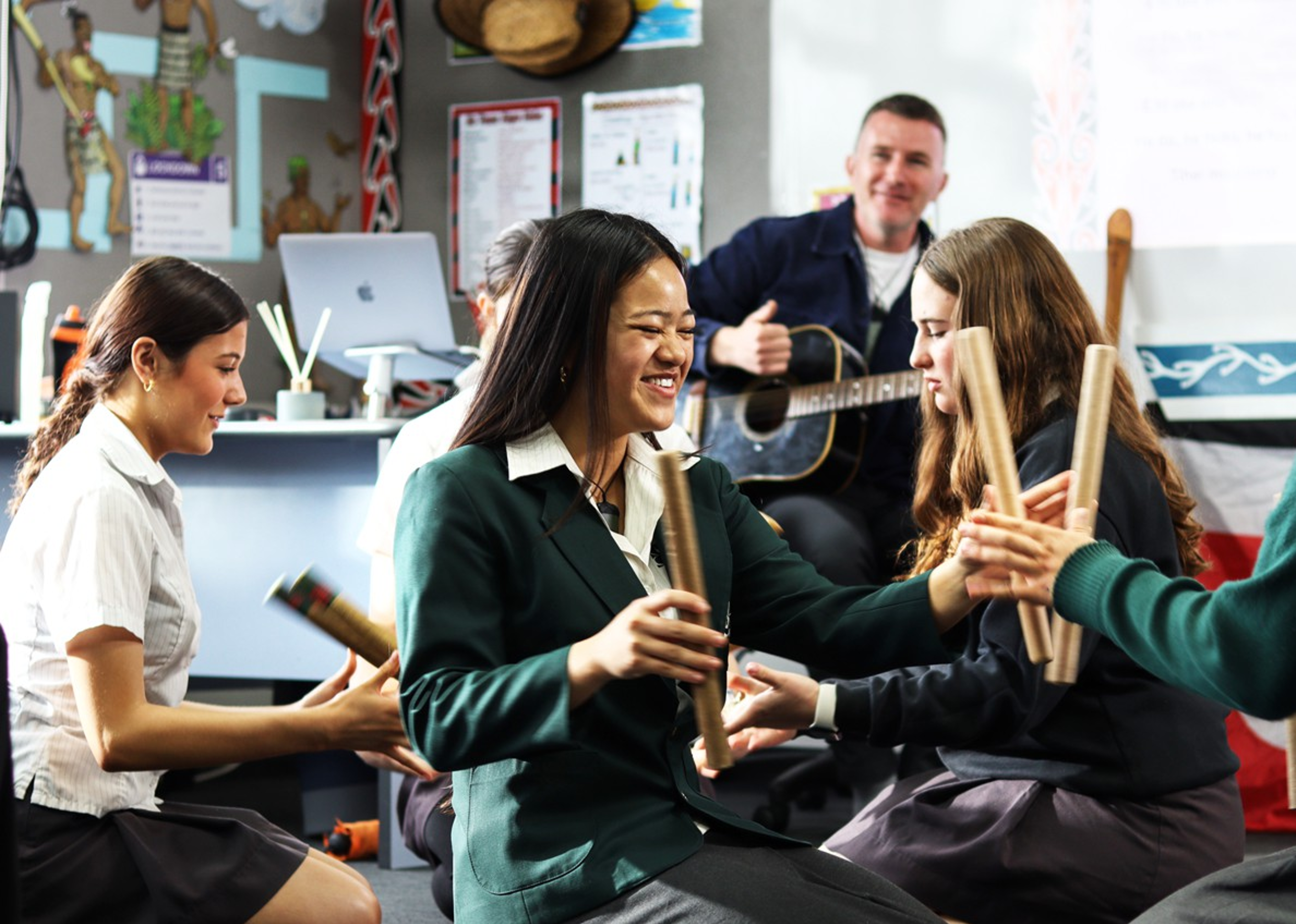
Students perform tī rākau in their te reo Māori lesson.
Planting seeds for the future
The school’s growing Māori-medium and bilingual pathways have emerged from the same philosophy. When conversations began about strengthening Māori provision at Ōrewa College, the initial vision was relatively modest.
Through engagement with whānau, students, staff and the wider community, however, it quickly became clear there was significant appetite for something more ambitious.
“The message from whānau was pretty clear. They wanted more reo, a stronger sense of kaupapa Māori, and they wanted to feel more connected to the kura and to the journey their tamariki were on.
“When small things become normalised, that leads to it becoming revitalised.”
“There is sometimes that feeling when your child gets to secondary school that you hear less and less about their day and it becomes harder to be part of their journey.
We knew that a strong kaupapa Māori philosophy, through something like a bilingual or whānau-based programme, could help break down some of those barriers.
“When you enrol a student into a programme like this, in many ways you are enrolling the whole whānau. It takes that collective commitment to make it work.”
School leaders initially imagined a small bilingual class. Then applications began to arrive, with 45 families wanting to take part for the first year.
The response encouraged the school to move faster, expand its planning and think more boldly about what might be possible.
“You hear simple, common phrases being used by staff, and when you walk around the school, students are using more te reo Māori as well. You hear it walking the school, in classrooms and in assemblies. It is starting to feel normal. Not put on and not pressured.”
Throughout the process, the school sought guidance from whānau, neighbouring kura and mana whenua. Wiri says leaders spent time learning from schools including Pasadena Intermediate, Whangārei Intermediate and Henderson Intermediate, while continuing to engage with Ngāti Manuhiri and leaders including Te Kurataiaho Kapea of Ngāti Rango and Ngāti Whātua, who is also an Ōrewa College alumnus.
“We had an idea about where we wanted to go, but the response from the community gave us the confidence to be bold and more ambitious.”
One memory stands out for Wiri, of a student from a non-Māori background who stood and delivered a whakatau in te reo Māori for five minutes.
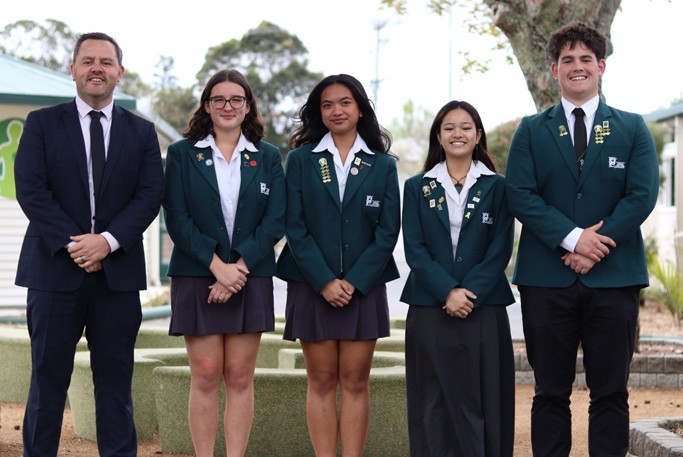
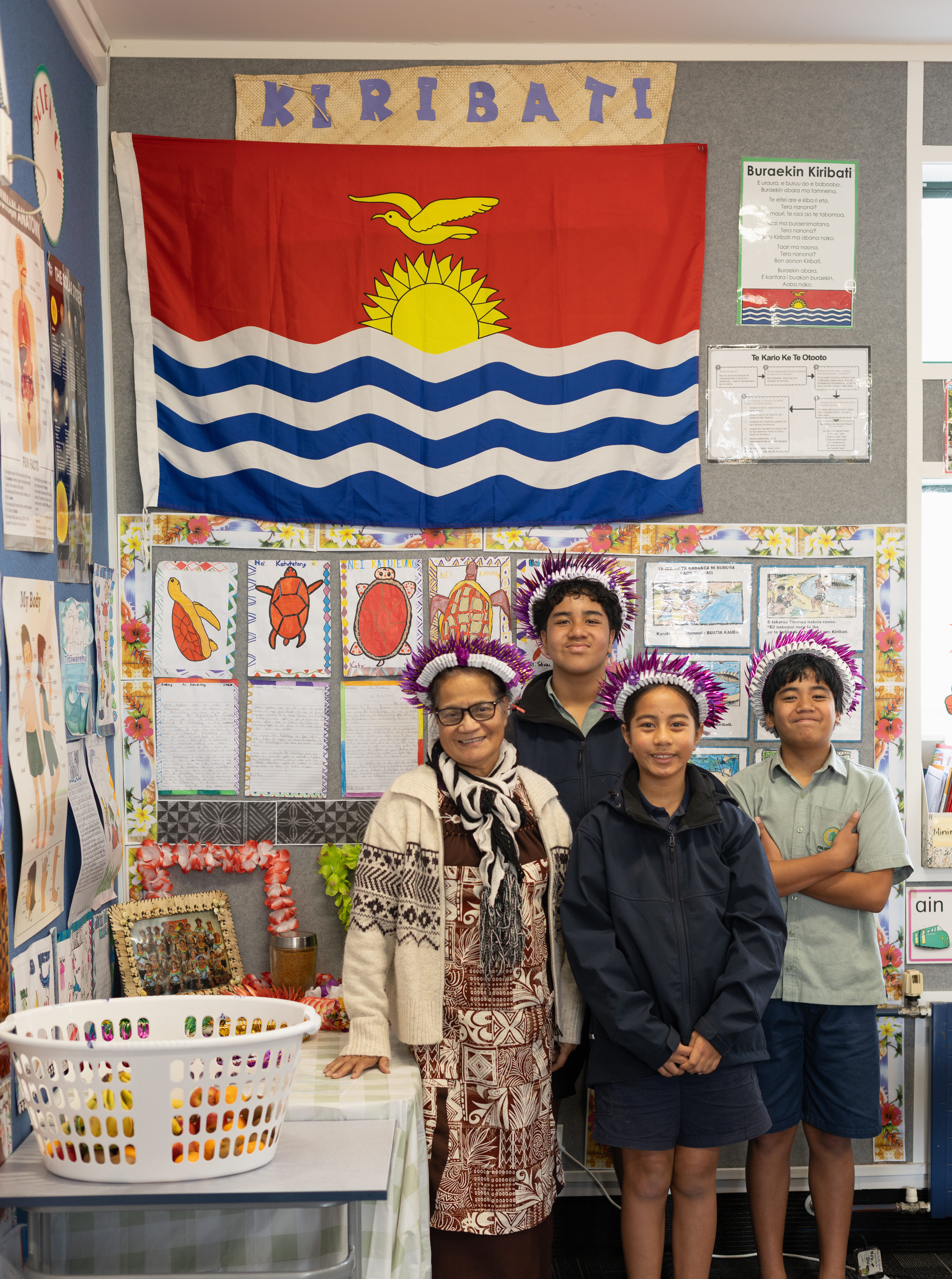
Wiri with the four Head Manukura for 2026.
“At the beginning of the year, his family were still considering whether the programme was going to be right for him. Now they are not looking back.”
For Wiri, moments like that reinforce what the work is ultimately about; creating an environment where people feel safe, confident and encouraged to participate.
“The responsibility now is to make sure students feel comfortable walking through the doors that have been opened.
“For Māori students, that means feeling confident to reclaim their language without any sense of shame. We also have many non-Māori families who genuinely want to be part of the learning and want to do that in a way that is respectful and supportive.”
When he thinks about the future, his mind returns to a memory from Wales. While coaching rugby overseas, he met a school coach whose children spoke fluent Welsh alongside their father. The interaction lasted only a few moments but stayed with him long afterwards.
“I remember watching them and immediately thinking, ‘I want that. I want that for my kids’.
“There was something really powerful about seeing a language living naturally within a family. It wasn’t being performed or taught at that moment; it was simply normal.”
If, decades from now, one of today’s students is speaking te reo Māori comfortably with their own tamariki, Wiri hopes Ōrewa College will have played a small part in that story.
“Maybe they go on to advocate in their own way, continue into further study, or carry those practices forward into the next generation.
“I would love to think that, in some small way, part of that journey started at their kura.”