Kiribati language unit celebrates culture and builds confidence
At Finlayson Park School in Auckland, a unique learning environment is helping young people strengthen their language, culture and sense of identity.
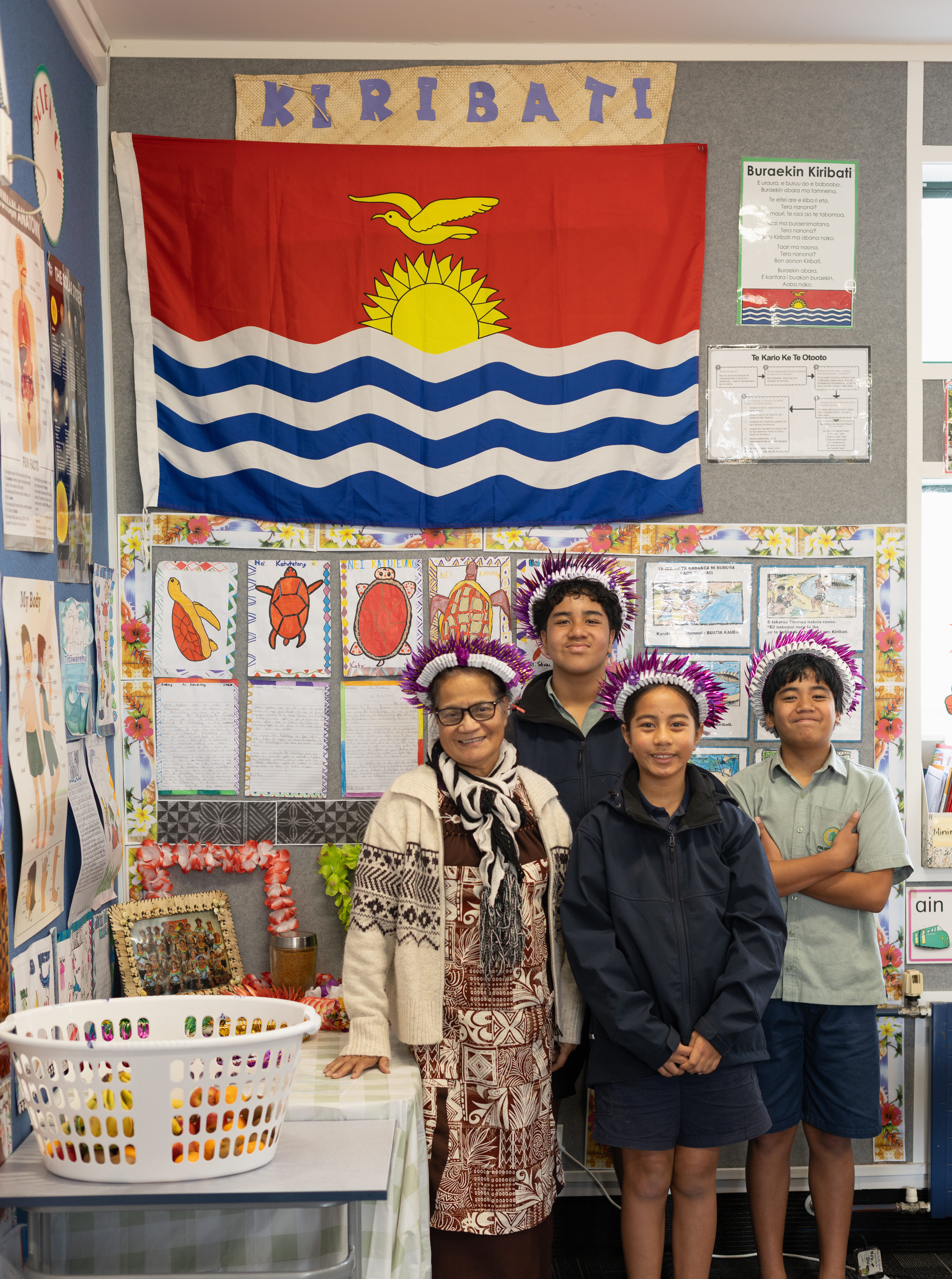
What I want to see is children loving their language,” says Taeang Erika, head teacher of the Marawen Te Rabakau Kiribati bilingual unit at Finlayson Park School.
Established in 2020, the unit is the first of its kind in New Zealand, providing students with opportunities to learn through the Kiribati language while celebrating the traditions, values and stories of their heritage.
“They love to know more about their culture and they know they belong to Kiribati.”
For Taeang, the work is deeply personal. Having grown up in Kiribati before moving to Auckland for further study, she understands the importance of maintaining strong cultural connections while living away from home.
“I miss the sound. I miss the noise. I miss the way my people are,” she explains.
Students in the language unit learn not only the language itself, but also the stories, traditions, songs, dances and values that make Kiribati culture unique.
Students in Years 1 to 4 learn through an 80 percent Kiribati and 20 percent English approach, while students in Years 5 to 8 transition to a 50/50 balance between the two languages.
Growing confidence through culture
Head teacher Taeang Erika and Marawen Te Rabakau Kiribati bilingual unit students.
Taeang recalls that when the programme first began, many students were hesitant to speak.
“At first it was a noiseless classroom,” she says. “But after a while, the sounds of the language surrounded me.”
Today, those once-quiet learners confidently communicate in Kiribati, share traditional knowledge and participate in cultural performances.
The benefits are equally evident in how students describe their experiences.
“I get to be around my people and I get to learn more about my identity,” says Caleb.
Brielle agrees. “I like to learn about all the Kiribati legends shared from the past and all the Kiribati traditions.”
The programme also nurtures confidence and leadership. Students report feeling proud when they can use their language publicly and share their culture with others.
“One of my highlights was performing in front of the school,” says Caleb. “It made me feel proud and confident.”
Keeping traditions alive
Another significant aspect of the unit is its commitment to preserving traditional knowledge. Students learn practical cultural skills such as making bwaai ni maie (traditional dance costumes including grass skirts) and te mwae (woven pandanus headbands).
As one student explains, these skills are important for future generations.
“What if the people who know how to do it are gone and it’s just us? We have to do it.”
Taeang agrees. “I often refer to my students as trees. We need the roots of our culture and language and without them we will collapse."
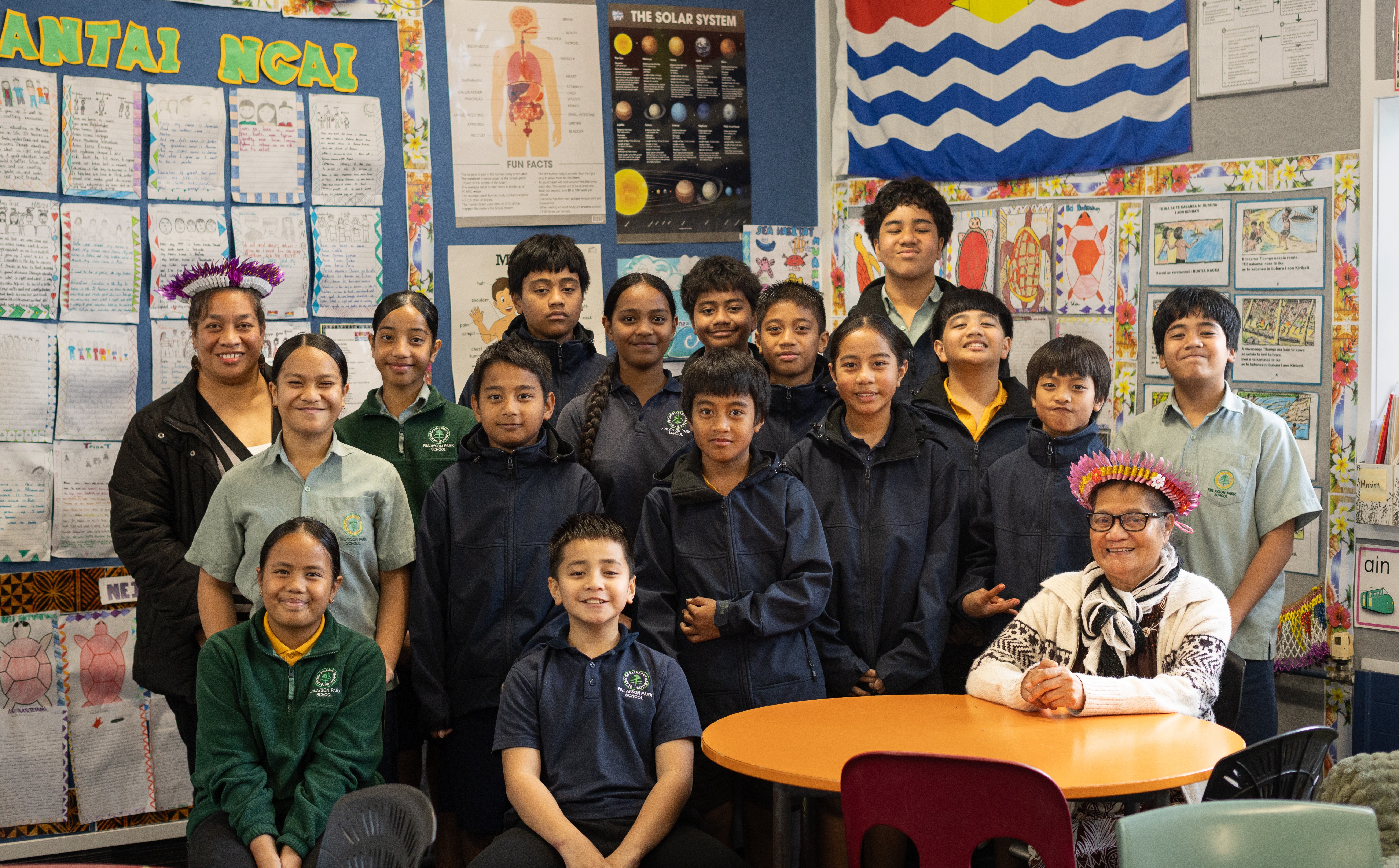
Taeang Erika (seated far right) proudly poses with her Year 6-8 students and teacher aid Taeam Tokamaen (standing far left).
The programme’s success can also be seen in the achievements of its earliest students. This year, Taeang watched her first cohort transition to secondary school after teaching many of them since Year 1.
“I was in tears because they had been with me since Year 1,” she recalls. “I felt so proud when their reports came back.”
Looking ahead, Taeang hopes her students will become future leaders. More importantly, she wants every child who leaves the unit to know exactly who they are and where they come from.
“I feel proud and happy,” she says. “You will not find another school like us. We are unique and special.”