Bringing local stories to life through animation
Earlier this year, Education Gazette explored how Shannon School Te Kura o Hanana was bringing the stories, identity and environment of the rohe to life through its school values and murals. The Year 6 class is now building on that mahi, using stop motion animation to share their learning about the local ōrea through literacy, storytelling and digital technologies.
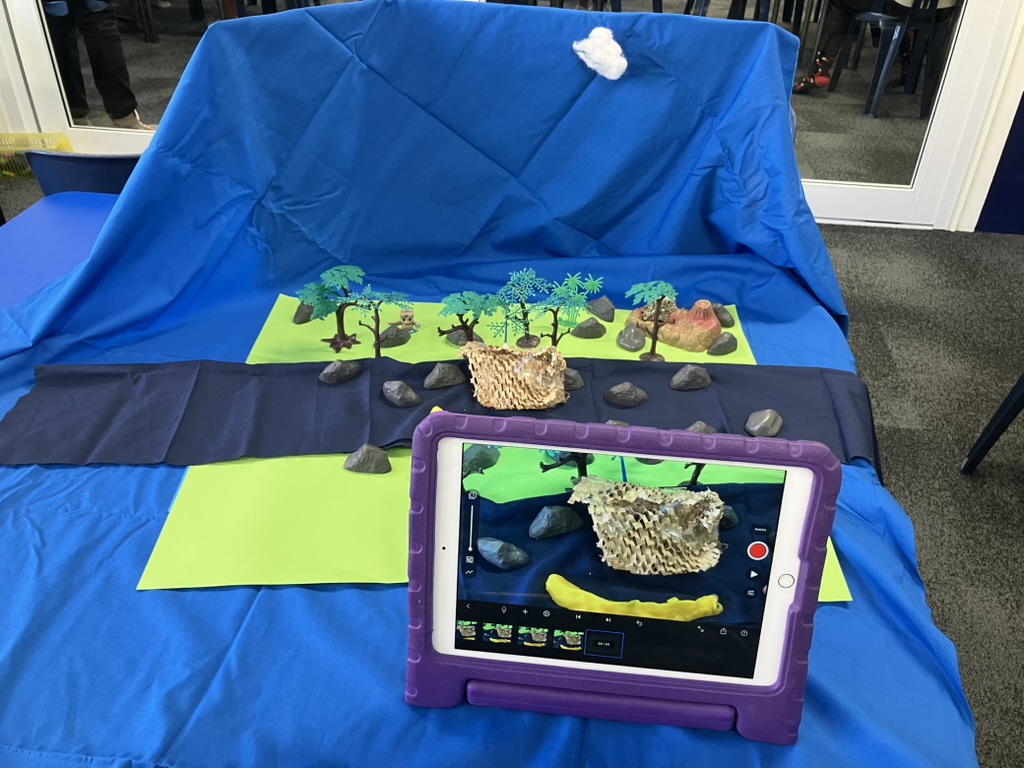
Using stop motion to tell the stories of the ōrea.
Handmade ōrea (longfin eels) inch across carefully crafted riverbanks. iPads are balanced in position. Students huddle around miniature sets, moving their characters just millimetres at a time before capturing the next frame.
In a Year 6 classroom at Shannon School Te Kura o Hanana, ākonga are bringing local stories and learning about the longfin eel, or ōrea, to life through stop motion animation.
Kaiako Lois Erceg-Erkilic, third-year Bachelor of Teaching student teacher Zirae Hyde and Dr Ben Egerton from Te Herenga Waka – Victoria University of Wellington have been supporting students to combine literacy learning, mātauranga about their local environment and digital technologies to create animated retellings of pūrākau and environmental stories connected to their rohe.
For tumuaki Rochelle Thorn, the project reflects the school’s wider vision for teaching and learning.
“What we are striving for in our kura [is] explicit, intentional teaching that builds strong literacy and numeracy foundations, alongside rich, engaging learning programmes grounded in te taiao,” she says.
Stories from the awa
One focus of learning has been the awa near the kura, home to ngā ōrea, the longfin eel.
This learning has been enriched by the mātauranga shared by the local hapū and mana whenua, Ngāti Whakatere, including knowledge of tūna, waterways and te taiao.
Through Ngāti Whakatere conservations with local councils, tamariki have had opportunities to experience kaitiakitanga in action and connect their learning to caring for their awa, whenua and taiao.
Ākonga in Lois’ and Zirae’s Year 6 class have been learning more about ōrea, their habitats, breeding cycles, food sources and significance within the local environment.
They have explored the awa itself, learned about hīnaki with support from Zirae, and engaged with pūrākau connected to the species.
Lois was also keen to introduce ākonga to stop motion animation and digital technologies as a way of sharing their learning and stories with a wider audience.
She says the project provided an opportunity to bring together thinking, care, knowledge and creativity Using stop motion to tell the stories of the ōrea. through learning that matters.
“By developing stop motion skills, our ākonga retell their pūrākau and share their mātauranga, making connections between their learning, identity and the world around them. They investigate our environment, explore the challenges facing our whenua and taiao. They collaborate to problem-solve and imagine positive solutions as kaitiaki.”
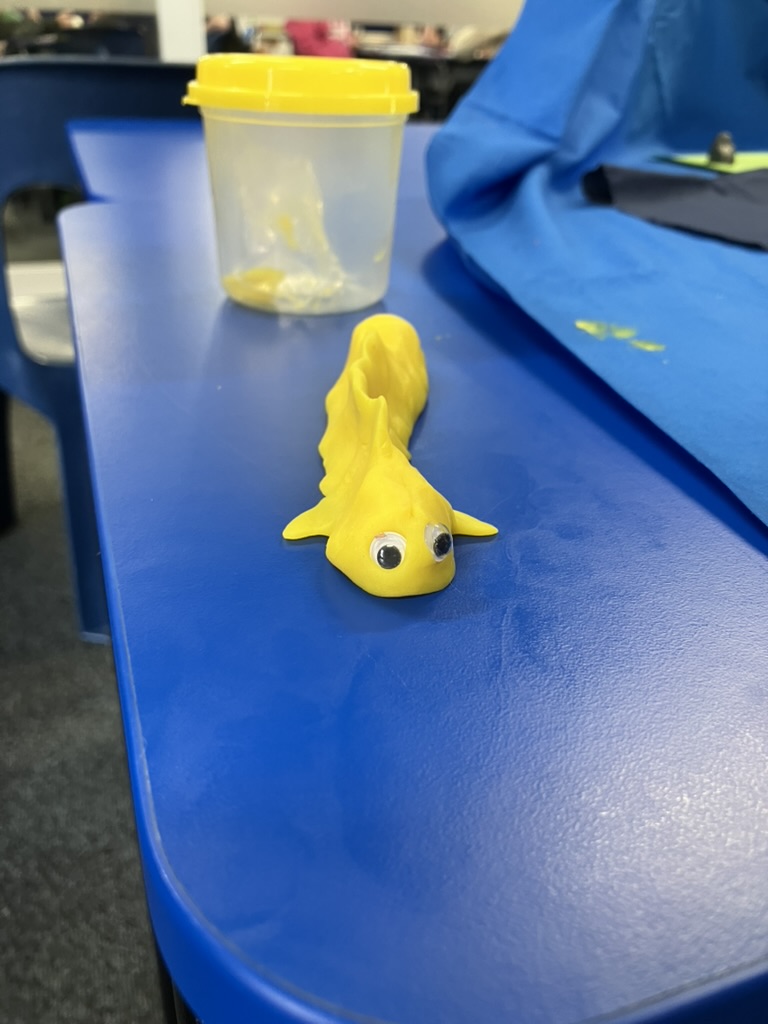
Ākonga made ōrea using playdough.
From writing to animation
On a Thursday in July, Ben joined Lois and Zirae in the classroom to begin bringing the stories to life.
The day started with literacy learning. Working in small rōpū, tauira developed narratives that would later form the basis of their animations.
Lois and Zirae revisited key scientific and te reo Māori vocabulary, spelling patterns and descriptive language, encouraging students to craft a short, written piece of around a paragraph in length.
Through drafting, revising and responding to feedback from classmates, the stories evolved.
After each round of writing, a spokesperson from each group shared their work with the class. Other students offered whakaaro, and groups returned to their whiteboards to revise and improve their writing.
The resulting stories reflected a wide range of approaches. Some took a scientific perspective, others imagined life through the eyes of an ōrea. Some focused on environmental messages, while others explored the more humorous side of eel life.
Once the writing was complete, Lois photographed the whiteboards to record each group’s final version.
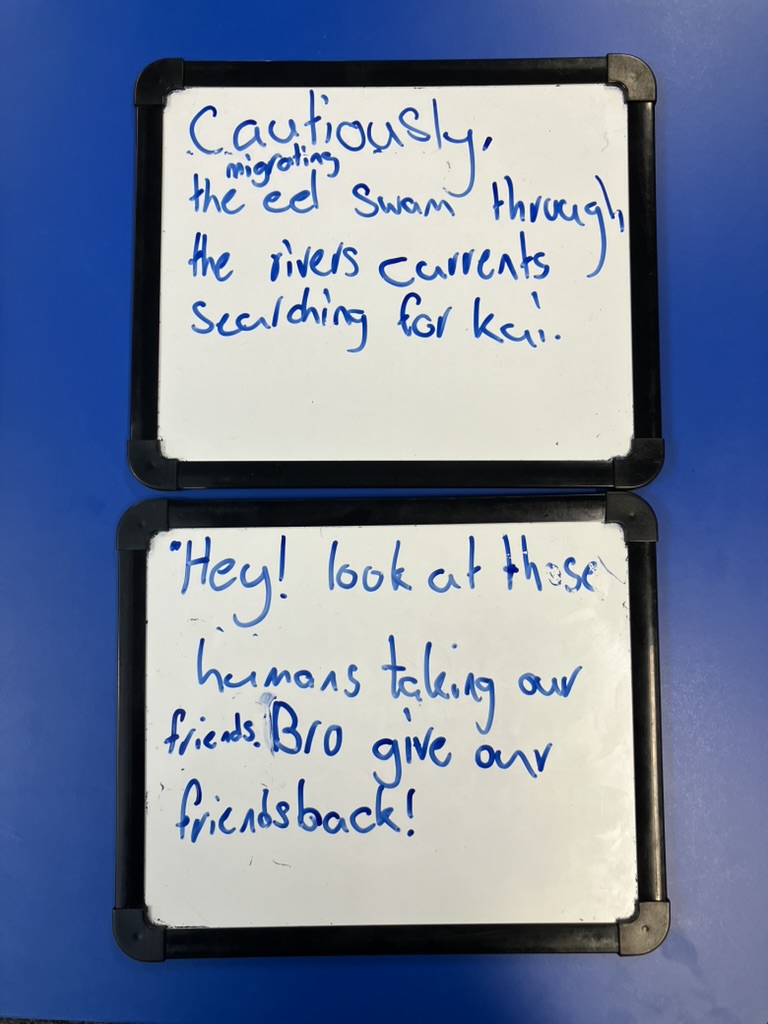
Literacy and creativity come to life when creating the animations.
Developing digital technology skills
After morning tea, attention shifted to animation.
Ben introduced students to Stop Motion Studio, a free application that allows users to create frame-byframe animations.
After some discussion, it quickly became apparent that several students already had experience with stop motion and were eager to share their expertise with classmates.
Working in groups, tauira experimented with camera angles, zooming, framing shots and creating movement.
They learned how to avoid hands appearing in the frame, how to create pauses by taking multiple still shots and how to move objects in very small increments.
“Teeny-tiny steps” became a common piece of advice.
Plastic dinosaurs used for practice were eventually replaced with playdough ōrea created by the students themselves.
The challenge then became how to combine what they had learned about storytelling with their growing animation skills.
As the day ended, ideas were beginning to take shape.
Bringing stories to life
The following week, the class dedicated an entire day to completing the animations.
After revisiting their storylines and animation techniques, students began planning.
Ben introduced the design cycle of “Investigate”, “Plan”, “Make” and “Appraise”, before students worked through how they would turn their stories into finished films.
The classroom soon became a hive of activity. Sets were designed. Models were built. Audio tracks were rehearsed. Students timed readings, tested scenes and refined their ideas. Cutting, gluing, directing and production were underway.
“I really like experimenting with stop motion animation,” says student Israel.
“I feel like a movie director working alongside my team to create and use our imaginations to tell a story in an enthusiastic way. Hikaka!”
Rich opportunities for learning
By the end of the day, every group had produced a completed animation.
Some stories explained scientific concepts. Others explored environmental issues. Some told cautionary tales and some embraced humour.
What united them was the pride students felt in sharing their learning.
“I am extremely glad that we were given the chance to tell our pūrākau in stop motion,” says Robyn.
“I loved being able to express and share mātauranga and imagination in creative ways with my group.”
Beyond the finished animations, the project created opportunities for collaboration, communication, creative thinking, decision-making and the application of knowledge across different learning areas.
For Rochelle, the project demonstrates that strong foundations and creativity can work hand in hand.
“It shows that rigour does not come at the expense of creativity, curiosity and critical thinking. Rather, when we get the balance right, tamariki develop the knowledge and skills they need to think deeply, make connections, solve problems and engage meaningfully with their learning programmes and the world around them.”
Ezra agrees. “Stop motion is a great learning experience which enabled us to use new learned skills to bring our pūrākau alive. Ka mau te wehi!”
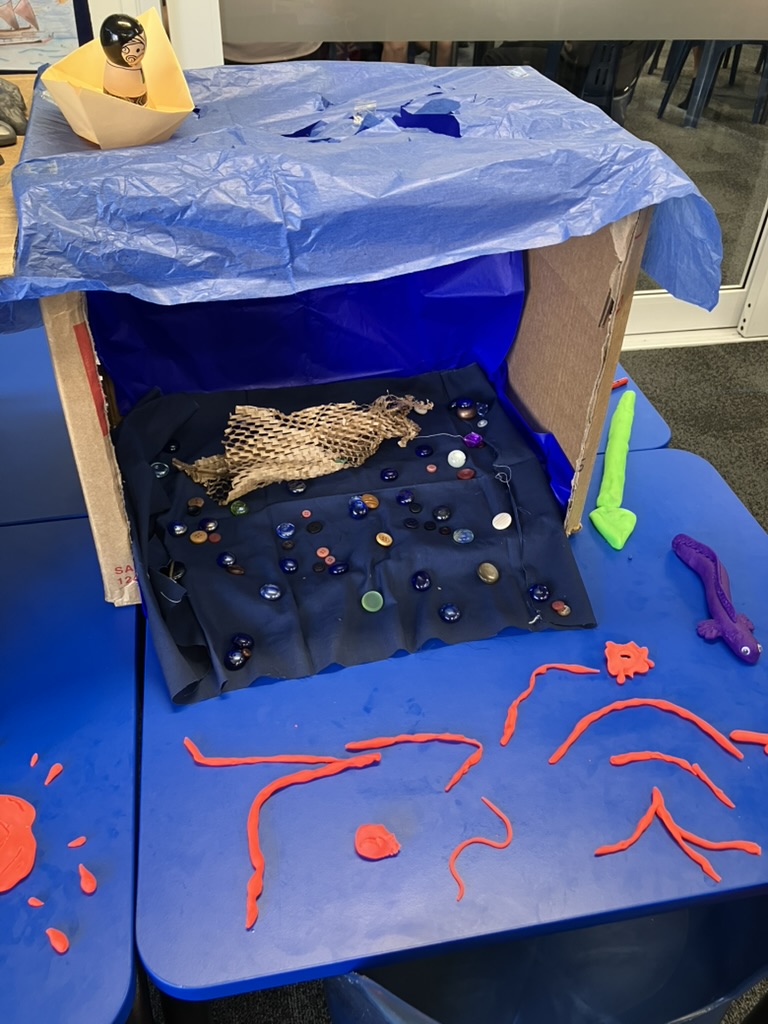
Using stop motion to tell the stories of the ōrea.
Sharing stories into the future
Now that students have developed stop motion skills, new opportunities are emerging.
The technique can be used to revisit existing stories or tell new ones. Students can refine their approaches, develop more sophisticated narratives and pass on their skills through tuakana-teina relationships. Lois believes the learning extends well beyond animation itself.
“This learning nurtures a sense of spiritual commitment and empowers them to serve, care for and make a meaningful contribution to their hāpori, their whenua and their taiao.”
The project is already feeding into upcoming speech presentations and will feature in learning celebrations with whānau later in the year.
More in the series
Murals spark a rohe-specific shift.
Te Kura o Hanana
A journey through time in Shannon.
He haerenga tahi o tēnei rohe o Hanana
Pūrākau, place and digital learning.
Storytelling in action