Waikato ākonga explore global citizenship through three-year Model UN journey
As part of their Puna Wānanga, Rototuna Senior High School ākonga, supported by kaiako Benny Pan and Martin Mai, organised and hosted the Waikato region’s largest Model United Nations event, with 126 students from 15 schools taking part. The project began three years ago, as a restart to the Waikato events, which stalled during Covid-19.
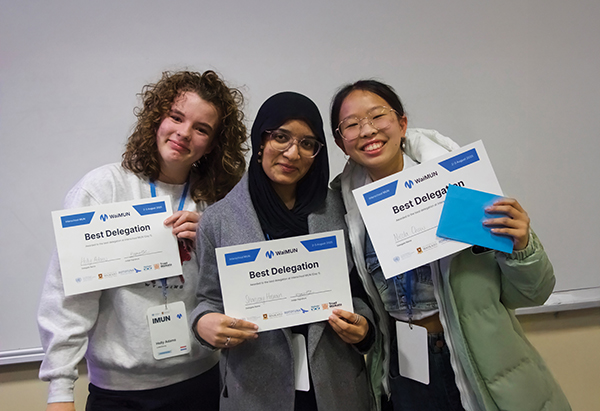
One of the ākonga groups awarded Best Delegation.
The Waikato Model UN (MUN) allows ākonga to role-play international diplomacy and debate real-world issues. Although there is a history of MUN in the Waikato, Rototuna Senior High School (RSHS) kaiako Benny Pan and Martin Mai – and a group of Year 11 ākonga – hadn’t been involved before.
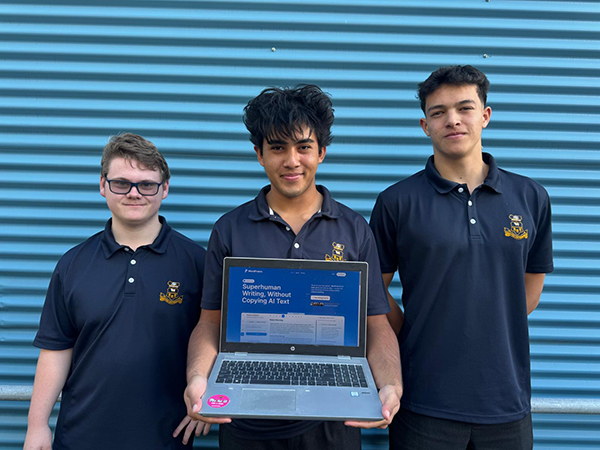
Five of the now Year 13 organisers, James, Ellen, Alex, Vennela and Sreshthaa (Sresh), and kaiako Benny, share their story of the journey to the August MUN, what they learned from the experience, and its legacy.
Project history
The project started in Year 11 with ākonga initially focusing on learning the basics of MUN. They did this with support from the UN Association Waikato branch and president, Mano Manoharan.
Taking part in conferences across Aotearoa and connecting with their sister schools in China helped build their skills.
It was last year, in Year 12, that the group organised their first smaller-scale MUN event – a one-day meet-up with 80 ākonga hosted at RSHS.
This year’s August event – the largest in Waikato history – was held over two days with 126 rangatahi from 15 schools taking part.
Because of a scheduling clash at RSHS, ākonga reached out to Waikato University and secured one of their lecture theatres. This venue ended up being a great fit for the event.
Ākonga had big responsibilities – from catering, budgeting and tech needs to organising the venue. With each having different skill sets, their roles were fairly defined. They shared that some overlaps were needed, so they stayed flexible.
The group often worked late into the evening and across weekends – it was a huge time commitment.
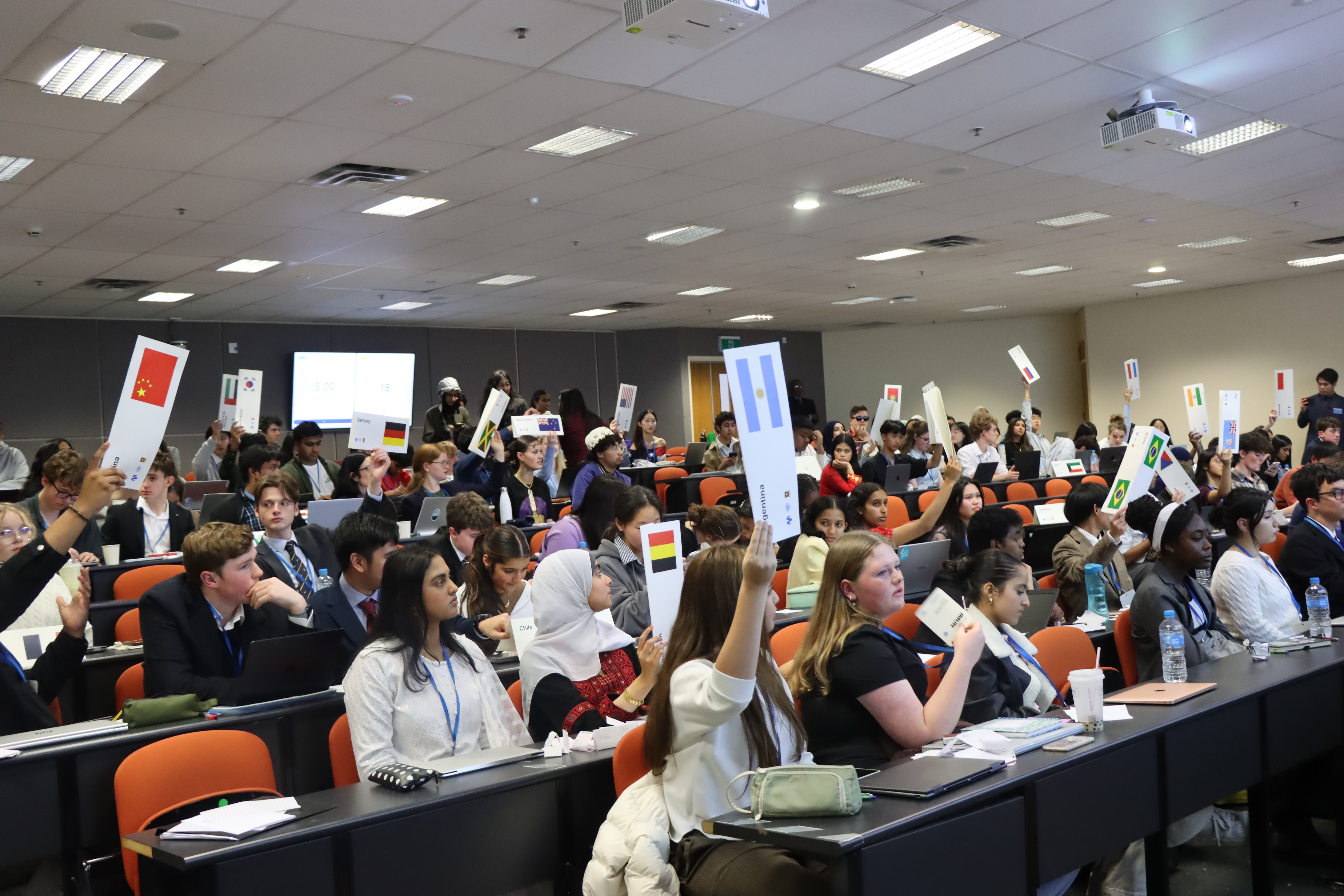
Delegates gather in Waikato University lecture theatre.
Skills developed
Vennela says she was quite shy when the project started. But with MUN’s structured speaking opportunities, she became a confident public speaker.
“Throughout these conferences, I’ve been able to find my own voice, and … connect with other people as well.” Her role was marketing and liaising with other schools.
Sresh took on budgeting and logistics. She shares that communication was a big thing they all learned to be better at through MUN. Not just within the team, but also externally.
Ellen’s focus was education and chairing committees. She’s proud of the deep MUN knowledge she gained. “It was really rewarding to be able to teach people [about] MUN. Because MUN hasn’t been around for a few years in the Waikato, we found that a lot of people don’t understand how it works.”
Alex’s roles combined marketing and tech. He improved his Canva graphic design skills and says he enjoyed “coming up with ideas that are both fun but also informative that we can put on our social media to advertise our events”.
He also found the group mahi rewarding, being part of a team to achieve something big together – judging when help was needed, and proactively jumping in.
James used his tech and graphic design skills to create the automated lanyards for delegates with their names and assigned countries. “I was also able to help out with the websites and having a platform where people can register.”
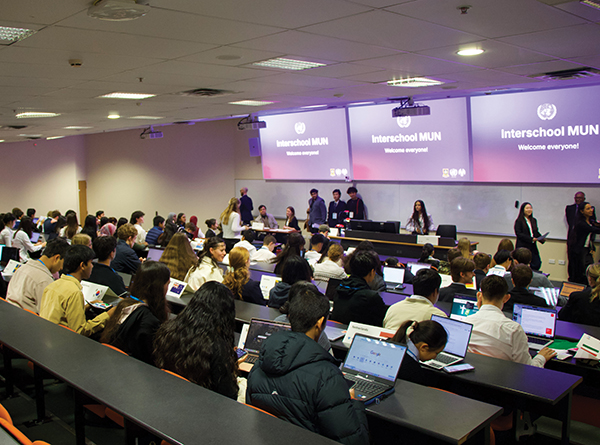
Waikato MUN in session.
Connections and collaboration
A big part of the team’s learning was appreciating the issues and perspectives of the countries they were representing.
Sresh says, “[MUN] helped us learn so much about different countries’ stance on everything, ways different communities think, different ways that we could think.”
It also gave her a deeper connection to the world. “We’re all people. We’re all human. We’re all trying to go towards the same goal of the happy life.”
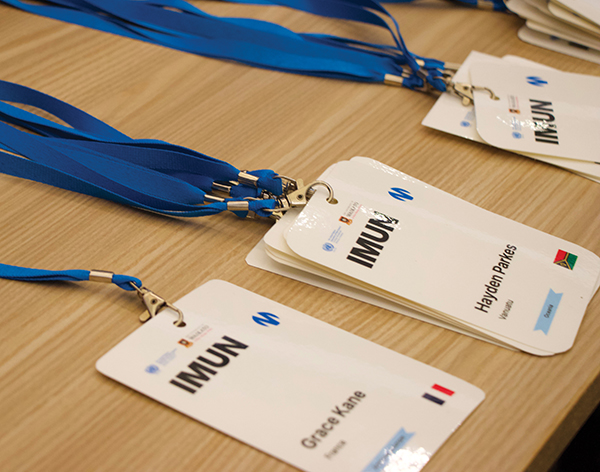
Automated lanyards for delegates with their names and assigned countries.
MUN has improved Ellen’s worldview and changed how she sees her future. “Before, I was completely disinterested in politics and global stuff, but now I want to make a difference in the world.”
Like all RSHS’s Puna Wānanga activities, the project was ākonga-led.
Benny says, “I think the teacher’s role is really working in the background and bringing stakeholders and community partners into the picture.”
As kaiako, he and Martin helped ākonga connect with venue sponsors, kai vendors and guest speakers.
Ākonga, especially Sresh, say that Benny was being modest in describing his input. She says he was involved “every step of the way”.
They all shared how the experience has prepared them for university. Some plan to build on their event management, knowing that university will provide more opportunities to use their new skills.
MUN has helped shape the group’s career plans. Vennela and Srish both plan to pursue medicine, where they will use their improved communication skills.
Ellen became interested in research and engineering, sparked by the project. And Alex is looking ahead to more group mahi and leadership roles through uni clubs and councils.
They all agreed the experience has taught them independence and self-management.
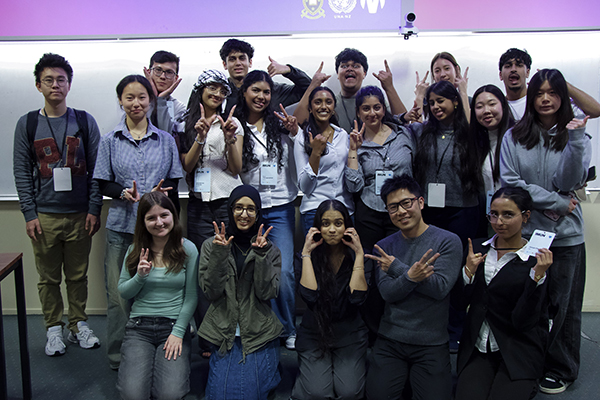
Organising committee of the Waikato MUN.
Community leader perspectives
Kaiako Benny helped the team secure community leaders to speak at MUN. These included the local mayor, councillors, their RSHS principal and a law professor from Waikato University. Each speaker gave ākonga useful insights into global issues discussed at MUN. Vennela commented that it was good to hear these speakers share similar concerns and perspectives on world issues.
The community link gave the MUN experience authenticity for ākonga, along with building networks outside the school environment.
As Year 13s, the founding team will graduate soon. With that in mind, they each chose an intern – from Year 11 and 12 students in their Puna Wānanga – to replace their role. The interns shadowed them at meetings, gradually increasing responsibilities. The interns observed the planning of the first MUN event and had active roles in this year’s two-day MUN.
Leaving their MUN project is “bittersweet”. But they have confidence and trust in the team they’ve trained to continue their legacy.
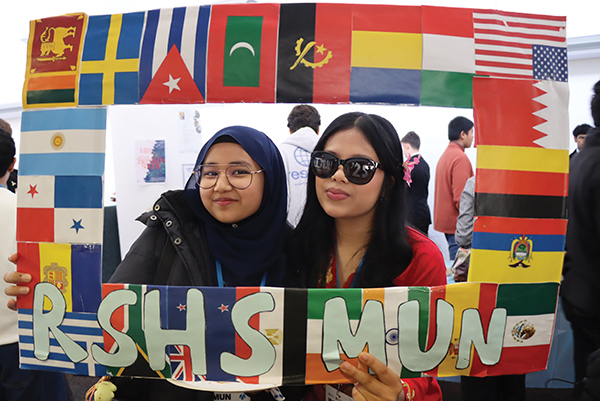
Two delegates in flag-decorated selfie frame representing the countries attending the event