Unpacking Te Whāriki in a mixed-age setting
Early childhood spans a range of ages, so how does Te Whāriki cater to them all? Education Gazette visits Capital Kids Cooperative in Te Whanganui-a-Tara Wellington to find out.
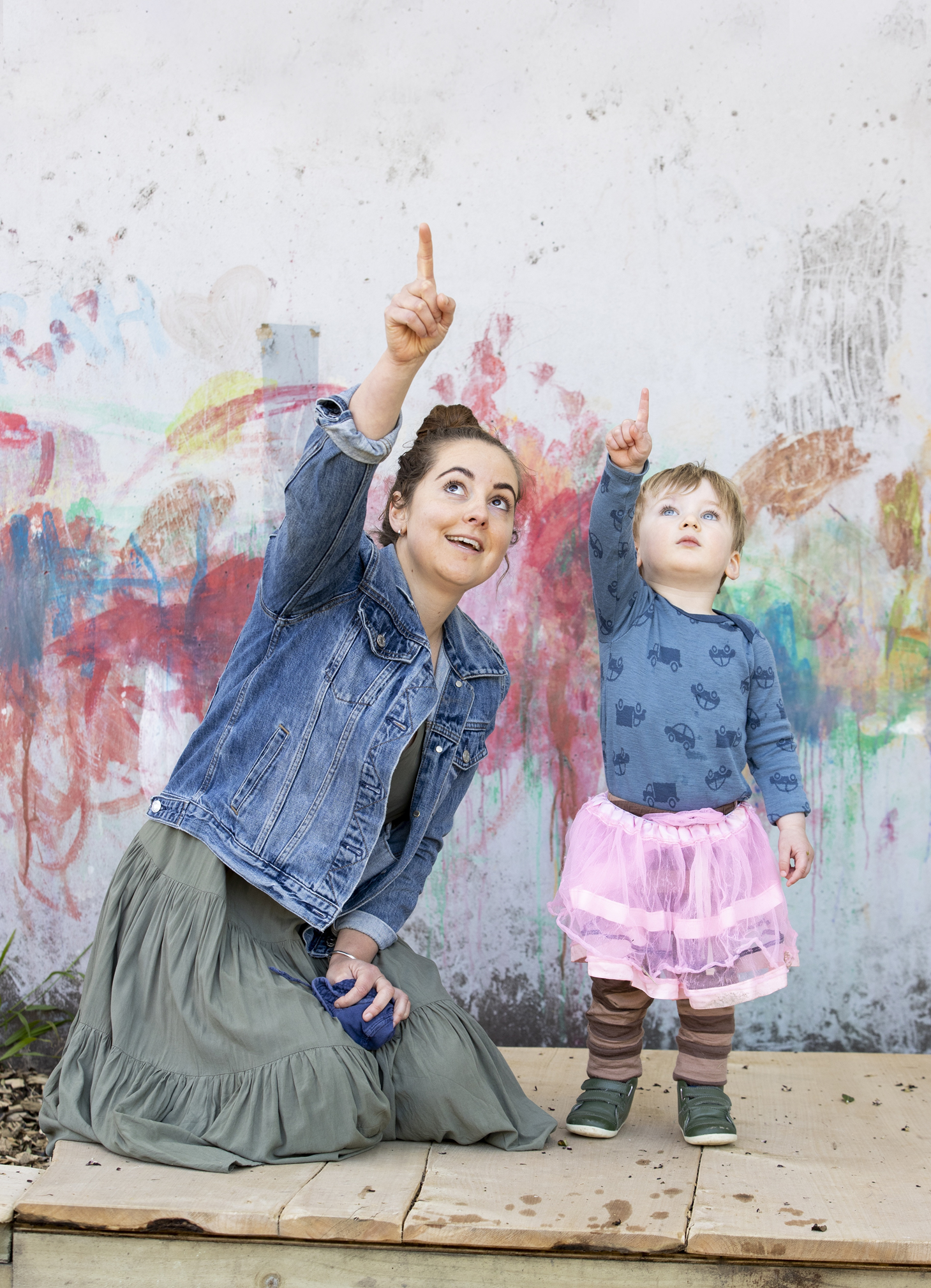
CKC centre manager Megan White engaging with tamaiti.
Newtown is a busy inner-city suburb, home to a diverse population and both Wellington Hospital and Wellington Zoo. Nestled in amongst it all is Capital Kids Cooperative (CKC), a small mixed-age early childhood centre.
The centre cares for tamariki from around seven months old through to school age, with all learning together in one shared environment.
“Because we are a mixed-age centre, we don’t have spaces for different ages,” explains centre manager Megan White.
“This means younger children get to benefit from observing and interacting with older tamariki, while older children naturally develop tuakana-teina relationships.”
In this kind of setting, Megan says one of the key challenges in delivering Te Whāriki is making sure it is consistent and responsive, “while still meeting the very different developmental needs of infants, toddlers and older tamariki”.
Licensed for 30 tamariki, including 12 under twos, the centre balances calm, relationship-focused environments for infants alongside more focused learning for older children.
“This requires us to be very intentional with our planning and have strong communication and shared understanding across the team,” says Megan.
Responding to developmental stages
With the principles and strands of Te Whāriki staying the same across different age groups, Megan says.
CKC’s curriculum “strongly reflects relationships where tamariki learn alongside and from one another across different ages and stages of development”.
“Older children naturally develop leadership, empathy and responsibility, while younger children learn through observation, imitation and connection.”
At different ages, Megan says what changes within Te Whāriki “is how kaiako respond to developmental stages, interests, and ways of learning”.
She explains what she means, using celebrating events as an example, which is what most of their group planning is focused on.
“For infants, learning may focus on sensory and relational experiences like music, textures, colours, dance, shared books or tasting foods connected to the celebration.
“Toddlers might engage through movement, art, simple cooking experiences, role play, singing and opportunities for repetition and exploration.
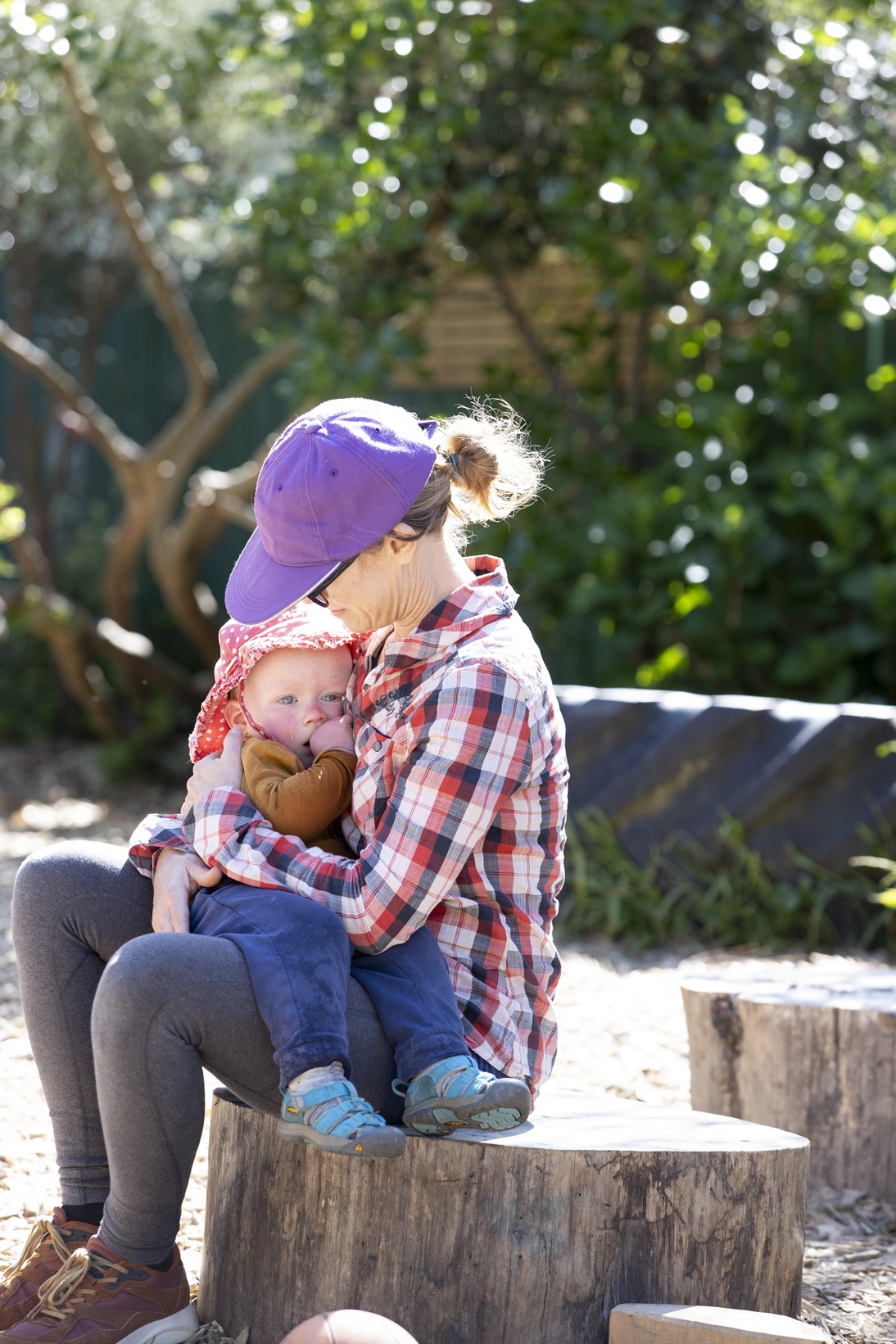
At the CKC centre, both kaiako and tamariki love being outside.
“Older tamariki are often involved in deeper conversations, collaborative projects, storytelling, creating decorations, learning greetings or songs in different languages, researching traditions and contributing their own ideas and questions.”
Recounting the centre’s recent learning about Chinese New Year, Megan delves into specifics.
“Our infants explored red and gold sensory materials, music and lanterns, while the toddlers helped make dragon art, joined in dancing and tried traditional foods.
“We had our older tamariki learning about the zodiac, writing their names in Chinese characters, creating collaborative dragon dances and having discussions about cultural traditions.”
Bringing Te Whāriki to life
Megan says being located so centrally means the centre has ample learning opportunities at its fingertips, all woven into implementation of the curriculum.
“We’re close to the town belt, to Matairangi Mount Victoria and to parks, schools, bus routes and community spaces such as Kaicycle urban farm.
All of these are rich opportunities for us to explore and engage with the community – we often go on trips in our morning block.”
She says the outdoor environment is a huge part of the centre’s identity.
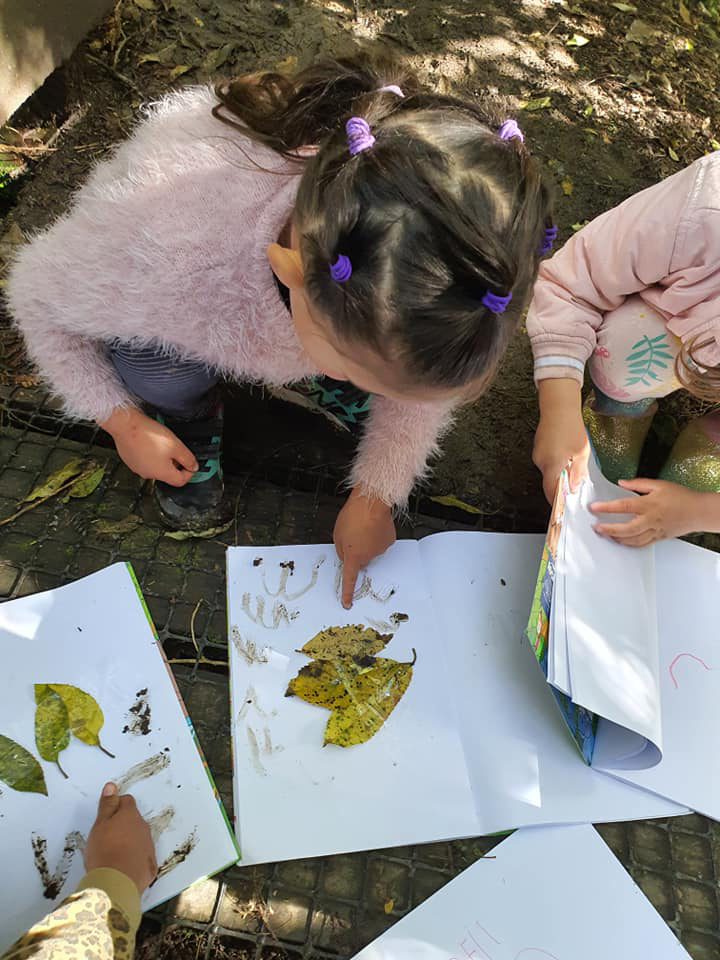
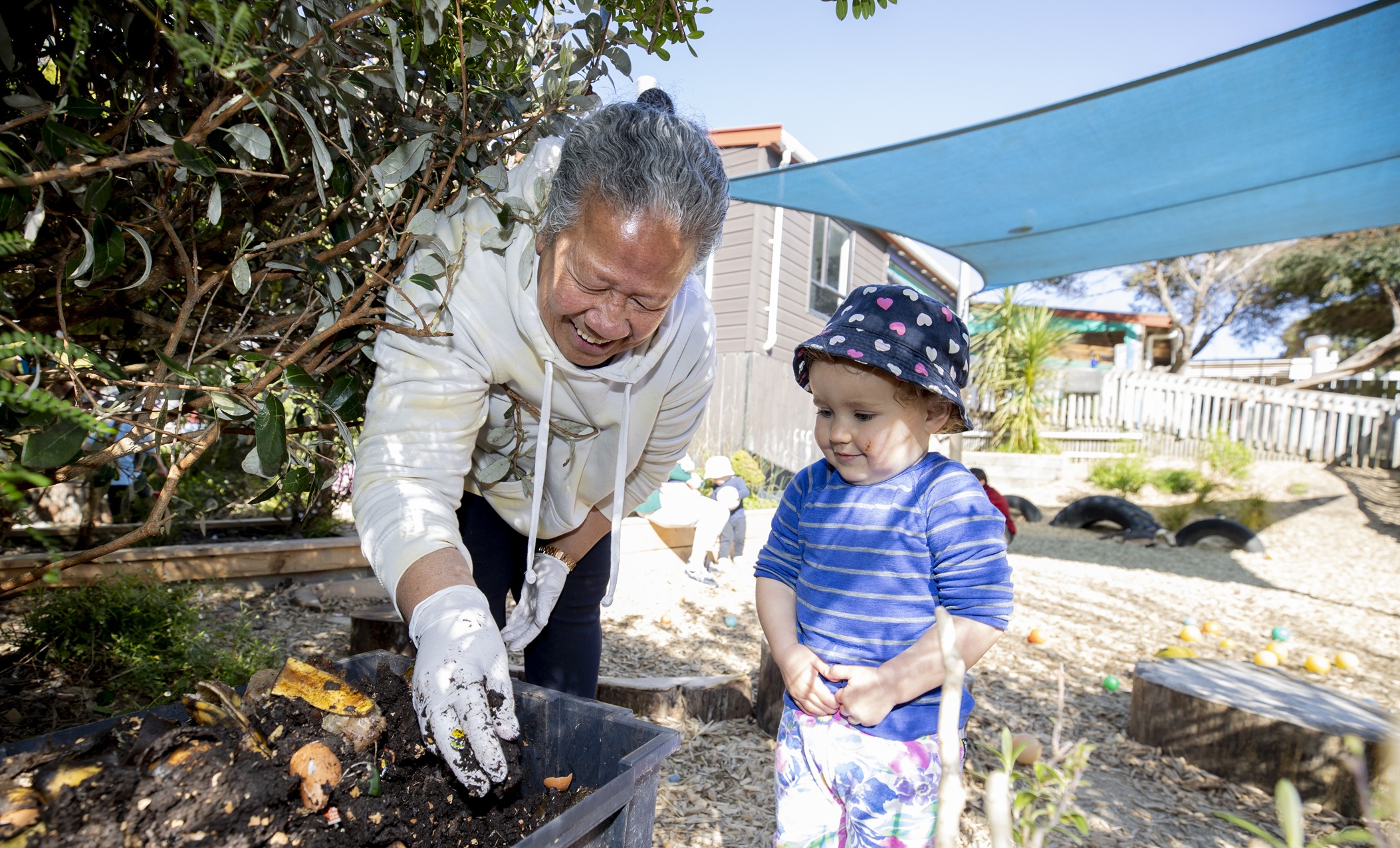
“We love being outside. Being outside encourages exploration, risk-taking, physical confidence, creativity and connection with nature, so we encourage tamariki to regularly connect with te taiao through excursions, environmental projects, gardening and outdoor play.”
Speaking enthusiastically about CKC’s approach to implementing Te Whāriki, Megan highlights the way it brings the framework “to life in a way that is meaningful and authentic to our centre”.
“Implementing the curriculum is deeply influenced by our values of manaakitanga, whanaungatanga, kaitiakitanga and wairuatanga,” says Megan.
“We view ourselves as a whānau and we place strong importance on relationships, emotional wellbeing, belonging and connection to people and place.”
She shares what this looks like in practice.
“Day to day, you’ll see this in the way we welcome and connect with whānau during arrivals, then get into play and exploration indoors and outdoors, as well as intentional learning experiences based on children’s interests.
“We have group experiences such as waiata, storytelling, movement or mat times, and care routines for infants and toddlers give us the opportunity for one-to-one interactions and responsive caregiving.”
She pauses before continuing. “There’s also project work, creative experiences, sensory play and outdoor exploration and plenty of opportunities for rest and quiet.
“This is all to say that learning happens through play, conversations, routines, exploration and everyday interactions.”
The role of whānau
Megan is quick to point out the pivotal role that whānau play in shaping and guiding CKC’s curriculum, and whānau are involved wherever possible.
“Whānau are essential partners. Their knowledge of their child, cultural values, language and aspirations directly inform our teaching practice and curriculum decisions across all age groups.
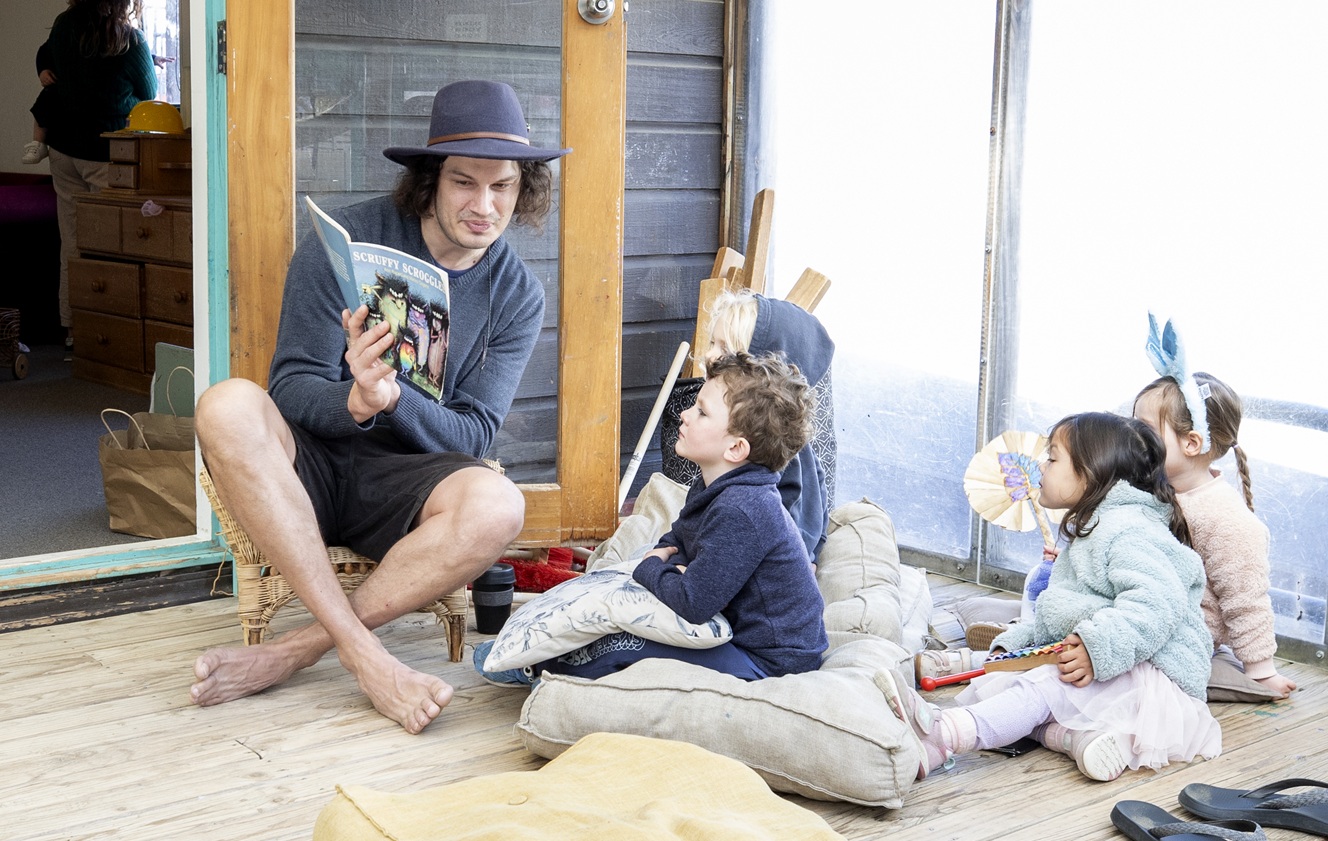
Kaiako Clarence reading with tamariki.
“They also help us to make sure our celebrations are authentic and respectful. They bring with them stories, clothing, food, music, language and experiences from home – having strong whānau connections gives us a real sense of belonging that makes the centre feel like an extension of home.”
Each new child starting at the centre has a pepeha created for them alongside their whānau, easily adapted for different ages.
“As infants, their pepeha is shared with them,” explains Megan, “and as they become toddlers, they start to repeat words back. Our older tamariki have a deep understanding about their whakapapa and can say their pepeha with little prompts.”
She says the centre actively seeks input and feedback from whānau, making sure families are not only informed about their child’s learning but are also active contributors to it.
“Once a year around Matariki, we have an aspiration kōrero with every whānau. Kaiako use whānau aspirations to guide planning and intentional teaching. These aspirations are revisited regularly and reflected in learning stories and curriculum decisions across infants, toddlers and older tamariki.”
Developing skills from the beginning
Kaiako Lita in the CKC garden.
For kaiako at CKC, creating learning environments and experiences for such a wide range of developmental stages is all about being flexible and inclusive.
“We try and create spaces for infants that are calm, safe, sensory-rich and allow freedom of movement and secure exploration,” explains Megan, “while toddlers start to get a bit more into active exploration, independence, physical movement and hands-on discovery.
“For older tamariki, our environment offers more complex resources, open-ended materials, collaborative spaces and opportunities for inquiry and creativity.
Open-ended resources are important because they can be used in different ways by different age groups.”
She describes how the outdoor space has been redeveloped “very intentionally” to have no fixed way to play and engage with it.
“We also wanted to make sure there were plenty of opportunities for safe risk-taking,” says Megan. “So we have big climbing ropes and trees to climb. We don’t put children in trees – they have to develop the skills from the beginning to be able to climb them, which makes it safe for all ages.”
Throughout the day, says Megan, kaiako observe children carefully to identify interests and strengths.
“From there, we intentionally provide experiences, resources, questions and environments that extend learning in meaningful ways.”
Ultimately, says Megan, having a successful mixed-age learning environment comes down to making sure the curriculum and its implementation evolves alongside their tamariki, whānau, kaiako and community.
“Our work reflects our commitment to Te Whāriki, Te Tiriti o Waitangi and creating a nurturing, empowering and culturally responsive learning environment where all tamariki can thrive.”