Three Pacific stars guiding Te Whāriki at Toru Fetū
At Toru Fetū Kindergarten in Porirua, learning follows the rhythms of Pacific life – collective, relational and grounded in cultural practice. Through Cook Islands, Niue and Tuvalu values and knowledge-systems, Te Whāriki is woven so children grow strong in their identity and place in the world.
In Porirua there is a place where Pacific tamaiti learn and grow in an environment that reflects their communities and cultures, as true as their enua reflected in the beautiful Pacific seas.
It is called Toru Fetū – three stars, drawing on Cook Islands (toru) and Niue and Tuvalu (fetū).
The name holds many meanings, beyond its literal translation. It reflects the Cook Islands, Niue and Tuvalu communities who came together to build it. It speaks to the stars that once guided Pacific voyagers across vast oceans. And for many here, it carries a spiritual meaning that is grounded in faith and service.
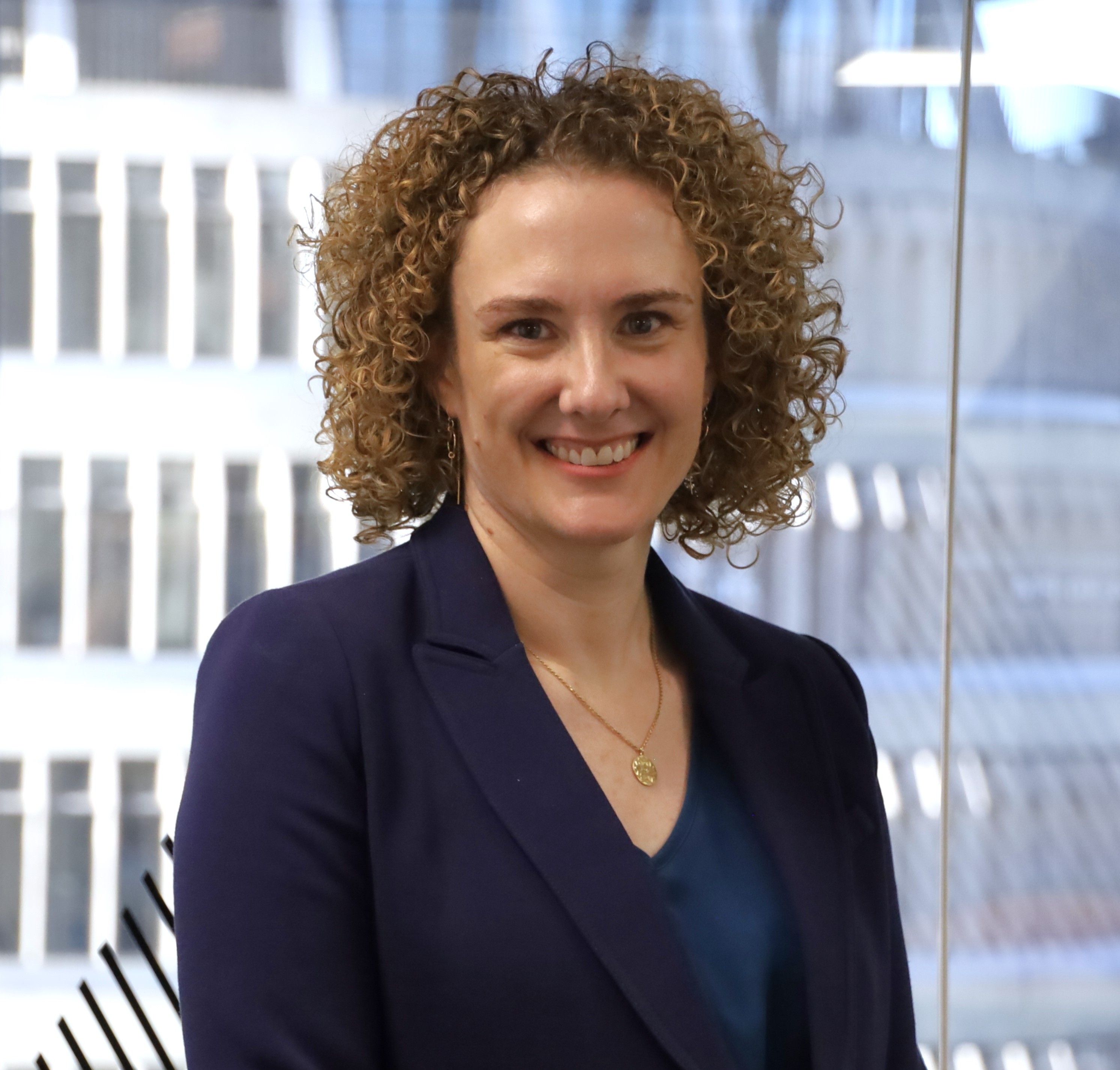
“It was very apt … the stars that navigated us to where we got to … and also the three groups,” says Lealamanu’a Aiga Caroline Mareko, community services senior lead for Piri’anga Alofa Pacific and Community Services.
But Toru Fetū is more than a name. It is a story shaped by community, carried within the vā between people, and expressed each day through the way tamaiti learn.
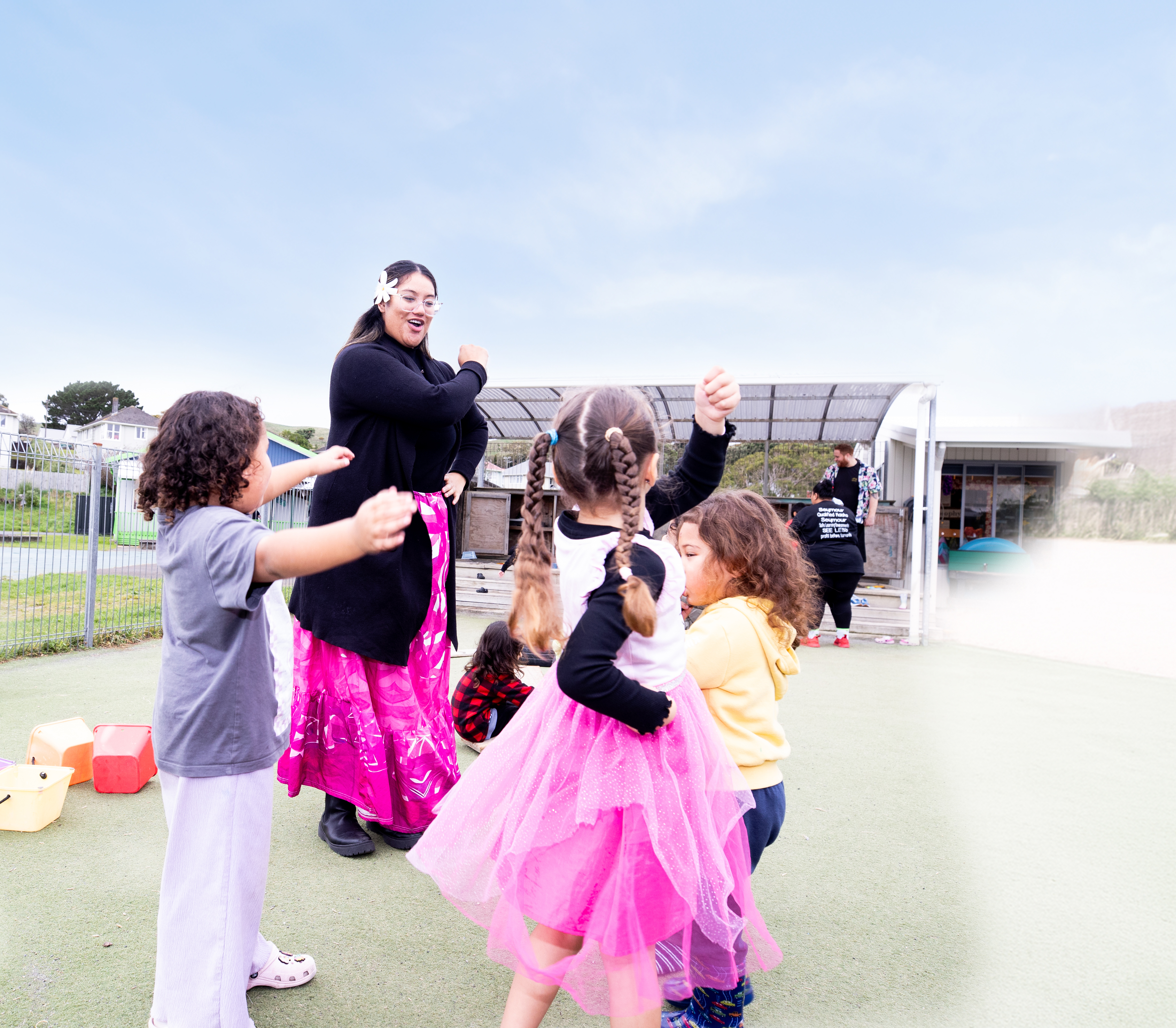
Texas (teacher aide and in training) and children are practising an item for an upcoming Te Kiwa Nui performance.
It started with playgroups
Before Toru Fetū opened its doors in 2010, there were three Pacific playgroups operating across Porirua; one for each of the Cook Islands, Tuvaluan and Niuean communities.
The women leading them were volunteers, driven by a deep commitment to keep their cultures and languages alive in future generations.
“They operated out of halls and classrooms and garages … around their own homes,” Caroline recalls. “And you don’t get paid to run playgroups … they were purely volunteers.”
Despite this, the work was rich and purposeful. Many of the women went on to train as teachers so they could continue supporting their communities in more formal settings.
“For our Cook Island women, they were in their 50s when they went to do their training,” says Caroline.
Over time, the three groups began to think about what might come next. They wanted something more sustainable.
The journey began in the mid-2000s, with the three playgroups exploring how they might move toward a licensed service together. Support from the Ministry of Education helped them take the next step, including early funding to get things started.
From there, the group chose to partner with what was then the Wellington Kindergarten Association (now Whānau Manaaki Kindergartens), to help bring their shared vision to life.
“It was a collective … people talking to people, relationships being established,” says Caroline.
Weaving three distinct strands
Bringing three Pacific communities together meant navigating difference, as each came with its own language, cultural practices and expectations of early learning.
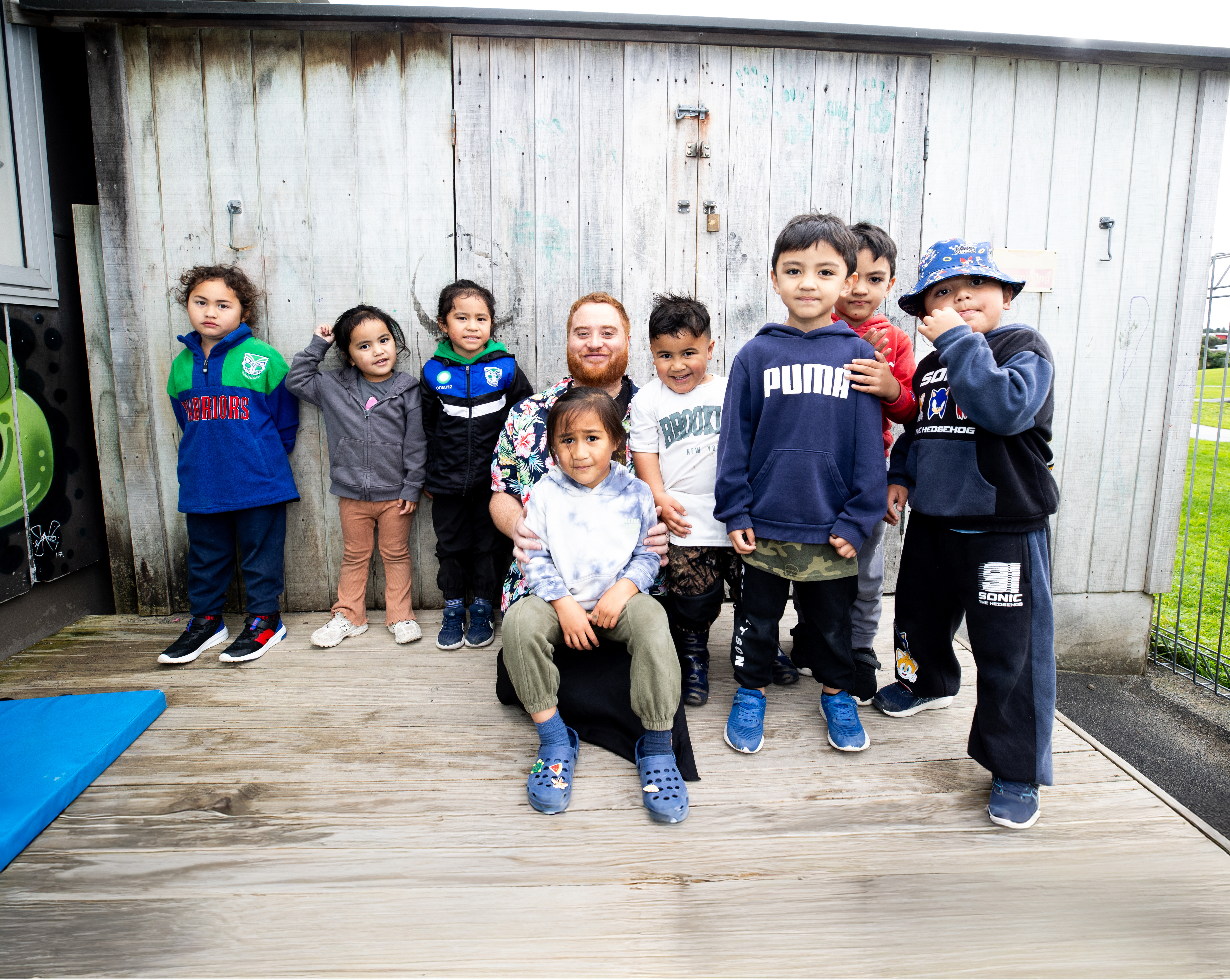
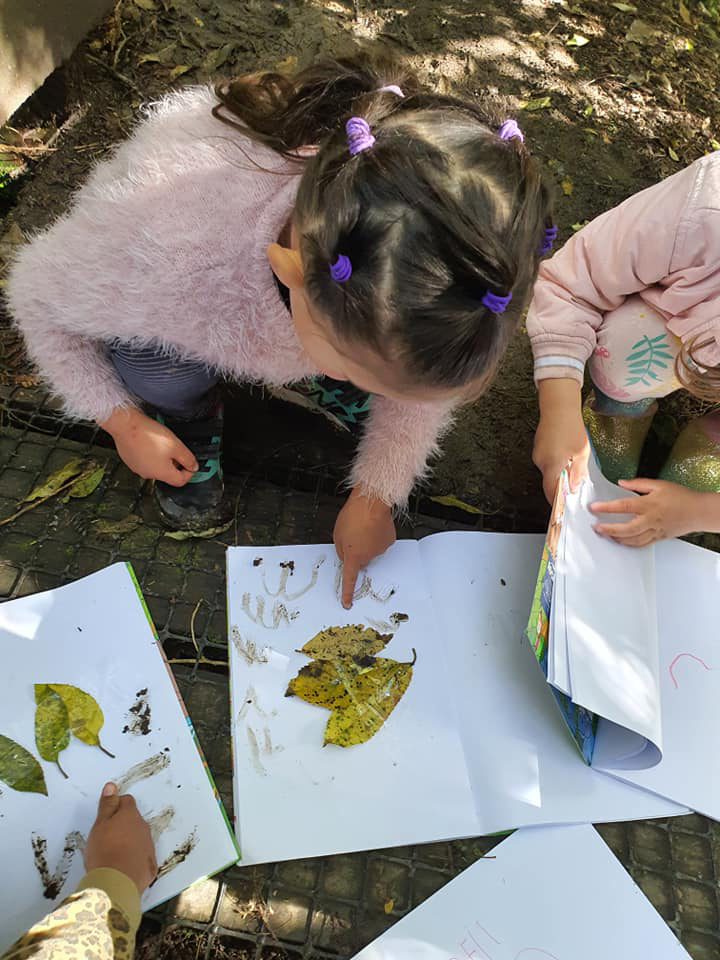
Kaiako Jared spending quality time outside with a group of children.
There were early discussions around things like language and cultural practice. In the Cook Islands nest, teachers and community acknowledged the different dialects of te reo Māori Kūki ‘Āirani but needed to choose one to lead teaching and learning. They ultimately agreed to use the dialect most common among them, Rarotongan.
For Tuvaluan families, there were strong views about play itself. “They were really adamant their kids did not play in the sand or water,” recalls Caroline, reflecting how expectations of learning looked different across communities.
At the same time, Niuean families placed high expectations on their language teachers to make sure their culture was upheld strongly within the space.
What held it all together was not agreement on everything, but ongoing talanoa and a clear commitment to each other.
A shared memorandum of understanding set out the values and expectations of each group, while also defining what they would hold collectively, including language, culture and Christian values.
It took around four years of planning, consultation and design before the centre finally opened in June 2010, with a newly appointed team of staff and a purpose-built space – the first of its kind in Aotearoa New Zealand.
Today, the centre has three rooms, or nests, around 20 qualified kaiako, four teacher aides, and two support staff. Together, they nourish and support 80 tamaiti each day.
A village of care
Step into Toru Fetū today, and the sense of togetherness is immediate.
The kindergarten operates as a mixed-age space, where babies, toddlers and older children learn alongside each other.
“We run a mixed-age whānau-based approach… we are all one,” says senior head teacher Trinity Coulston.
This creates a natural flow of learning and “there’s a lot of tuakana-teina,” says Trinity.
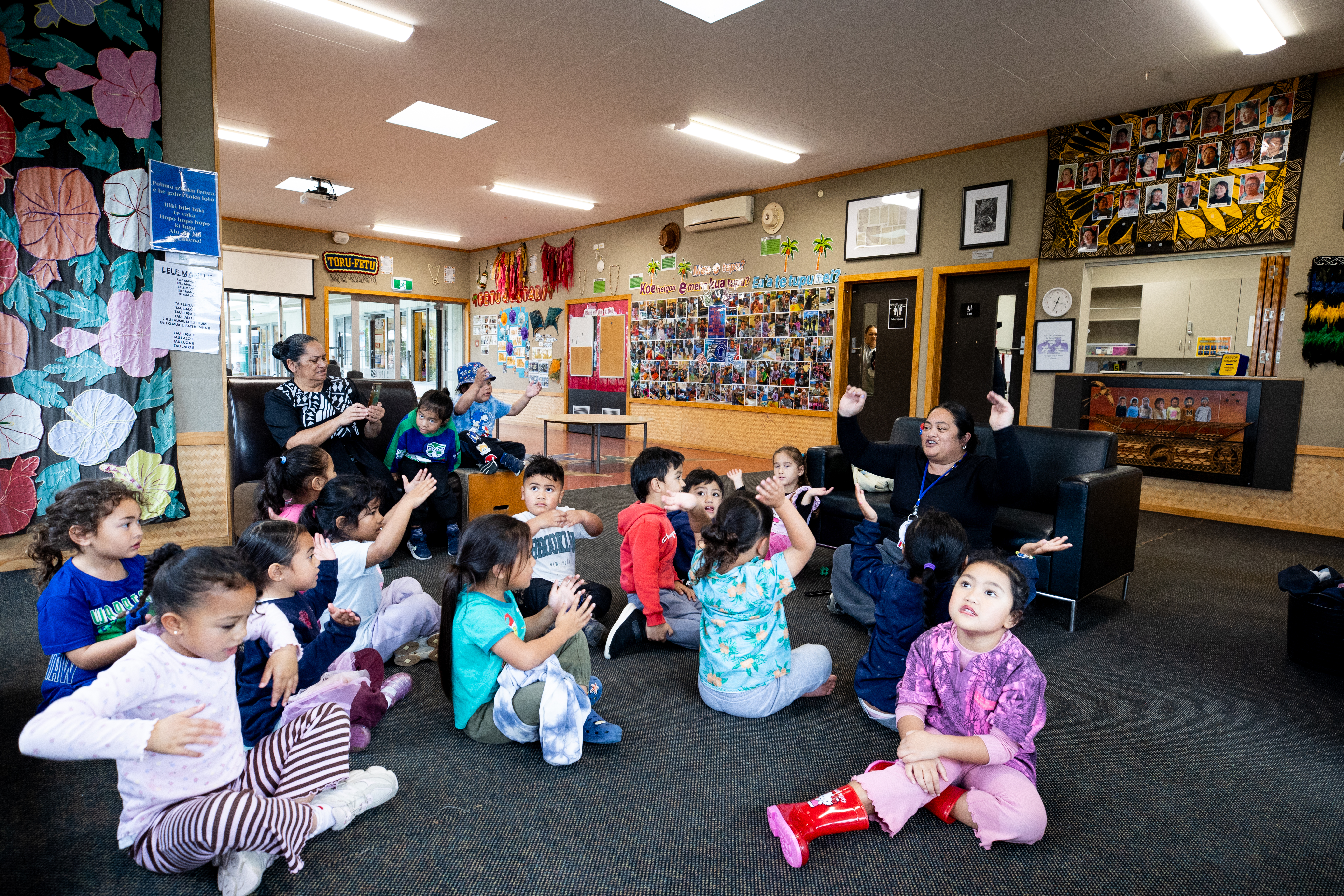
Kaiako Joy and Rima are singing songs together at Fetu Arataki.
For assistant head teacher Lana Nootai, this reflects familiar ways of growing up.
“It’s very much a Pacific concept as well,” she says.“We all grew up with our cousins … in grandparents’ houses.”
That sense of collective care extends beyond the children.
“It takes a village ... Every teacher here is for every child,” says Lana.
There is also a strong sense of holistic support around families. The centre has a dedicated community liaison role that connects families with health, learning support and other services when needed, recognising that children learn best when their wider needs are met.
“Because we know that if children come in here with their needs not met, they’re not going to be able to learn,” Trinity explains.
Three stars guiding the vaka
Leadership at Toru Fetū is shared across a three-way model, with each role carrying different strengths that work together to support children and families.
As senior head teacher, Trinity leads the day-to-day running of the kindergarten, while assistant head teacher Lana brings strong cultural leadership, guiding how language and identity are upheld across the spaces.
Alongside them is Ngaretta Strong in the dedicated community liaison role, focused on connecting whānau with wider services and making sure children are supported holistically.
“It’s not just one person doing everything,” explains Trinity. “We can support each other.”
This shared approach reflects the centre’s collective values, where responsibility is carried together.
For Lana, this leadership is grounded in service and representation. “I’m the hands, the feet, the ears, the voice of Pacific for Toru Fetū,” she says, describing the responsibility of holding culture closely in everyday practice.
Te Whāriki, woven with identity
Te Whāriki provides the foundation for learning at Toru Fetū. But here, it is not something applied in a uniform way.
Teachers draw on its principles and continually interpret them through the lens of their communities.
This has included careful unpacking of mainstream approaches and reshaping them so that teaching reflects Pacific ways of learning and relating.
“There’s a lot of good bits in the mainstream,” says Caroline. “But what does that look like in terms of our setting?”
This questioning has shaped their practice over time, leading to ongoing reflection and adaptation. One of the outcomes of this work is the development of the centre’s framework, Fetū Taonga.
“Our children are our treasured stars,” explains Lana.
Fetū Taonga draws on Pacific symbols, including the turtle, stingray, coconut crab (uga) and tavake bird, to represent different learning dispositions such as curiosity, resilience, leadership, nurturing and protection.
These symbols allow children to see their learning reflected in forms that are culturally meaningful for them.
“We want them to be able to see themselves,” says Trinity. “To see their dispositions within a cultural lens.”
For children, this brings learning to life and “opens up a whole new world for them”.
The framework sits alongside Te Whāriki, along with the Ministry of Education’s Tapasā and Whānau Manaaki Kindergarten’s Te Manawa, helping guide how teaching and learning are implemented in ways that are consistent and culturally grounded.
The rhythm of the child
At Toru Fetū, learning happens in the flow of the day, through relationships and shared experiences.
For babies, learning is grounded in connection and “through facial expressions and interactions… the nurturing of the teachers,” says Lana.
For toddlers, it is driven by curiosity. For older children, it grows into leadership and confidence.
“We build leaders in Toru Fetū,” says Lana. “They come out of here great leaders.”
Teachers describe their role as noticing, recognising and responding – following what Trinity calls “the rhythm of the child."
This means children are supported to take part in opportunities when they show readiness and interest, whether that is performing at Te Kiwa Nui, exploring their environment or taking on new challenges.
“You’re never told you’re too young,” says Trinity.
Spirituality and faith are also part of this daily rhythm, not separate from learning but woven through it in ways that are natural and familiar for children and families.
As Trinity explains, it is “not an isolated thing… it’s a part of everything,” lived through everyday practices like devotions, shared rituals and routines that children come to recognise and take part in.
Strong partnerships with families
Families and communities are part of learning at Toru Fetū. The centre places a strong emphasis on relationships with families, recognising that learning does not happen in isolation.
“We do serve our community a lot here,” says Lana. “We do work in partnership with our community.”
That partnership is grounded in a strong sense of service, which is something the team identifies as a core value in how they work alongside families.
In the early years, this partnership also included supporting parents to understand how learning happens in early childhood settings.
“They thought the kids just play,” recalls Caroline. “So we had to show them what learning in action is.”
Through workshops and everyday interactions, teachers shared how children develop skills through play, from literacy and numeracy to social confidence.
The doors to Toru Fetū are always open to families, who are welcome at any time, and their contributions are visible throughout the centre.
Grandparents play a strong role, coming in to share knowledge, support activities and participate in events.
“They give 100, 150, even 200 percent,” says Caroline.
From language weeks to shared excursions and celebrations, the learning environment extends beyond the classroom into the wider community.
Looking ahead
Sixteen years on, Toru Fetū continues to grow and evolve.
There is a strong awareness of the importance of sustaining language, culture and identity, particularly as communities change and face new challenges.
This includes the growing challenge of sustaining Pacific languages, even in homelands, and the need to continue building a new generation of speakers, teachers and leaders.
“It’s about how we preserve and continue the legacy,” reflects Caroline. “We’re doing our bit here … But we’ve also got to look out to the horizon.”
At the centre of that vision is a simple but powerful idea.
“We hope that here, we plant the seed,” says Trinity.
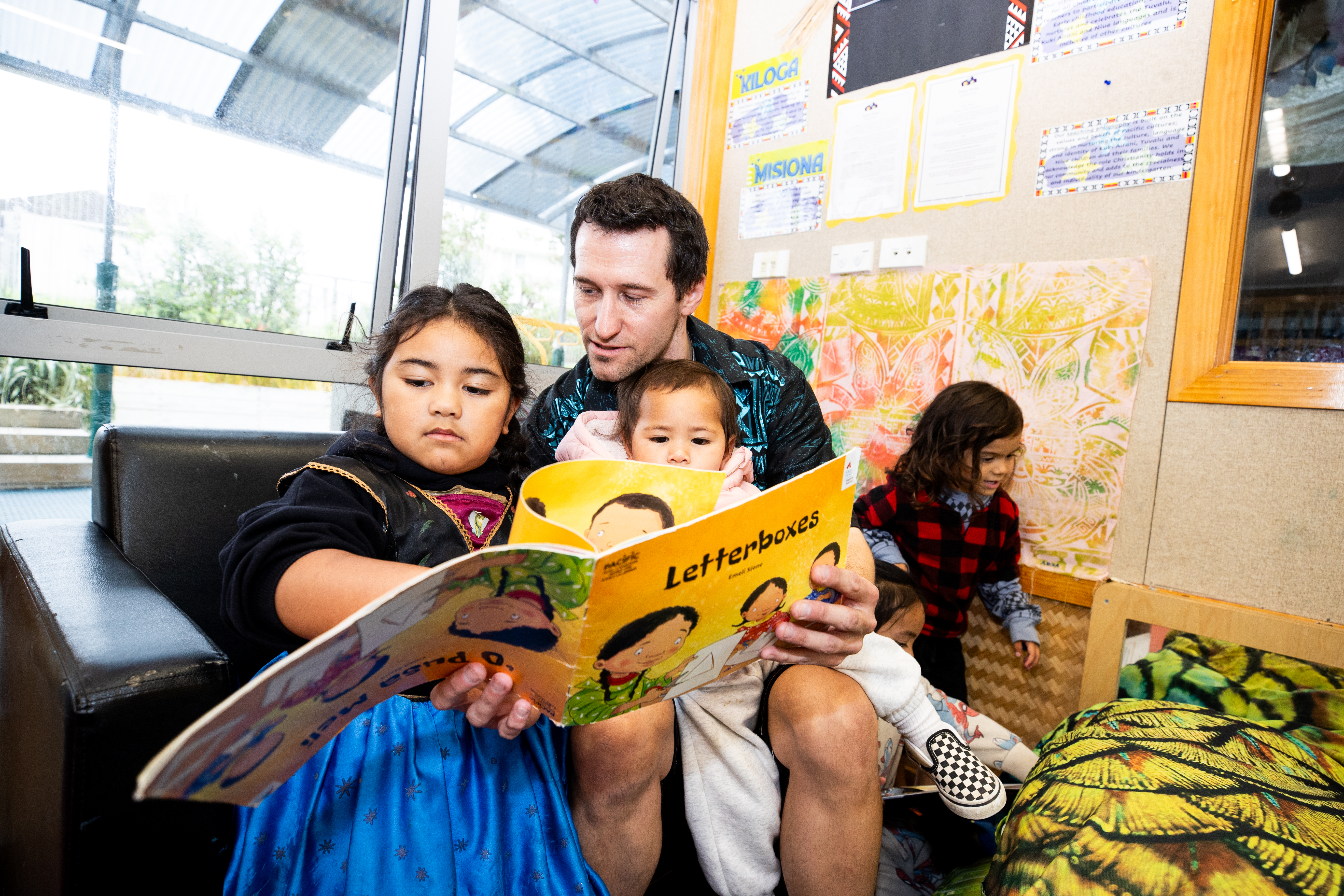
Kaiako Dean reading to Nora and Senitila.
Seeds of identity, belonging and confidence so children leave knowing who they are and carry that into the wider world.
At Toru Fetū, Te Whāriki is not just followed. It is lived, shaped and woven together to create a strong foundation for the next generation of Pacific learners to stand tall as themselves.
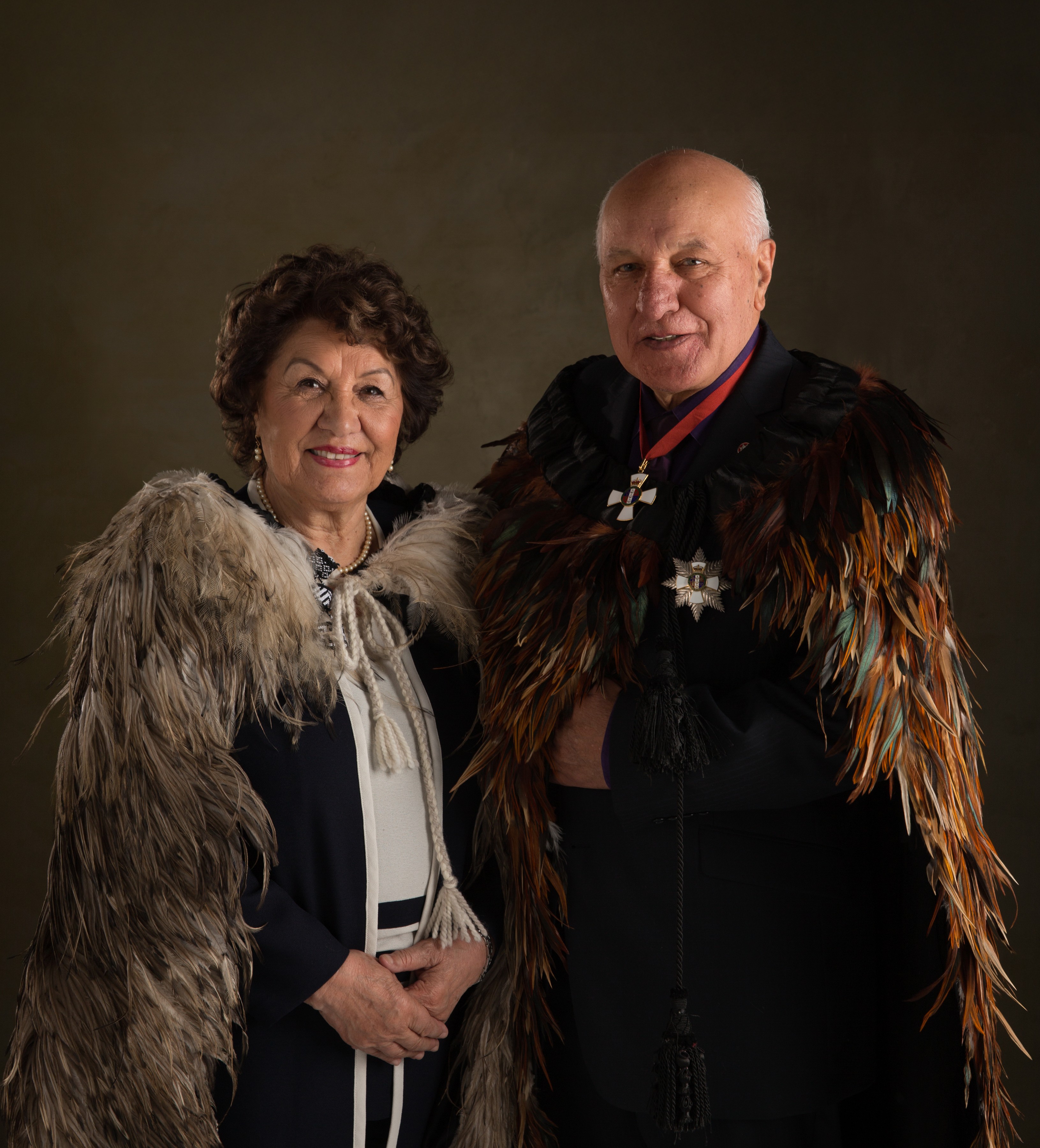
The team at Toru Fetū acknowledge the contribution of Tā Tamati Reedy and Lady Tilly Reedy, who were instrumental in the development of Te Whāriki. Their work made sure Pacific perspectives were included, so that communities like Toru Fetū could see themselves within the curriculum and shape it in ways that are meaningful for their tamaiti.