The kaiako elevating te reo Māori at Shirley Boys’ High School
At Shirley Boys’ High School te ao Māori is woven through everyday school life, from karakia in classrooms and house assemblies to strong whānau partnerships and student leadership. Kaiako Chez-William Waihi and Paul Peawini, supported by acting headmaster Rob Wilson-Pyne, are helping create a culture where Māori students can see themselves reflected, supported and inspired to succeed.
For many people, the opportunity to be a role model is one of the reasons they choose a career in teaching.
Although relatively new to the teaching profession, Chez-William Waihi says the role models in his own life have done more than inspire him, they have shaped the way he teaches.
“I try to lead from the front in how I want my students to be. Not just as Māori, but as students as a whole. So when they do go on to pathways post school, I’ve given them some words of wisdom, or a little bit of inspiration to succeed.”
Chez has been a teacher at Shirley Boys’ High School for just over two years, and senior leadership has already begun to see how important relatability can be for role models.
“The boys revere him; he’s young, but old in character. The boys really do look up to him, a young Māori man who is brilliant in what he does, and always supports them,” says Rob Wilson-Pyne, acting headmaster of Shirley Boys’.
In his short term so far at Shirley Boys’, Chez has already made an impact on the school’s nearly 300 Māori students, as well as the wider roll of around 1,200 students.
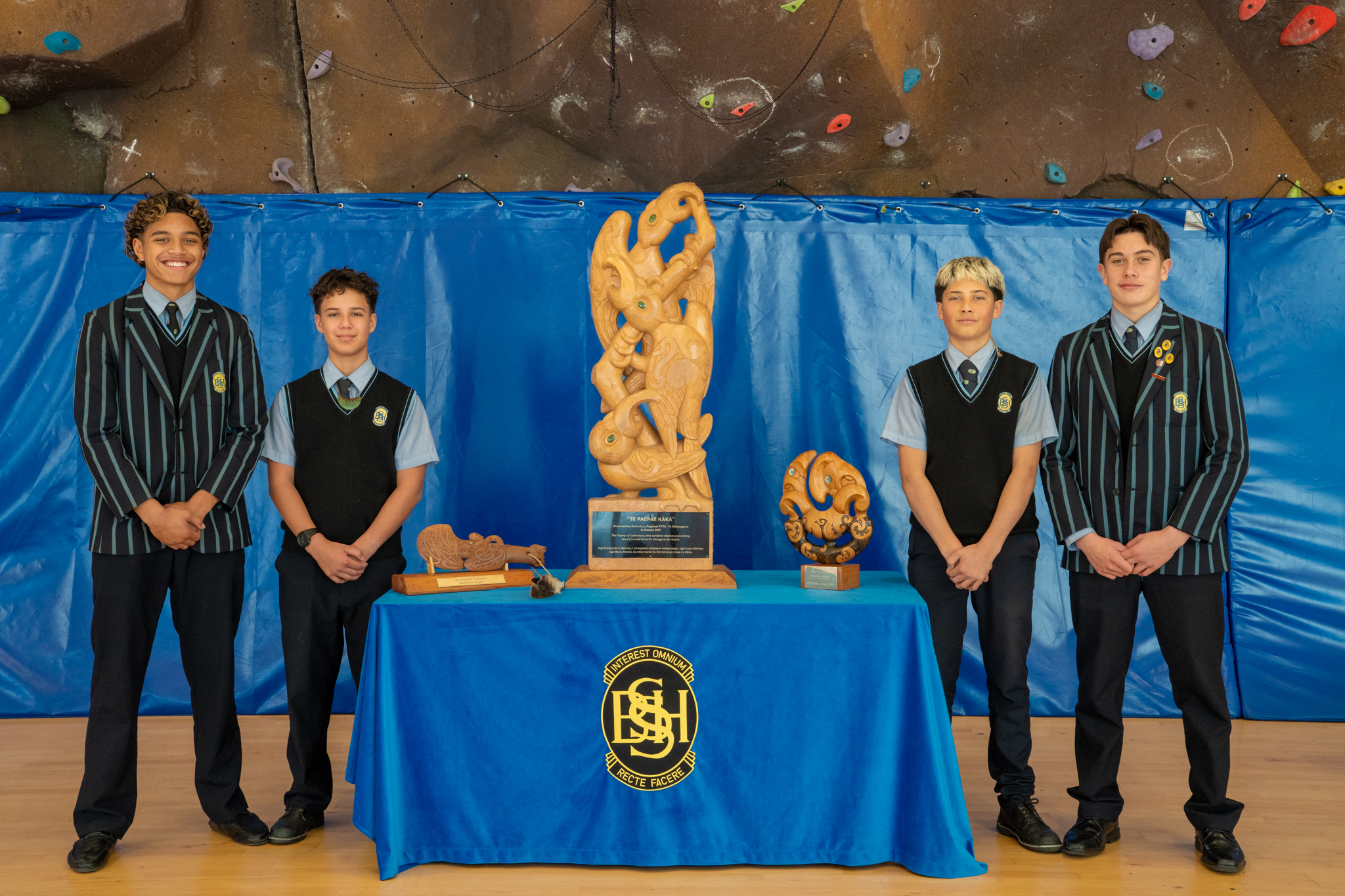
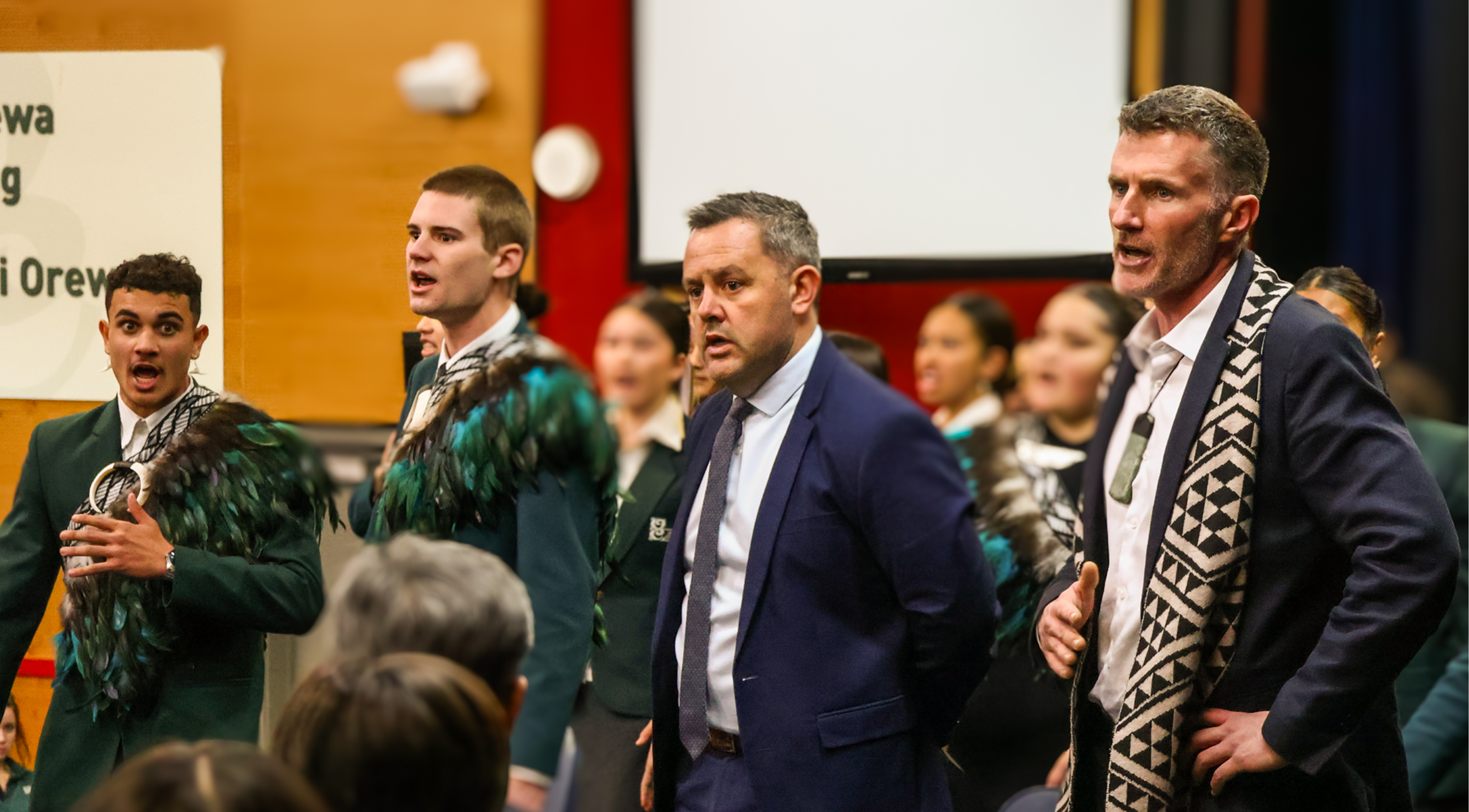
Shirley Boys’ tauira achieved outstanding results at Ngā Manu Kōrero 2026.
Role models in action
Kaiako Paul Peawini, known as Paora, was similarly influenced by the role models in his own life and now aims to help young Māori men become the best versions of themselves.
Mentored by Gilbert Enoka in his youth, Paora has always found success integrating te ao Māori into his physical education lessons.
Now having completed over five years at Shirley Boys’, he is able to look back and appreciate the strides his school has taken.
“From the principal down, our school really values te ao Māori in our spaces; it’s something that we’re really proud of.”
At Shirley Boys’, leadership doesn’t stop with staff. Many of the school’s senior students are becoming role models in their own right.
“This year our headboy is Māori. He’s been involved in our whānau form classes for five years. From a student perspective I am sure seeing someone come from the same kaupapa spaces as you and achieving so many things is really inspirational,” says Chez.
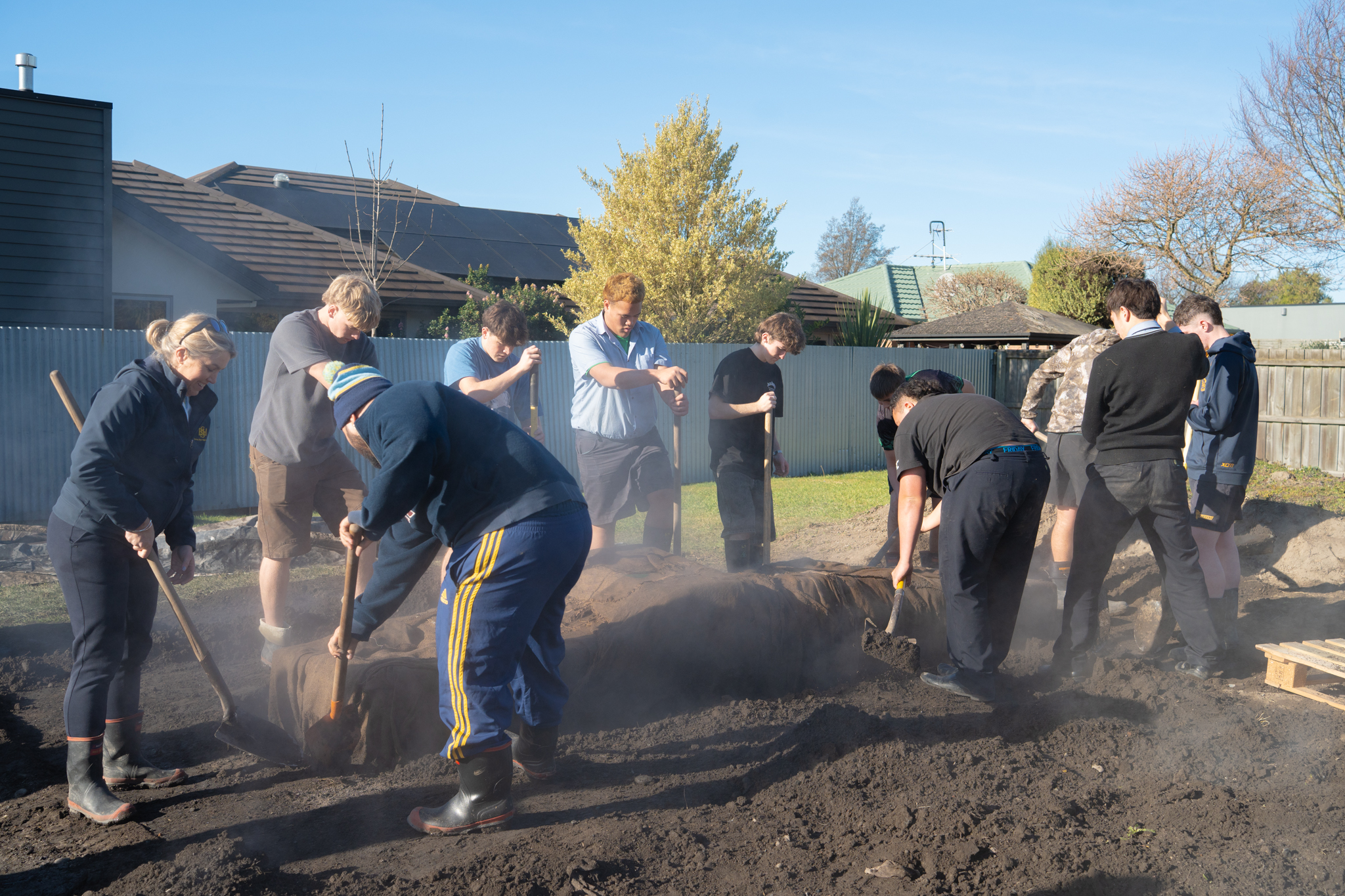
Coming together as a kura to celebrate Matariki with a hāngī.
Staff say many students are finding their own ways to weave kaupapa Māori into school life.
“Regardless of their background and what they bring, we listen to their ideas of leadership. We have had wellbeing programmes, kids going overseas, other initiatives, all set up by the boys,” adds Rob.
“We’re very fortunate to have a number of boys who have been wonderful leaders in our school. We’re very proud of all of our boys.”
Supporting fellow kaiako
Rob explains that most of the initiatives his students have set up are their own ideas, on their own accord, including the introduction of their school’s karakia into student-run house assemblies.
Rob believes the success of this integration stems from the way leaders encourage the use of te reo Māori and tikanga Māori without forcing it.
Paora believes knowledge and confidence remain two of the biggest barriers for some teachers wanting to incorporate more te ao Māori into their practice.
“A lot of it is confidence; once they get that basic confidence then it starts to become a natural, normal part of their day.”
Both Paora and Chez remark that, in some sense, they believe they could still be doing much more to increase the knowledge and confidence of their fellow teachers.
“I think that’s somewhere my role could improve – the professional development of others. It’s hard to remember sometimes that some people want to help more, but they don’t know how,” says Paora.
“A lot of staff do come to me on their own terms, to ask for guidance. But I think I could be a bit more forthcoming in order to help some teachers understand more,” says Chez.
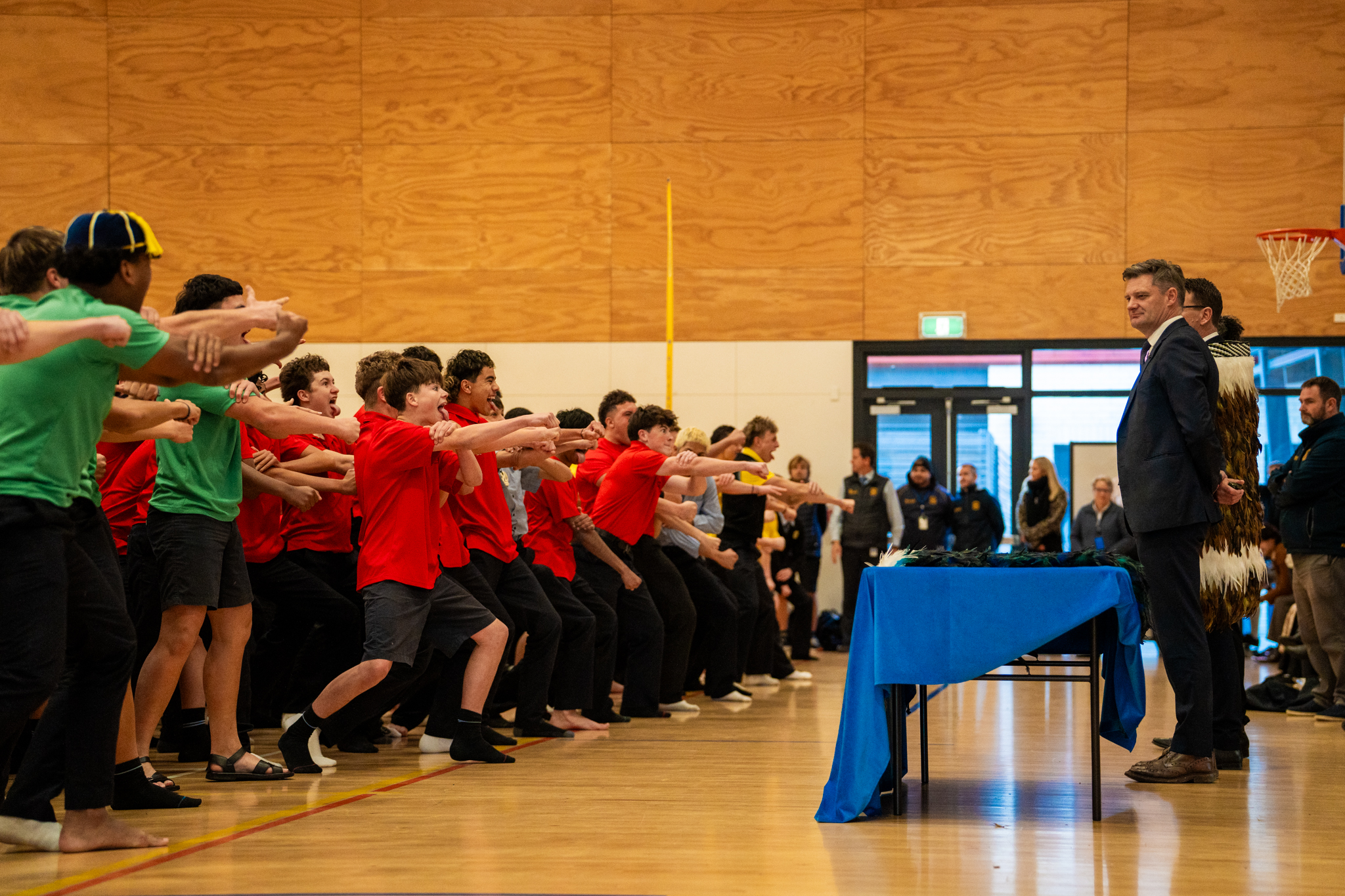
Students take part in a haka competition between houses.
Rob is proud of his team and points out the lengths both of these teachers have gone to in order to integrate Māori culture and language throughout Shirley Boys’.
“We hear karakia being recited by the department members regularly, it’s beautiful. Chez is younger, but like I said, he has the wisdom of a man above his years.
“Regardless of what they can or cannot be doing more of, all of these teachers are extremely proud of where their school is at, and where it is headed.”
Connections with whānau
The impact of kaupapa Māori at Shirley Boys’ extends beyond the school gates and into the wider community.
“I have two boys here too. I tell my wife that our boys are in good hands. The languages, the practices and the role models at the school are incredible,” says Paora.
Often holding hui nights with whānau of students to get to know them better, Shirley Boys’ takes the time to understand and acknowledge their feedback and aspirations.
Many parents are incredibly involved in some extracurriculur activities at the school, especially assisting and even coaching the kapa haka.
“But not just only in our haka spaces; that’s really just the way it is across all our families. They have always been incredibly supportive. We’re really lucky with the parents we have,” says Rob.
“We get many students who join us straight from bilingual or full-immersion. They are usually concerned that their kid might lose the skills they’ve gained from those schools.”
Building trust with those whānau, and the students themselves, is an important part of the school’s approach.
“Some of those boys are really nervous, their parents too, so it’s just gaining their trust and showing them we can still provide everything they need,” says Rob.
Looking beyond the school gates
The team is also looking beyond Shirley Boys’, with ambitions to strengthen engagement with te ao Māori both within their own school and across the wider education sector.
Paora says they have goals and plans to take their Māori education to a higher level and have already begun connecting with other schools in order to achieve this.
“We know we are not the pinnacle. Chez is connected to Hastings Boys’, and they are connected to other kura – they’ve been doing stuff that we have wanted to for many years,” says Rob.
With high hopes for the future, the teachers of Shirley Boys’ are excited to expand their success across New Zealand.
"Years ago they did fantastic work as well, creating things, but keeping it to yourself. Whereas now we share knowledge, help everyone succeed.”
As members of the South Island Boys’ Network, the team sees collaboration as essential to lifting outcomes for all ākonga.
As Chez puts it, “We are of the view that if we can help other people be better, then it’s going to make us better. Anything that helps us, and also raises the bar of what we can achieve, is good.”