Strengthening values to strengthen belonging at Rapaura School
With more than 150 years of history, Rapaura School in Marlborough has revisited its core values, school vision and logo to create a sense of belonging for ākonga. These are now connecting values to everyday learning.
Seven students first attended Rapaura School when it opened in 1862. Now, the rural school near Blenheim is a community serving 110 ākonga and their whānau.
Students are at the heart of Rapaura School’s new logo.
“This was the first school we went to, and it just felt right to be here,” senior student Max remembers. “I started here as a Year 2. When I got here, I was really nervous, but then I realised that everybody here was really nice and kind, so I felt like I fitted right in.”
Belonging that starts with community
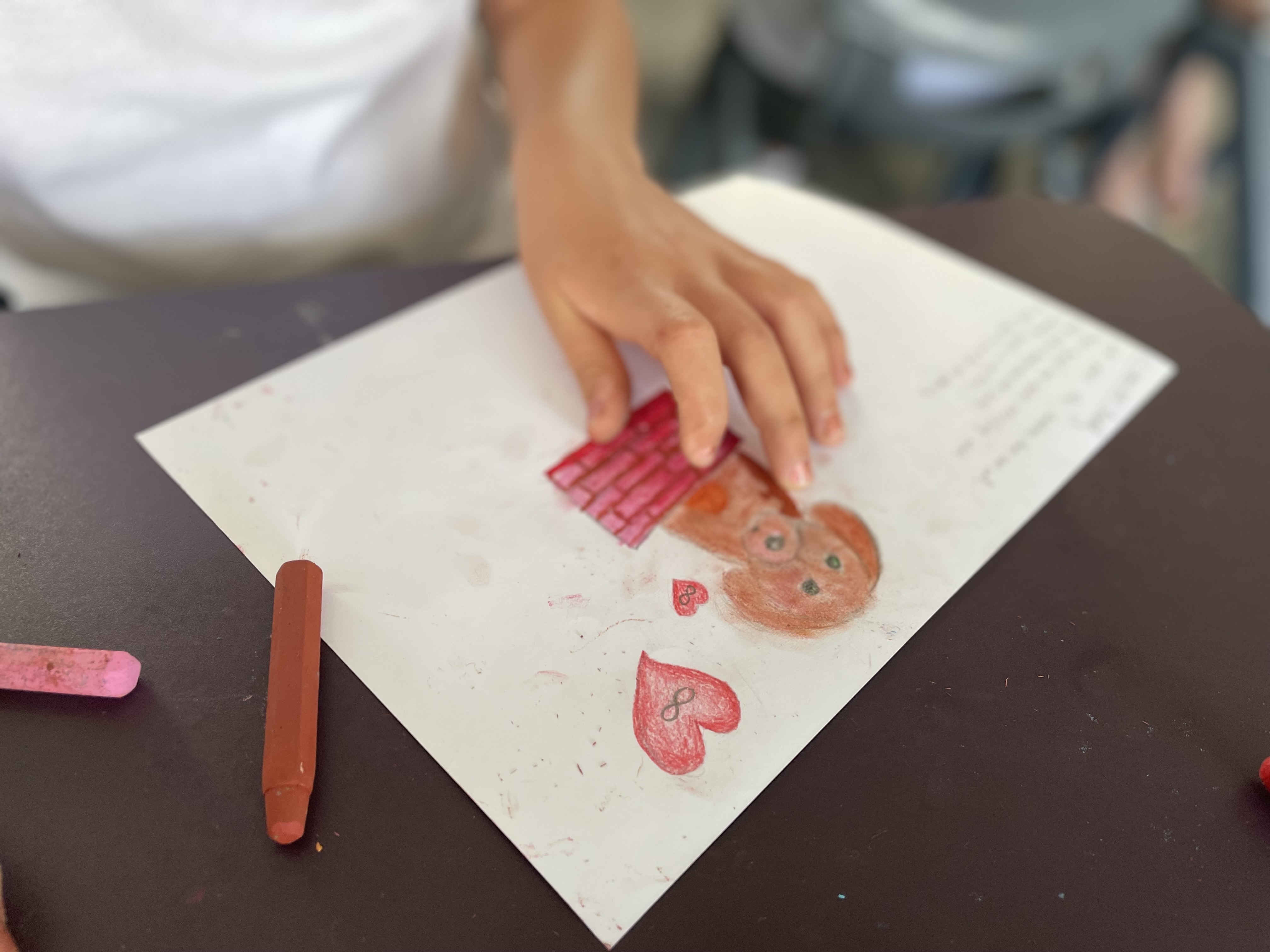
Students were invited to submit their own ideas for the logo in a schoolwide competition.
The winning designers, including student Tamatea, met with local graphic designer Leanne Hayes, who created the final logo from their creations.
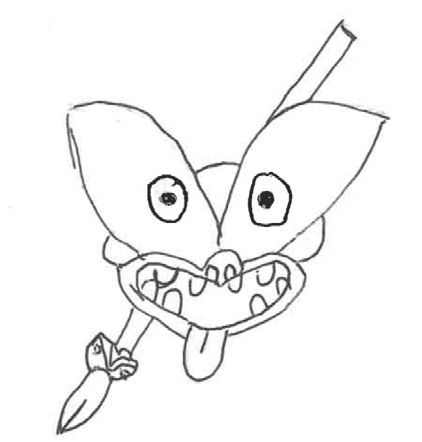
Student Tamatea was inspired by the taniwha on Rapaura School’s taiaha.
“I was inspired by the taniwha on our school taiaha,” says Tamatea. “I came up with the idea that the taniwha was the protector of our school.”
The taiaha were gifted to the school by former students, Dylan and Chase, explains Carey. “We held a mihi whakatau in 2023 for the taiaha, which was attended by Te Rūnanga o Ngāti Rārua Pouwhakahaere Shane Graham.”
Manaakitanga, kaitiakitanga, manawaroa and kotahitanga were adopted as the school’s new values. They now form the foundation of a student’s learning and symbolically sit at the base of the new school logo.
The values are represented as a koru and all elements enclosed in a protective circle, “representing the partnership between whānau, staff, the board and the wider community, all working together to create a high-quality learning environment that fosters high achievement and positive behaviour”, says Carey.
The six larger leaves integrated into the design represent the key competencies incorporated in all inquiry learning, planning and teaching.
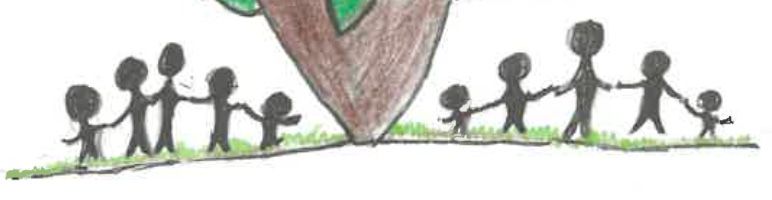
The historic tree within the design signifies growth and represents the generations of families who have attended Rapaura School in the past 150 years.
“We are developing these as part of the curriculum review and work to connect what we believe is fundamental to a whole child’s development and the Government’s priorities.”
Rapaura School also revised its whakataukī to be ‘Poipoia te kākano kia puāwai’, or ‘nurture the seed so it will grow.’
Belonging through positive behaviour
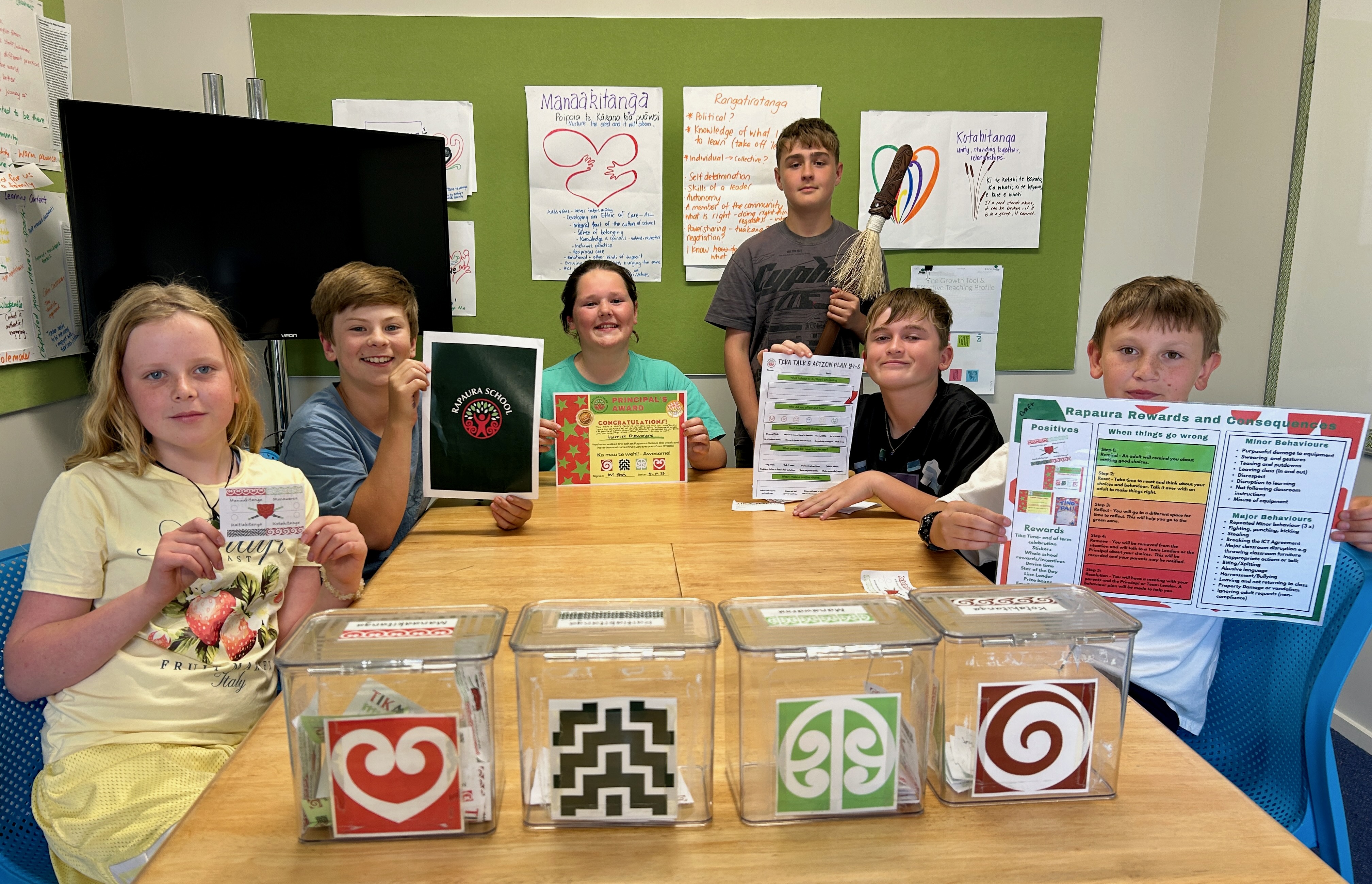
Tamatea’s taniwha design inspired the ‘Tika Token’, which encourages positive behaviour, student leadership and fosters a sense of belonging through peer nominations for actions that reflect the school values.
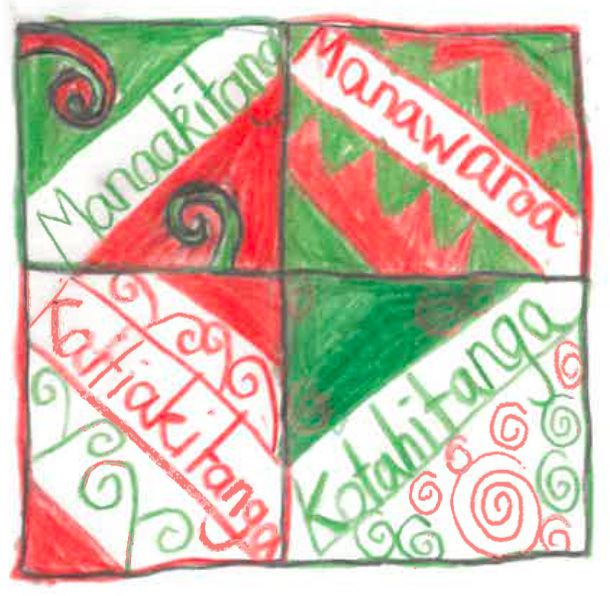
The Tika Token connects values and learning
“The four values relate to the Tika Token,” explains Tamatea. “Depending on what you do, there’d be a different value you’d be appreciated for.”
Students write Tika Tokens for each other and the teachers, adds Isabella, who has nominated a few people for “being really good at including others” in her class, under the value manaakitanga.
“They choose a school value and nominate someone for doing something really good for the school – like picking up rubbish is kaitiakitanga.”
Carey says all aspects of behaviour across the school are linked back to how students are showing manaakitanga.
“How are we caring for each other, working in teams, during play times and off-site activities?”
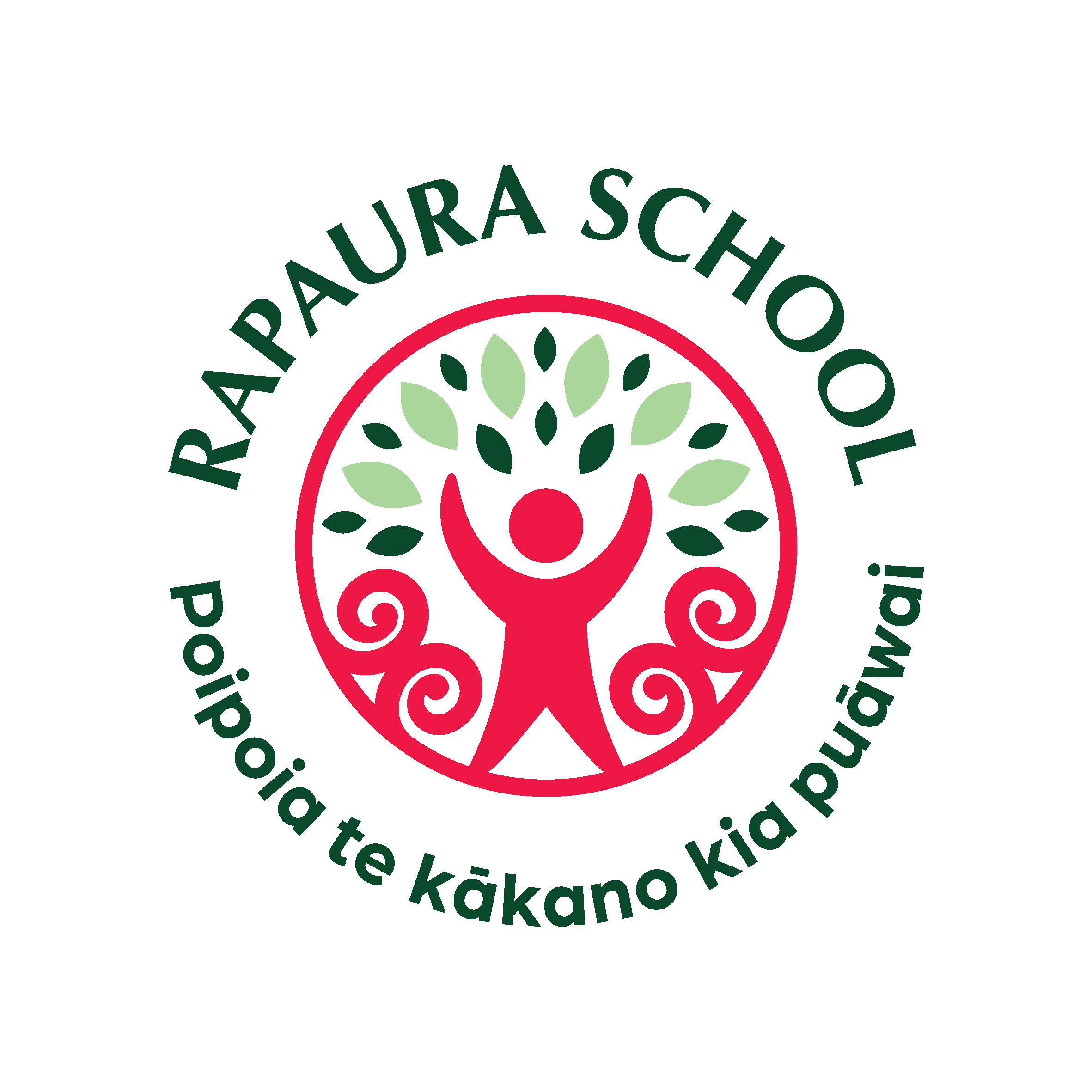
Rapaura School's logo
Max adds that manawaroa – resilience – is also an important value. “If you go on a path and get knocked off, you try to find your way back onto that path again.”
The initiative extends to the Tika Talk Action Plan. Going to get themselves a plan allows students time to “calm down and get in a better mood”, student Liam explains.
“You reflect on how you’re behaving and how it affects others, and tell the teacher what you’ve done and what you can do to make it better. It’s really helped me.”
Student Harriet says there’s also a chart of rewards and consequences, where green can lead to awards and Tika Tokens, and red can lead to whānau being contacted.
Harriet herself was awarded a principal’s award at the last assembly. “I displayed manawaroa and achieved my goals. I felt really good, very proud of myself,” she says. Carey adds that Harriet was leading the assembly that day. “So, it was extra special. She was showing all those leadership qualities at assembly.”
Belonging through empowerment and possibility
When students first step onto Rapaura School grounds at age five, they immediately become kaitiaki of the school’s values, learning the same language that applies to both learning and behaving in class.
As students grow, they bring this same language into their leadership positions, such as leading the assembly or running events.
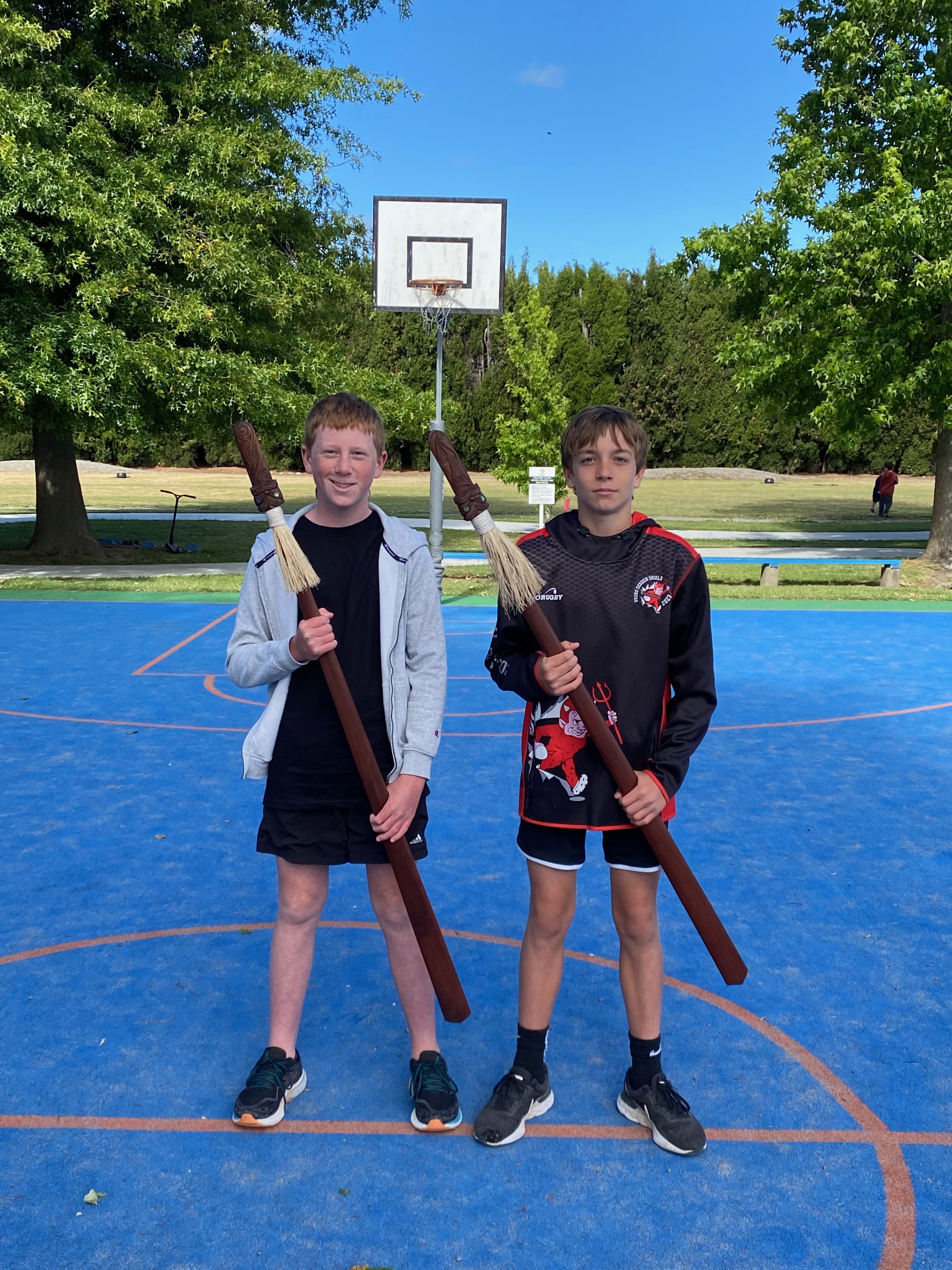
The taiaha were gifted to the school by former students, Chase and Dylan, pictured in 2023.
The student kaiwhakahaere are selected by their fellow students. “This gives a sense of empowerment and possibility for the younger students,” says Carey. “We’re often consulting and talking about what’s happening in the school; adults aren’t making all the decisions.”
Student Thomas says letting students make those decisions meant he’s felt able to step up as a role model and taken the lead in events such as Gumboot Friday.
“It’s much better because I get to make some calls.” Carey explains that by seeing themselves and their culture in the school environment, the students feel like they belong to the school.
“We turn the curriculum into something the children will have success with, linking it to our school values, so they feel confident and are empowered to be happy and have good lives in the future.