Bilingual education builds belonging for ākonga at Sutton Park School
Sutton Park School in Māngere, Tāmaki Makaurau, is a hub for Pacific and Māori bilingual learning. There, identity, language and culture drive student success, stronger engagement and attendance, and show how bilingual education empowers ākonga to thrive in both worlds.
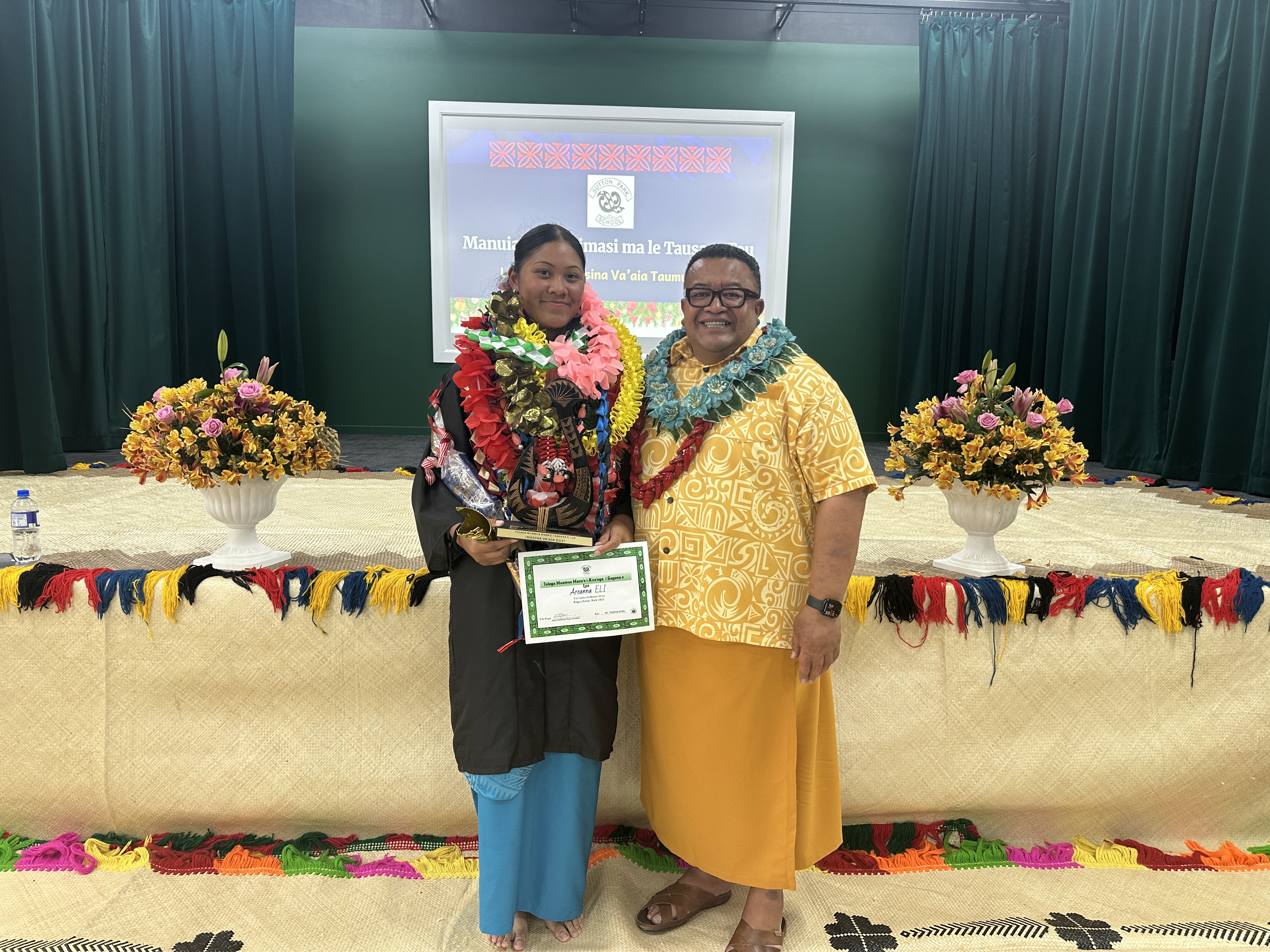
As Sutton Park School senior student Areanna stood in front of the crowd gathered for the national final of the FAGASA Speech Competition, she felt the emotions of knowing she wanted to make her parents proud.
And make them proud she did. After winning the annual Samoan speech competition at school, then coming third in Auckland, she placed second in the New Zealand final. It had been her last opportunity to compete at intermediate level, after coming third equal at national level in 2024.
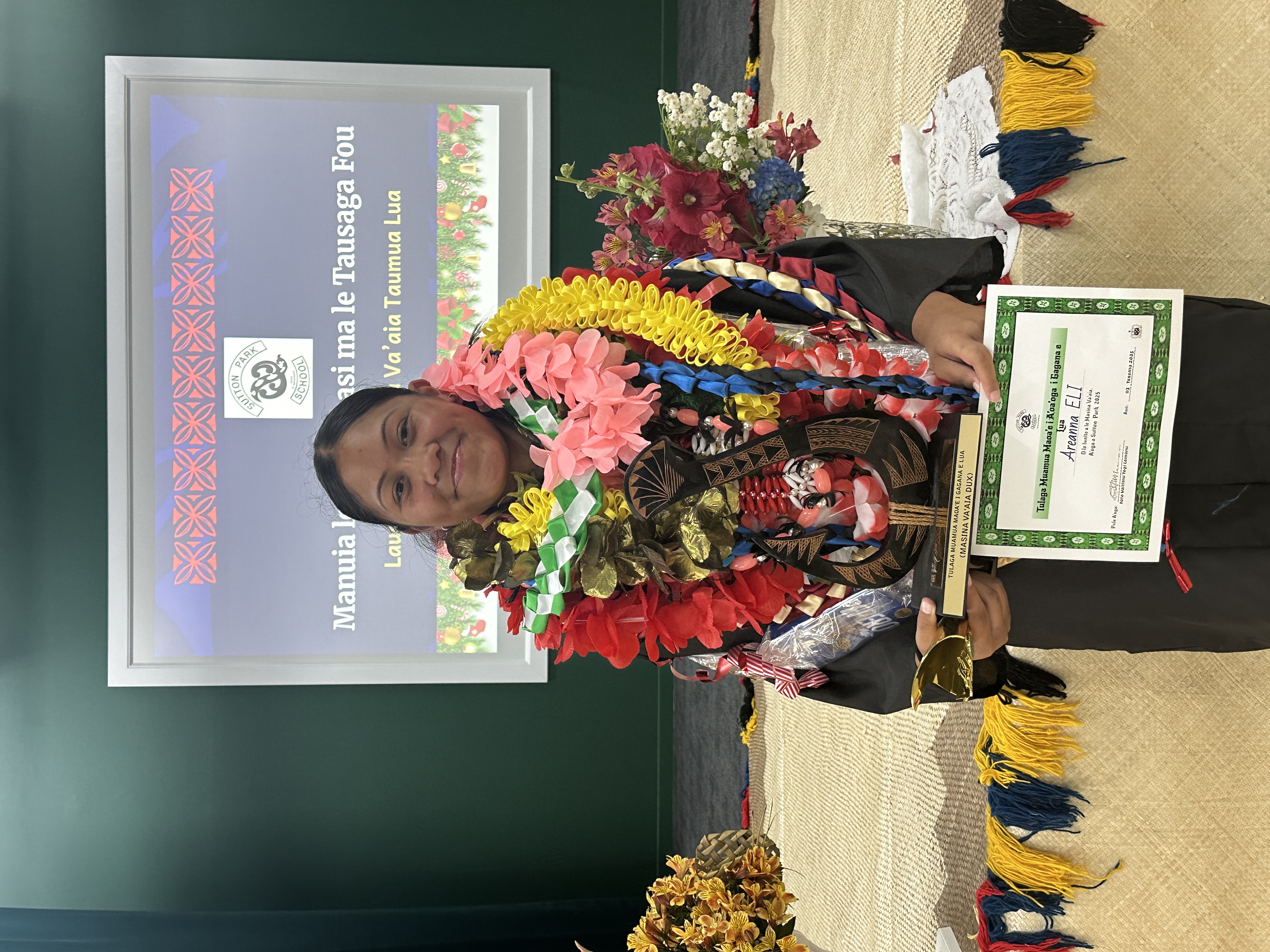
Sutton Park School student Areanna won many awards for public speaking in Samoan and English.
“I knew that either way they’ll be proud of me for my achievements throughout my past four years,” says Areanna.
Those four years of speaking achievements were at Auckland’s Sutton Park School, where Areanna attended the Samoan bilingual class from Year 5 onwards.
She started entering speech competitions after her teacher asked her to give it a try.
“She gave me the opportunity of doing my speech and she helped me to write it. And she didn’t just help me write it, she helped me understand my speech and ever since then, I knew that I loved doing speeches. I loved talking in front of huge crowds.”
Areanna’s speaking skills in both English and Samoan – the language of her family – were further polished at school for welcoming speeches to visitors and during ceremonies.
“There were just a lot of opportunities that I got to speak my language.”
Sutton Park School principal Fata VaitimuTogi Lemanu says Areanna arrived with a grounded knowledge of both the Samoan and English languages. This, along with her confidence, made it easy for the bilingual education model to extend and support her to become a leader and succeed in speeches in both languages.
“The pinnacle moment was when she won the overall Auckland Champion of Champions speech competition in English. That just comes with the confidence of knowing who she is.”
A growing hub of bilingual education
Sutton Park School in Māngere provides Pacific bilingual and immersion education in Gagana Sāmoa, Lea Faka-Tonga and te reo Māori.
Fifteen of Sutton Park’s 23 classes are bilingual. The Tongan bilingual unit, Sia Ua, has nine classes from Years 0 to 8. The Samoan unit, Masina Va’aia, has five classes and the Rumaki Reo unit has one. The remaining classes are English medium.
“We’re kind of a bilingual hub for Māngere,” says Fata Vaitimu.
Born, bred and educated in Māngere, Fata Vaitimu taught at primary and secondary levels before becoming deputy principal at Sutton Park. After seven years in that role, he became principal three years ago.
“I just wanted to give back to the community where everything started for me.”
As a first-year teacher in 1999, Fata Vaitimu taught in a bilingual unit at Sir Douglas Bader Intermediate. He learned early on it was important to bring whānau on board by building understanding of what bilingual education looks like.
“It’s using both languages to deliver the New Zealand Curriculum. Once they got their heads around that, all their mindsets around understanding what bilingual education was, our classes flourished.
With that in mind, Sutton Park School held 10 trial sessions around bilingual education for parents. As a result of fostering this understanding, the school has the support of the community, Fata Vaitimu says, and a high number of students are enrolling from out of zone
Bilingual education boosting confidence and attendance
Elizabeth Keresoma is Lead Advisor, English, Languages and Pacific at the Ministry of Education. Her focus is specifically on bilingual education and she supports schools with starting a unit to maintaining and sustaining it.
Elizabeth also provides support such as access to professional learning and development, and resource development to support the implementation of the curriculum in Pacific bilingual and immersion settings.
She says the number of bilingual units is growing, with most being opened by those who participated in Reo Moana professional learning development.
“They just recognise the strength and importance of bilingual education for Pacific learners.”
The achievements of ākonga like Areanna are great examples of that strength, she adds. “Performing well in both their Pacific languages and English medium speech competitions showed how bilingual and biliterate the students are.
“They can be successful in both worlds. Bilingual units build on the strengths that the students bring.”
Sutton Park School student Areanna was named 2025 dux of Masina Va'aia, the school's Samoan bilingual unit, as well for English medium. She is pictured with principal Fata Vaitimu Togi Lemanu
Sutton Park works with three other schools to build bilingual education. Elizabeth hopes those sorts of relationships will continue to grow through visits and shared expertise.
“Other than the academic world, it’s our leaders and teachers in those settings who hold the knowledge and the skills and the expertise to be able to carry out their teaching and learning and design appropriate curriculum programmes for their learners here.”
Fata Vaitimu says the bilingual model helps ākonga better engage and understand what they are being taught.
“It’s that switching of the languages. If they don’t understand one, they can switch if they wish.
“Once again I always have to go back to the teachers and how competent they are and proficient they are in the language.”
He has seen how the setting boosts confidence among ākonga, as well as attendance, which he says is high in the school’s bilingual units.
“So once again it’s that we get better engagement because of both languages that are used.
“Ākonga become confident in themselves and they’re fully engaged, more engaged in the teaching and learning of the different learning areas and the school."
Building belonging to build achievement
The vision behind creating bilingual units around Aotearoa was to promote a strong sense of belonging, says Elizabeth.
“It’s about achievement and it’s also about the identity, language and culture of the students and supporting that growing, nurturing it and strengthening as they journey through our school system.”
Fata Vaitimu agrees that identity, language and culture play a vital role in their school and others.
“Those are the three core values that we instil in our students in the units and it’s really successful.”
Elizabeth says bilingual settings can share not only the same language as students may speak at home, but also the same values and expectations.
“So when they come to school, it’s just continuing that same behaviour, same expectations and it’s not something new for them.”
That familiar environment provides students with the confidence to learn and ask questions, says Elizabeth.
“They focus on growing their understanding, their knowledge, their skills and engage in practice that they are familiar with. And that challenges them to make those next steps and progress well.”
For Areanna, those next steps are now at high school, which she started this month. Inspired by the teacher who helped her with her very first speech, she hopes to go on to university to study teaching.
She is grateful to have had the opportunity to learn in a bilingual setting.
“It’s helped me discover more about my culture, especially about who I am."