Mind over matter: Wairarapa schools dominate Tournament of Minds
Wairarapa dominated Tournament of Minds last year, with three schools from the region representing New Zealand at the international final in Australia. Their success at the annual problem-solving competition was down to a powerful combination of preparation, shared expertise and a strong culture of regional collaboration and tuakana-teina partnership.
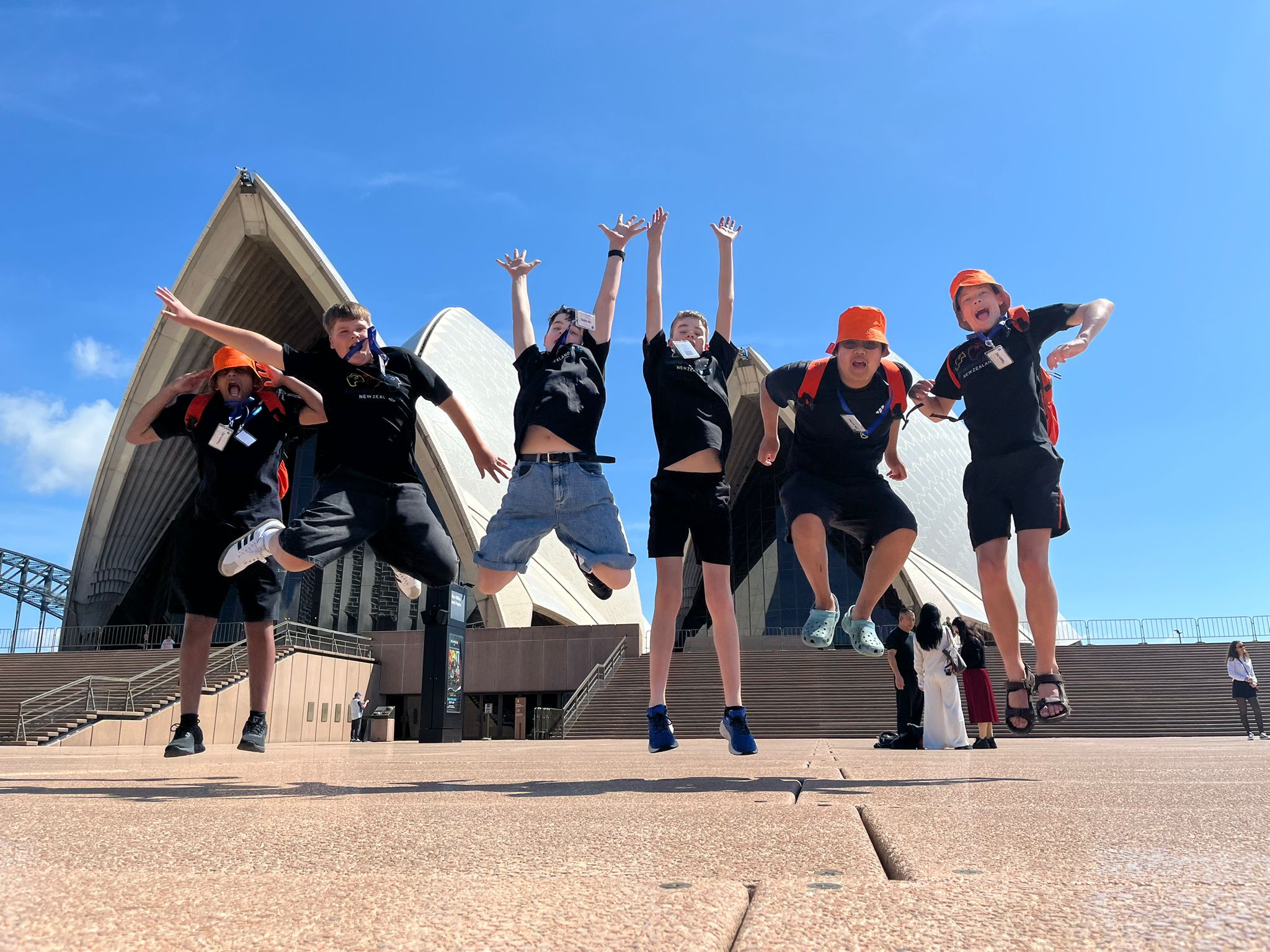
The Rathkeale College team in front of the Sydney Opera House before the finals: Moksh, Xav, Atticus, Oscar, Brenden and Ethan.
Last year, Tournament of Minds Aotearoa NZ co-director and teacher Ruth Olds wasn’t sure if she could facilitate a team for her school like she normally would. Having just started teaching in secondary at Rathkeale College after almost 20 years in primary, she felt she should focus on finding her feet.
“Tournament of Minds (TOM) is one of those things that really needs passionate, committed teachers to get it going in a kura – kind of like launching a new sports team with the right coach and manager behind it.”
Ultimately, Ruth’s many years of involvement in the international problem-solving competition won out.
“After getting to know some of the Year 9 and 10 students, it was clear there were so many potential TOM stars, and I couldn’t let that go to waste.”
TOM is an international creative, critical and collaborative problem-solving competition. At national and international level, participants have three hours to solve a challenge, which they present to judges in a 10-minute dramatic performance with presentation skills, such as costumes and props. There is also a ‘spontaneous challenge’, where the team of five to seven students has less than five minutes to solve a quick challenge using out-of-the-box thinking.
Challenges are presented to a panel of judges and assessed against rigorous criteria.
“TOM aims to enhance the potential of students by developing diverse skills, enterprise, time management and the discipline to work collaboratively within a challenging and competitive environment,” says TOM Aotearoa NZ director Jocelyn Pollock.
Teams at primary, intermediate and secondary levels in Years 5 to 11 compete in one of four disciplines: Language Literature, Social Sciences, STEM, or The Arts.
“We promote a team activity that thrives on overcoming challenges and values creativity, originality, diversity, respect and encouragement,” says Jocelyn.
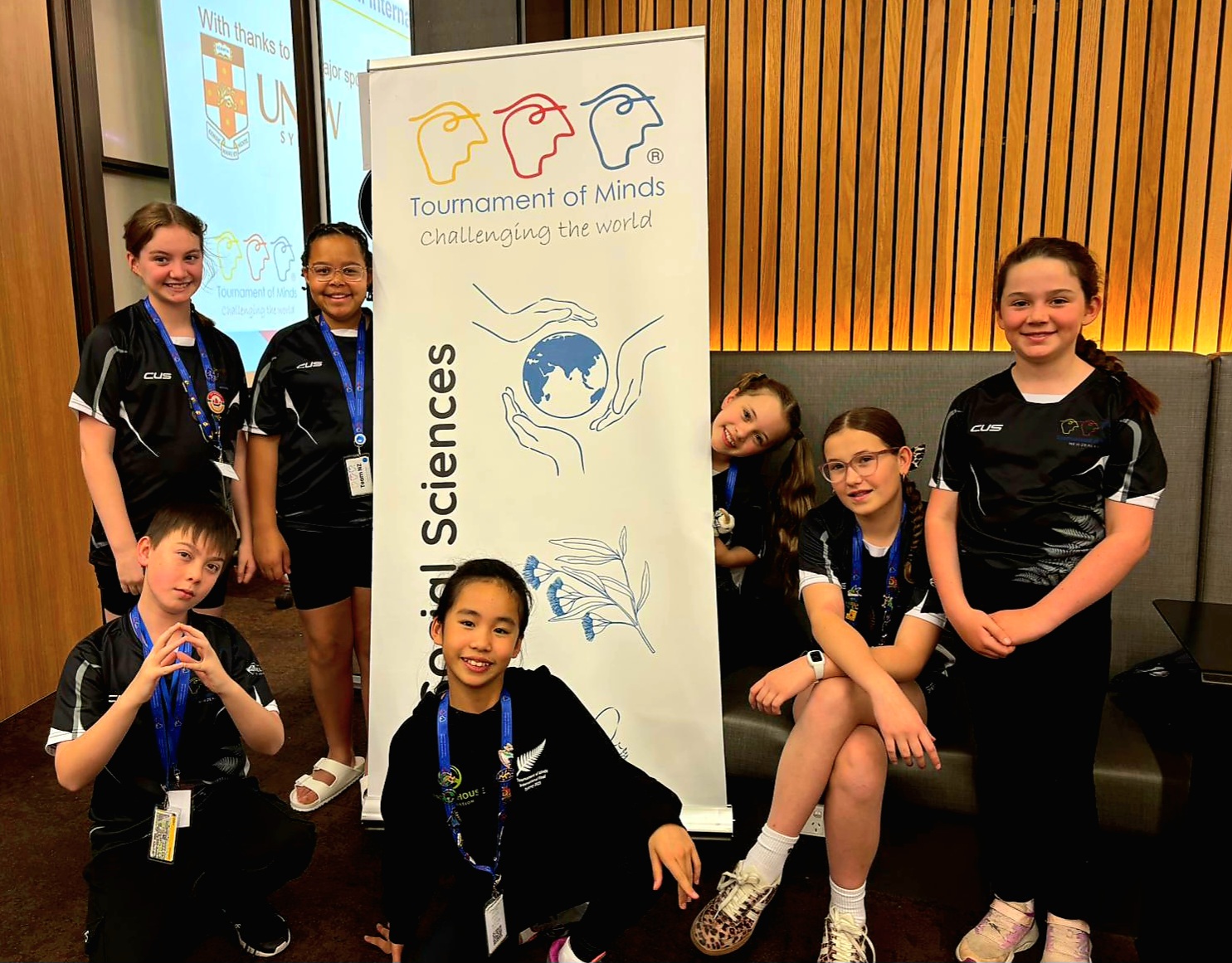
The Hadlow School team ready for their 10-minute presentation at the international final.
Rathkeale College won the TOM regional competition. Then, the national competition. Suddenly, they were off to the Tournament of Minds International Final (TIF) at the University of New South Wales in Sydney, along with seven other New Zealand teams. They included two more Wairarapa kura: Hadlow Preparatory School, which also competed in 2024, and TOM first-timer Wairarapa College. It was the first time in many years that so many schools from a single rural region qualified for TIF.
Building a team for success
Hadlow School entered 20 students from Years 5 to 8 in The Arts, Social Science and STEM disciplines.
Rathkeale entered one team of six Year 9 students in the secondary Language Literature division, while Wairarapa College had two teams of Year 9 and 10 students in the secondary division of The Arts and STEM.
Ruth says teamwork was crucial to their success, which began at team selection.
“This meant understanding one another’s strengths and weaknesses, which took a bit of time – and some socialising – to develop.”
At Hadlow School, teacher Rev Mannie Marara says ākonga learned about the skills needed for TOM before teachers targeted key skills.
“Teamwork, quick critical thinking, plus an ability to articulate ideas in such a way that others could understand, were some of the skills we looked at.”
Hadlow student Katie says teams needed connection.
“You can’t be randomly put together, you have to get to know your team and become friends.”
Teammate Aisling adds: “You need to be always working together as a team even if sometimes you disagree with what the other person is saying.”
At Rathkeale, the student librarians quickly answered the call for interested TOM team members, making the Language Literature discipline an obvious fit, says Ruth. School librarian Maxine Hartley became the boys’ number one supporter.
“The students already knew each other well, shared similar strengths, and the dynamic just clicked naturally from the start. This was especially important when it came to the time-ticking spontaneous challenge, where students had to generate creative ideas, decide collaboratively on a solution, and report back according to the success criteria. No mean feat for a bunch of students in less than five minutes!”
Wairarapa College offered the opportunity to ākonga in their gifted programme first, resulting in two teams, says programme coordinator and teacher Rory Hughes.
“It really came down to grouping like-minded students who enjoyed thinking creatively, problem-solving, and bouncing ideas off one another. The students gravitated toward those they worked well with, and the teams evolved quite organically from their shared strengths and enthusiasm.”
Wairarapa College student Isabelle says the team included strong personalities. “Sometimes it was hard to be heard, but it taught me how to speak up and back myself.”
Over time their teamwork became “solid”, says Rory, and they exceeded his and their own expectations.
“Seeing that growth made my role as teacher and facilitator so much easier, and it was a real highlight of the whole journey.”
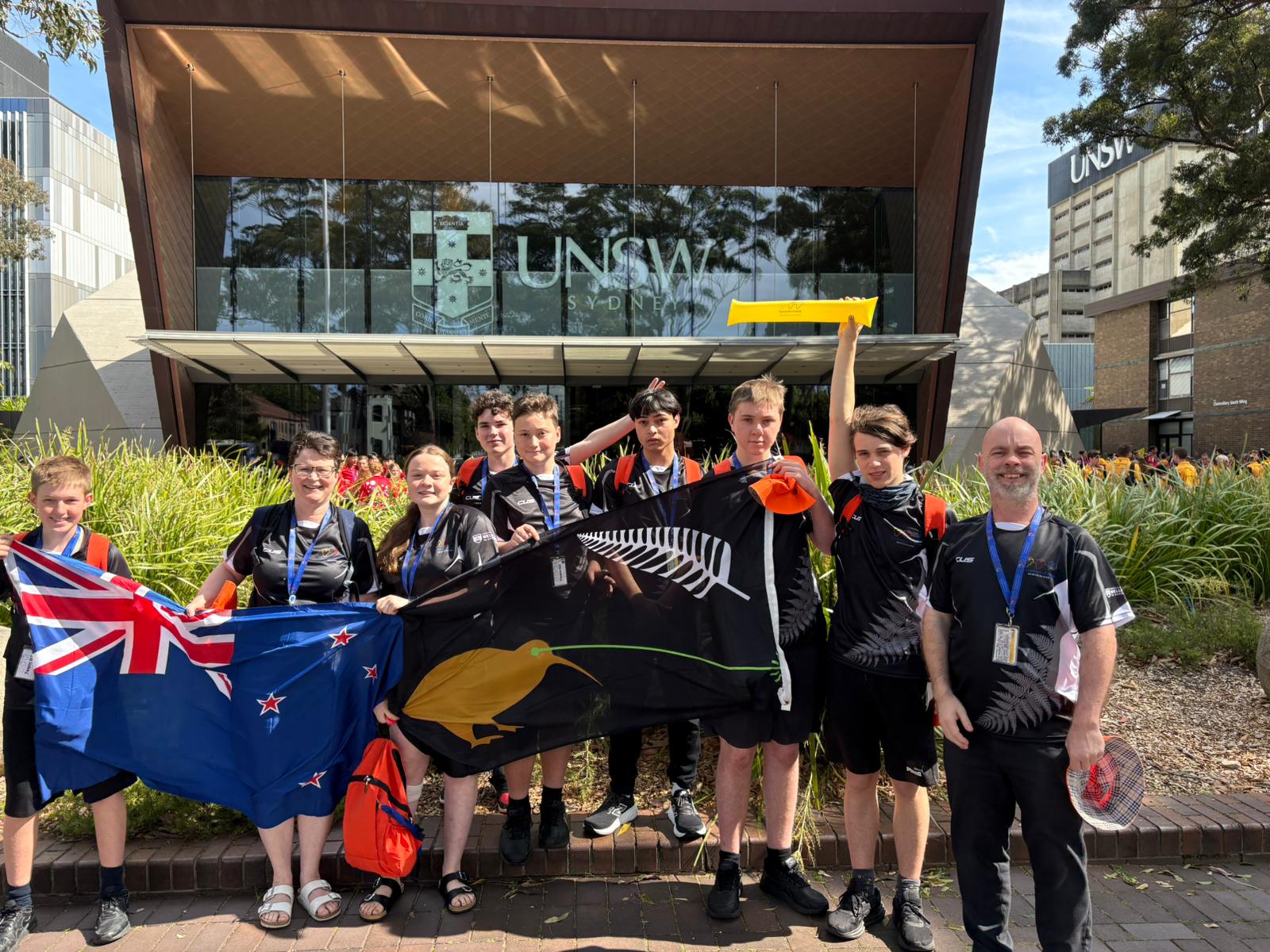
“A legacy of experienced students moving to new schools and bringing their knowledge with them created a natural tuakana-teina model, where learners supported and taught one another.”
Regional collaboration key to success
With just weeks to prepare and fundraise, practices were held at school, after school and on weekends.
Collaboration between schools was crucial, Ruth says, and experienced competitors helped create a natural tuakana-teina model, where ākonga supported and taught one another.
“In-person workshops at all three schools, regular kōrero between kaiako and ākonga leading up to TIF, and weekend practices, helped sharpen teams’ creative and critical thinking skills,” she says.
“Altogether, this culture of collective growth and cross school support gave the Wairarapa its edge and helped secure three places at TIF.
“They already knew the buzz of the competition and were keen to give it another crack. Their enthusiasm was infectious. The students really drove the momentum.”
Rory says their team included legacy TOM students from schools like Masterton Intermediate.
One of those students was Alby, a legacy TOM student of three consecutive years.
“We met often, practised different challenge types, and spent a lot of time figuring out how to work well together.
I also tried to keep things fun – humour definitely helped when things got stressful!”
Playing to their strengths
Teams select one discipline for the regional round of the competition, based on six-week challenges released at
the beginning of term 3. Teams successful at regional level stick with their discipline for the sequential national and international competitions.
Jocelyn says key competencies in the New Zealand Curriculum are foundational to those disciplines.
“As well as a focus on the curriculum areas aligned to their chosen challenge discipline, literacy and maths are integral to how teams work through their chosen challenge and prepare their dramatic response.”
Rathkeale student Atticus says for them, that was Language Literature.
“The regional challenge was based on the works of Shaun Tan. The national challenge focused on circular narratives and the misplacement of commas. The international challenge – described by the team as a real doozy – required them to connect two landmarks and use anthropomorphism.”
Isabelle from Wairarapa College says they chose STEM “because it was hands-on, creative and really pushed us to think outside the box”.
Katie from Hadlow, who also participated in TOM in 2024, says their team chose Social Sciences at the start of the competitions and “stuck with it”.
Teammate Amanda says they had to create an artificial intelligence (AI) system that would help with understanding an historical event. She enjoyed this, “because I got to explore and learn about different things”.
Aisling also liked this discipline, “because I love looking at real-world issues and thinking of ways that everyone can do their part to solve them”.
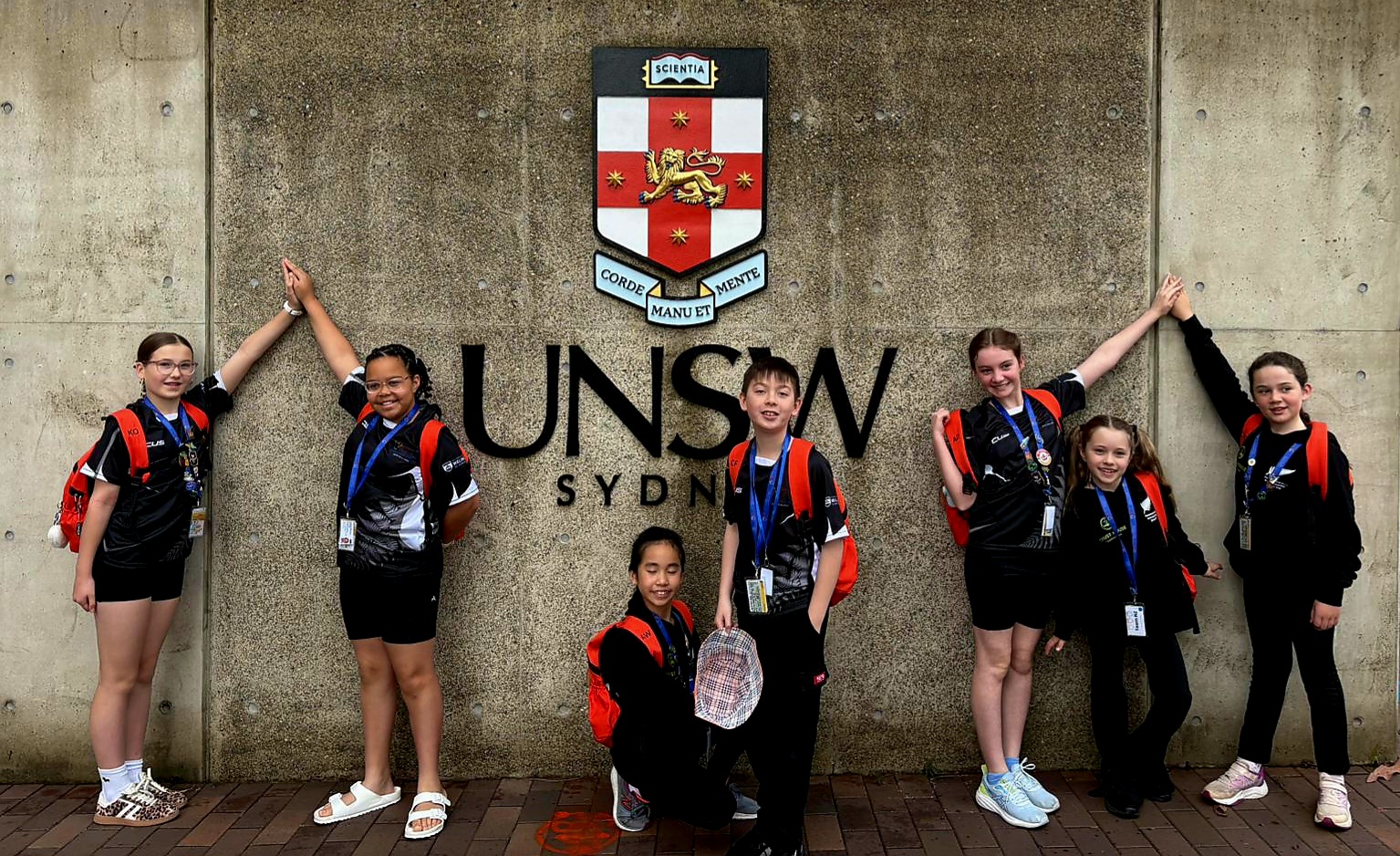
The Hadlow School team placed in the top three of the Social Sciences division. From left, Katie, Aisling, Amanda, Coby, Alice, Heidi and Caia.
A unique team spirit
In Sydney, Hadlow finished in the top three of the Social Sciences category for the primary school division.
Hadlow School’s Alice says she felt proud to represent New Zealand in another country. “It was amazing to meet people from all the Australian states and other countries too.”
Ruth was the New Zealand team manager for the Sydney competition, and a spontaneous challenge judge, along with Mannie and Rory. She managed to watch all teams.
“Their creativity was incredible – they came up with ideas most adults would never dream of!”
Isabelle says being part of TIF was “incredible”.
“It felt surreal to be representing New Zealand alongside teams from all over the world. The atmosphere was exciting, a little overwhelming at times, but amazing. It was cool seeing how creative and clever other teams were too.”
The teams also led the haka, waiata, karakia and team spirit.
“I was so proud as we showed unique team spirit,” says Mannie. “Our waiata, karakia and haka were not prepared just for TOM. They are an integral part of our New Zealand identity and this showed as the passion and feeling that was different compared to other teams present.”
Rory says the moment gave him goosebumps.
“It was super special – a moment that made me feel so proud, humbled and excited all at once.”
Putting ideas out into the world
Jocelyn says TOM is dedicated to increasing students’ chances of success and that, “as a society, we capture and grow the gifts and talents of as many students as possible”.
Amanda from Hadlow says TOM taught her to “put my ideas out there”.
“Even though your idea may be super wacky and weird and you don’t think it is good, still put it out there. Because you never know if it will be the winning one.”
Rathkeale College student Moksh says he learned to manage his nerves, including by going over the script at least 10 times and making sure he had everything he needed.
“One of the skills that I learned is that you have to be confident, but that’s challenging.”
Oscar, also from Rathkeale, agrees and says TOM helped grow his confidence.
“Working with my team to solve challenges was heaps of fun, and it felt great seeing how well we all worked together when things got tough. One of the best moments was on the bus after the competition when some of the New Zealand
teams were singing and celebrating. It was such a cool feeling – everyone was proud and happy, and it showed how much we were all enjoying the experience.”
Alby says there were “moments where things felt intense”.
“TOM taught me how to stay calm, focus on the task and support my teammates.”
Growing minds of the future
All three Wairarapa schools will enter TOM again. Mannie says the competitions bring many benefits to teaching and learning.
“TOM is providing students with team-based critical thinking, dramatic presentation and problem-solving skills that are not always tackled fully in other areas. These are not just TOM specific but essential life skills that are having a huge and very positive impact on students’ learning in other areas.”
Rory considers TOM an asset to Wairarapa College’s Gifted Programme and he’s keen to see the student legacy grow and improve.
“I’ve seen firsthand how powerful it can be in uplifting students who might not find that same boost through sport or cultural activities. TOM gives space for academic strengths to shine, which is especially valuable for our gifted learners.
“It offers opportunities, challenge and confidence-building that many of our students genuinely thrive on.”
Ruth, of course, will have a team ready for the 2026 competitions.
“I don’t think I could ever not do TOM!”
The TOM website and Facebook page have more information.