Creativity and belonging through poetry and art in Raglan
Year 7 and 8 ākonga at Raglan Area School recently embarked on a creative inquiry that blended poetry, visual arts and the explicit teaching of language features. The results were a published book of poems and art that students are proud of, and strengthened peer relationships. Teacher Felipe Queriquelli explains the process and outcomes of the inquiry to Education Gazette.
The aim of this inquiry was simple yet powerful: help students recognise how metaphor, alliteration, personification, imagery, and other features shape meaning, then give them the freedom to craft something authentically their own.
Throughout term 3 last year, all poems were handwritten. This was to make sure genuine voice was used. Students were encouraged to avoid digital shortcuts – including artificial intelligence (AI) writing tools – and instead engage deeply with their own thinking, drafting, and creative decision-making.
Creative and critical thinking were at the heart of this inquiry, especially when students faced an open-ended task requiring experimentation and reflection. Students navigated poetry structures, visual semiotics and symbolic representation through both writing and art.
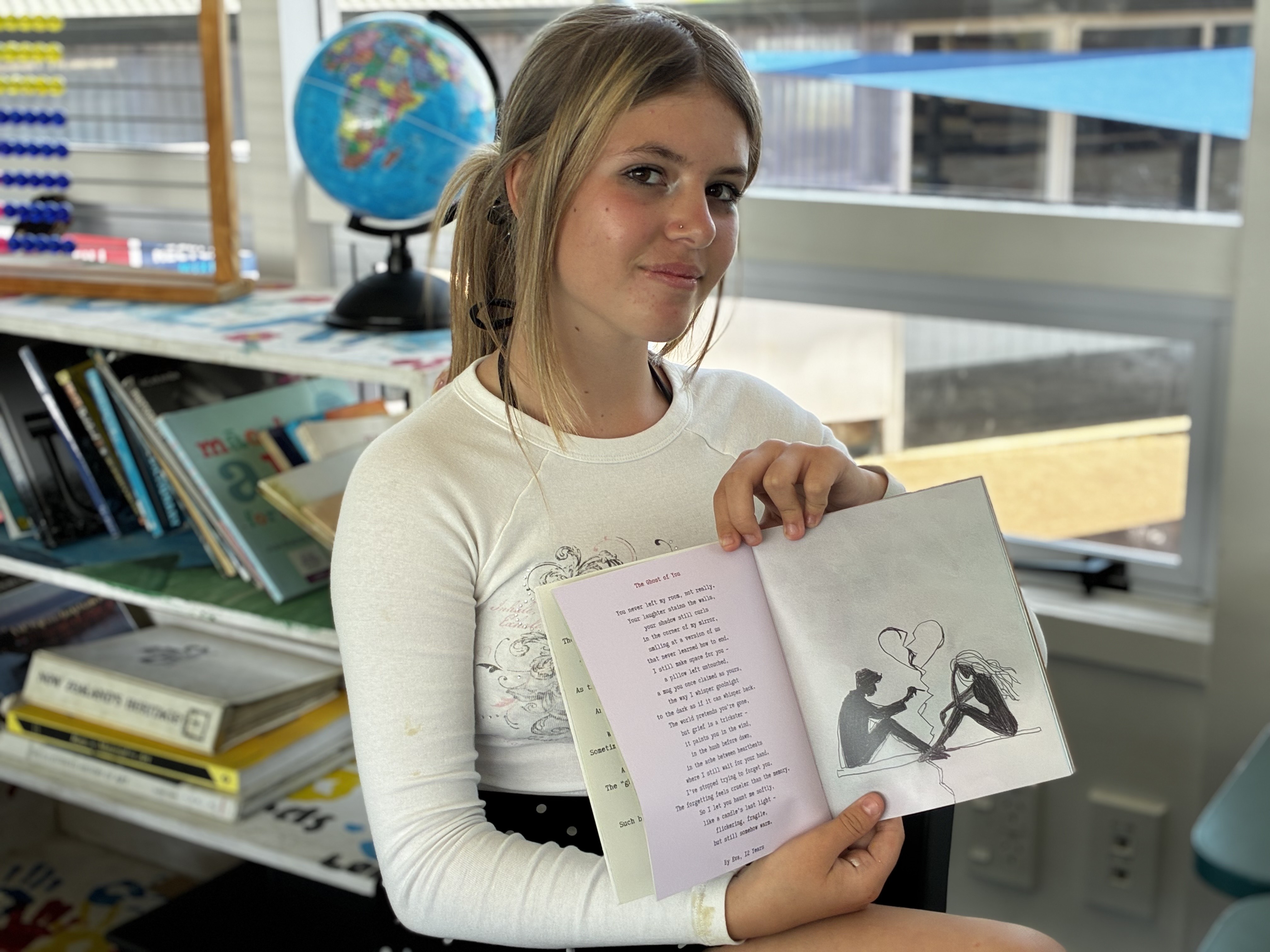
Eva with her poem, The Ghost of You and her artwork.
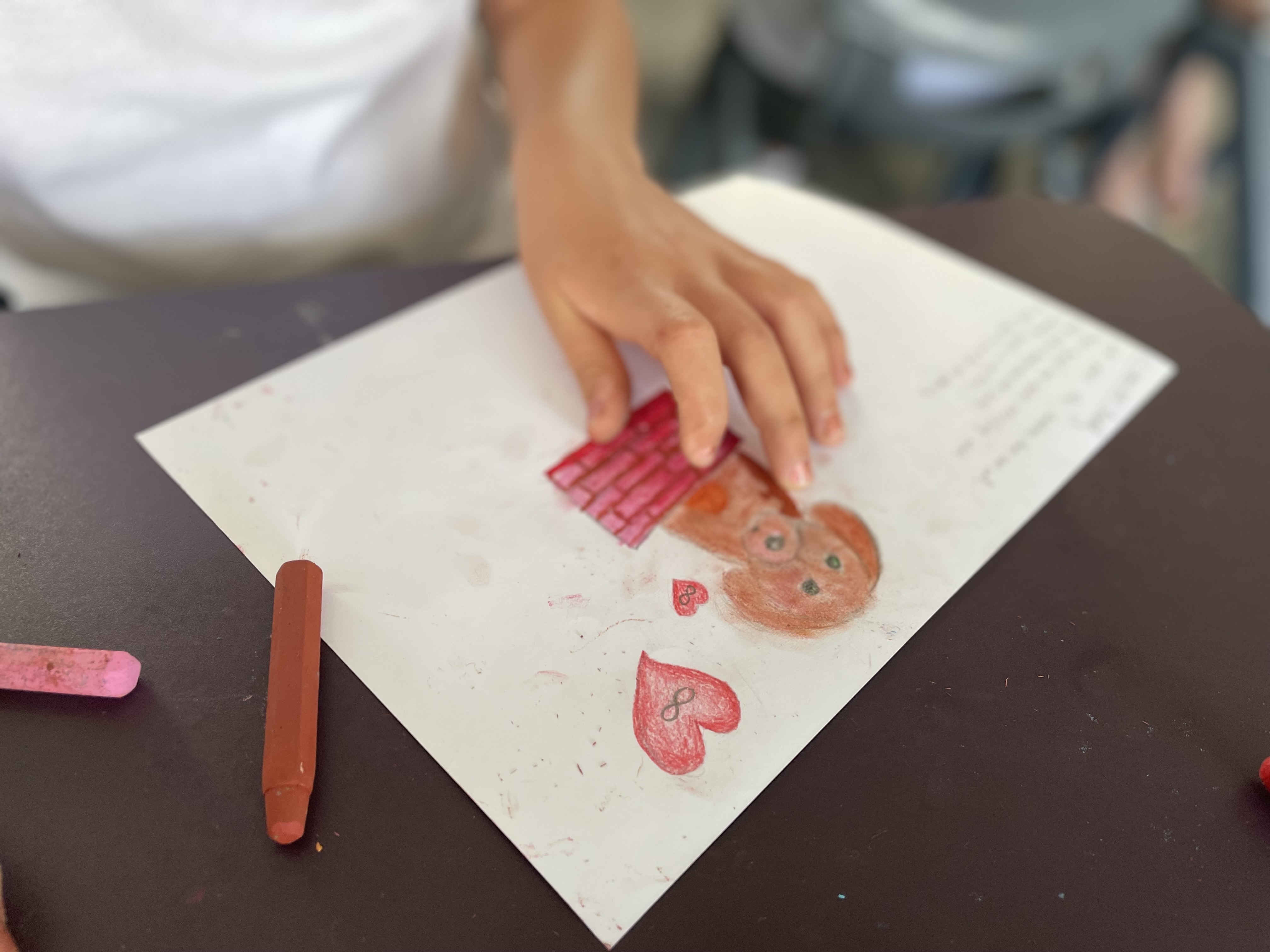
Once their poems were complete, students transformed their writing into visual artworks, creating drawings or paintings that communicated the emotions, themes and imagery of their poetry. The theme of each poem was entirely open, as was the artistic technique. Students explored everything from abstract symbolism to portraiture and landscape illustration.
Their poems and illustrations were then compiled into a book titled Tauoranga – A Breath of life, which was published in November. Whānau and the community were invited to come in and talk to ākonga about their poems and art.
Creative freedom as a challenge
Initially, many students found the level of freedom they were given challenging. With no prescribed topic and no template to follow, they struggled to decide where to begin. This challenge quickly evolved into a catalyst for discovery.
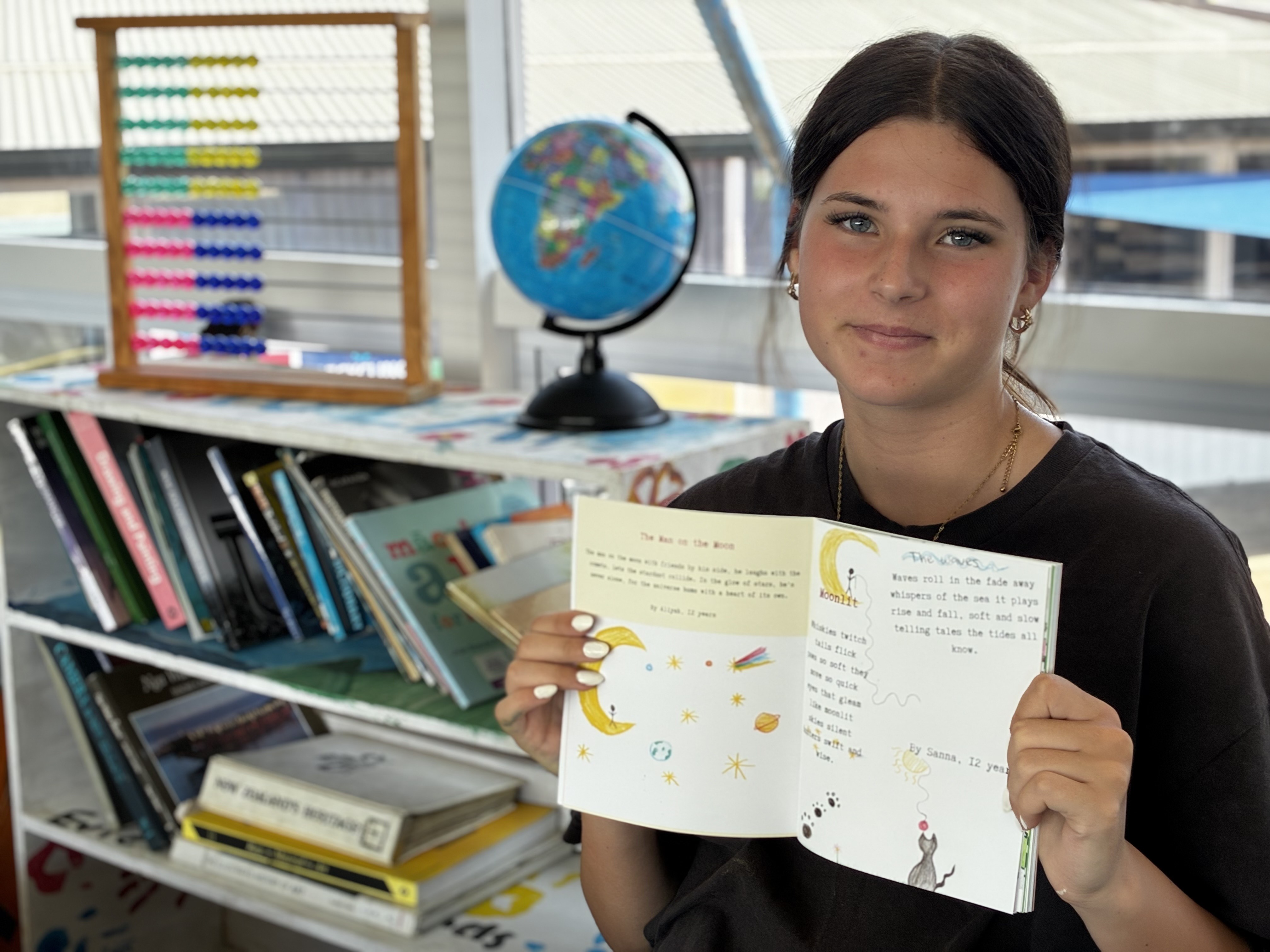
Sanna wrote Moonlit and The Waves.
Freed from constraints, students experimented with personal interests, meaningful experiences, and inventive metaphors.
Some explored environmental themes. Others wrote about identity, relationships, sport, or fantastical worlds.
Jimmy’s poem, The Basketball Night was inspired by one of his favourite sports. Handwriting his poem was “good, in a different way compared to the typing in Chromebooks”, he says. Jimmy enjoyed the drawing because he likes art and says he learned how to write a poem and “all possibilities we can have to create such a thing”. Having his work published felt “amazing”, he says.
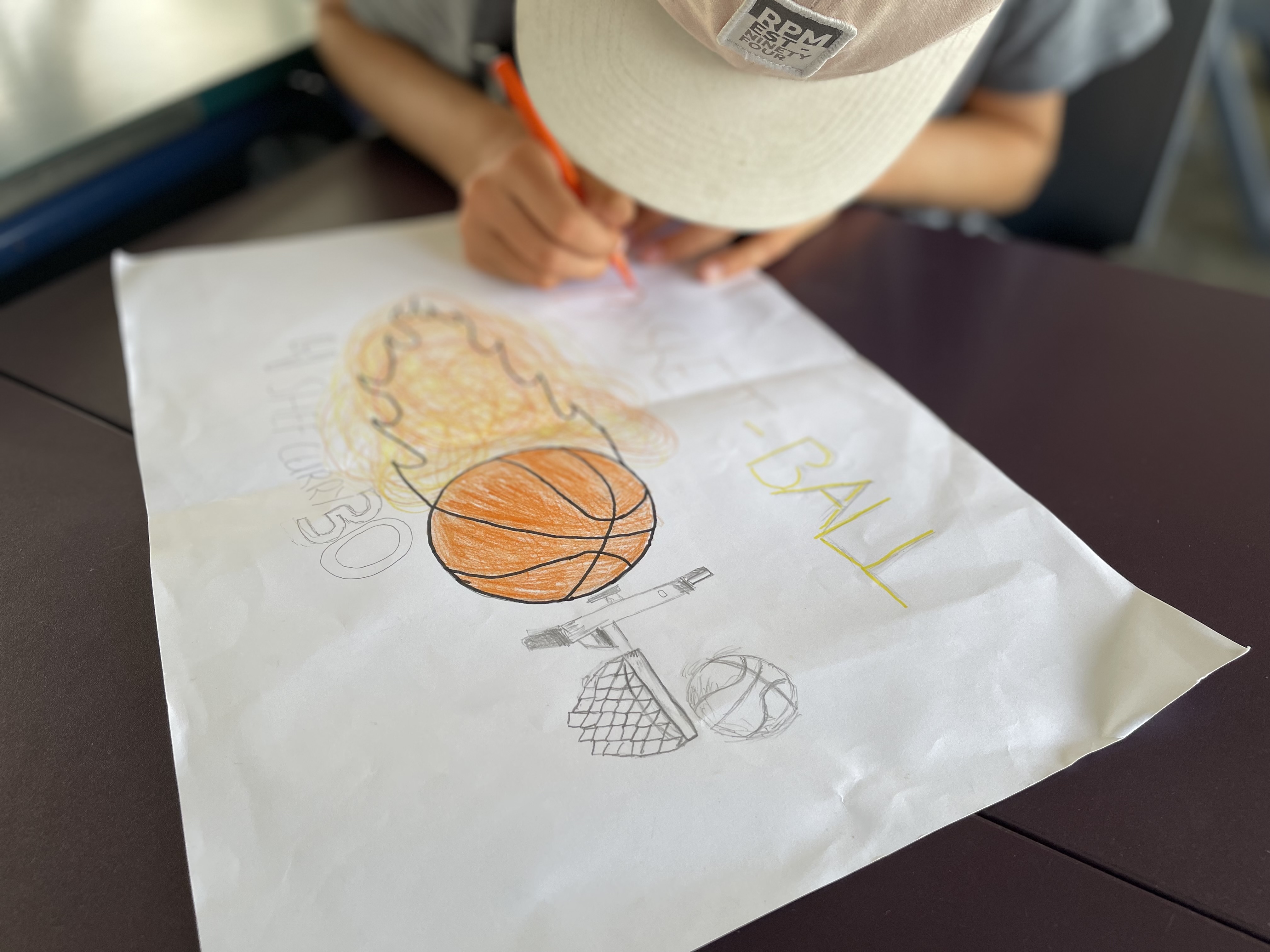
Jimmy enjoyed the drawing because he likes art.
Aliyah got her idea for The Man on the Moon from the DreamWorks Animation logo. “I drew a man and he is sitting on the moon, quite basic and straightforward I think worked well. I enjoyed colouring all the planets, I like painting, and it makes more sense to me to see the picture and reading it... having an image or something by the side.”
Handwriting poems, redrafting, and independently developing artworks required personal responsibility and sustained focus. Several students chose to write more poems beyond the required task.
Chelsea was one of the students who learned she enjoys writing poems and wants to do more. She wrote Lost which was inspired by her interest in philosophy. Handwriting her work felt “more rustic and more creative than writing online”, she adds.
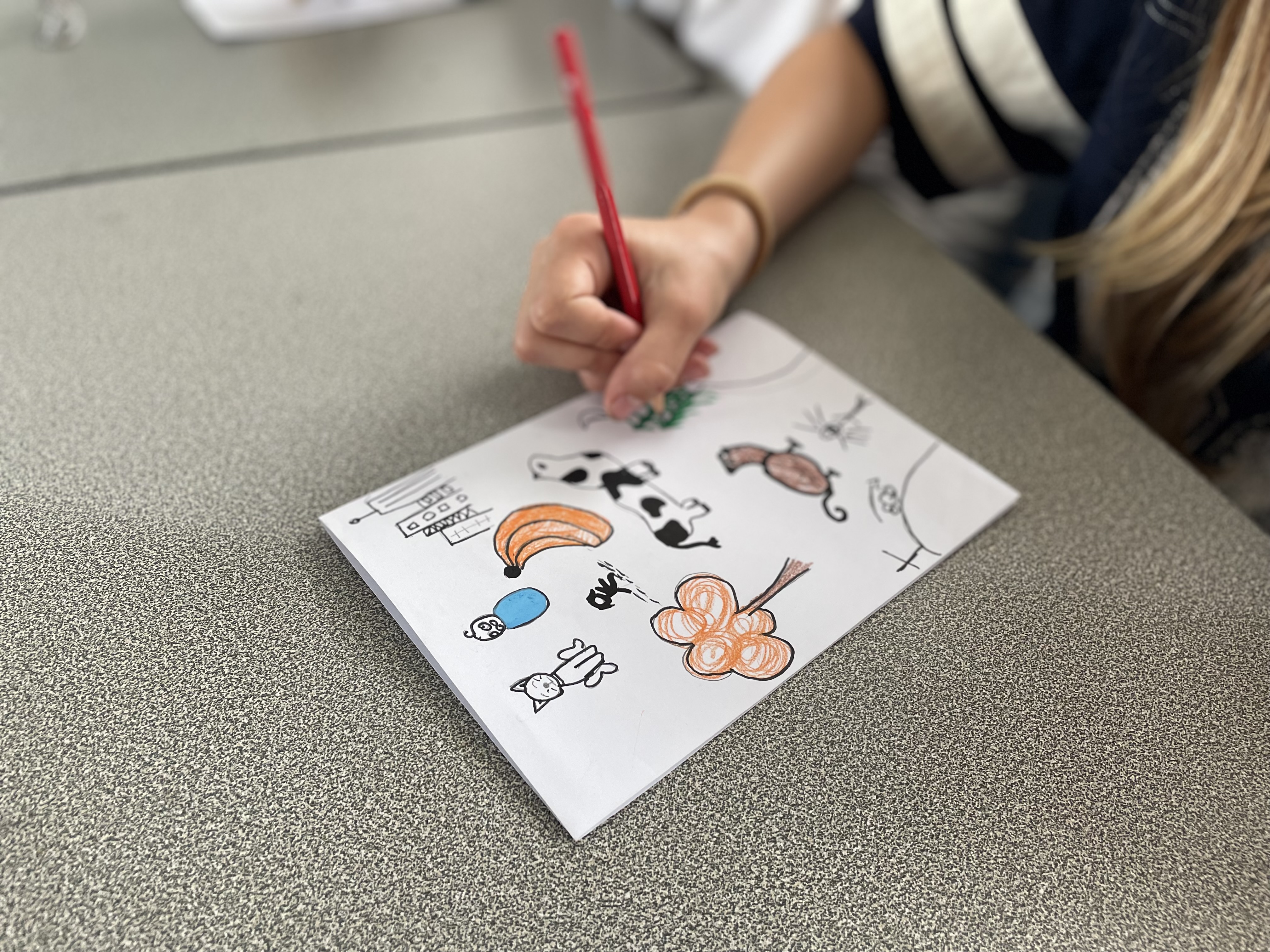
Students began by researching images online that could represent their poem, and started drawing inspired by the images
To create her artwork, Chelsea imagined her poem as the drawing, “and you really have to read deep into it”.
Others expanded their artworks or collaborated with classmates for feedback, colour ideas and alternative interpretations.
Over time, poetry became not just a language activity, but a social and creative anchor within the classroom.
Tamoe, whose poem My Story was inspired by a book, enjoyed “everything” about the project.
“It is fun and gives the purpose to create something original. “I started researching for images online that could represent my poem, and started drawing inspired by the images I found.”
Having that work published felt “very important” to Tamoe: “Like being proud of my mahi.”
Strengthened belonging and peer connections
One of the most valued outcomes of this project was the strengthening of relationships. The shared process of poetry creation fostered inclusion and strengthened the learning community. Peer feedback, collaboration, and collective celebration of work contributed to a supportive classroom culture.
Through handwritten poems and original artwork, students demonstrated that creative freedom, when guided by strong teaching of language features, can foster confidence, identity and powerful literacy growth. As students shared their poems and artworks, they developed trust, empathy and pride in one another’s work.
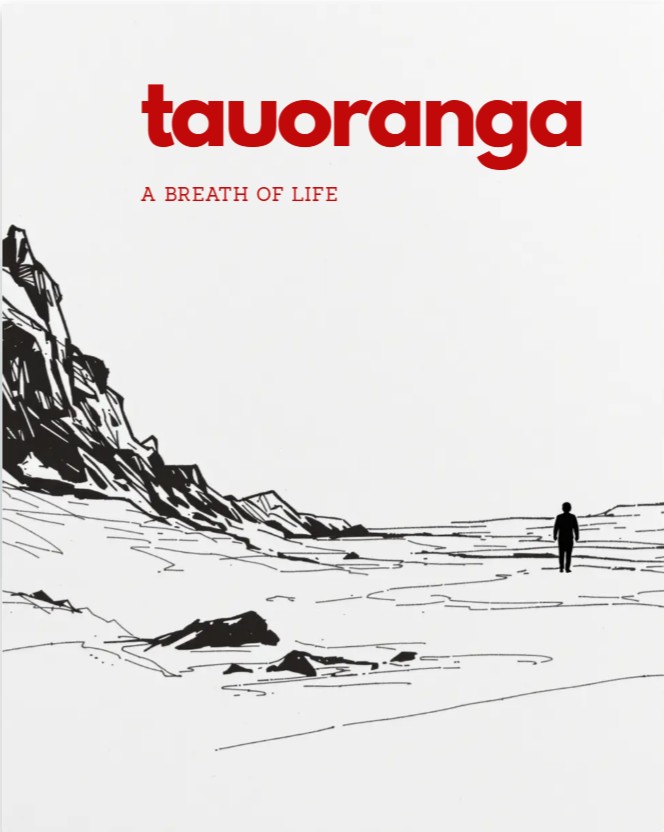
Poems and illustrations were compiled into a book titled Tauoranga – A Breath of life.
The classroom culture shifted toward deeper peer support – ākonga were not only celebrating each other’s creative ideas, but also encouraging risk-taking, persistence and self-expression.
This sense of belonging was especially visible during peer-review sessions, where students confidently read aloud, offered constructive feedback and connected over shared themes.
Poetry became a vehicle for whanaungatanga and collective identity in our kura. It was one of the highlights of our school year. Students not only developed literacy skills aligned with curriculum expectations, but also discovered joy in creative expression and connection with their peers.
By allowing ākonga to explore their own ideas through language and art, we witnessed a profound shift in engagement, confidence and classroom culture, proving that creativity remains a vital pathway for learning, wellbeing and belonging in Aotearoa New Zealand schools.
Raglan Area School’s book of original poems and illustrations ‘Tauoranga – A Breath of life’