Preparing students to face the forces beneath their feet
A new online teaching hub is helping schools across Aotearoa to equip students with the knowledge and confidence to face natural hazards. Developed by Massey University researchers with Bay of Plenty schools, the resource blends science, local context and hands-on learning to build future resilience.
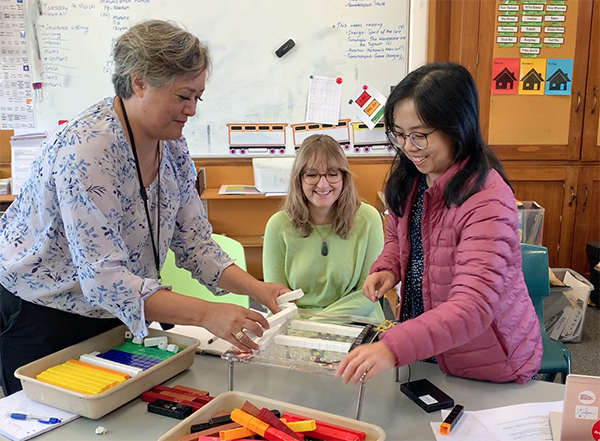
Massey University researcher Marion Tan is working with Bay of Plenty schools on natural hazard education.
A new resource is preparing ākonga for the challenges of the future: earthquakes, tsunamis and volcanoes – significant natural hazards we have seen before and will see again.
Lead researcher Marion Tan explains that, after engaging with several Bay of Plenty schools on natural hazard education, kaiako had been asking for follow-up materials. Their ākonga were still curious and wanted to learn more.
“As researchers, we might come to schools once or twice a year to run a really engaging programme with the students,” she says. “But once we leave, the teachers are left to their own devices.”
The online platform was created in response, providing accessible teaching materials all in one place. It was developed with direct input from schools, reflecting classroom needs.
Teachers can feel confident in teaching the material, with activities tailored from Year 1 to Year 13 and split across three different hazard types.
“Living in Aotearoa, we have many natural hazards, from earthquakes and tsunamis to high-impact weather events,” says Marion.
“We live with natural hazards, and so it’s essential to have a resource that teaches tamariki how to prepare for them.”
Educational activities include lava fudge recipes, virtual field trips, video games and more.
The initiative works to empower teachers and students with future preparedness. When students learn about earthquakes, at first glance they may seem scary and daunting, Marion explains, but the hub materials provide a wider perspective.
“Students learn about why we have earthquakes – due to the movement of tectonic plates – but they also learn that the same processes help create the beautiful mountains that we have,” she says.
“We’re sharing with the students that, although we’re surrounded by hazards and they might be scary, there are ways that we can prepare for them, and we can also appreciate the natural processes.”
Content grounded in the local environment
Anna Brown, who co-led the research with Marion, says linking the hub’s educational content to the local environment is really important for getting students interested. They have seen the success of this through the DEVORA (Determining Volcanic Risk in Auckland) research programme.
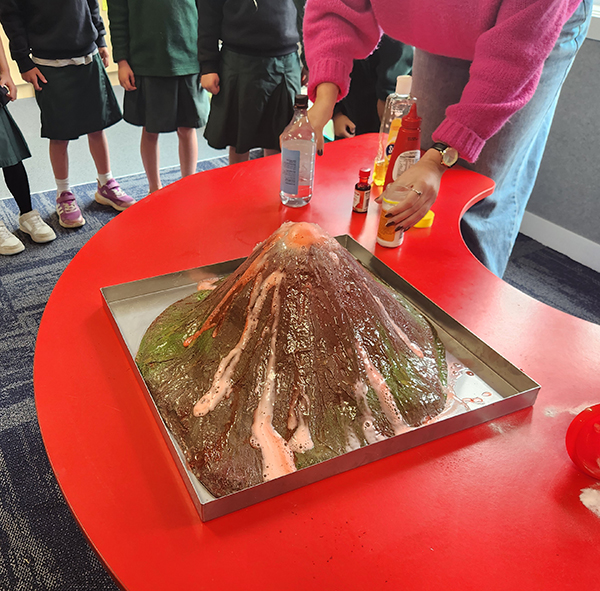
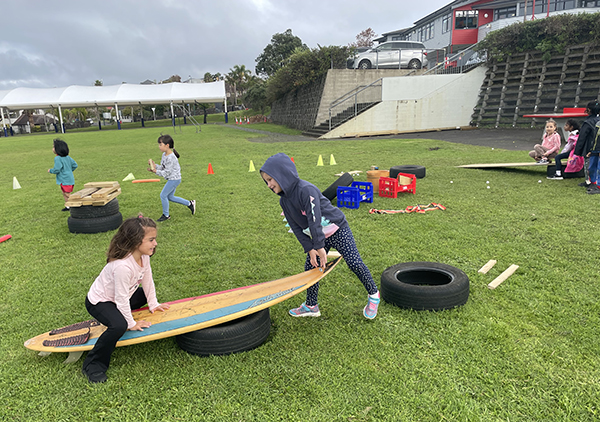
DEVORA and the Auckland Museum Volcanoes Van visited Meadowbank School’s Year 2 class last term.
“We made a volcano with tomato sauce, vinegar, food colouring and baking soda. It exploded high onto the tray,” one student says.
“We passed humongous rocks around. I got to hold the large obsidian and the moustache rocks. We looked at the screen and we saw Rangitoto. They said Rangitoto is 600 years old, and it’s a baby,” another student adds.
Linking the in-class experiment to the students’ own backyard helped them better conceptualise the science behind volcanoes.
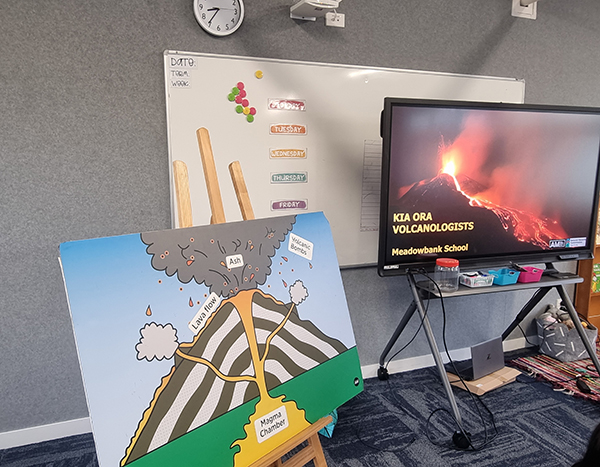
DEVORA and the Auckland Museum Volcanoes Van visited Meadowbank School’s Year 2 class last term, where the students learned about how volcanoes erupt with an in-class demonstration.
“At this age, the children start to become really curious about the world around them, and they want to find out how things work,” says Meadowbank teacher Brownwyn Steptoe. Her students were asking the facilitators questions like, “What would happen if Rangitoto erupted?”
“The demonstrations contributed to the learning the students had already done,” she explains.
“They’re able to learn about volcanoes and then understand we’ve got systems in place in New Zealand to be able to keep them safe. They learn ideas for how to prepare.”
Favona Primary School’s Year 5 and 6 classes have been learning how volcanoes are formed by looking at the Auckland volcanic field.
“We linked the stories to our maunga, Māngere Mountain,” says teacher Jane Thomas, “as understanding the risks of where we live is really important.”
The students then wanted to know if the volcanic field was still active, and one of DEVORA’s volcanologists visited their class to provide the answers.
“We often forget, as Aucklanders living here, that the volcanic field is bubbling away below us,” says Jane.
“So then the kids went home and talked about it with their parents, encouraging whānau discussion about being prepared. It gives the kids a lot of power when they understand how our Earth works.”
“We hope that, through engaging with tamariki about natural hazards, they will then go home to their families and share what they’ve learned,” adds Marion. “It’s starting those conversations with families to help them prepare at home.”
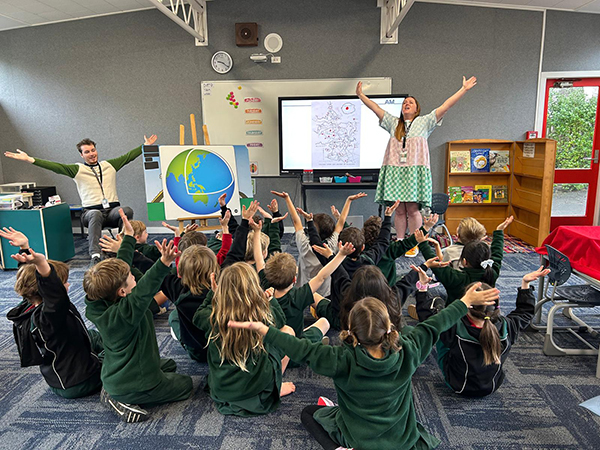
Meadowbank School is learning about natural hazards in its Auckland backyard with a teaching team from Auckland University and the Natural Hazards Commission.
Preparing for the future
The Natural Hazards Commission, which funded the hub and many of the resources within it, is invested in helping all New Zealanders better understand their risk of natural hazards so they can better prepare.
Public education manager Hamish Armstrong believes educating our children about natural hazard risks and how to prepare for their impacts is very important.
“It’s vital we build this knowledge from the ground up, as early as possible, growing the next generation of hazard-risk-aware New Zealanders,” he says.
“If we do that from an early age, it becomes ingrained, and then we can carry that knowledge with us through the rest of our lives and apply it in those really important moments.”
Children are agents of change, adds Hamish. “They’re the scientists of the future, and hopefully, we’re inspiring a passion to learn more about these events so they can become future leaders in the natural hazard and preparedness space.”
DEVORA’s work is featured in the Teaching Hub, and it has already been added to since its creation. Marion welcomes feedback and says that teachers can contact her if they have any suggestions for good resources to be uploaded.
“There is so much amazing work out there across New Zealand and around the world on natural hazards, and the beauty of this hub is that it pulls it all together,” says Hamish.
“Teachers play a vital role in building future resilience in communities, and this resource makes it as easy as possible for them to take that leadership role.”
Take a look at NZ Natural Hazard Teaching Resources hub
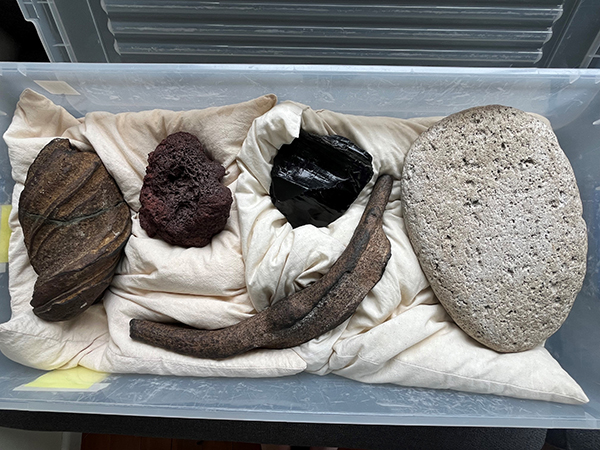
Tamariki from Meadowbank and Favona Primary schools got to hold different types of rocks.