New framework supports kaiako to teach digital safety and creativity
Five Ōtautahi schools and one early childhood education centre, are part of a new future-focused initiative to support tamariki to use technology safely, confidently and with purpose.
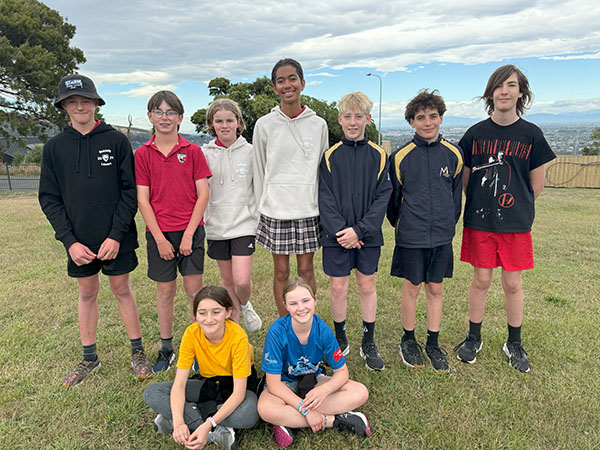
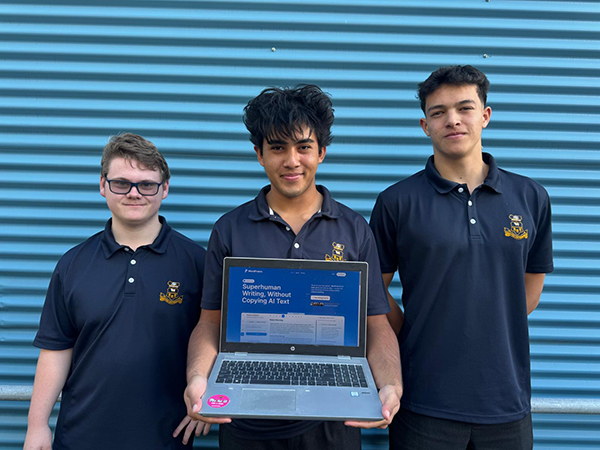
Team of lead ākonga involved in character, soundtrack and video design.
The Digital Learner’s Framework (DLF), rolled out this year, supports ākonga, kaiako and their whānau to navigate the digital world.
There has been a huge demand in recent years from kura and whānau for digital safety support, says Digital Learning PLD director and framework developer,
Emma Planicka.
As Australia bans social media for under-16s, and debates continue over research like Jonathan Haidt’s Anxious Generation, parents are overwhelmed.
“Our communities just want to make sure their children are protected and safe in the online space,” says Emma.
Already teaching digital fluency in several Christchurch schools, Emma saw an opportunity to create a resource that supports a holistic approach to digital safety education. She gathered insights through whānau evenings and in-classroom discussions in 2024, building the framework based on the data and needs identified.
The framework contains practical resources organised under three pillars: digital safety, digital confidence, and digital creativity. They connect from early childhood to Year 8.
Daily integration
Other than resources such as Netsafe, there has never been a full curriculum or specific guidance on digital safety, says Anita McGowan, Mt Pleasant School’s Digitech lead kaiako.
“But the DLF collates everything into an easy-to-follow structured method for teachers to use as a tool within their classes,” she says.
Framework activities are integrated to support numeracy and literacy. One teacher uses her students’ screen time statistics to build graphs in maths class. Another teacher uses digital safety teachings as the basis for persuasive writing classes.
“In this way, the framework integrates into teachers’ day-to-day teaching,” says Emma. “It’s not a one-off learning session where the student might lose concentration and the message is lost, or is too overwhelming. Instead, it’s woven into the everyday.”

Emma Planicka, Digital Learning PLD director and DLF developer.
Rather than a ‘one-size-fits-all’ model, the framework is also contextualised for schools’ needs. Anita is using the framework to teach her Year 7 and 8 students about their digital footprint and how it paints a picture of who they are online.
“We can define the target areas that we need to discuss with ākonga in a really authentic context,” she says, “such as teaching them to be kind online.”
Te Raekura Redcliffs School principal Nick Leith says the framework helped his school to quickly set up internet infrastructure, and they have linked the learning to reflect their school values. This year, each term is dedicated to one framework pillar, and students discuss learning during circle time.
“It’s a daily discussion rather than a big announcement,” he says, “and we’ve noticed that any crisis moments have reduced.”
Taking control of the narrative
“Instead of saying, ‘no technology at all, all technology is bad,’ we need to prepare our tamariki and provide them with the skills to navigate technology at an age-appropriate level,” says Emma. “Technology can be used to support learning in meaningful and purposeful ways”
Nick says at his kura, many students did not know how to use technology for creative purposes; rather, they were primarily consuming media. The ‘Digital Creativity’ pillar was developed to teach ākonga how to use their device as a tool and creative outlet.
Emma worked with Mt Pleasant ākonga Lucy, and a team of Year 6–8 students, to create several of the framework’s videos on digital safety.
“I learned how to make videos and how to use the different apps,” says Lucy. She used Procreate to design ‘Digital Navigator’ characters. On Canva, Lucy helped to create moving animations of the characters, scripting their dialogue.
Another ākonga, Liam, helped create a video inviting whānau to an educational night about safe technology use.
“Digital safety is really important to learn about and also how we can use it for creative things,” he says. This is especially important for him as he completes most of his work on his computer.
Parents are often so focused on their child’s consumption of technology that they forget that digi-tech can be used positively for creative thinking, explains Anita.
“It’s about changing the narrative and stopping fearmongering”, says Nick. “We can teach how technology can be used as a healthy tool for creativity.”
Importance of whānau collaboration
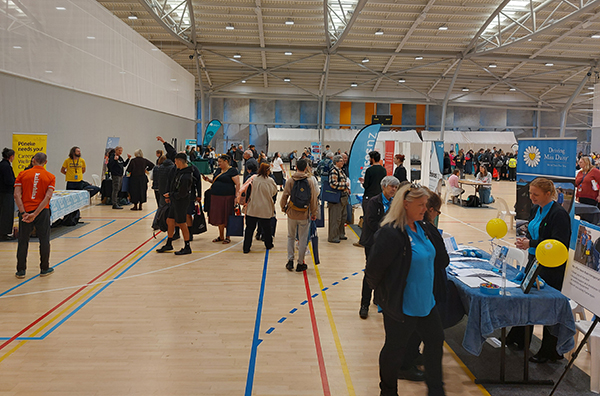
With students accessing technology both in and outside school hours, a collaborative approach is essential, something the framework encourages through promoting whānau meetings and resources being sent home.
“It’s on the teachers, the school, the parents and the tamariki themselves to work together,” says Emma.
“Education around digital technologies has become a 24-hour job, not just within school hours,” adds Mt Pleasant principal Donna Ellery.
“It used to be that unkind notes were passed around in schools, that teachers could see and deal with, now those notes are passed around digitally from home at any time,” she says. “The whānau evenings help connect teachers with families, to see what we can do together to support their child and how they positively engage with others online.”
At these events, parents are provided with weekly planners for screen time use, ideas of non-technology activities for their tamariki, a device use contract, and an action plan.
“Parents often think they have no control when it comes to their kids being online,” says Donna.
“But they can have control. They need to be taught as much as the students to help their kids be digitally safe and make wise choices at home as well.”
Start learning early
Connecting with whānau is essential, says Sydenham Community Preschool infant and toddler team leader Chantal.
“It’s about extending their learning experiences,” she says. Although young children may not be on devices, educators want to prepare parents to think about digital use early on.
“This builds confidence and understanding of how to keep children safe as they reach device-using ages,” says Emma.
Technology is also allowing early childhood educators to branch out in the ways they support whānau. Parents are engaging well with shared videos created, highlighting learning, explains Chantal.
“It’s enabling families to feel so much more included in their children’s learning,” says Rhonda, centre manager.
To find out more about the DLF, visit digitallearningpld.com