Merrin School’s paws-itively wonderful wellbeing programme
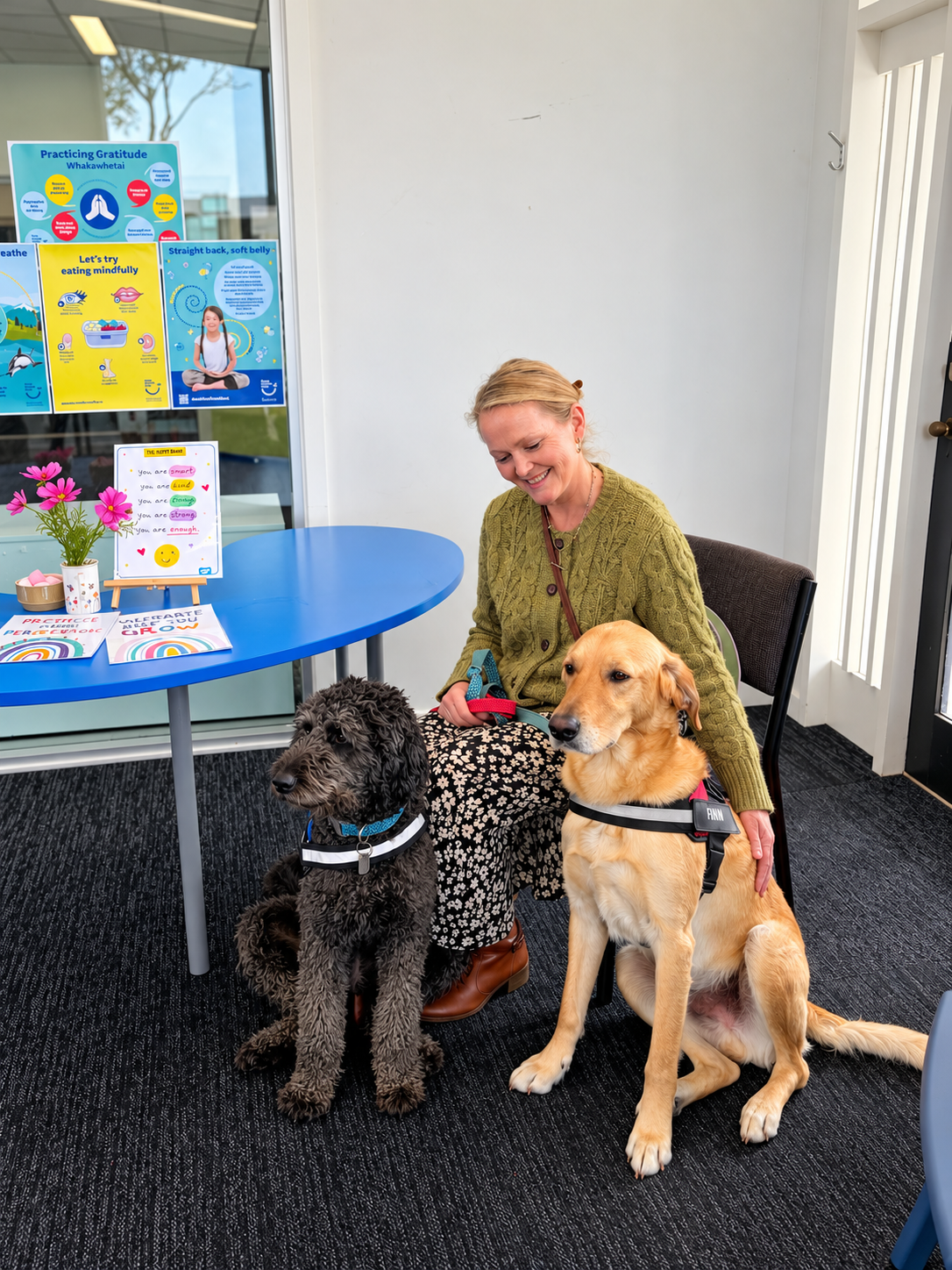
When its community said some tamariki were struggling, Merrin School Ngā Whetū Kohara listened. It introduced a wellbeing programme to build resilience and confidence and offer practical strategies. At the programme's heart are two gentle dogs offering a peaceful place to pause and restore.
“We want our students to have the self-belief, skills and competencies to believe that anything and everything is possible,” says Merrin School tumuaki Lisa Dillon-Roberts.
“More than our name, our vision is ‘whētū kohara’ – shining stars,” she explains.
“All stars are different from one another, but all are unique and treasured. Some stars are brighter than others at different times, some are larger, some are smaller, but all are very important to the combined strength of the night sky.
“And sometimes stars flicker and need extra support to shine.”
The last part, she says, is important. After hearing concerns raised by whānau and teachers – and children themselves – about struggles that were impacting tamariki academically, emotionally and socially, the school decided to create a programme to help tamariki build resilience, confidence and practical strategies they would be able to use when “something felt too hard or tricky”.
“Supporting our children means nurturing not just their academic progress, but their individual strengths, confidence and emotional wellbeing,” explains Lisa. “So we created a wellbeing programme that gives children a peaceful place to pause and restore.”
Honed over the last 18 months, the resulting programme comprises 30-minute mindfulness sessions supported by ‘wellbeing’ dogs.
The children love to talk to the dogs while they brush or cuddle them – dogs are great non-judgemental listeners who never interrupt.
Gentle companions
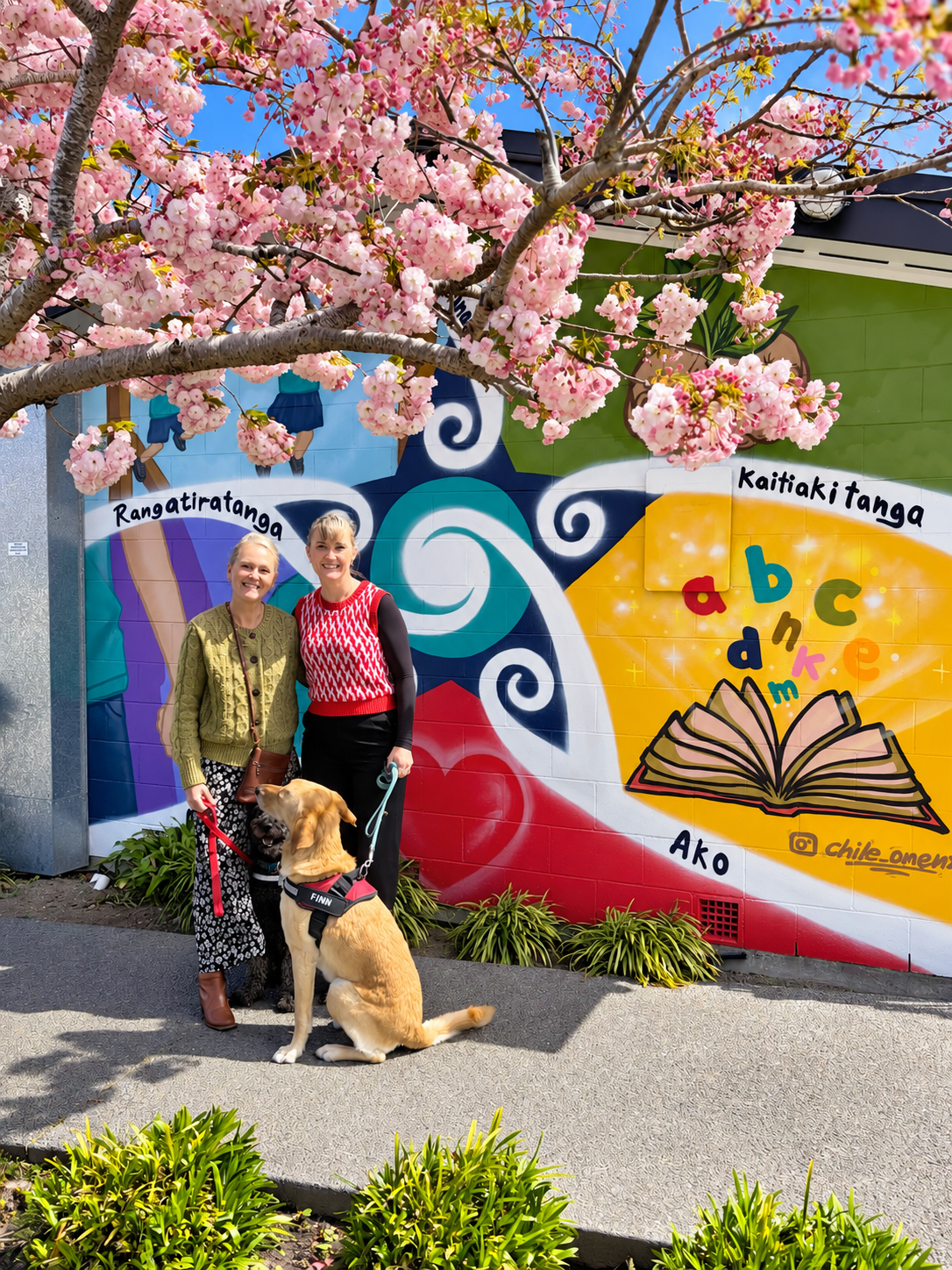
Finn and George are the beloved pets of wellbeing kaiako Siobhan van der Werk.
“Finn is a five-year-old golden retriever crossed with a labrador,” describes Siobhan. “He was originally training to be a guide dog, but because public transport made him a bit too anxious, he didn’t finish the programme.”
Instead, he has found his true calling as a gentle companion for the children at Merrin School.
“George,” she continues, “is a Bernese mountain dog, crossed with a golden retriever/poodle cross. He is one year old and still learning the ropes from Finn. The children get to help with his training as they work with him each week.”
Dogs are amazing at supporting wellbeing, says Siobhan.
“Within a pack, dogs naturally co-regulate as an innate behaviour – they work together to keep their families safe and grounded.
“Finn especially has a naturally calm manner, so if a child is anxious or upset, Finn stays relaxed and quiet, sharing his steady energy with them. We often see children who are feeling overwhelmed begin to mirror Finn’s calmness, which helps them settle quite quickly.
“The children love to talk to the dogs while they brush or cuddle them – dogs are great non-judgemental listeners who never interrupt,” she says with a smile. “Meanwhile, little George watches Finn closely, learning from each quiet interaction.”
“We have seen wonderful shifts in our students,” says Lisa, highlighting the changes the school has seen since introducing the programme.
“Children who were very anxious to begin with are now smiling, laughing and eager to share in class. They’re signing up for school activities that they wouldn’t have felt confident to try before.”
Walking taller and smiling wider
Each 30-minute session takes place in a quiet room with soft lavender oils, gentle music, a snack and a few simple activity choices for the children.
“When students arrive, they check in using colours to show how they are feeling: red if they feel upset or frustrated, green if they feel calm,” says Lisa.
“They then spend four or five minutes practising ‘pause, breathe, smile’ mindfulness. Children can pat George and Finn, draw or try a quiet activity while they talk about their week.”
“It’s my job to listen closely and follow their lead, letting them share as much or as little as they want,” adds Siobhan.
“Sometimes if a child is facing a tricky challenge, together we might create a small, practical plan to help them tackle it, so the child knows they can take supportive action whenever it is needed.”
Before tamariki head back to class, Siobhan will take a moment to reflect with them, thank them for being brave, and “remind them how much we value who they are”.
For both Lisa and Siobhan, just one of the highlights is seeing children who were initially frightened of animals, or who had never petted a dog before, grow close to them. Often, Lisa says, these become the children most eager to help with training George.
“We see children who have been quiet for weeks suddenly open up and share everything all at once. After some gentle processing, they literally walk taller and smile wider,” she says.
“Children who used to feel confused by big emotions, are now able to name what they are feeling and know some strategies to use when those feelings arise,” adds Siobhan.
Measuring success
Lisa tells the story of refugee siblings, starting school and a life in New Zealand with severe trauma.
“They arrived from a war-torn country, spoke no English, and exhibited behaviours ranging from extreme dysregulation to complete withdrawal.
“The sessions gave them a sanctuary. They slowly opened up, began sharing and started to trust and smile. They still experience hypervigilance to loud noises and have heightened anxiety, but today they are happy, thriving children who love coming to school and actively laugh and play alongside their peers.”
She explains how they measure the programme’s success.
“Weekly, we review session notes, the children’s collaborative action plans, their pastoral care notes and feedback from classroom teachers. We work closely with their classroom teachers, our school learning support coordinator and senior management.
“The patterns that emerge from all of these sources help guide and inform the best next steps for each child.
“At the end of eight to 10 sessions, Siobhan and the LSC reflect on whether the child is showing improvements and in which specific ways.”
Pausing to reflect, Lisa says they’ve learned “a great deal” since launching the programme.
“Keeping sessions to 30 minutes works well,” she explains. “It’s long enough to connect but keeps children fresh and doesn’t take them away from class for too long. Meeting once a week also feels right; it gives children enough time between sessions to try out the strategies they’ve learned but also keeps the experience exciting and something they can look forward to.
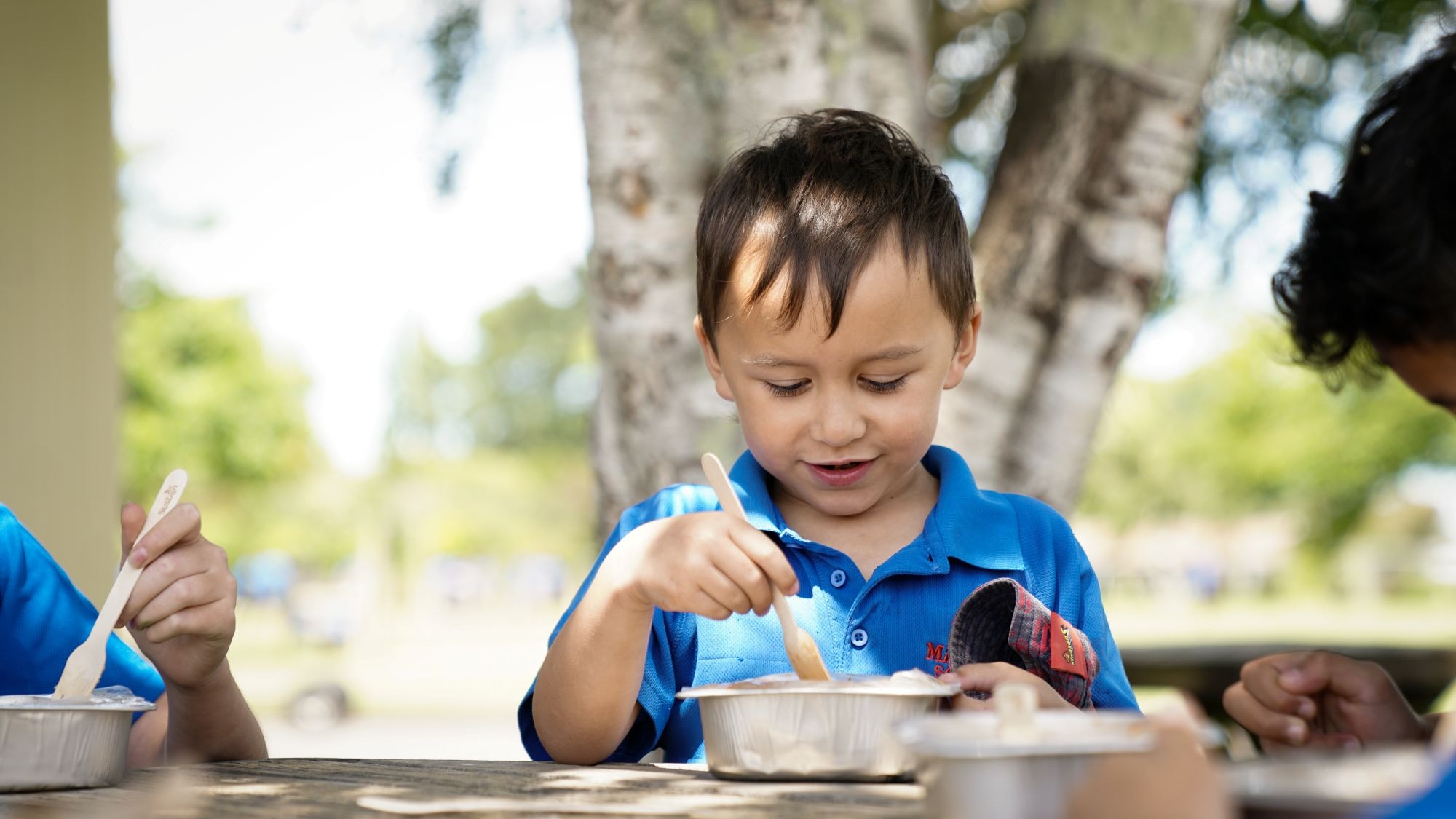
“We allow the sessions to be student-led and at the child’s own pace – it’s so essential for real sharing to happen. We also quickly discovered that a small snack goes a long way in helping children settle. It’s hard to stay anxious or closed off when enjoying something nice to eat!”
Looking ahead to the future, Lisa says they’d love to offer wellbeing sessions to teachers, too.
“It’d be great to give them dedicated time to enjoy quiet reflection, practice mindfulness, and reflect on their week with a supportive colleague.”
Ngā kōrero a ngā tauira | What students say
“I like working with Finn. He lies on my lap and goes to sleep. He makes me feel calm.” Oliver, Year 4
“Finn is really nice. He puts his chin on my lap and it feels heavy.” Amélie, Year 4
“Finn walks with me and then I can talk to him. I like cuddling him and he makes me happy.” Coen, Year 1
“I like Finn and George. They give me company and I like taking them for walks. Sometimes Finn is lazy and wants to sleep, so George keeps me company.” Ana, Year 2