Fashioning a future generation of technology students
From cardboard sculptures and digital fabrication to handmade tivaevae, Kōhara2Shine is giving technology students a public stage for their creativity while opening doors to future study and careers.
Founded by Wellington East Girls’ College teacher Nan Walden, the exhibition is helping redefine what technology education looks like for a new generation.
In the audience at this year’s World of WearableArt (WOW) show in Wellington, a group of bright-eyed students soak up the creativity and colour on display.
For these young visitors, some from as far away as the Cook Islands, the evening is more than entertainment. It’s a glimpse into a possible future.
Their visit to WOW is part of Kōhara2Shine, an exhibition founded by Wellington technology teacher Nan Walden to celebrate student design and creativity.
Nan, a recipient of the Prime Minister’s Science Teacher Award in 2025, established Kōhara2Shine four years ago to give her design ākonga at Wellington East Girls’ College a public platform for their work.
What began as a small exhibition involving seven Wellington schools has steadily evolved into a significant showcase hosted at Massey University’s College of Creative Arts.
At the time she began, Nan says there were few opportunities to celebrate fashion, textile and product design at secondary school level.
“There are competitions for our students, and you can do fashion shows and things, but I find it difficult. Some of the competitions you must send everything away and it’s very intensive to do all that.
“I thought, if you just bring your work, we’ll put it in Massey, put a sign up and that’s it. And it’s just grown so much; I can’t believe how much people have taken to it.”
A possible future
Sponsored by TENZ (Technology Education NZ), this year’s Kōhara2Shine featured schools from Taranaki, Hamilton and Wellington, and – for the first time – an overseas contingent from Tereora College in Rarotonga.
A big incentive for participating schools is the chance for students to explore tertiary pathways, with a special tour of Massey’s design school.
“It’s kind of bridging the gap between secondary and tertiary education,” says Nan.
There’s also the special thrill in seeing your own work on display. Opening night at Massey’s Te Ara Hihiko is special, with cultural performances and a celebration of what ākonga are capable of.
It’s clear from the works on show that technology is not what it used to be. Alongside fashion and textiles are digital technologies, fabrication projects, laser-cutting, 3D printing, digital art and digital visual communication projects.
“It’s really a future-focused curriculum and making people aware of what we do in schools,” says Nan.
“It’s not just about fashion or textiles – it’s all technology, and just a platform to show it off.”
Each year’s exhibition begins with a mihi whakatau and whaikōrero (welcome and speech), with responses from participating schools.
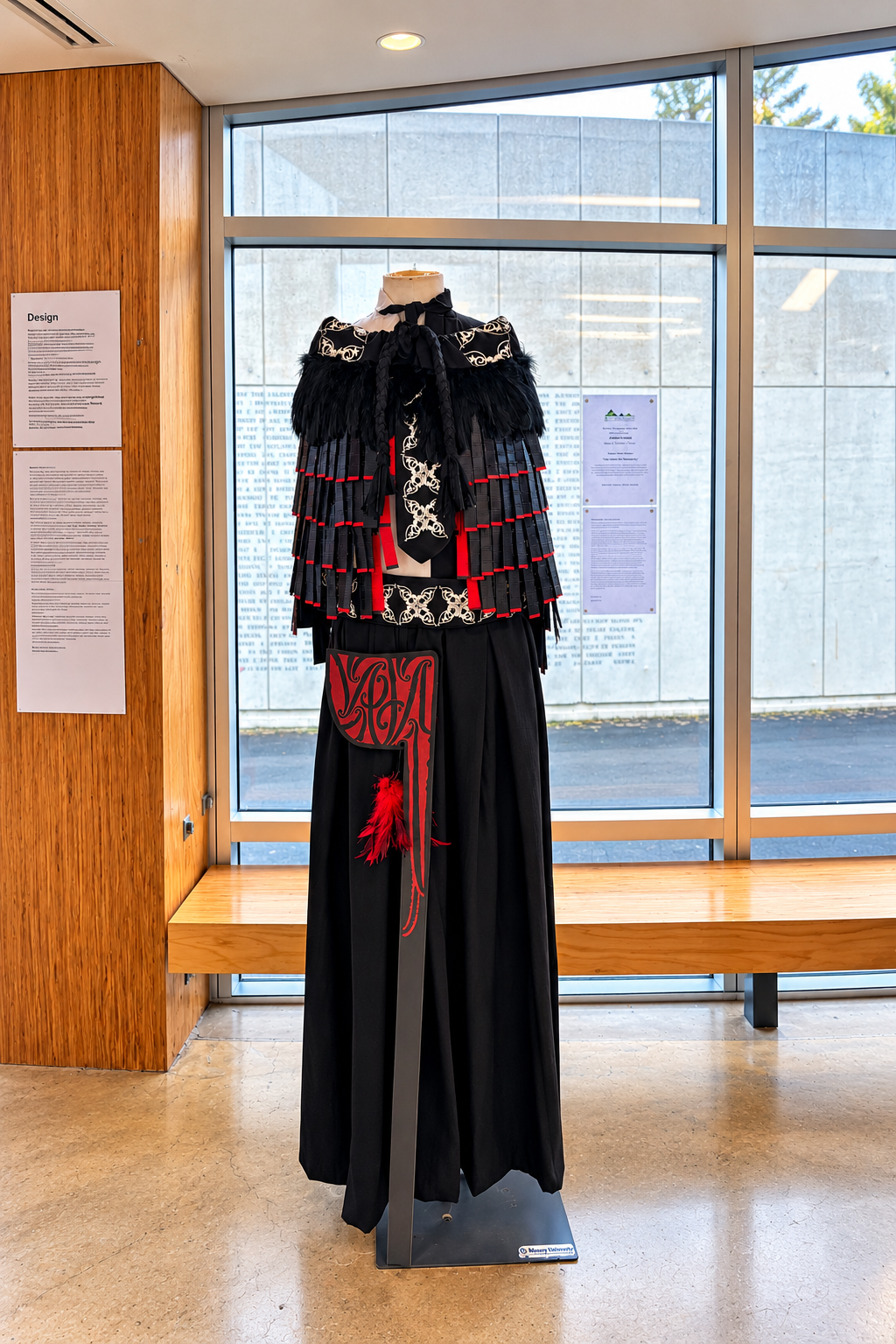
Performances from Wellington East Girls’ College’s kapa haka group and a cultural dance by the Cook Islands visitors followed, and then a korowai (cloak) made by Nan was gifted to schools in the region for their use.
Pride of place this year was a group of handmade tivaevae quilts, only given or displayed on special occasions.
The quilts were made by Year 13 Tereora College students, with designs reflecting their culture and environment.
I just think if I can have a place for my students to shine, then I’m helping to create the next generation of wearable artists as well.

Curriculum 'hooks'
In terms of pedagogy, the purpose of Kōhara2Shine, and design in general, is to ask the ‘why’, says Nan.
In this case, the ‘why’ is exhibiting work at Massey University, a real-world context that taps into project management skills.
“That’s the hook. It makes it high stakes, and ākonga are so into it. When I tell them to pack up, they complain. They’re so locked into their projects.”
Their unit is about using sustainable materials and in Nan’s class, students selected a fantasy theme, using mannequins, brown bags and cardboard boxes.
“Some of the students have got those old inner tubes from fabric rolls and they’re making an octopus and others have used them to make Maleficent wings. Another has used the box to make this old crinoline from Medieval times.
“Our next unit will be creating a pair of pyjama pants using really standard sewing techniques, elastic hems, zigzag, neatening – the theoretical side of sewing,” says Nan.
“This unit is all about really unorthodox materials testing and pushing the boundaries of creativity, thinking outside the box. It’s about [letting their imagination] go crazy.”
WOW's influence
It’s no coincidence Kōhara2Shine coincides with Wellington’s World of WearableArts (WOW) show, giving students exposure to next-level wearable design. And this year Nan is a finalist with her mother, with an entry that turns a bra into teacups.
“I really take inspiration from WOW, and the lady who started WOW 30 years ago,” she says.
“I just think if I can have a place for my students to shine, then I’m helping to create the next generation of wearable artists as well.”
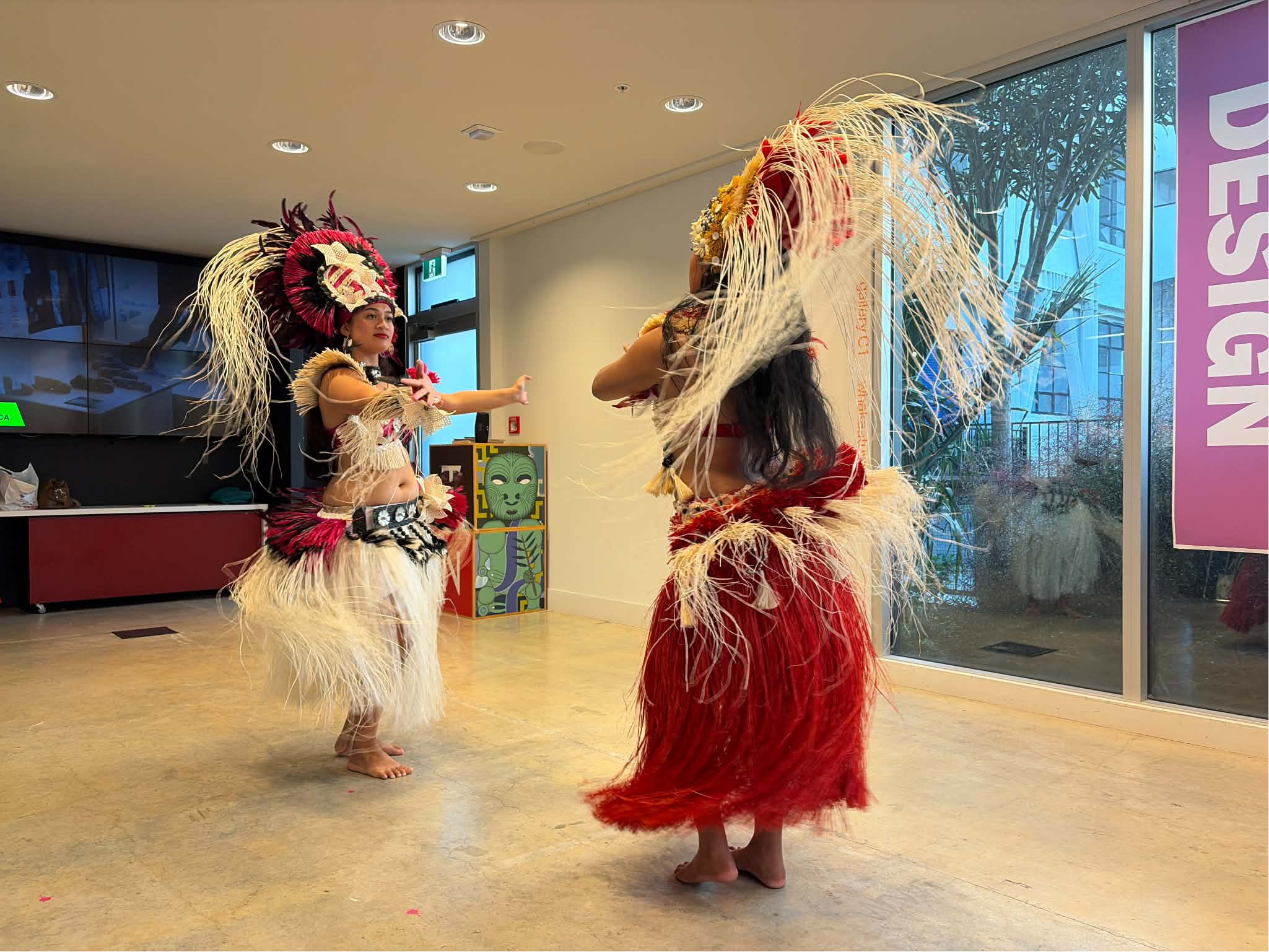
Rarotonga calling
For Tauira and Shamara, travelling from Rarotonga’s Tereora College for Kōhara2Shine was a rare opportunity.
“This is my first time in New Zealand, and it’s been overwhelming,” says Tauira.
“My highlight during the exhibition was the haka, the cultural part felt so incredible.”
Both students plan to study at Massey next year, but as well as touring the Massey design campus, they visited Toi Whakaari, Te Papa’s Pasifika collections and Whitecliffe art school in Auckland.
Tauira discovered a passion for design in Year 10.
“I like to be creative and inspired by natural things like flowers, and I came to love it so much,” she says.
Her tivaevae features tipani flowers and her favourite colour, orange, reflecting “the tropical side of Rarotonga”.
It also uses a traditional Cook Islands pattern. “There’s a specific design called tikitiki tangata which is an image of people holding hands together, and it stands for unity.”
While Tauira hopes to pursue interior design, Shamara has fashion design in her sights.
Sewing has been Shamara’s passion since Year 10 and she credits both school and family for developing her skills.
“We had embroidery class, and that’s where I learned it from. And also from my grandmother.”
Shamara spent eight weeks creating her tivaevae, which centres on the gardenia flower and is finished with hand and machine embroidery.
Her performance costume features “everything from the environment” – tropical colours, shells, seeds, nuts, and the kiri’au (dance skirt) was made with fibre from the hibiscus tree.
The students were accompanied by technology teacher Kirsten Le Bon, a New Zealander teaching in Rarotonga.
Kirsten first met Nan while helping develop the New Zealand technology curriculum, and the trip was generously funded through Nan’s Prime Minister’s Award winnings.
Kirsten says the visit was a wonderful opportunity.
“It was like gifting [the students] to New Zealand for all the support and connection that they’ve given me in their country.”
Kirsten’s own passion for textiles began early. “I was the two-year-old who used to play with fabric at a very young age.
“I was on a sewing machine at six years old. I was on a farm and I didn’t want to be a farmer, and I always wanted to make clothes, but my passion is sustainability so I went to India and studied cotton and silk and women’s education.”
She sees no gender stereotypes in technology education.
“I’m a very staunch advocate for empowerment for people to be able to sustain their own creativity.
“We brought up four shirts of my Year 11 boys that printed their own fabric and made their own tailored shirts.”
Gender, materials, style: “It doesn’t matter to me as long as you’re thinking about what fibres and designs you are creating and it’s an expression of a person,” says Kirsten.