Inclusion starts with connection at Kaitiaki Kindergartens
Being named a finalist in three categories at the 2026 Diversity Awards gave Kaitiaki Kindergartens a chance to celebrate the inclusive culture it has built, while learning from the organisations around it.
When Education Gazette visited Kaitiaki Kindergartens’ head office in Tāmaki Makaurau Auckland, the visit began with a mihi whakatau. It was fitting for an organisation whose approach to inclusion is closely tied to connection, belonging and a strong sense of place.
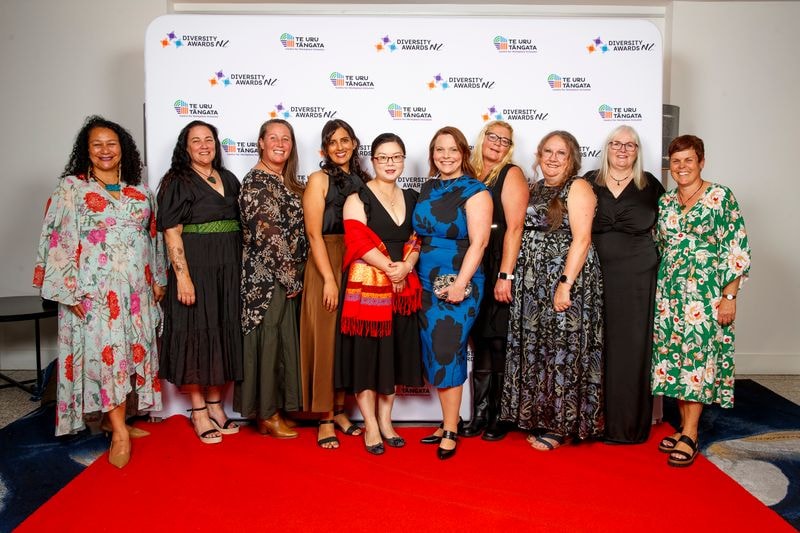
Earlier this year, Kaitiaki Kindergartens was named a finalist in three categories at the 2026 Diversity Awards NZ, hosted by Te Uru Tāngata Centre for Workplace Inclusion.
The awards received a record 135 entries across eight categories, with 50 finalists selected. Kaitiaki Kindergartens was represented in three of those categories. Chief executive Tara Solomon was a finalist for Inclusive Leader of the Year, Parakai Kindergarten was a finalist for the Cultural Competence Award, and Kaitiaki Kindergartens was one of three finalists for the Respectful Culture Award.
The group was the only education organisation among the finalists, alongside large Aotearoa New Zealand organisations including Air New Zealand, Kiwibank and New Zealand Football.
For Tara, however, putting Kaitiaki Kindergartens forward was never simply about receiving an award.
“One of the reasons that we even put ourselves forward is not really to shine light on us, but to shine a light on what education does.”
Being recognised across three categories was particularly meaningful because, for Tara, it showed that the organisation’s values were reflected throughout its mahi, rather than belonging to one particular programme or team.
“It just showed that diversity and inclusion is at every level of our organisation, which is our vision,” she says.
The awards also gave Kaitiaki Kindergartens an opportunity to look beyond its own practice and learn from others.
“Another thing that we got from being there was we were learning as well,” says Tara.
That learning has continued after the awards, including through the establishment of a neurodiversity group within Kaitiaki Kindergartens for staff.
But the work of creating an inclusive culture had started long before the awards.
Building belonging from the beginning
At Kaitiaki Kindergartens, belonging starts with how people are welcomed into the organisation.
New kaimahi take part in inductions and mihi whakatau, helping them understand the organisation, its values and the communities they are joining.
Professional learning is another important part of the approach. During term breaks, Kaitiaki Kindergartens holds professional development weeks covering topics including wellbeing and maramataka, alongside opportunities for kaiako to share their own ideas and innovations.
Learning also happens by visiting other kindergartens.
On one recent professional development day, staff visited two different kindergartens to see what their colleagues had been working on. At one, an art installation caught their attention, but for Tara, the real value was in understanding the process that had led to the final result.
“One had this amazing art installation, but it wasn’t the installation that was amazing, it was the journey that they’d gone to get there,” she says.
Seeing the mahi in another setting gave staff a chance to share ideas and recognise good practice in one another.
“And I think that that’s really powerful, giving people a voice.”
For Tara, building an inclusive culture also means making space for staff to understand the reasons behind the organisation’s approach to Te Tiriti o Waitangi.
“One thing we really understand is that it’s often not that people don’t want to embrace Te Tiriti, but sometimes they don’t understand ‘the why’.”
Tara trained as a kaiako 11 years ago and says the emphasis on Te Tiriti in teacher education has changed over time. At Kaitiaki Kindergartens, professional learning gives staff opportunities to build both their understanding and their confidence in putting that learning into practice.
Te ao Māori and the natural world
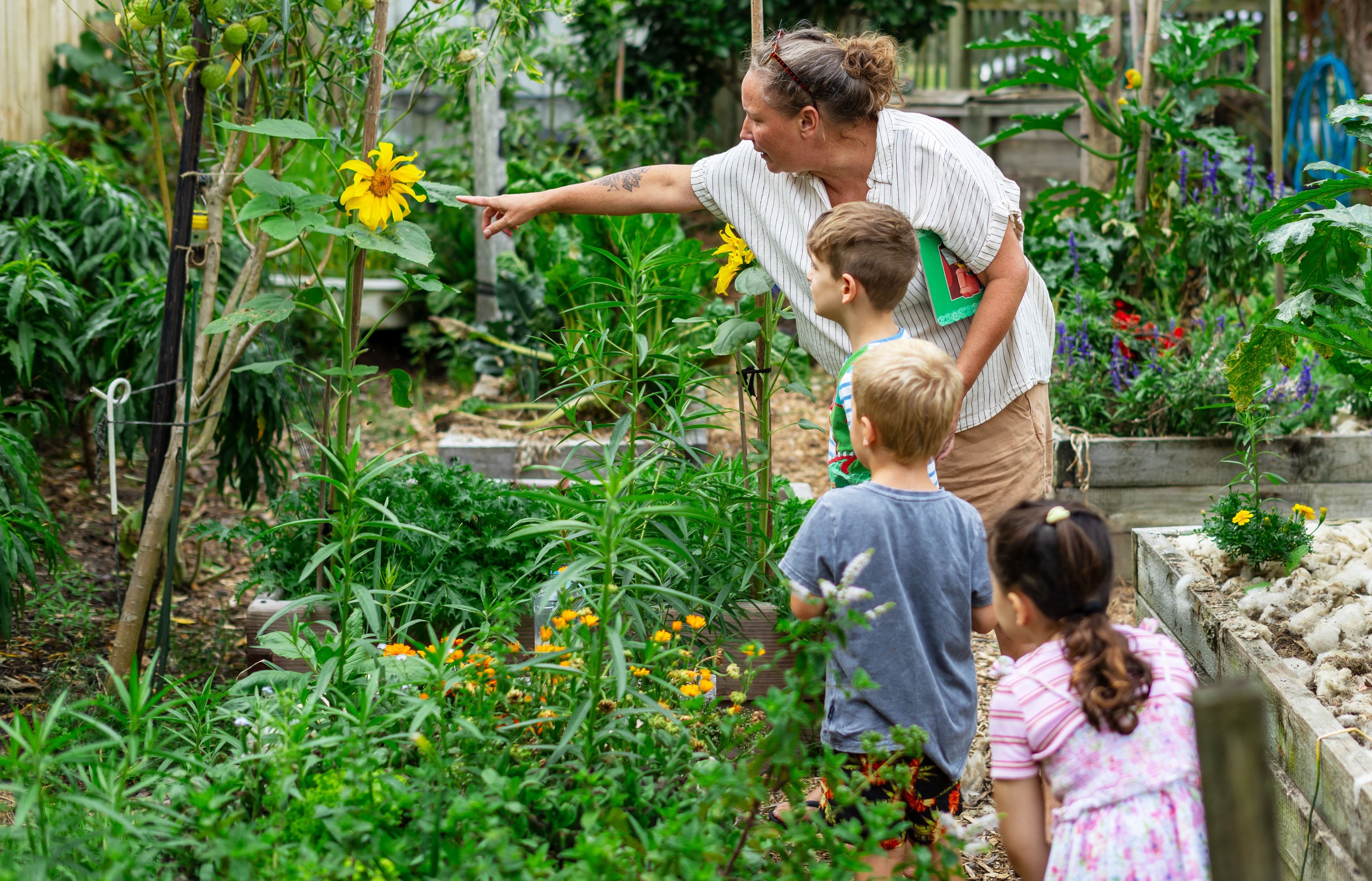
Enviroschools is another important part of Kaitiaki Kindergartens’ kaupapa, linking sustainability with an understanding of te ao Māori and the natural world. For Tara, that relationship begins with helping tamariki understand Papatūānuku and Ranginui and develop a sense of responsibility for caring for them.
“Papatūānuku and Ranginui are not ‘an other’, they’re family,” she says.
That understanding shapes the way Kaitiaki Kindergartens talks about the environment. Caring for the natural world is not treated as something separate from everyday life, but as part of the relationships children and whānau have with the world around them.
That mahi also reaches beyond the kindergarten gates.
In the six months leading up to the awards, Kaitiaki Kindergartens planted more than 1,000 trees through around 41 partnerships with schools and other organisations. Kaiako and communities also take part in local environmental projects, including cleaning up awa and planting trees.
Tara describes these activities as “ripples of kaitiakitanga” extending into the wider community.
The group’s annual survey of parents and whānau provides another indication of how those ideas are travelling home.
Tara says one of the most encouraging parts of the feedback is hearing about children using te reo Māori at home and teaching it to their whānau, as well as sharing their learning about sustainability.
“The power of it is that they’re leading, and not just with te ao Māori, but also with their sustainability practices, and the amount that they’re telling their parents what to do.”
She says a high percentage of parents report changing some of their own practices because of what their children bring home from kindergarten.
A place to be yourself
Alongside cultural identity and environmental responsibility, Kaitiaki Kindergartens’ approach to wellbeing is about creating spaces where tamariki feel safe to be themselves.
Tara recalls one tamaiti bringing his korowai to kindergarten when he was preparing to leave. As he proudly shared it with his class, he became emotional.
For Tara, moments like this demonstrate what can happen when children have a genuine sense of safety and belonging.
“Kaitiaki Kindergartens is a genuine place where they feel safe to be able to express that,” she says. “And to get that rich fulfilment.”
Parakai Kindergarten, Kaitiaki Kindergartens’ finalist in the Cultural Competence Award, demonstrates this approach through its everyday practice.
Te ao Māori is woven through the kindergarten, including in ordinary interactions between tamariki.
“Te reo Maori is spoken daily. When you’re there, you can hear tamariki calling each other in ‘haere mai ki te kai’, it’s so embedded.”
Karakia, mihi whakatau, poroporoaki and kapa haka are also all part of the kindergarten’s life, alongside a range of community-focused mahi.
Parakai has worked on zero-waste projects, supported families with food, established a community vegetable garden and run clothing swaps and giveaways.
These practical actions are another way of communicating belonging, says Tara.
“No matter who you are, you belong here, you’re important, there’s something here for you.” Kaitiaki Kindergarten’s values seen in action.
“I always say, the value of something is if you took it away, who would miss it? Parakai Kindergarten, it would be missed. It’s not just the families that are there that benefit from it, it’s the external community as well.”
The Diversity Awards recognised Parakai Kindergarten’s work to embed bicultural capability through Te Waka Hourua, Kaitiaki Kindergartens’ cultural competency framework developed by the Pou Ahurea Pandy Hawke, and have built a relationship with their mana whenua Ngāti Whātua ki Kaipara to embed their pūrakau, waiata, haka and karakia into their curriculum.
For Kaitiaki Kindergartens, cultural competency is not something that sits separately from wellbeing or inclusion. It is woven through the way people learn, work and relate to each other.
Looking after the people doing the mahi
The same focus on connection extends to Kaitiaki Kindergartens’ kaimahi.
Celebration is deliberately built into the organisation’s culture, from an annual conference and Matariki Awards night to a values award recognising a kindergarten that has embodied Kaitiaki Kindergartens’ values.
There is even a bell in their head office that staff ring when there is something to celebrate, with those moments shared with teams across the organisation. A regular newsletter also shares stories of celebration alongside information staff need to know.
Tara says those moments matter because wellbeing is not only about responding when people are struggling. It is also about creating opportunities for people to feel valued and connected through their everyday work.
She recalls hearing from a parent who attended an activity to support their child, despite finding it difficult to take a day off work.
“I went to support my child and I couldn’t really afford to take a day off work, but I left feeling like my bucket was full, and it was so worthwhile and so valuable.”
For Tara, that is the kind of impact Kaitiaki Kindergartens wants its work to have.
Taking the learning forward
The experience of the Diversity Awards also prompted Kaitiaki Kindergartens to ask what else it could be doing.
Since the awards, the organisation has established a neurodiversity group, creating space for kaimahi to share experiences and helping Kaitiaki Kindergartens think about how it can support neurodivergent whānau as well.
Tara says that work recognises that neurodiversity can be relevant to adults as well as children.
“A lot of us are realising as adults that we are probably neurodivergent in some sort of way.”
She says creating a dedicated space can support staff while also helping the organisation better understand the experiences of families.
“More and more families, not just their children, but their parents as well are looking for support in this area. Because often you’re transitioning parents as well as children.”
This is part of what Tara means when she talks about the ripples of kaitiakitanga.
For Tara, the most immediate impact of the awards, though, was seeing kaiako from Parakai experience the occasion and have their work recognised.
“When you’re in the weeds, you can feel that ‘this is a lot’.”
She says seeing the team at the awards gave them a sense that their mahi was being noticed and valued.
“They love what they do and they’re passionate about it, but it’s just that real affirmation of their mahi.”
Kaitiaki Kindergartens did not leave the Diversity Awards with a trophy, but Tara says the recognition was still valuable.
For an organisation focused on building belonging, they are proud of their efforts. The value of the mahi is not only found in formal recognition, but in the people who experience it every day.