Leading with culture and learning for life
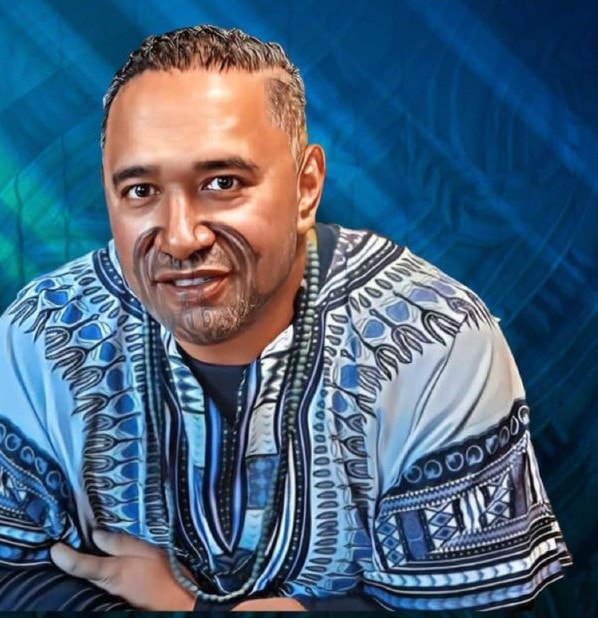
Tarei Patuwairua’s pathway into teaching was anything but conventional. From working in prisons to teaching mathematics in bilingual and immersion schools, his journey has been guided by a belief in the power of identity, relationships and education.
For Tarei Patuwairua (Waka of Tainui, Te Arawa and Aotea), teaching is about the people – who they are and where they come from. Drawing on his experience before education, he says it is what’s at the very heart of people that matters most.
Teaching across three bilingual and total immersion schools in Te Tai Tokerau – Te Kura o Te Kao, Te Kura Kaupapa Māori o Te Rangi Āniwaniwa and Te Kura Kaupapa Māori o Pukemiro – Tarei has grown his practice around whakapapa and culture, and a belief in the strengths of every young person.
But his journey was not a straight path to the teaching roles he is in now. Instead, he started with an entirely different area of studies and an entirely different career.
“I started off studying management. I thought at the time it could be all about management, managing iwi and other Māori organisations,” says Tarei.
Following this, he spent some time working with Māori in prisons around Whanganui, running courses and interventions, using a Māori practice model. It was here that Tārei developed his understanding of the incredible ways culture can expand both his students’ knowledge and motivation to learn.
“I think for me it’s more about celebrating being Māori – it’s cool. It’s a cool thing to be, and I want to show them that.”
Relationships impact the outcome
A maths teacher of almost 20 years, Tarei started out in a support role in Whangārei. There, he saw first-hand how a trusting relationship built on the pillars of a shared culture could elevate his students’ education to another level.
“The relationships you build have a massive impact on the outcome. Forming relationships with those kids, and even with their parents, can be the point of difference as a teacher.”
Tarei always begins by trying to relate to Māori students on a personable level in his teaching. Some students told him that he was the first teacher to greet them by name if he saw them around the school. It’s the little things that matter when it comes to success, he shares.
After building a trusting relationship, Tarei found that students started to view learning as something they could enjoy – and the classroom as somewhere they could thrive.
“Every kid just wants to be acknowledged and spoken to in a way where they are respected.”
The teacher becomes the student
After more than a decade, Tarei recently returned to the classroom as a student.
“I’ve been wanting to do a doctorate for years; I’ve found I’m able to grow beyond just maths, and really by some pure luck and a sabbatical I’m able to do it.”
Last year, with the support of a study award granted by the Ministry of Education, he completed a Master of Hōaka Pounamu degree at the University of Canterbury, which centred on Māori bilingual and immersion teaching and learning. Next, he will begin a PhD with further aspirations to increase his ability to teach culturally.
“My journey through my Master’s was about much more than gaining another qualification,” he explains. “It challenged me to think more deeply about who I am as a Māori educator and why I teach the way I do.”
Tarei’s PhD research will explore the ways artificial intelligence can integrate Māori values, tikanga and mana motuhake (identity). He wants to understand how to evolve and adapt to changes in technology, while holding on to authority over Māori language, knowledge and identity.
“Central to my new work is the question of how we uphold rangatiratanga, protect mātauranga Māori, but make sure our tamariki and mokopuna benefit from emerging technologies without compromising who they are,” says Tarei.
So far, he has already found that integrating te ao Māori into learning is not as simple as using the language – especially in maths. Rather, he prefers to connect the thinking behind mathematics to the experiences and culture that is meaningful to his Māori students.
“That connection does not mean putting a Māori word into a mathematics problem and calling it culturally responsive. It means considering the context through which mathematics is taught.
“Our tūpuna possessed sophisticated knowledge long before our current education system existed. When students can see themselves and their world within the learning, mathematics becomes something they can own rather than something being imposed upon them.”
While students often vary in their level of interest towards mathematics, Tarei has found his ‘win their hearts and you win their minds’ motto helps him to establish a relationship with students that comes before learning. Getting to know who they are, where they come from, and what’s important to them are small steps towards something much bigger.
“A young person needs to know that you genuinely care about them before they are likely to fully engage with what you are trying to teach them.
“Once that relationship has developed, their attitude towards learning often changes as well. They are prepared to take risks, ask questions and make mistakes because there is trust.”
Start with whanaungatanga
Tarei’s own schooling as a young person had a great impact on the way he approaches his own teaching. Being one of only a few Māori students at his school, he had to work hard to achieve his goals, and he also had to teach himself the importance of identity in education.
His family had a huge influence on Tarei as an educator – and the leader he now tries to be for his students.
“The best part of my journey is my family. My grandmother and great grandmother were humble servants and loving people. Their humility and courage are attributes that I try my hardest to emulate. My wife is an amazing person who is always supportive and is just there all the time.”
Recently, he has found that some of his favourite teachers are his own students, and he encourages other teachers to start from a place of whanaungatanga.
“Don’t begin by asking what is wrong with a student or why they are not achieving. Start by finding out who they are. Learn their name properly. Learn where they come from. Know their whānau.”
Teachers don’t need to know everything about te ao Māori before they begin, says Tarei. Instead, he advises them to make mistakes and accept that corrections are a valuable part of the process.
“’Win their hearts and you win their minds’ for me, sums up teaching. If a student knows that you respect who they are, believe in their potential and will stand beside them when things become difficult, you have created the foundation upon which learning can happen.”