Classroom conversations spark civic confidence
Teachers at Edgewater College and Aorere College are supporting students to engage with democracy in new ways. Through the civics education programme Waha, students are exploring their values, debating real-world issues and gaining confidence in their own voice.
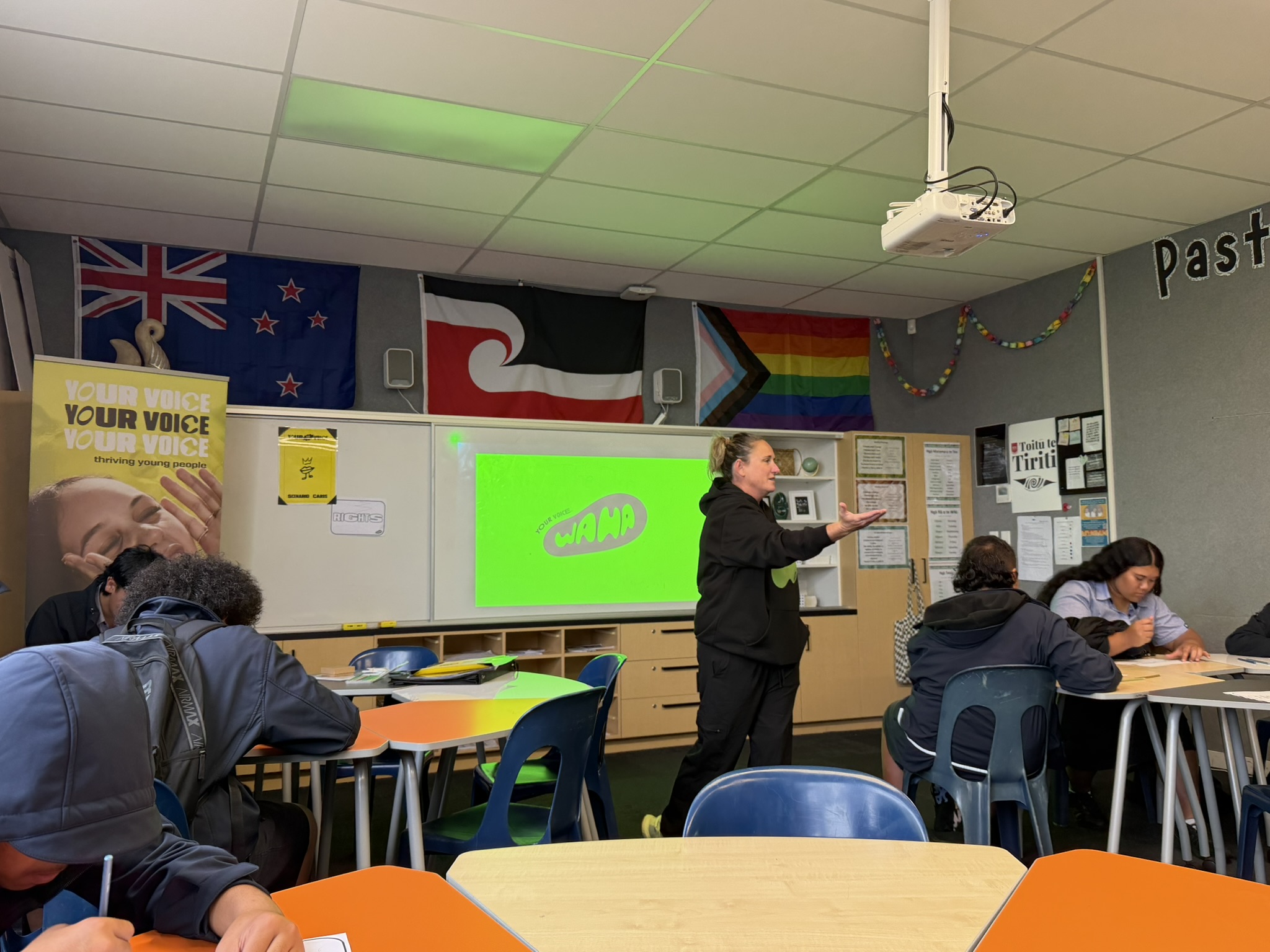
YouthLaw’s Sarah Guy gets ākonga engaged in the Waha programme.
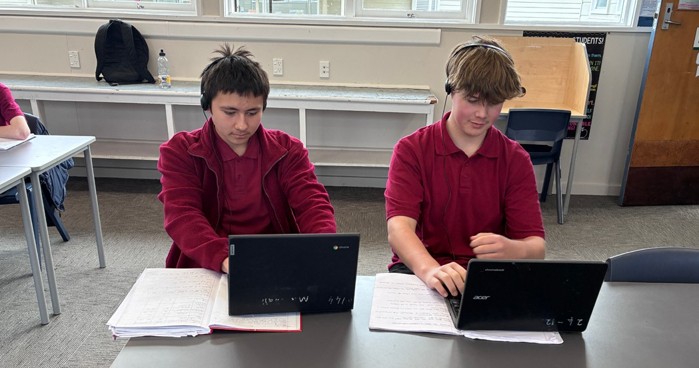
Edgewater College students say the civics education programme Waha has changed how they think about democracy and their place in it. Before taking part, Devyna knew little about Aotearoa New Zealand's political system.
“I only knew that children had rights, but not how many,” she says. Now she and her classmates say they feel more confident using their voice and engaging with issues that affect them.
Rolling out in intermediate and secondary schools this year, the Waha programme is split into three teaching components: Your Voice (what it means to be an individual citizen); Our Voice (exploring civics and the legal system); and Waha (how to take action on the issues that matter most to the students).
It’s a flexible programme, where teachers can decide how their classes learn best, whether information is shared in bite-sized snippets or as a whole subject. There are also video and game elements to support higher engagement.
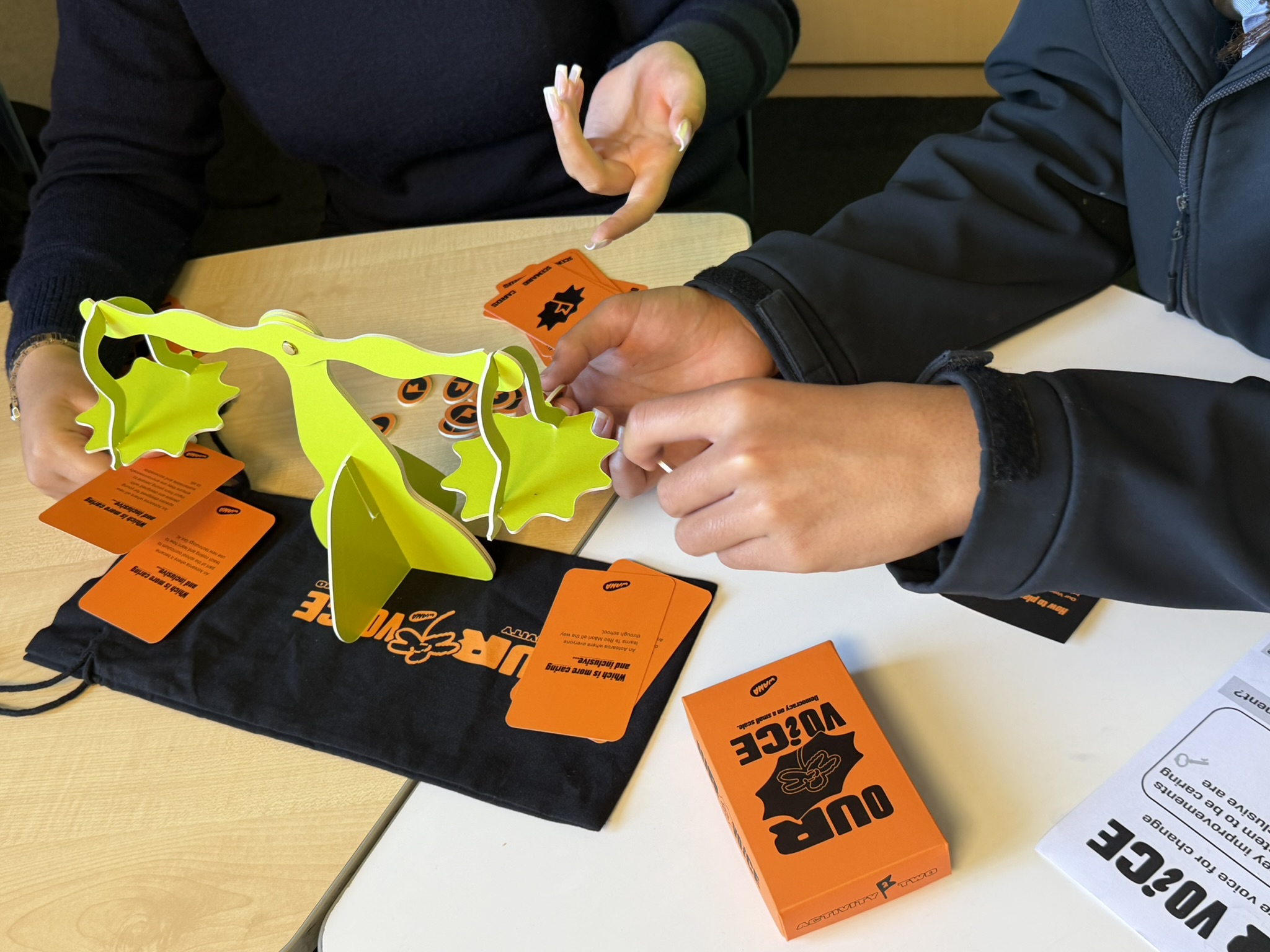
Ākonga at Edgewater College use the programme resources to understand their rights and find their voice.
Growing engagement with civics
When Edgewater College teacher Katarena Bisset sat amongst only 10 others at a civics workshop at the Social Science Teachers' Conference last year, she recalls feeling disappointed at the turnout.
But sitting behind her was Sarah Guy from YouthLaw, who invited Katarena to help the organisation out with Waha.
“From the get-go, I was in,” says Katarena. “I’m extremely passionate about this because everything we do impacts children, and if they are not aware of who’s making decisions for them and they don’t know how they can be involved, then we teachers are not doing our jobs properly.”
Katarena says civics education is taught differently across the motu. Some schools only do a week of civics at the junior school, where others might only teach civics during an election year.
Before Waha was taught in her class as a pilot programme, Katarena says that her students “knew a whole lot of nothing” about civics.
“They knew they could vote one day and that was about it. They think it’s something for adults; it’s not a young person problem,” she says.
But her students also told her they wanted to be heard, but they felt they weren’t being listened to.
“That was really cool to see; that despite my students thinking they were not a part of democracy, they still wanted to be.”
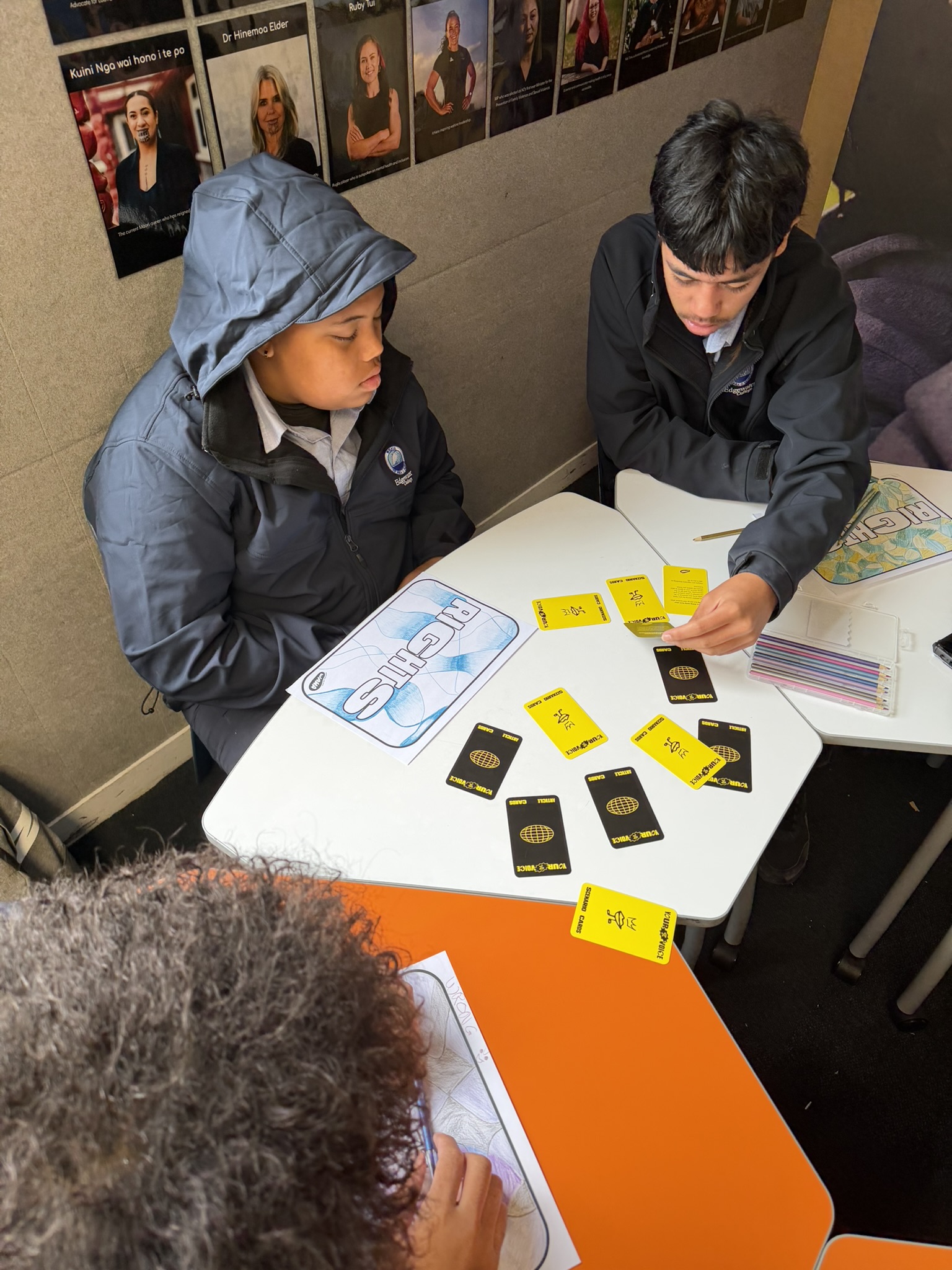
Ākonga at Edgewater College use the programme resources to understand their rights and find their voice.
Understanding different perspectives
Aorere College teacher Moira Hintz began working with YouthLaw this year to help craft, develop and launch Waha.
“It’s been a long-time focus of mine to help our students better understand that they can have a voice,” she shares.
“Just because they’re a 13-year-old in the classroom, it doesn’t mean they can’t have an impact on a political party’s policy.”
Her social science class took part in a pilot of Waha, helping shape resources that made sense to students.
“We didn’t know how it was going to work with the students until we were there in the classroom, seeing how they interact and engage. We want this to be educational in a fun and beneficial way,” says Moira.
She says her class discussed issues such as school phone bans and the legal driving age, with students often taking different positions. Some argued the driving age should be raised, while others believed it should be lowered.
“By getting students to reflect on what matters to them in the classroom, they can see that their peers may have different perspectives.”
On the topic of the voting age, in Moira’s younger class, she noticed they reflected what is already heard across the political spectrum in the adult world.
“Some said, ‘No, we’re too young, we don’t know what we’re talking about,” she shares. Others argued their voice did matter, as they would be affected later in life by laws and decisions made now.
“It was really interesting to hear these conversations coming through,” says Moira.
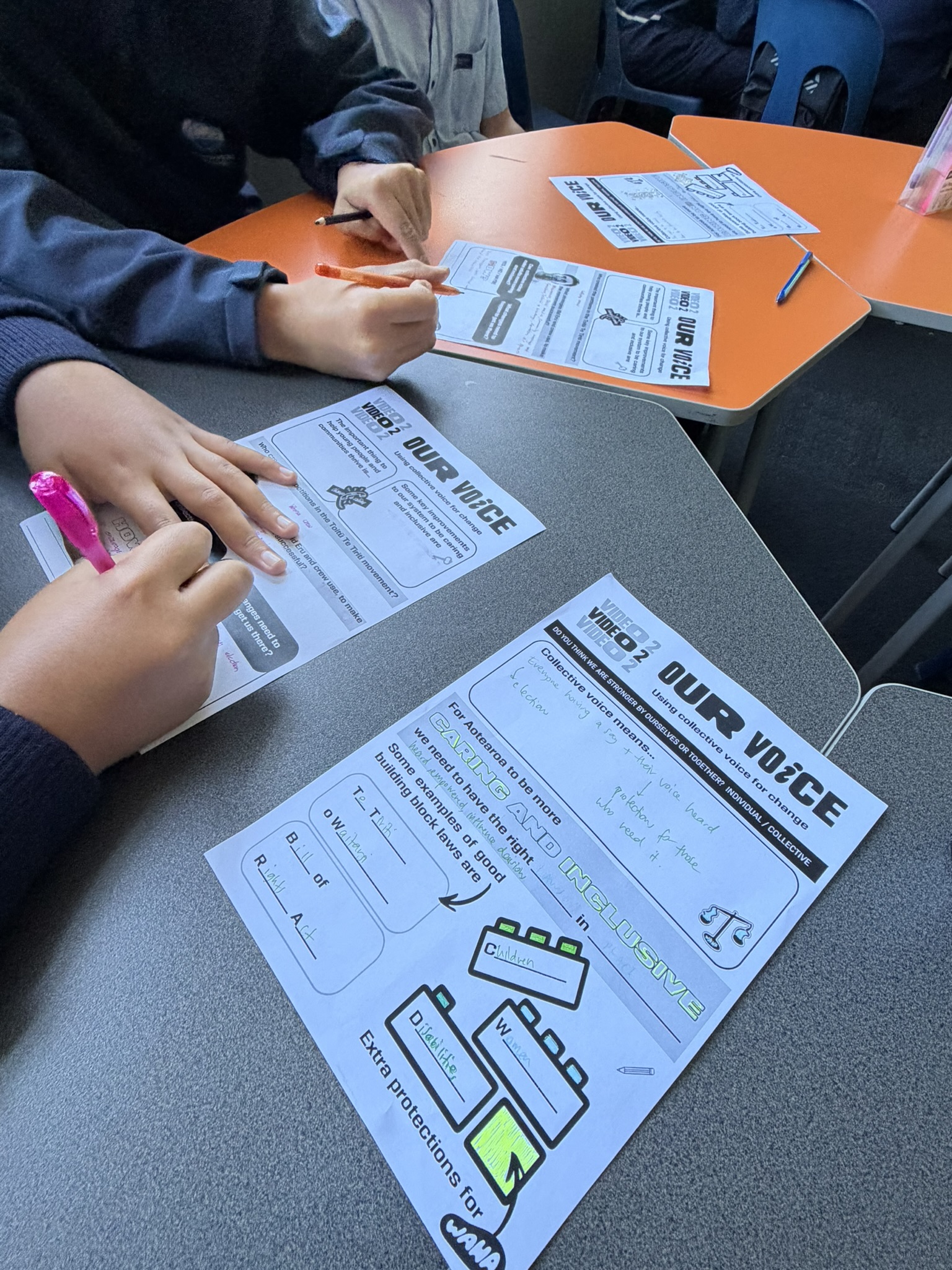
Ākonga at Edgewater College use the programme resources to understand their rights and find their voice.
Finding their voice
Both Katarena and Moira say their students most strongly resonated with the ‘Your Voice’ segment, where they would reflect on what’s important to them, identify their values and see how that reflected in policy.
“They see how within their class of 30, there are 30 individual voices, and these voices make up how our country is run; it’s meant to reflect everyone,” says Moira.
Devyna says most of the time, she feels left out of “political things”, but Waha made her feel heard and seen.
“You shouldn’t be afraid to speak up for yourself and state your opinion, but you also need to hear everyone else’s opinion,” adds another student, Sophia.
With the General Election taking place in November this year, Waha is creating conversations in the classroom, whether the students are of voting age or not.
“We want students to understand that the electoral process isn’t just about ticking two boxes once every three years after they turn 18,” says Moira. “It’s a process where their voice continues to matter after the election results come out.”
For example, students can talk to their local MPs about issues they are passionate about. Students Paki and Sophia say Waha has made them want to be more vocal about their political feelings.
“I want young people to feel empowered to share their voice so decision makers can actually hear them,” says Katarena.
“I think we would see so much incredible participation from young people if we allowed them to have the chance to do so. Their opinions are so creative, interesting, informed, and they really matter. When decisions affect them, we need to ask them for their thoughts.”
Resources are available for teachers to download and work through with their classes on Waha website, and any enquiries can be emailed to Waha.
Email: [email protected]
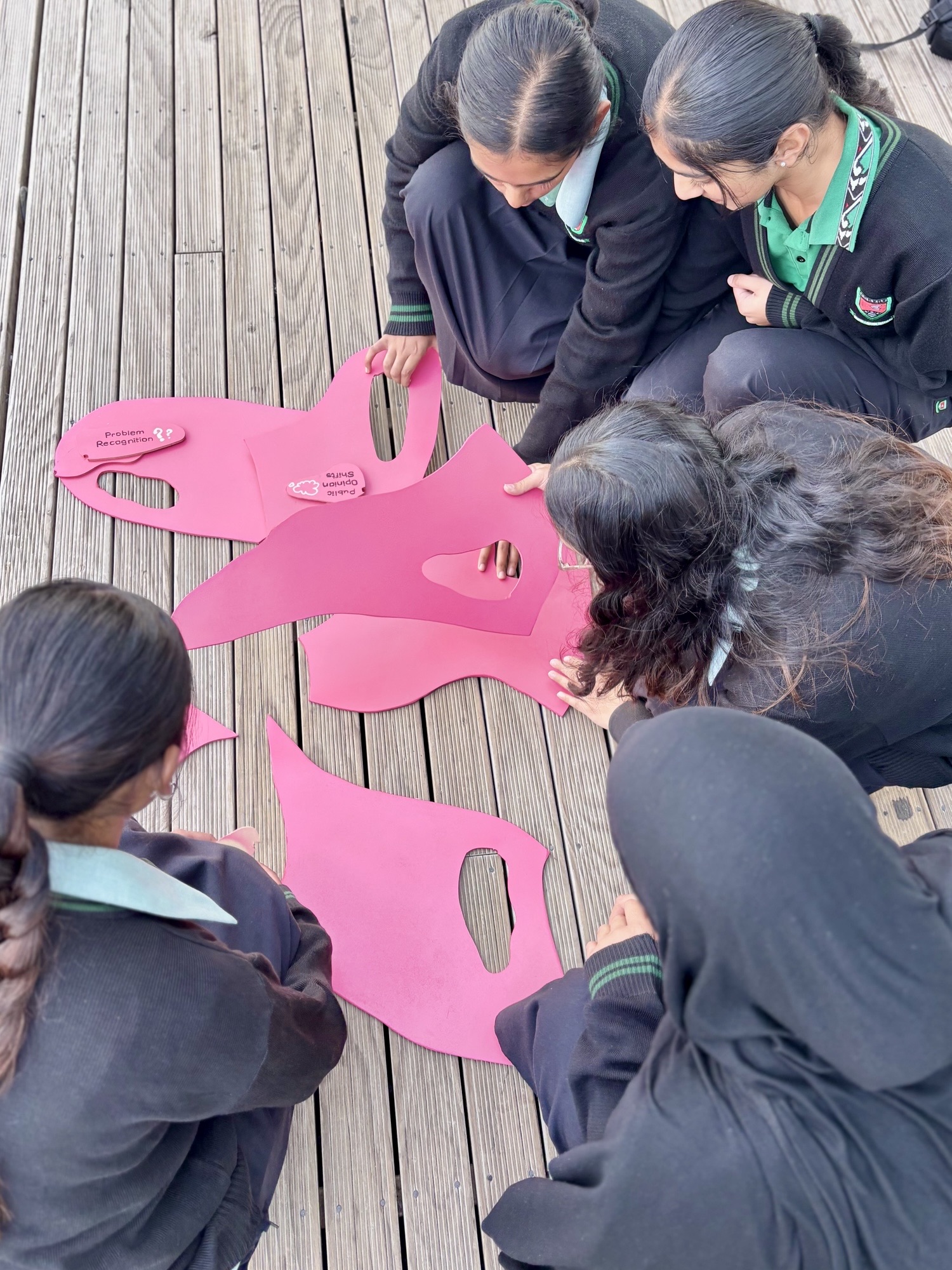
Ākonga at Aorere College are engaging with civics education in new ways.
Civics learning is also strengthened through the refreshed New Zealand Curriculum, where the Social Sciences learning area includes a deliberate progression of learning about identity, communities, citizenship, rights, responsibilities and participation from the early years onwards.
This gives schools a coherent curriculum foundation for civics education, supporting students to develop the knowledge, understanding and practices needed to engage actively in their communities and in New Zealand’s democracy.
Programmes such as Waha can help bring this learning to life through discussion, debate and authentic opportunities for participation. The refreshed Social Sciences learning area, Years 0-10, can be found on Tāhūrangi.