A mother’s story: Education expert brings refugees’ stories of resilience and hope to the world
Saniya Surani, a senior advisor with the Ministry of Education, explored the educational experiences of refugee mothers in New Zealand as part of her master’s degree. Now she’s taking her research, and the womens’ stories of resilience and hope, to the international stage – a journey that resulted in a private audience with the Pope.
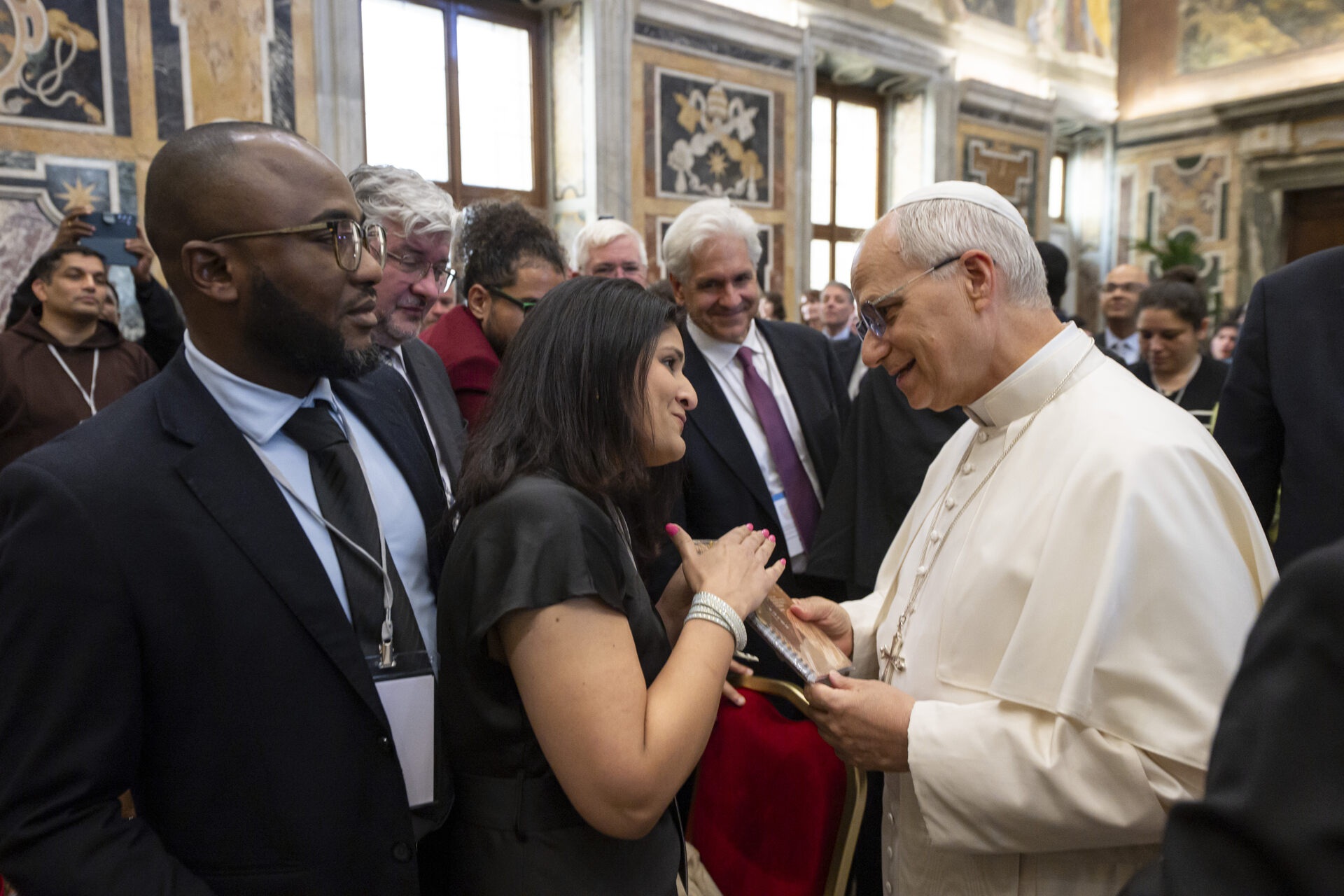
An audience with His Holiness Pope Leo XIV during the conference at the Vatican
For three years, Saniya Surani, Senior Advisor Refugee and Migrant Education, delved deeply into what it’s like for refugee women from Pakistan to settle in New Zealand.
As part of her Master’s in Education through the University of Auckland, Saniya focused on factors that supported their children’s education and the barriers they faced.
The result was a research paper, Resettlement experiences of Pakistani refugee mothers in Auckland, New Zealand that is now being noticed on the global stage – including the Vatican City.
Last year, Saniya was invited to present her research at global conference Refugees and Migrants in our Common Home in Rome, Italy, which included a private audience with the Pope.
Saniya says a unique aspect of her research was examining the relationship between refugee communities and Māori, including how the pōwhiri at Māngere Refugee Centre helped foster connections with tangata whenua.
This relationship is globally unique, she explains, and includes innovative practices the world can learn from. That’s why she’s motivated to tell the stories of refugees in New Zealand more widely, while also learning from the fresh perspectives of others.
A global journey through education
Saniya works within the English for Speakers of Other Languages (ESOL) Migrant and Refugee Education team. Based in Auckland, she’s worked for the Ministry for eight years, and in the education sector for 12.
Saniya was born in Karachi, Pakistan, and now proudly identifies as a Kiwi Pakistani. She moved to New Zealand nine years ago with her husband and oldest daughter who is now 10. Their second daughter is now 3.
At the start of her career, Saniya worked for a global education initiative, Teach For All, as part of Teach For Pakistan. There, she contributed to high-impact work in public schools across Pakistan.
Before arriving in New Zealand, Saniya lived and worked in Dubai, where she served as the assistant head of the ESOL department at an international school.
She holds a Master’s in Education from Aga Khan University and a Diploma in Education from Australian Catholic University.
Embarking on her second Master’s in Education in Auckland, Saniya worked around her young family and her job, taking three years to complete the degree.
“The Ministry supported me through its study assistance programme, and my colleagues provided emotional support throughout the journey even when I welcomed a baby during this time,” she says.
“I was fortunate to design a special paper with faculty support, allowing me to tailor the course to my prior experience, qualification and interest.”
The road to Rome
Saniya travelled to the conference in Rome on a full scholarship provided by its American organiser, Villanova University.
“Schools and communities can play a vital role in promoting gestures of reconciliation and lifting up stories of resilience and hope among refugee families.”
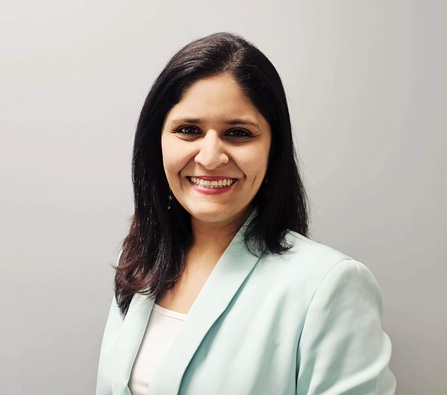
Saniya Surani, Senior Advisor Refugee and Migrant Education with the Ministry of Education.
The three-day conference brought together participants from 40 countries to discuss refugee and migrant issues.
Saniya was the only representative from New Zealand and was invited to talk about her research as a ‘lightning talk’ presenter.
“The delegates included education professionals, academics, international agencies such as UNHCR and the International Organization for Migration, Catholic institutions, the Aga Khan Development Network and many other global stakeholders,” says Saniya.
Her presentation session attracted significant interest from the audience, she adds, particularly around how New Zealand manages its refugee resettlement programme.
An audience with the Pope
“I had the incredible honour of a private audience with His Holiness Pope Leo XIV during the conference at the Vatican,” says Saniya.
She presented a notebook with proverbs about education in different languages, representing refugee and migrant communities in New Zealand. The notebook was developed as part of a Ministry of Education project to celebrate cultural diversity and the universal value of learning.
“The experience was deeply humbling and inspiring. Pope Leo XIV’s address emphasised the urgent need to respond to the challenges of migration and displacement through teaching, research, service and advocacy, and to place the dignity of every human person at the centre of solutions,” says Saniya.
“His call to foster a culture of encounter, reconciliation and hope resonated strongly with me, as these principles align closely with my work in refugee and migrant education.”
Meeting the Pope has reinforced Saniya’s belief that education is a bridge for inclusion.
“Schools and communities can play a vital role in promoting gestures of reconciliation and lifting up stories of resilience and hope among refugee families.”
The power of dialogue, belonging and resilience
Saniya says her research deepened her understanding of refugee families’ needs. Her findings were that:
- refugee mothers valued education highly but faced challenges such as language barriers, limited access to culturally responsive resources and navigating unfamiliar systems
- positive engagement with Māori culture through pōwhiri and community events created a sense of belonging and strengthened relationships
- support networks both formal (schools, government and non-government agencies) and informal (community groups) played a critical role in successful resettlement and educational outcomes.
“My key takeaways include the power of intercultural dialogue in fostering belonging and resilience, and the importance of strong community partnerships to provide wraparound support for refugee learners and their families,” says Saniya.
Learning from the experiences of others
Saniya is now looking for opportunities to publish her research findings and share best practices internationally. She is also working on another paper further exploring migrant women’s experiences and career aspirations in New Zealand.
In the meantime, her research continues to inform her role at the Ministry. She says a key focus is to provide a strong sense of belonging for migrant and refugee students by recognising and valuing the richness they bring to the school community.
“Building trusting relationships with refugee families is essential for meaningful engagement.”
Schools play a pivotal role by connecting families with community resources and creating spaces for authentic cultural exchange, she adds.
“This means creating opportunities for courageous conversations about identity, and making sure diversity is celebrated.”
Saniya Surani, Senior Advisor Refugee and Migrant Education with the Ministry of Education.