Stepping up to teach in the communities they call home
At Woodville School, two teacher aides are training to become teachers without leaving the community they already serve. Their stories, along with a student teacher in Te Anau, show how schools are growing their own future workforce and strengthening the communities around them.
When Woodville School principal Wes Va’ai-Wells looked at the future teaching workforce, he didn’t start by looking outside the district.
He looked across the staffroom.
There he saw two teacher aides with university qualifications, strong connections to the school and a passion for working with tamariki.
“I wanted to grow capable teachers within Tararua and within our own school,” says Wes.
Today, Alisea McDonald and Crystal Sargent are training to become teachers with the support of the Ministry of Education’s School Onsite Training Programme (SOTP), which combines teacher education study with extensive in-school experience.
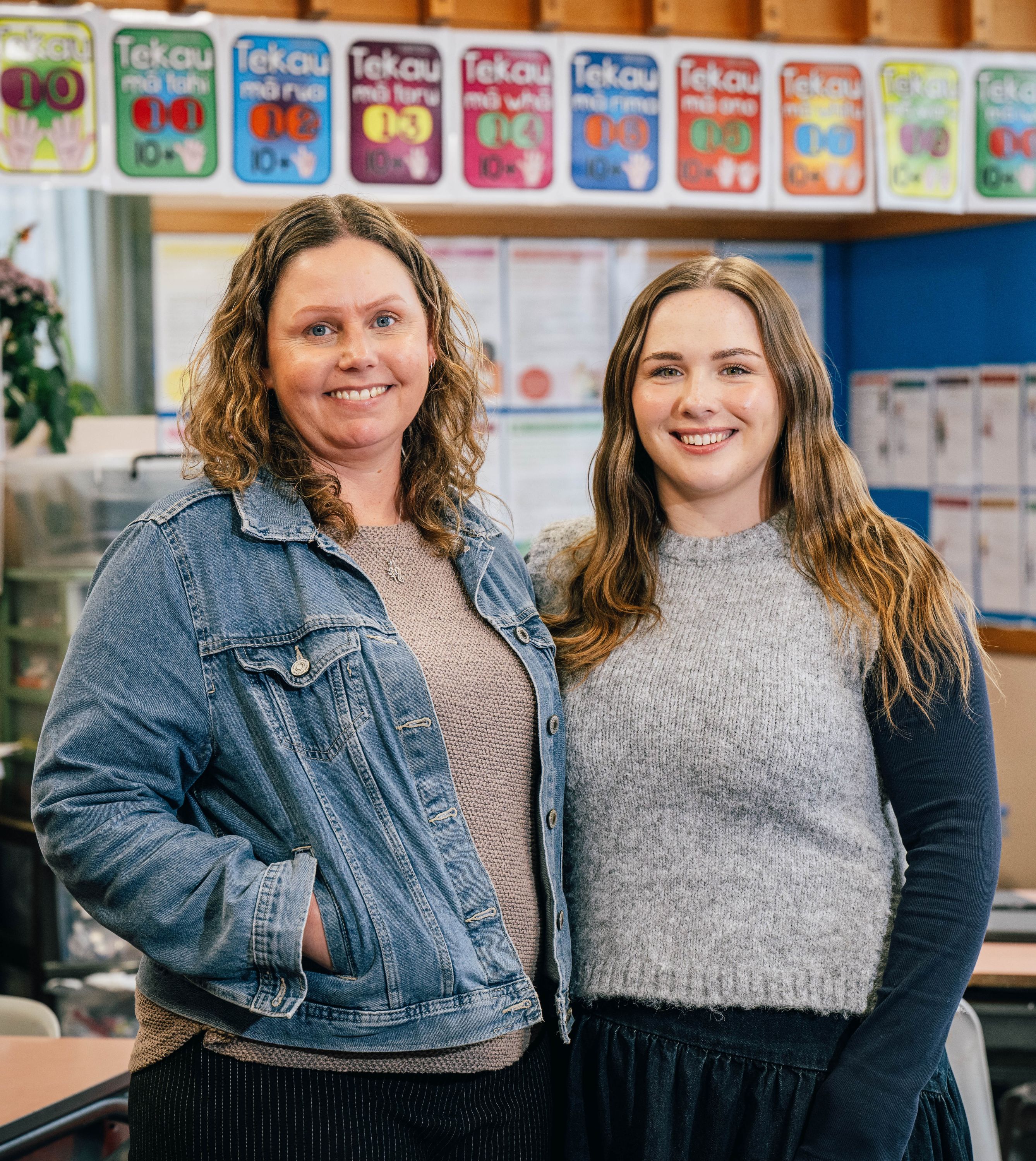
Woodville School teacher aides Crystal Sargent (left) and Alisea McDonald.
Drawn to education
For Alisea, becoming a teacher wasn’t a sudden decision.
“I’ve always wanted to make a change in the world in whatever way, shape or form,” she says.
After studying psychology and working with Oranga Tamariki in both care and protection and youth justice settings, she found herself drawn to education.
“I think teaching means to me being the change that I want to see around me and being able to create a safe environment for tamariki to thrive in.”
Each morning, she is greeted at the school gates by smiling children wanting to talk about their day. “I feel like every day that I come in, it’s always positive. It’s always light.”
The programme appealed because it allowed her to continue learning in the environment that first sparked her passion for teaching.
“What the programme allows for me to do is to continue that passion within the environment that was fostered, which is a really special and unique experience.”
Community connection
For Crystal, the pathway solved a different challenge. A mother of five with a partner running a business, she had dreamed of becoming a teacher since she was 12 years old.
“Working and studying is good for me because I have a big family.
“The aspect of the programme that’s had the biggest impact is being able to do the programme and work as a teacher aide because without that I don’t think I could afford to do this.”
Having already worked at the school helped. “I know the school. I know the kids. I know the staff.”
What both women have in common is a deep connection to their community. They are already known by students and whānau. They understand the local context. They’re not arriving as strangers. That local connection is exactly what appealed to Wes.
“I think bigger picture-wise, the benefits will come through building the teaching capabilities of the Tararua District.”
Learning by doing
The programme places student teachers in a host school three days a week while they complete a one year teaching qualification.
For the aspiring teachers involved, that means learning in real classrooms, with real students, every week.
Crystal believes that amount of immersion is invaluable. “Being in school three days a week for a whole year, you get a lot of knowledge.
“You’re not just learning how to be a teacher. You’re learning school culture. You’re learning management. You’re getting to know kids really well.”
Later she describes the experience another way.
“You’re exposed to different teaching styles and you learn so much. You’re just amongst it for three days straight and you can’t not learn. It’s like through osmosis.”
Alisea says the mentoring relationships have also played a major role in her development.
“Being paired with a mentor for the entire year and getting a mentor at your away school is really beneficial.
“You feel really safe and walked through the entire process.”
Staying close to home
More than 1,600 kilometres south of Woodville, Bernice Cullen’s story reflects another benefit of the programme.
“I was interested in SOTP because it meant I could live at home.”
That mattered.
She coaches tennis locally and wanted to remain connected to the community where she lives.
Te Anau School principal Fallon Graham sees that as one of the programme’s greatest strengths.
“For people who are part of a community like ours, it means that you don’t have to leave your home town or your family to go and pursue something that you want to become.
“It’s a nice, supportive way of looking after people in your own community.”
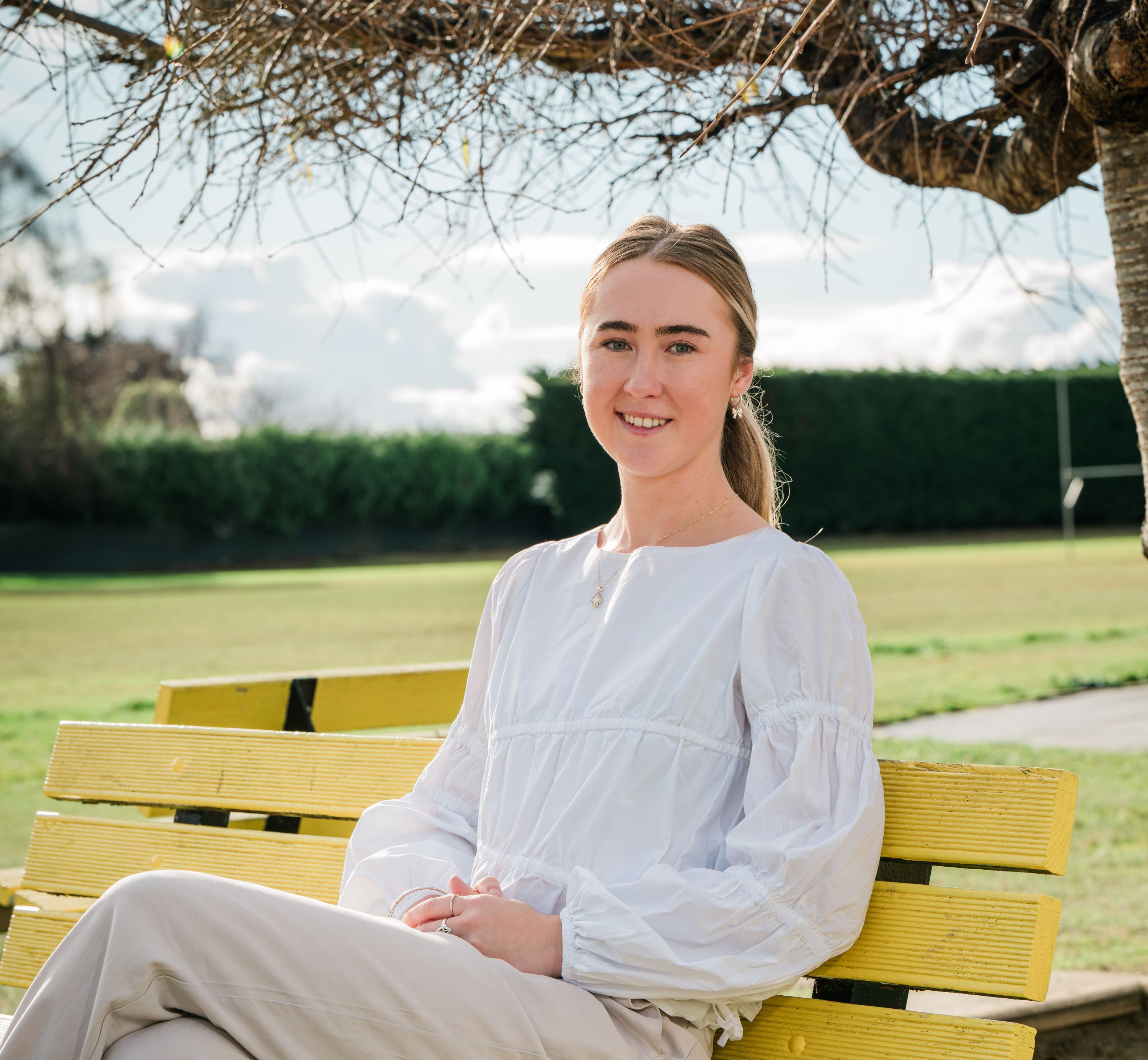
Te Anau School teacher aide Bernice Cullen.
Since beginning the programme, Bernice has become deeply immersed in both school and community life.
“As I didn’t grow up here, I didn’t actually know a lot of the community.
“Doing a programme like this and being so involved with the school and the community, it’s been really helpful.”
For Fallon, the value extends beyond supporting individual student teachers.
“It’s about including your community. These teachers, they want to be part of your crew. We need good teachers.”
Growing the next generation
For all three student teachers, the programme is ultimately about making a difference for young people.
Alisea wants to create environments where children feel safe and supported.
“I just want to make the day-to-day lives of tamariki feel brighter and happier.”
Crystal talks about helping children discover a love of learning that stays with them throughout life.
“I want to have an impact to make children feel safe, heard, and enjoy the learning process.”
Bernice hopes to remain working in a rural community after she graduates.
“I grew up in a small school in a small community and I would love to stay around the area.”
Her confidence has grown dramatically over the past year.
“I don’t think I realised I wasn’t actually that confident standing in front of a classroom until I actually had to do it.
“And now I’ve grown so much and I think I am ready to get out there and actually teach.”
For Wes and Fallon, those individual journeys point to something bigger.
As schools across Aotearoa think about future workforce needs, the answer may not always lie in attracting teachers from elsewhere. Sometimes, the future teaching workforce is already there: supporting students as teacher aides, coaching the local netball team, volunteering in the community, and waiting for an opportunity to take the next step.
School onsite training programme at a glance
What is it?
A school-based pathway into teaching that combines study with practical classroom experience.
How does it work?
Student teachers spend three days a week in a host school or kura.
They complete a one-year initial teacher education qualification.
They receive ongoing support and mentoring from experienced teachers.
Participants receive a tax-free bursary to help with study and living costs.
Why schools are getting involved
It helps grow teachers from local communities. Student teachers gain extensive hands-on classroom experience. Schools can support talented teacher aides and other local staff into teaching careers.
For more information, visit: