North Shore principals unite to strengthen collective leadership
As schools continue to implement curriculum and assessment changes, leaders across Auckland’s North Shore are coming together to learn, share ideas and strengthen collective capability. For the North Shore Principals’ Association, collaboration is not just about professional learning, it’s about building the relationships and trust that help schools respond confidently to change and support better outcomes for learners.
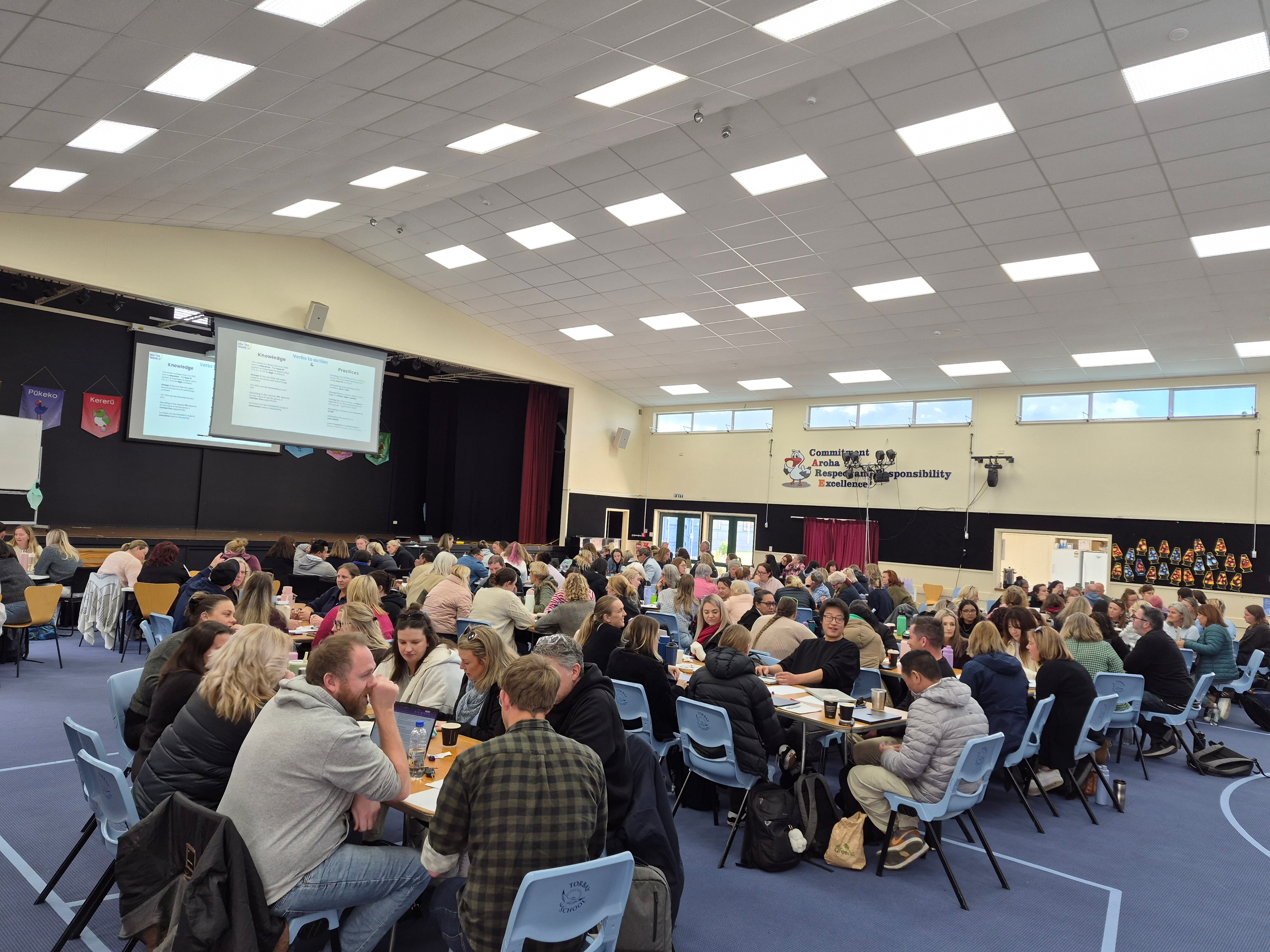
Earlier this year, school leaders from across Auckland’s North Shore gathered to explore curriculum implementation and leadership practice.
The summit days, organised by the North Shore Principals’ Association, were designed to help school leaders make sense of change collectively.
“The pace and scale of curriculum change created a clear need to come together,” says Nathan Janes, principal of Mairangi Bay School and executive vice president of the North Shore Principals’ Association.
“Principals were navigating new curriculum content, assessment expectations, implementation timelines and professional learning needs, often while independently interpreting the same information.”
The association wanted to create space for leaders to step back from the immediate operational demands of their schools, examine changes collectively and learn from one another’s experiences.
“When these leaders learn together, they develop a shared language and a clearer understanding of both the intent and practical implications of change.”
Nathan says the approach has also strengthened distributed leadership.
“Curriculum and middle leaders have been positioned as active contributors to schoolwide improvement, helping build capability beyond the principal or senior leadership team.
“Each school brings different strengths, experiences and community perspectives. By sharing these openly, we can challenge assumptions, identify effective practice and avoid unnecessary duplication.”
More than networking
A recurring theme across the summit days was the value of schools learning from one another.
For Nathan, meaningful collaboration is far more than an opportunity to network.
“Effective collaboration is purposeful, reciprocal and grounded in trust.”
Across the North Shore, this has included sharing resources, implementation challenges, planning approaches and professional learning priorities, while exploring how similar issues are being addressed in different school contexts.
Importantly, those conversations are most valuable when leaders feel able to be honest about what is working and what still needs attention.
“It involves leaders sharing resources, implementation challenges and emerging practice honestly, not presenting only the polished outcomes.”
Nathan believes the most effective networks create opportunities for leaders to think collectively about problems and solutions.
“The strongest collaboration moves beyond networking. It creates opportunities for leaders to think together, test ideas, share responsibility and return to their schools with greater clarity and practical next steps.”
Building trust
Strong collaboration depends on strong relationships. “Trust develops when leaders know that the purpose
of collaboration is collective improvement rather than comparison or judgement.”
Creating that sense of trust takes time, but Nathan says it allows leaders to engage in deeper professional conversations.
“School leaders need spaces where they can acknowledge uncertainty, ask difficult questions and share challenges without feeling that they must already have every answer.”
The relationships built through regular interaction become just as important as the professional learning itself.
“Trust grows through consistent contact, generosity, confidentiality and a genuine willingness to listen.”
That connection can help leaders recognise that many of the challenges they face are shared by others.
“Leadership can sometimes feel isolating. Open professional relationships remind us that uncertainty is not an individual weakness; it is often a shared feature of leading through significant change.”
Learning from different perspectives
One of the most valuable discussions during the summit days centred on balancing consistency with responsiveness.
Nathan says leaders were often asking similar questions, even though their schools and communities looked different.
“Our intention was to reduce isolation, strengthen leadership capability and ensure that schools did not have to solve the same challenges separately.”
While the summit days had a curriculum focus, Nathan says their wider value was bringing leaders together to build shared understanding, collective capability and confidence.
Learning together
The events brought together principals, curriculum leaders and middle leaders from across the North Shore.
“Sustainable improvement requires alignment at every level of leadership,” says Nathan.
“Principals help establish the strategic direction and conditions for change; curriculum leaders develop
shared pedagogical understanding; and middle leaders translate this into effective classroom practice.
“What should be consistent? Where should teachers adapt? How do we maintain high expectations while responding to learner diversity?”
Hearing how colleagues approached those questions broadened thinking and opened up new possibilities.
The conversations also reinforced that collaboration does not require total agreement.
“Constructive differences can deepen thinking and help schools make more deliberate decisions.”
Nathan says collaboration is not about creating identical approaches.
“Consistency should mean equitable access to effective teaching, not identical teaching in every classroom or school.”
An ongoing conversation
For the North Shore Principals’ Association, the summit days were never intended to be one-off events.
“Momentum is sustained by treating each event as part of an ongoing learning journey rather than an isolated occasion.”
Nathan says leaders need opportunities to trial ideas in their own schools before reconnecting with colleagues to share what they have learned.
“Leaders also need opportunities to return to their schools, test ideas and then reconnect to discuss what has worked, what has changed and where further support is needed.”
Maintaining those relationships between events is crucial to sustaining momentum and building collective capability over time.
A collective response
Feedback from participants highlighted the value of having dedicated time to think, question and plan alongside colleagues.
Leaders particularly appreciated being able to bring principals, curriculum leaders and middle leaders into the same conversations, strengthening alignment between strategic leadership and classroom implementation.
“A consistent message was that leaders left with increased clarity, reassurance and a stronger sense that they were part of a collective response rather than navigating change alone.”
For Nathan, that sense of collective responsibility is one of the most important roles principals’ associations can play.
“Principals’ associations are uniquely positioned to connect national direction with local leadership and community context.”
They can bring leaders together around shared needs, facilitate professional learning and create trusted spaces for collective problem-solving.
Most importantly, they can help ensure leadership does not happen in isolation.
“When leaders learn with and from one another, we build collective capability, improve coherence and create stronger conditions for every learner to succeed.”
For associations or networks wanting to create similar opportunities, Nathan’s advice is simple.
“Begin with a clearly identified, shared need and involve leaders in shaping the learning.
“One-off presentations can build awareness, but sustained collaboration develops capability.”