Learning from the little blue penguin
For a nation blessed with ready access to its coastlines, the potential for schools in Aotearoa to take their learning out to the sea’s edge is immense. Some of the caretakers of New Zealand’s kororā (little penguins) are leaning into this geographical luck by building fruitful connections with teachers.
Two of the kaitiaki actively engaging with tamariki are Places for Penguins (a Forest and Bird conservation programme based in Wellington) and Ōamaru Penguins (a scientific research/conservation facility in the southern region of Waitaki).
Ridgway School makes Places for Penguins
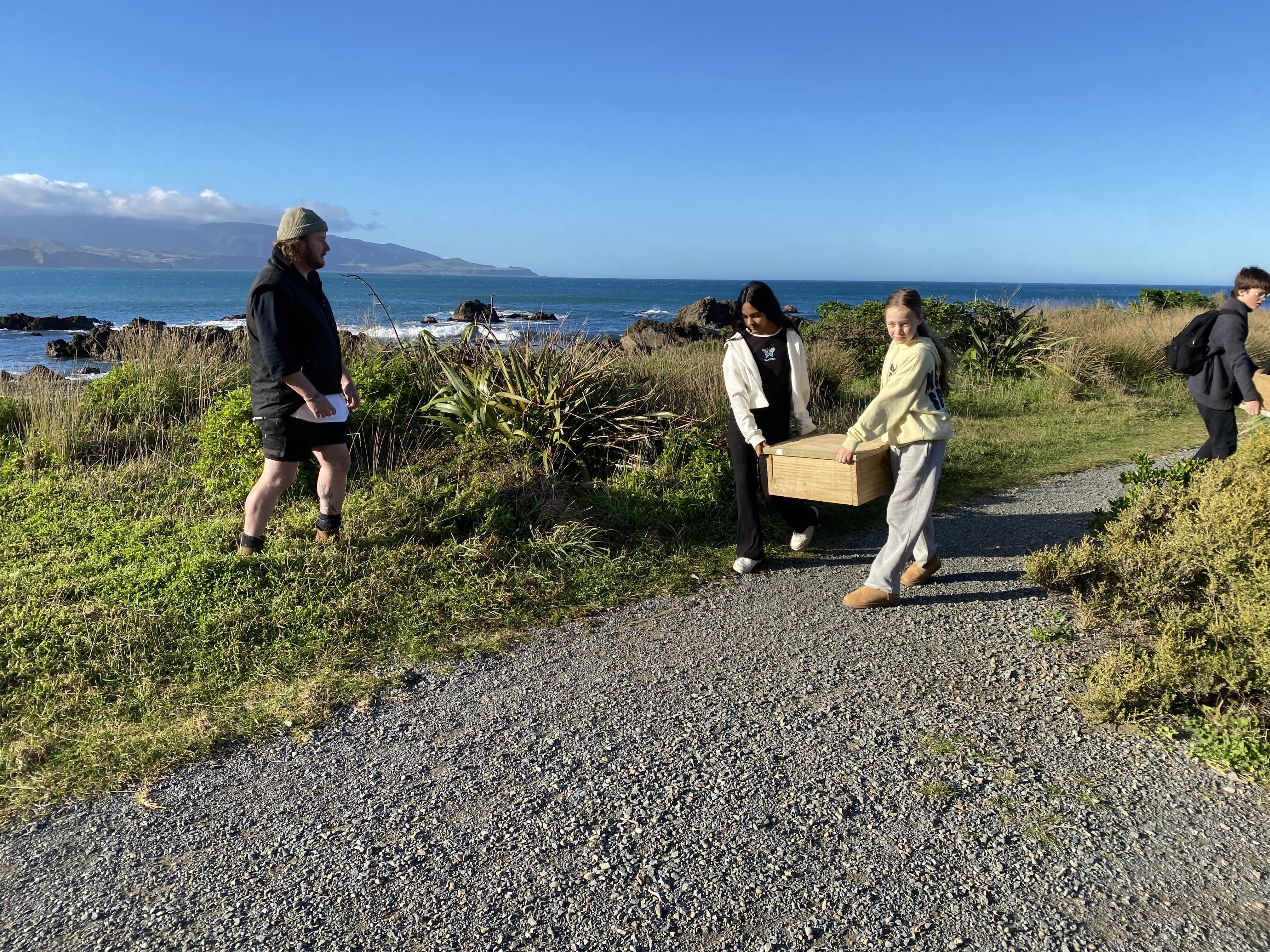
Tawatawa Ridgway students carrying one of their ‘mint’ penguin boxes.
When Te Kura o Tawatawa – Ridgway School deputy principal Nathan Crocker heard that the kororā along Wellington’s South Coast were in need of new nesting boxes, it was music to his ears. Having recently devised a new technology programme, Ridgway School was on the lookout for projects that would fit with the hard materials curriculum.
Enviroschools facilitator Chloe Bisley-Wright got wind of this and put Nathan in touch with Josh Forrest, a Places for Penguins volunteer who was dreaming of building 300 new penguin homes.
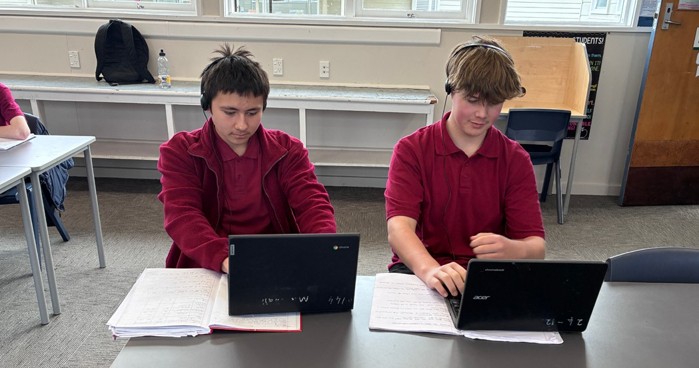
Nathan couldn’t sign Ridgway up fast enough. He arranged for a cohort of Year 7 and 8 students to help Josh put a dent in that figure. So far, those students have constructed 28 penguin hotels, which they decorated with the help of fellow Wellington Enviroschool students.
Josh, thrilled with their mahi, describes the hotels as ‘mint’.
“The encouraging messages inside are so cute.”
The project has yielded much more than a lesson in hard materials – it’s cross-curricular gold.
Inviting the Ridgway School box crafters to install their penguin hotels, Josh took them along the stretch of coast between Waitaha Cove and Ōwhiro Bay.
With students strategising where to position their homes, he talked them through some of the factors that imperil penguin wellbeing – the cars on the road between the kororā and their nesting sites, unleashed dogs and climate change.
“I wanted the kids to think deeply about the positive and negative impacts humans have on their local environment, so I came up with the provocation, ‘It’s my backyard, I can do what I want!’, says Nathan, outlining how the project tied in perfectly with Ridgway School’s inquiry learning theme.
“In terms 1 and 2 we made tunnel traps for Predator Free Brooklyn. Then to extend on that in terms 2 and 3, we made penguin boxes.”
The opportunities for hands-on learning beyond the school gate are hugely enriching, he says.
“Our school is really community focused – doing things that matter for the community and the environment is big for us.”
The kororā conservation lessons have continued outside of school hours too.
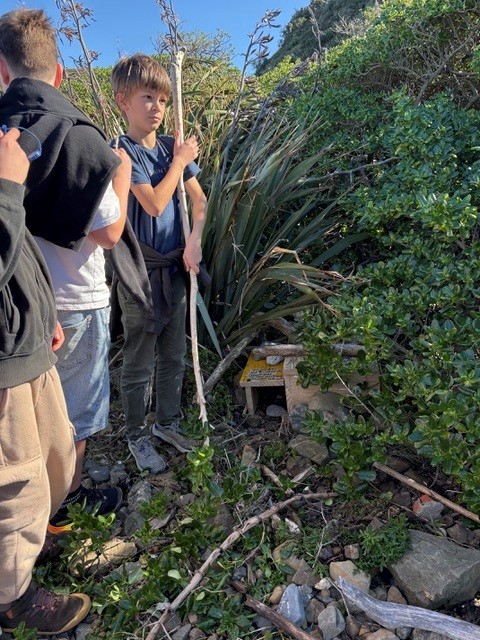
Tawatawa Ridgway students selecting a peril-free site for their penguin hotel.
“We’ve had kids go and visit the boxes with their families on the weekends. There’s been so much learning and excitement around the project. It’s been awesome.”
Nathan is keen to pursue further learning opportunities with Places for Penguins.
“We’re keen to continue working with Josh and do a little bit of citizen science for them by monitoring the boxes in the future. When the penguins find the houses our kids have made and start living in them, we want to be the ones to check on them and do the count.”
He’s a firm believer in the power of these sorts of projects to enrich the minds of young students.
“Kids don’t remember the reading, writing or the maths. They remember the projects and the days where they did something special.”
Research and conservation at Ōamaru Penguins
Te Waipounamu South Island ecotourism operation Ōamaru Penguins has done much to strengthen its engagement with the public.
While its primary focus is on caring for the kororā colony, the recent redevelopment of its Discovery Centre has allowed the Ōamaru Penguins team to showcase its research and conservation efforts in a more compelling and accessible way.
New state-of-the-art interactive displays and hands-on learning opportunities have amplified the appeal of Ōamaru Penguins for school groups. They’ve also developed two education programmes with the help of a local teacher.
‘Kaitiaki of the Coast’ and ‘Penguin Protectors’ are tailored for junior and senior learners and aligned with current and emerging curriculum requirements.
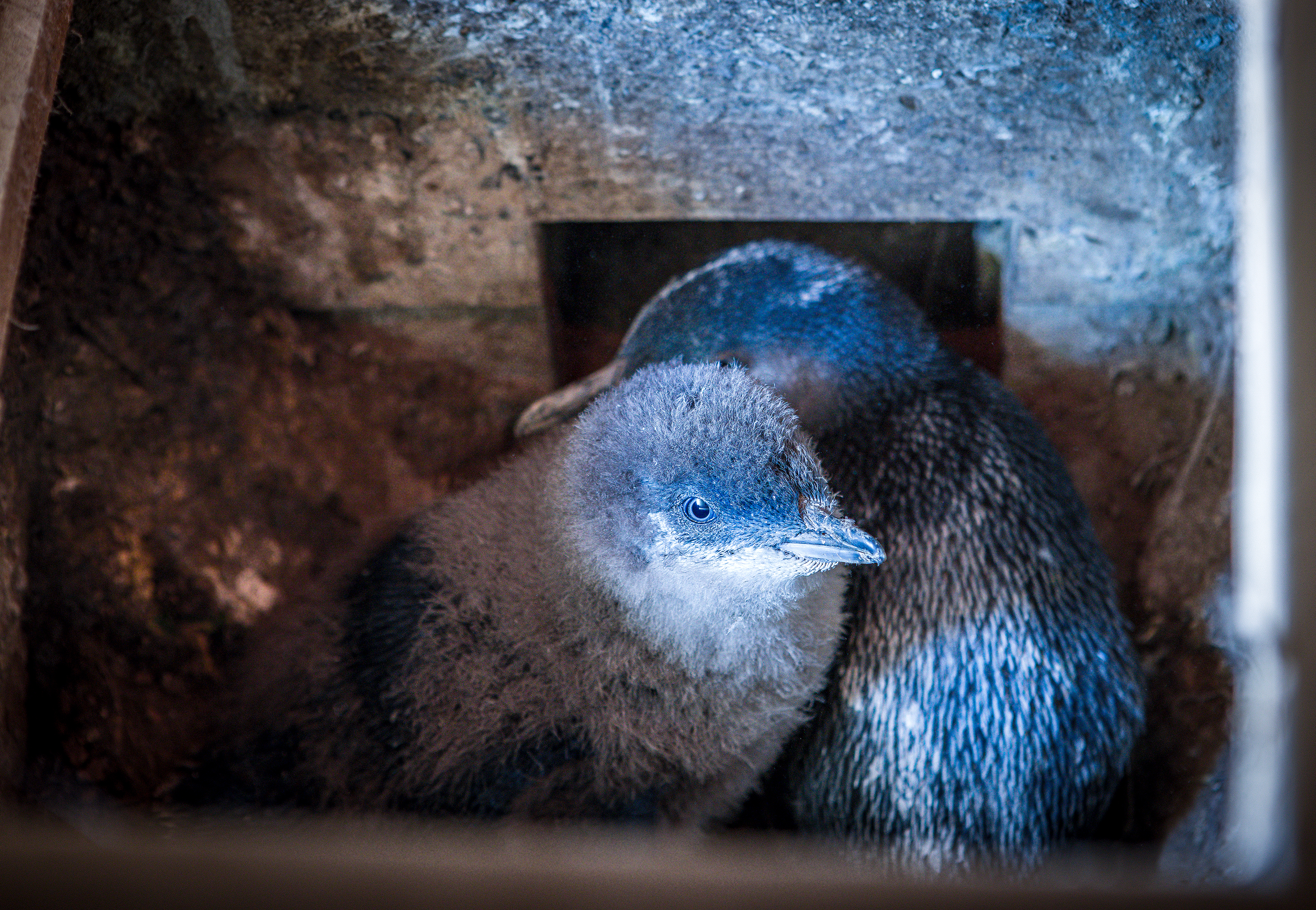
Little penguins in the specially designed darkroom at Ōamaru Penguins.
Ōmakau School: Kaitiaki of the coast
Wanda Jaggard of Ōmakau School in Central Otago signed her Year 6–8 class up for the ‘Kaitiaki of the Coast’ programme as part of the school’s annual camp trip. As most of her students have grown up in a tussocky hinterland a couple of hours from the coast, the chance to get up close to the world’s smallest penguins in their Ōamaru habitat was a rare treat.
“I see so much value in these sorts of trips. A lot of kids don’t go very far from where they live so it’s really great when you can show them something different,” says Wanda.
The ‘Kaitiaki of the Coast’ programme began with a harbour audit along the coast near the Discovery Centre.
“It was a good way to make the kids look. Then we got to see where the chicks were nesting. Some of the penguins were having their ‘catastrophic moult’ as they call it and were looking quite raggedy. The kids thought it was really special because I don’t think any of them had been there before.”
Wanda says the most impactful aspect of the programme was hearing about the town’s efforts to accommodate and protect its feathered residents.
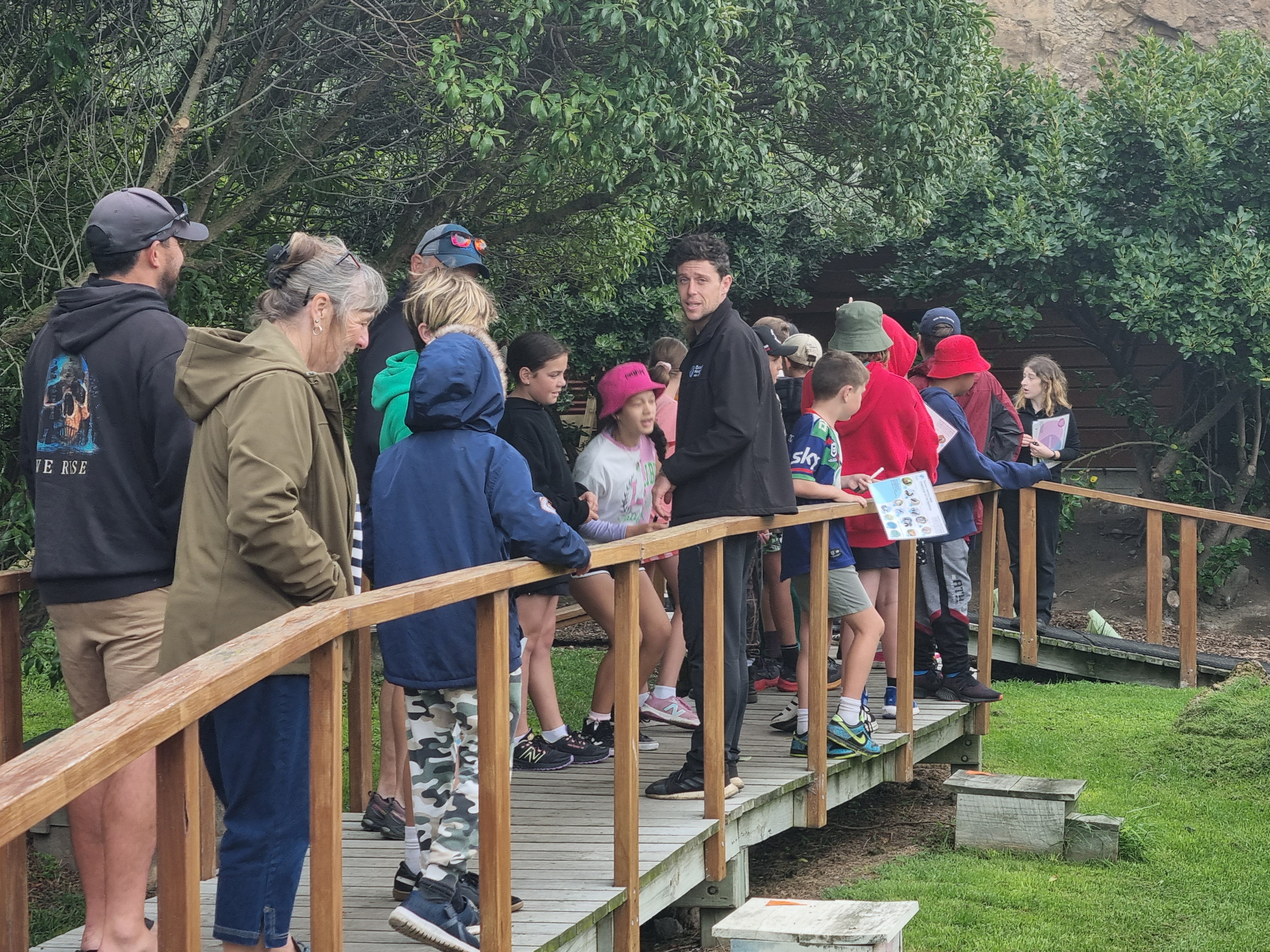
Ōmakau School students explore the penguin habitat with Henry Elsom, Team Leader (Environmental) at Ōamaru Penguins.
“We had a great classroom session there and talked about what happens when nature collides with people and towns. It was neat to see that they’ve built this place around the care and protection of the penguins.”
That nature-people collision dates back to 1970, when a population of plucky penguins took up residence in the town’s old rock quarry. The then-mayor and some of his council members were not thrilled about this and had a fence built to thwart the penguin settlement in the 1980s.
But many impassioned locals pushed back on this decision and convinced the council to turn the unused quarry site into a protected breeding ground. That saw the establishment of the Ōamaru Blue Penguin Colony in 1992.
The Ōmakau students were intrigued by this history – and by the 25-metre-long tunnel (New Zealand’s first wildlife underpass) which was built under one of Ōamaru’s roads a decade ago to create a safe passageway for kororā to waddle through on their way from the sea to their nests.
Wanda says this provided a great springboard for inquiry learning back in the classroom.
“I set the kids up with questions to do more research on. I also gave them a claim – that the penguins need to be protected – and they had to justify it either way. It really got them thinking and it covered us right through the rest of the term.”
Fenwick School: A tuākana-tēina approach to penguin advocacy
Fenwick School teacher Sara Brown is another big fan of Ōamaru Penguins.
With the help of Waitaki District’s Enviroschools facilitator, the school has built a great relationship with the staff there.
Sara says this has strengthened since the opening of the new Discovery Centre and her Envirogroup has been helping re-plant one of the new habitat areas.
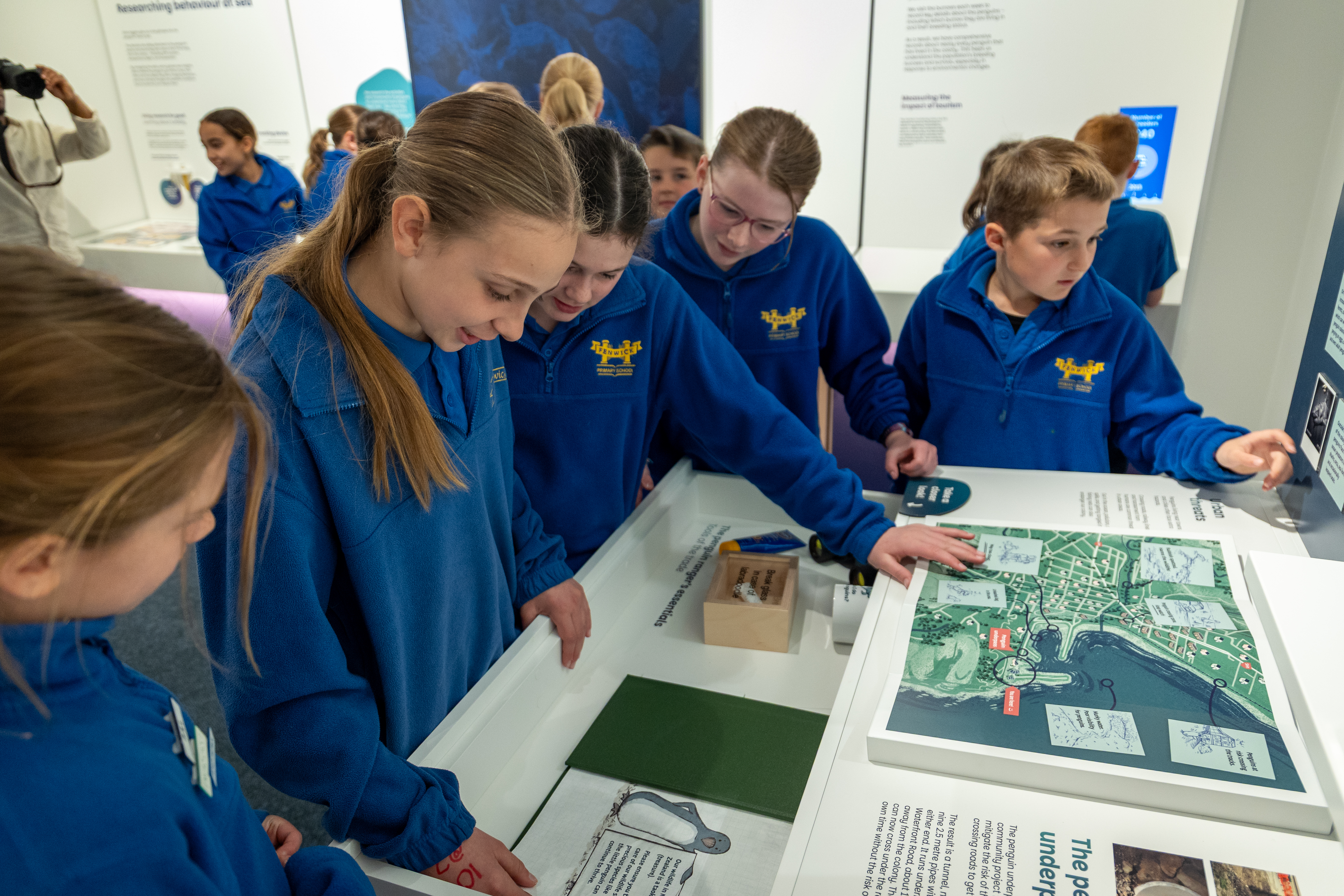
Fenwick School students learn about coastal threats in the Ōamaru Penguins Discovery Centre.
“Our senior kids are passionate about the penguins,” says Sara. “One group developed a soft plastics recycling programme after learning that rubbish had been found in the Waitaki river.
“They spoke to the junior classes about rubbish flowing into the penguins’ feeding area and showed them pictures of penguins that had been affected by it. Some kids then go home and talk to their families about it. Those small changes we learn from our kids can impact a whole household.”
This tuākana-tēina approach to penguin advocacy has had a heartening knock-on effect at Fenwick School.
“The junior classes are now obsessive about penguins,” explains Sara. “We have the Ōamaru Penguins website up in our classrooms and quite often the live cams are on. The children come in and say ‘what are the penguins up to today?’ It’s gorgeous.”
Having ‘reality penguin TV’ on tap has given the kids a sense of the kororā life cycle.
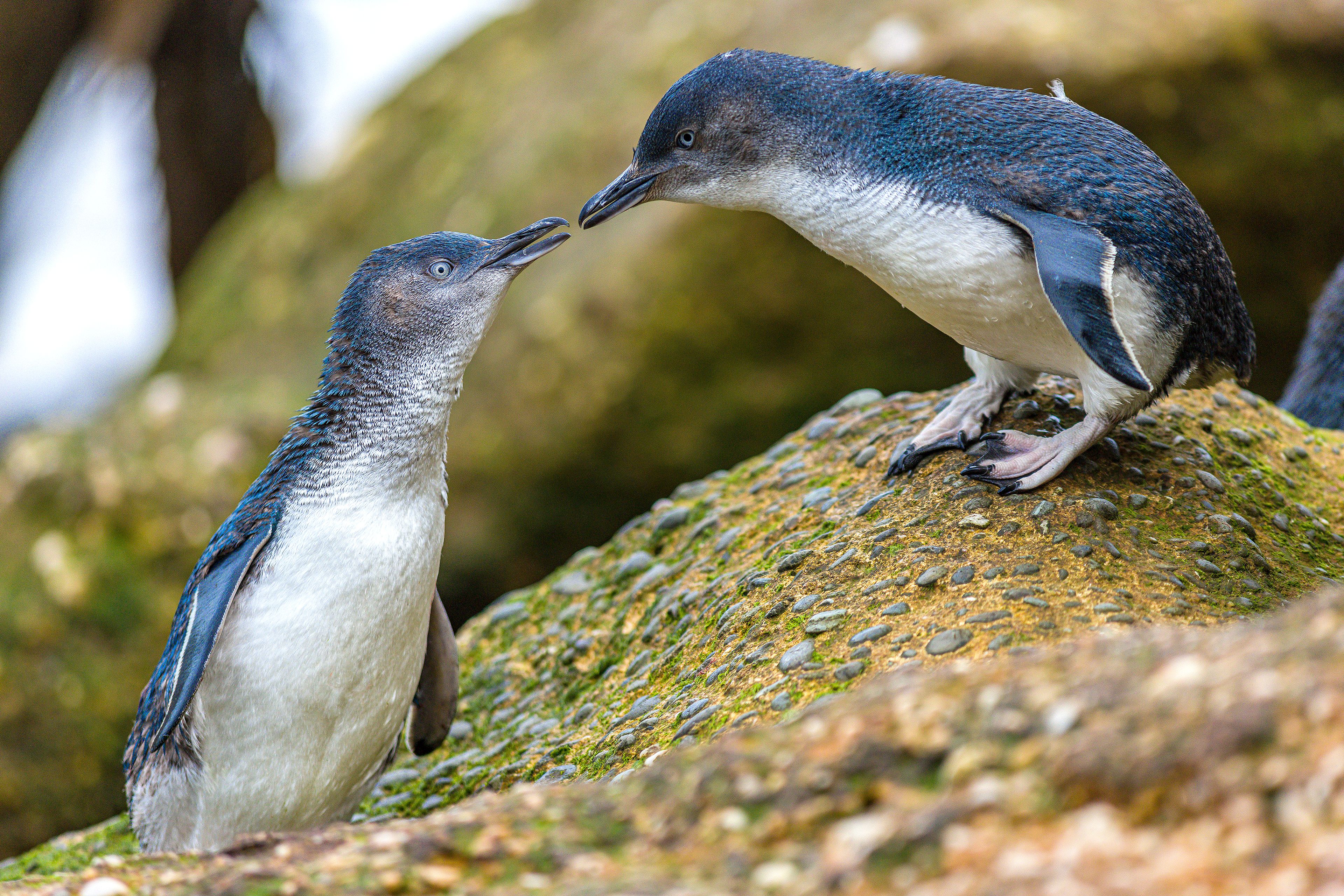
Little penguins interacting on the rocks after returning from sea in the evening.
Fenwick School deputy principal Kelly Roger receives regular updates from the juniors.
“If something exciting happens, the little kids run down the hallway to my office and say, ‘Mrs Roger, Mrs Roger! The eggs are here!’” she laughs.
Sara says that one of the most heartening things is seeing the quieter, nature-attuned students shine.
“Kids who may not have had a voice suddenly want to speak up for the birds. They ‘simmer up’ and become passionate little enviro-warriors. They’ll run up and say, ‘Mrs Brown, look how many pieces of rubbish I’ve found! I’ve just saved another bird’s life’.”
She thinks community-school collaborations like this are a boon to education and says that watching the deep kororā engagement spread through her school is a total joy.
“It’s gold, it really is.”