Kaiako head to the US to explore new ways of engaging learners
Two kaiako from the Wellington region are set to deepen their practice in the United States through the Fulbright Distinguished Awards in Teaching Programme, investigating how to re-engage secondary learners through community connections and how play can support language development in diverse classrooms.
From the Wellington region to the United States of America, two kaiako have been awarded a prestigious opportunity to spend four months studying an educational research topic of their choice, leaving next month.
Rachael Kneepkens and Mary Bluck are the newest recipients of the prestigious Fulbright Distinguished Awards in Teaching Programme. Rachael is a special education needs coordinator for Arahunga Special School at Ōtaki College. She will attend Indiana University of Pennsylvania, where her research will focus on how to motivate and support disengaged secondary students.
Mary teaches in the junior school at Te Kura O Ngā Puna Waiora Newtown School in Wellington. She will attend Rochester University in New York, researching how indigenous play in the playground can be introduced in the classroom to assist learning, especially for English language learners.
Grounded in experience and purpose
Both kaiako bring deep classroom experience and a clear sense of purpose to their research.
“I want to learn about how we can motivate the students who don’t feel like school is the place for them and understand how we can do this as a community,” says Rachael. “What resources could we offer to our students?”
Mary has spent 17 years teaching junior school students, becoming a teacher after first working as a registered nurse.
“My love of working with kids is a lifelong thing. I get so much joy from interacting with my little people,” she says. “I think we’re all given talents, and this is the one that God’s given me.”
Mary received the news she was a Fulbright awardee while waiting at a bus stop to take her students to a nearby park.
“I kept reading the email, it was so hard to believe,” she shares. “Then I got to dance around with the kids as they played. I was just feeling so happy.”
With almost 30 years of teaching experience, Rachael has been based at Ōtaki for the past five years in learning support. She applied for the scholarship after seeing it advertised on Facebook. She says she has often pondered how schools can re-engage disinterested students, with her recent work opening her eyes to the role of community.
While working within the former kāhui ako programme, Mary explored positive play in the playground, which is the inspiration behind her upcoming research.
“I will be investigating whether play is universal, whether there is a cultural component, and how we can use play to affect change, learning, agency and connection in the classroom,” she explains.
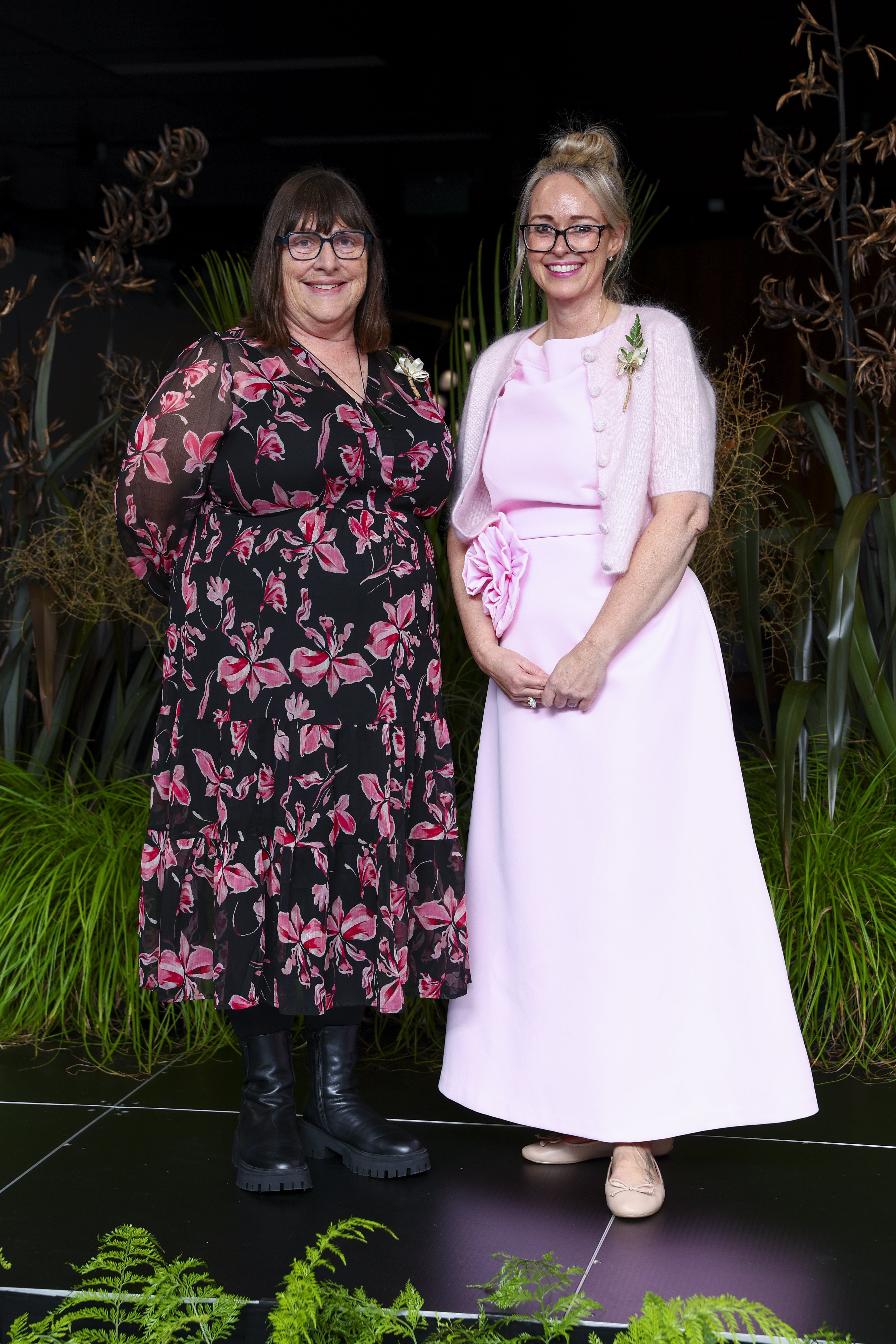
Mary Bluck and Rachael Kneepkens at the Fulbright New Zealand Annual Awards Ceremony in June 2026
Extending learning beyond the classroom
For both kaiako, their inquiries centre on expanding how and where learning happens.
Rachael has seen firsthand that learning doesn’t always need to be confined to traditional classroom settings.
“I’ve seen that there are so many opportunities for students to get more out of their education in different ways outside of the traditional classroom,” she says.
“Work experience in the community is a great example of this. If the traditional classroom isn’t working for our students, how can we do things differently so they are still set up well for their future?”
Rachael believes most students love learning, but how they access it is not one-size-fits-all.
“As teachers, we should be doing everything we can to support our learners, thinking outside of the box to create opportunities for their future,” she says.
Mary is exploring a different but complementary idea that play can act as a powerful bridge for learning, particularly for students learning English as an additional language.
In her classroom, where 80 percent of students have English as their second language, she has observed play as a shared form of communication.
“It’s used in the playground, but how can I use it in the class to accelerate learning?” she asks.
Mary’s interest in play is long-standing. She was involved in the Playcentre movement before completing her teaching qualification.
“I’ve had an underlying philosophy that children learn best through play about the things that interest them,” she says. “Now I want to build on this, especially for my second language students who need more support.”
Drawing on community and culture
Both areas of research highlight the importance of connection to community, culture and shared experience.
Rachael wants to tap into the skills and talents around her to better support students. Ōtaki College already provides examples of this, with students engaging in initiatives such as the local opportunity shop, the Zero Waste programme and support from the MenzShed.
“I want to look at how we use these groups, our local businesses, our grandparents as a community pool of resources for our students to tap into,” she says.
Meanwhile, Mary is exploring how play reflects culture and identity within the classroom.
In her school environment, she sees imaginative play as a key tool for communication, with students drawing on familiar routines and experiences. She is also interested in the shared nature of games.
“We call it Tag here, but in the South Island it’s called Tig, so how can we use this commonality?” she says.
She notes that while games like Hide and Seek are universal, they are played differently across cultures.
“One of my Somali mums explained how it was played differently in Somalia. There’s no reason why we can’t play that version so it’s familiar to those students, while also introducing something new to others,” she says.
Rachael's work similarly draws on alternative settings for learning, including taking small groups to the local library or a café.
“I think the college is doing exceptionally well already, but I want to see what else is out there, and what I can bring back,” she says. “How do we meet the needs of individual students and re-ignite a passion for learning?”
Mary also acknowledges the bicultural journey within her school.
“We have a lot to learn from our Māori counterparts, and I feel really strongly about what we can incorporate from our tangata whenua,” she says. “I want to build on what I know about Māori play as well.”
Bringing new learning back to Aotearoa
Both kaiako see the opportunity not just as personal development, but as something to share.
Rachael is approaching her research with an open mind.
“I’m at the early stages of this journey. I’m not quite sure how it will pan out, but I think it’s always good to dream big and hope I will come back to New Zealand with something that can create positive change for our students,” she says.
Although she admits to feeling nervous about leaving her family, she describes the experience as a once-in-a-career opportunity and is excited about what she will bring back, including a global perspective on education.
Mary is equally focused on what comes next.
While in the United States, she plans to visit the Strong National Museum of Play in Rochester, NY, and collaborate with teachers from 16 nations.
“This collaborating is really important in the teaching world,” she says. “For me, the best ideas often come from other teachers.”
She hopes her research will lead to workshops she can share with others back in Aotearoa.
“This opportunity will allow me to learn and bring what I learn back into the school and make a difference,” she says.
For Mary, it is a time to embrace new opportunities.
“If people ask me to do things, I will say ‘yes, let’s give it a go’, because that’s what brings excitement and joy in life, and you just never know what’s around the corner.”