How Miller Avenue School got students excited about coming to school
At Miller Avenue School in Paeroa, improving attendance has gone hand in hand with creating a more engaging school experience. Principal Derek Martin and his team have focused on quality learning, purposeful break times and fostering a strong sense of belonging, with results reflected in both attendance and achievement.
When Derek Martin arrived at Miller Avenue School, it didn't take long to identify attendance as an area needing attention.
Student behaviour was a concern and many children appeared disengaged during break times. Derek spent his first weeks observing playground interactions and how students transitioned between break times and classroom learning.
"I walked around the playground every day for a couple of weeks as well as watched the transition from break times to classroom times and could tell things needed a revamp," says Derek.
The Ministry of Education attendance data reinforced what he was seeing.
"The Ministry attendance report confirmed that not enough learners had regular attendance."
Rather than beginning with attendance campaigns or compliance measures, Derek and his team focused on making school a place students wanted to be.
Focusing on quality learning
While expanded sports and lunchtime programmes have become a visible part of Miller Avenue School's approach, Derek believes the most important work still happens inside the classroom.
"What happens in the classroom is the most important factor in running a good school," says Derek.
"Apart from just ensuring curriculum coverage, teachers need to make lessons fun, exhilarating and memorable."
That focus reflects the school's wider vision of creating a second home for learners while maintaining strong expectations for achievement. The school emphasises personalised learning, high expectations and providing opportunities for every child to thrive.
For Derek, engagement, attendance and achievement are closely connected.
As new activities and opportunities were introduced across the school day, students became increasingly enthusiastic about being at school.
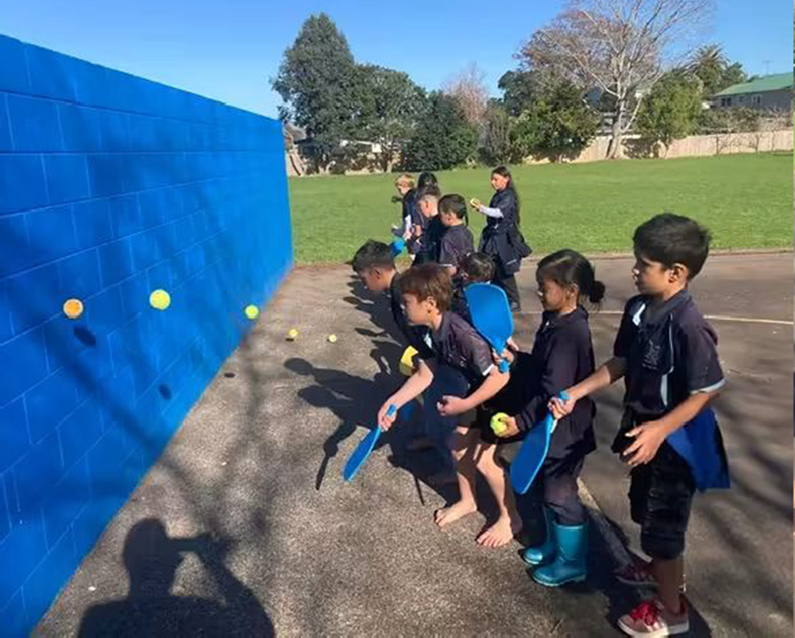
Ākonga enjoy all sorts of activities at Miller Avenue School, including mini tennis.
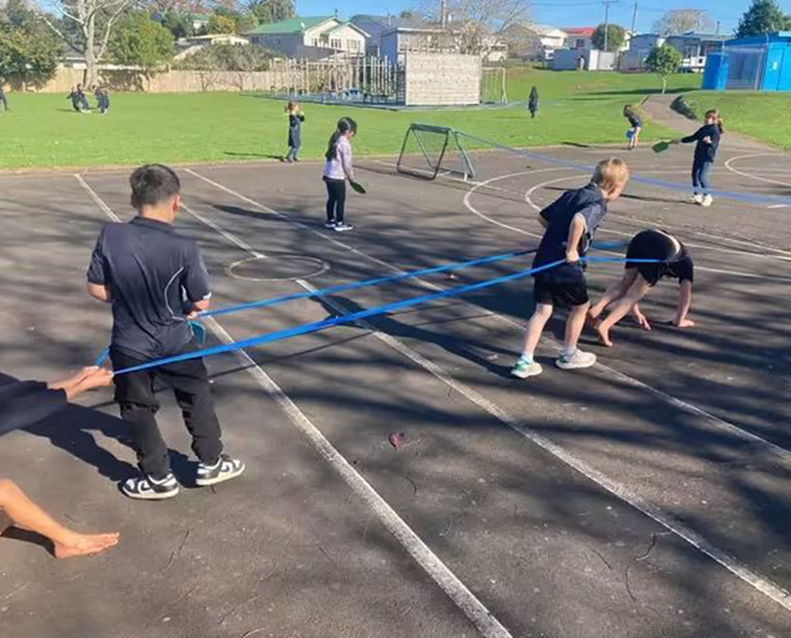
Lunchtime fun in the sun with a giant rubber band.
"It happened naturally as soon as we spiced up what was happening in the classrooms and on the sports fields and playground," says Derek.
"More students were enjoying themselves and so naturally they did not want to miss out on the fun that was happening around the school."
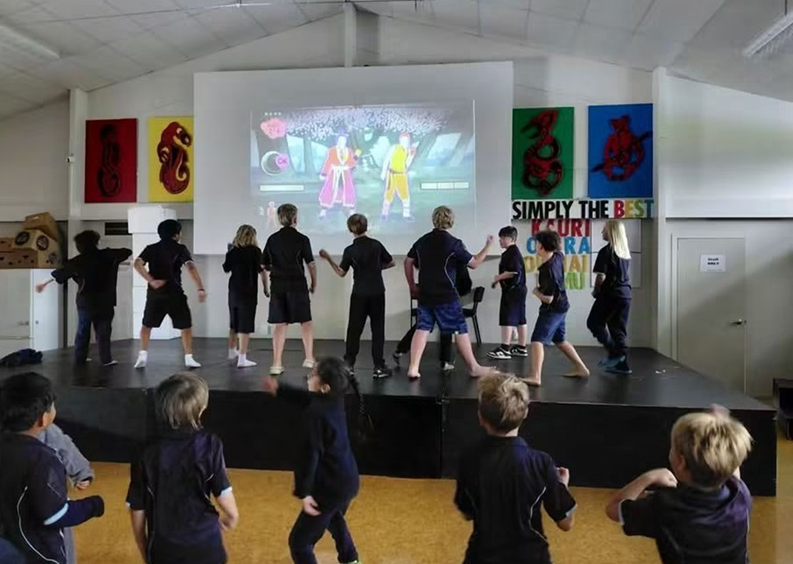
Left and right: On 'Fun Friday', ākonga enjoy dancing inside, followed by partner races and handstands in the sunshine outside.
Creating opportunities to belong
Miller Avenue School expanded opportunities for students to participate in sport, arts, music and other activities. The school website highlights an ongoing commitment to helping every child find an activity they love.
Derek says there was never a concern that these additional activities would distract students from their learning.
"Children need a lot of play and outside time and when these needs are being met, their performance in the classroom tends to improve alongside."
He says the impact was quickly visible, with “immediate improvements in maths, reading and writing”. Student voice also helped shape the activities offered.
“Make your kura an exciting and engaging place that offers children a much more fun experience than they would have if they took the day off."
"The teachers and I would present the children with a range of lunchtime activity options and ask them in advance which ones they would prefer," says Derek.
"Their answers sometimes surprised us – for example mini-tennis became hugely popular and a favourite of the junior classes. I would not have expected this, so be open minded and ask the children what activities they would prefer."
Building a shared vision
Derek says improvements in attendance have been the result of collective effort across the school community.
He and deputy principal Jane Lupton worked together to establish a clear direction and embed it into the school's strategic planning.
"Jane and I strategised what we were trying to achieve and documented it in our strategic and annual plans," says Derek. "This was shared with staff at a number of meetings and their input was encouraged."
The positive response from staff has been one of the most rewarding aspects of the journey.
"I am proud of the buy-in we achieved from staff.
We have a very talented and committed group."
As students became more engaged, staff enthusiasm also grew.
"As soon as we introduced our revamped activity programme, our team saw and understood the benefits and began to volunteer their own ideas about which sports, arts and music activities we could include."
Derek credits the wider community for helping sustain the momentum, including the board and the school's active Whānau and Friends Group.
"We used our weekly newsletter, Facebook page, website and whānau meetings to share our vision," says Derek.
"We also have a creative and committed Whānau and Friends Group who embraced and took further what we were trying to do."
Attendance as an outcome
The school's attendance improvements have been significant. Regular attendance increased from 51 percent to 70 percent within a year, while daily attendance rose above 90 percent.
Derek says attendance data helped confirm that the school's approach was working, but it never became a pressure point.
"The rise in attendance was so quick and so sustained that this was never an issue. We began to easily exceed our targets as soon as we introduced our revamped sports and arts programmes."
For him, the most important indicator was not the data itself but the atmosphere around the school.
"We began to see very happy tamariki around our school and this lifted everyone's spirit and encouraged them to participate further in the initiatives."
Looking back, Derek believes the lessons are surprisingly simple.
"It's quite a simple message – make your kura an exciting and engaging place that offers children a much more fun experience than they would have if they took the day off."