How Tiniroto School keeps its rural community connected
Sixty kilometres inland from Gisborne, Tiniroto School serves as the beating heart of its small rural community. Locals cool off in the school pool, gather kai from the garden and socialise at school events. It’s a deeply reciprocal relationship, with the community rallying to provide enriching experiences for the tamariki of Tiniroto.
Calling the roll at Tiniroto School is a short-lived affair. Just seven students, ranging from Years 1 to 8, currently attend this country kura. There is one class, taught by the principal, a release teacher and a teacher aide. Tiniroto is small, but its impact spreads well beyond the five families enrolled.
In a place with little to no public amenities, the school is also a community sports and social centre, says Jess Kawenga, Tiniroto School Board presiding member.
Facility maintenance is a major focus for the board, so the community can continue to enjoy its full-size and fully covered tennis court, swimming pool, native nursery, vegetable garden and orchard.
“When you live this far out, there are not many things you can do with your children without having to drive for an hour each way. Over summer, the school is humming. We have families in the pool, having picnics and playing tennis.”
A community-funded tennis instructor served up lessons not just for ākonga, but the wider community too – who have also benefited from swimming lessons in the school pool.
School-hosted events, including the annual Matariki evening, foster vital community connection, says Jess.
“We do have a few people out here living on their own. They are older and can be a bit more isolated.”
In return, the community gives back in spades – sometimes quite literally. A working bee each term is incredibly well-supported, says Jess, and not just by those with a current connection to the school.
“Everyone from the community turns up with their tractors and spades and the farmers bring their farming cadets with them too.”
Nourishing community connections
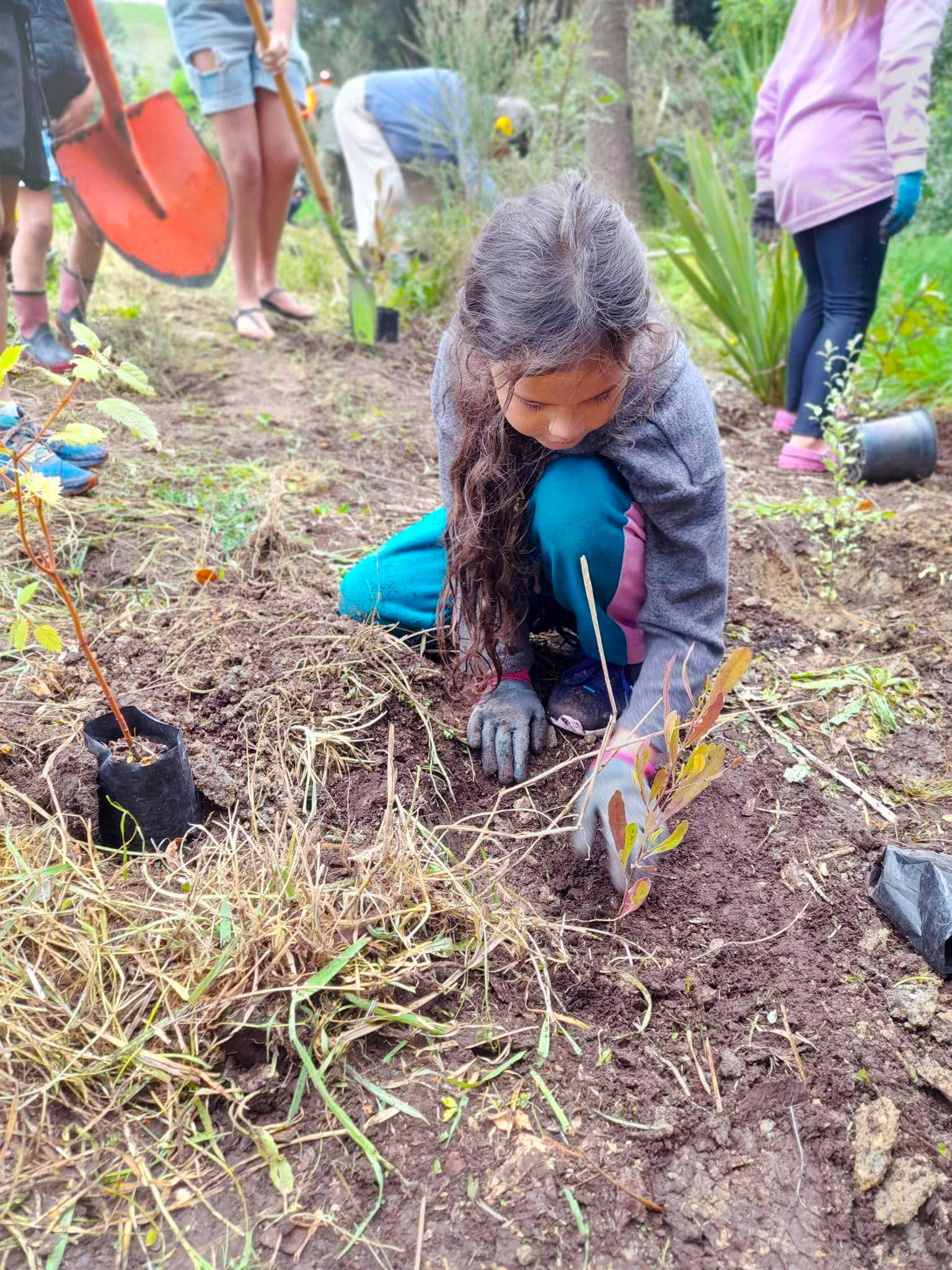
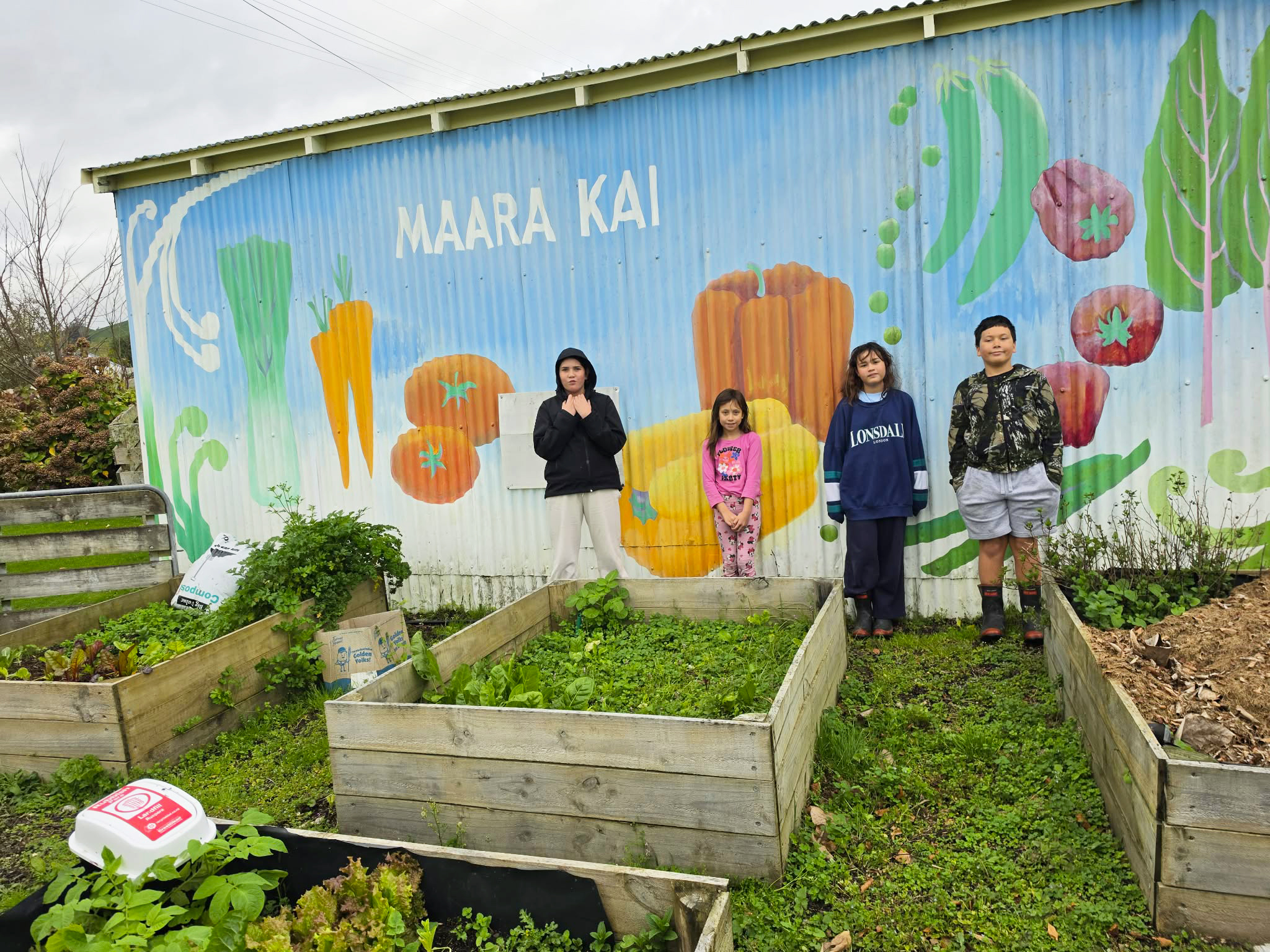
The community garden is a great way for students to learn about the process of growing but also giving back to the community.
Tiniroto’s māra kai (vegetable garden) has been a community-kura collaboration right from the get-go, says Jess.
Community working bees first established the boxed garden beds. With the support of local Te Reinga Marae and the Enviroschools programme, ākonga have learned to gather and grow seeds, giving their seedlings to the wider community.
Produce from the garden is used in their Ministry of Education-funded, school-made lunches.
“Our chef uses the garden weekly, and we love hearing the kids say, ‘Can we go and get some strawberries for morning tea?’ It’s extra special that they have grown them themselves.
“Local families will also come and gather what they need and they bring us a lot as well. One lady comes and gets veges and brings buckets of fruit for the kids.”
The school recently received funding to construct a greenhouse, so it can grow more produce year-round.
“We noticed the amount of people coming in to gather was growing and there are no garden shops or anything like that around. It’s a great way for kids to learn about the process of growing but also giving back to the community.”
Enabling enriching experiences
The deep community support enables Tiniroto to host large, interschool events that would otherwise be logistically impossible, says Jess.
Tiniroto is the proud host of the annual Tairāwhiti Small and Rural Schools Cross Country, which last year saw 200 runners converge on the community; and in 2024, the school put on the Wairoa Kapa Haka Festival – an event attended by 3,000 people.
“These events are a real challenge for a school of our size to manage. But the community always helps. They take time off work and give workers time off to help. They run the barbecue, do the marshalling, bake the morning teas and our local butcher donates the sausages. We just couldn’t do it without them.”
The Tiniroto community also supports ākonga in their day-to-day learning, says Jess.
“One of our neighbours comes and does the mail – we’re also the Tiniroto Post Office – and she shares her knowledge with the kids. She takes them to gather watercress from the streams and shows them the chrysalises forming in butterfly season.
“We have another lady, and although her grandchildren go to a neighbouring school, she still comes in fortnightly and runs a library for our kids.”
The community garden is a great way for students to learn about the process of growing but also giving back to the community.
School a community lifeline
When Cyclone Gabrielle washed out the road into Tiniroto, the school opened its gates to all children in the community, providing routine for students and reducing stress on farming parents.
“We kept classes and lunches going for everyone. The roll doubled to 17 and we called it our Storm Class.”
Without small rural schools like Tiniroto, farming communities wither, says Jess.
“If you don’t have access to a school, your prospects for employees minimise. It’s hard to get families to come live in these places and we need that variety of people in rural communities to keep them alive.”