Dunedin celebrates 150 years of teacher education
As Te Kura Ākau Taitoka – the University of Otago College of Education approaches its 150th anniversary, Education Gazette looks back at the origins of teacher education in Aotearoa New Zealand and the legacy of the country’s first training institution.
Drawing on its long history, Te Kura Ākau Taitoka – the University of Otago College of Education has built a reputation for preparing teachers to meet the changing needs of learners and communities.
Across 150 years, the college has weathered significant challenges including closure during the Great Depression, a major campus fire in 1968, and the disruption of the Covid-19 pandemic.
Current dean of the college Professor Vivienne Anderson says the institution is in fine fettle after a century and a half of educational service. She and her colleagues are keenly awaiting the college’s alumni reunion this October, when former staff and students will gather to toast the institution’s 150th birthday.
The whakataukī at the heart of the celebrations is ‘Hoki whakamuri, kia anga whakamua – Look to the past to forge the future’.
“We’re very proud to celebrate the 150th. It speaks to a long history of caring for people – of working hard to care for education and child wellbeing.
“It’s also a unique opportunity to honour all who have built this proud reputation and to consider our role in developing the educators and educational researchers of tomorrow.”
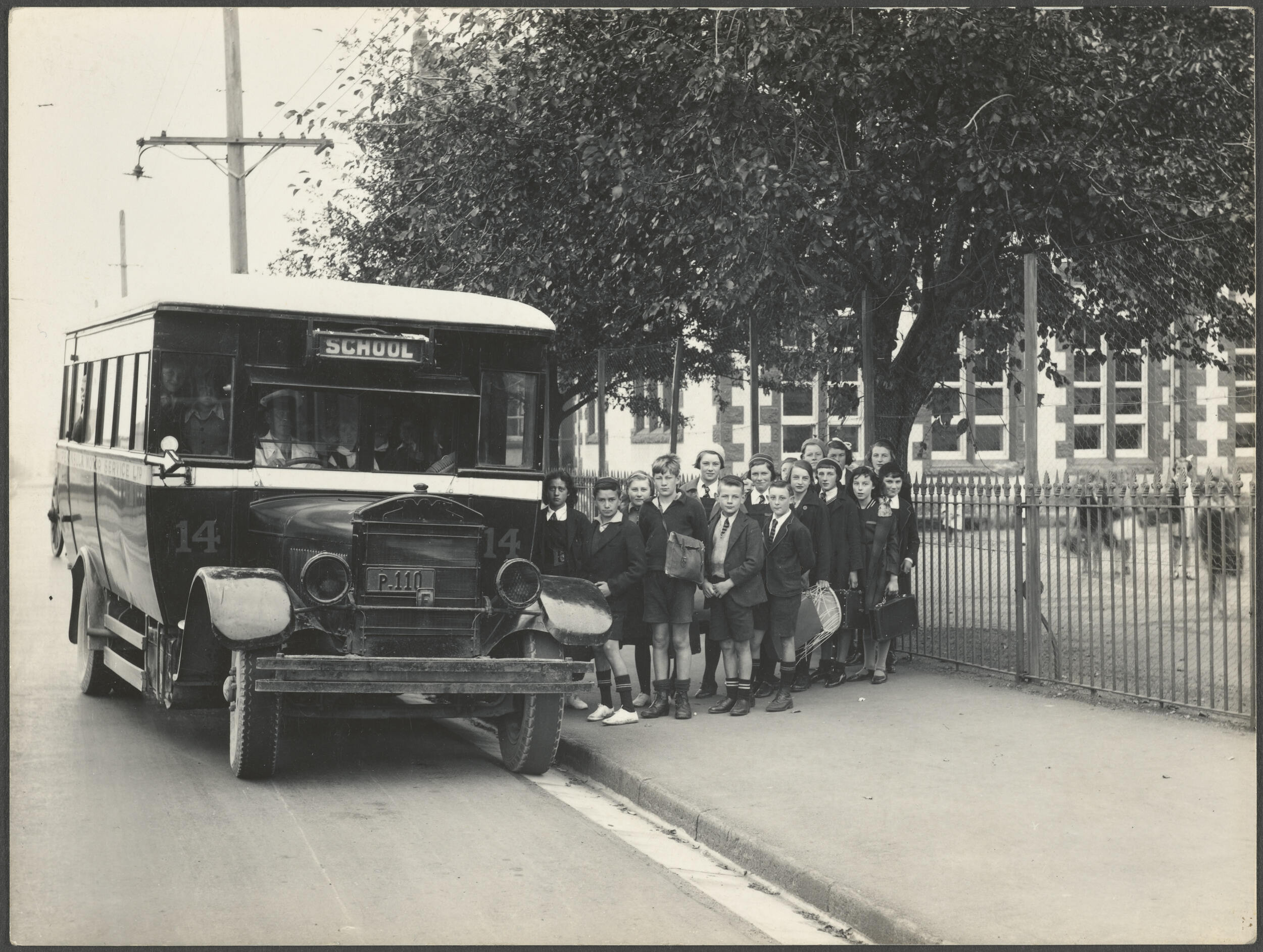
Collins, Claude Morris, 1888-1951, School bus at George Street School (1936). Hocken Digital Collections.
Teachable, empathetic and relational
That history of caring began in 1876 with the college’s first iteration – the Training Department of the Dunedin Normal School. Its establishment in Dunedin was a relief to British migrant teachers who were struggling to meet the educational needs of a community booming in the wake of the Otago gold rush.
Until this point, schools had supplemented their staff with ‘pupil-teachers’ – an apprenticeship system, introduced here by Scottish settlers, where high-achieving students received on-the-job training under the direction of a headmaster.
Professor Hugh Morrison, researcher and lecturer at the college, says his great-grandfather Edward Pinder was one of the institution’s first pupil-teachers and, later, a principal.
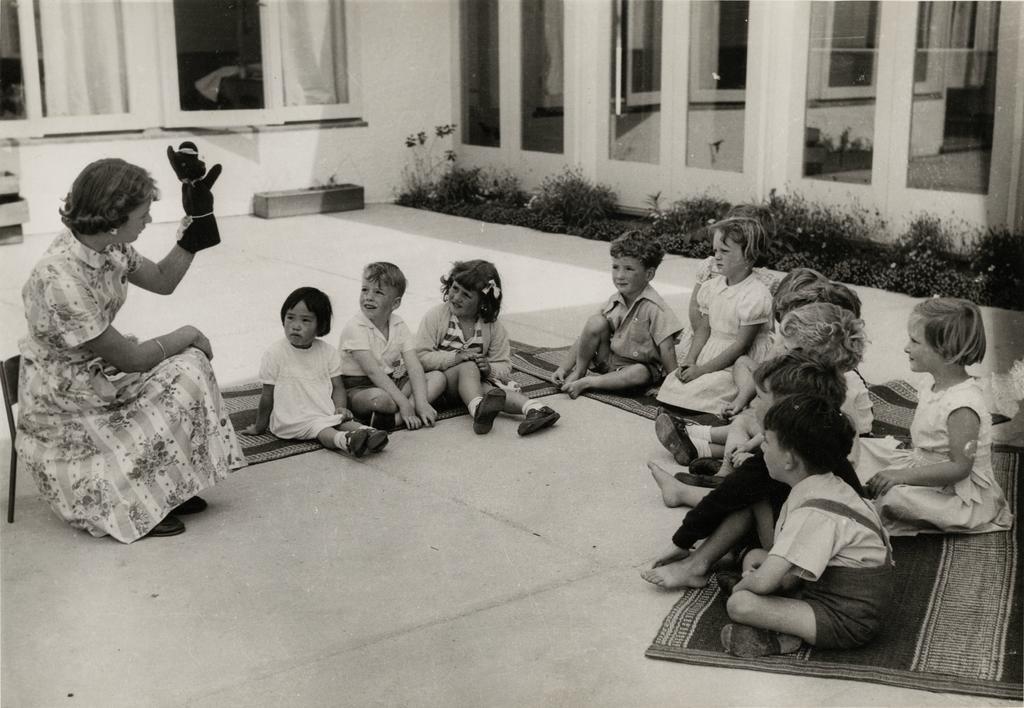
Story time at the Helen Deem Centre for Pre-School Education (1950s). Hocken Digital Collections.
During Edward’s time, the college's stated goal was to train teachers who were “humble, industrious, and instructed”. When asked which three traits he thinks the college prizes most in its current students, Hugh painted an educational picture far from the somewhat starchy hopes of his ancestor’s day.
“I would say we’re aiming to produce people who are teachable, empathetic and relational.”
An educational frontrunner
Ōtepoti Dunedin was the perfect location for the nation’s inaugural teacher education facility. It already boasted the first university, first public secondary school for girls and would soon roll out the first kindergartens.
The institution opened its doors before the 1877 Education Act which heralded free, secular and compulsory state education for all colonial settler children in New Zealand aged between seven and 13.
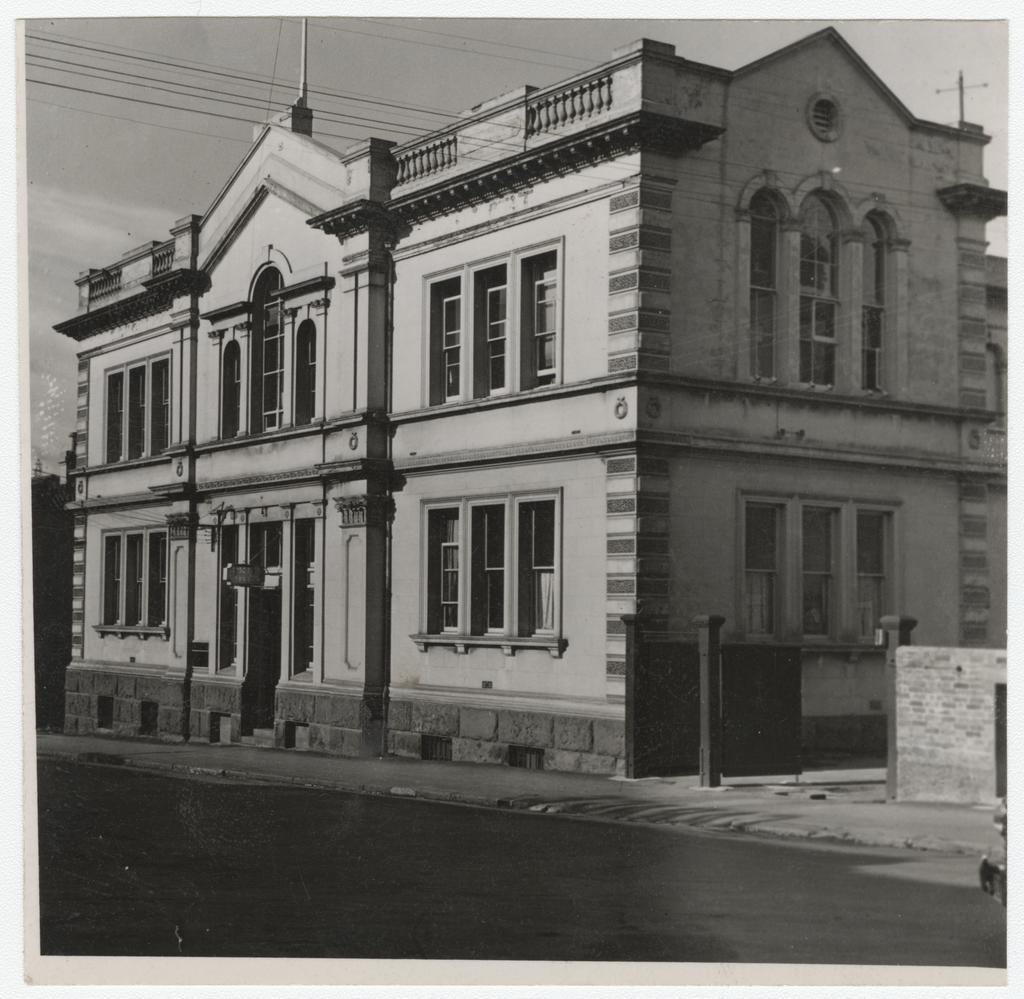
The first Dunedin Training College opened in 1876. Otago Daily Times (Newspaper), Dunedin Teachers College (n.d.). Hocken Digital Collections
The first student intake was of five men and 17 women. During conscription of WW1 and WW2, there were nearly five times as many female students as male.
Having initially focused its efforts on primary school education, the college broadened its offerings in the post-WW2 period and hatched a new suite of programmes. These included undergraduate and postgraduate degrees, and diplomas in early childhood, primary, primary bilingual and secondary teacher education.
In 1980, it increased its geographical reachby establishing a satellite campus, Ahuahu Te Mātauranga, in Invercargill.
Success in diversification
The college has continued to diversify. It began building an international profile through advisory work, exchanges and partnerships in the 1980s, and established the Children’s Writer in Residence programme in 1992. It was the only residency of its kind in Aotearoa New Zealand.
The college is also home to the national education monitoring project – the Curriculum Insights and Progress Study, in partnership with the New Zealand Council for Educational Research. Vivienne describes it as “a national taoka and the envy of colleagues offshore”.
Over the years, the college has had an on-again off-again relationship with the University of Otago, from 1976 when a joint University-College Bachelor of Education was established, to separating again in the 1990s. They eventually merged in 2007, signalling a concerted effort to bring expertise in teaching and research together.
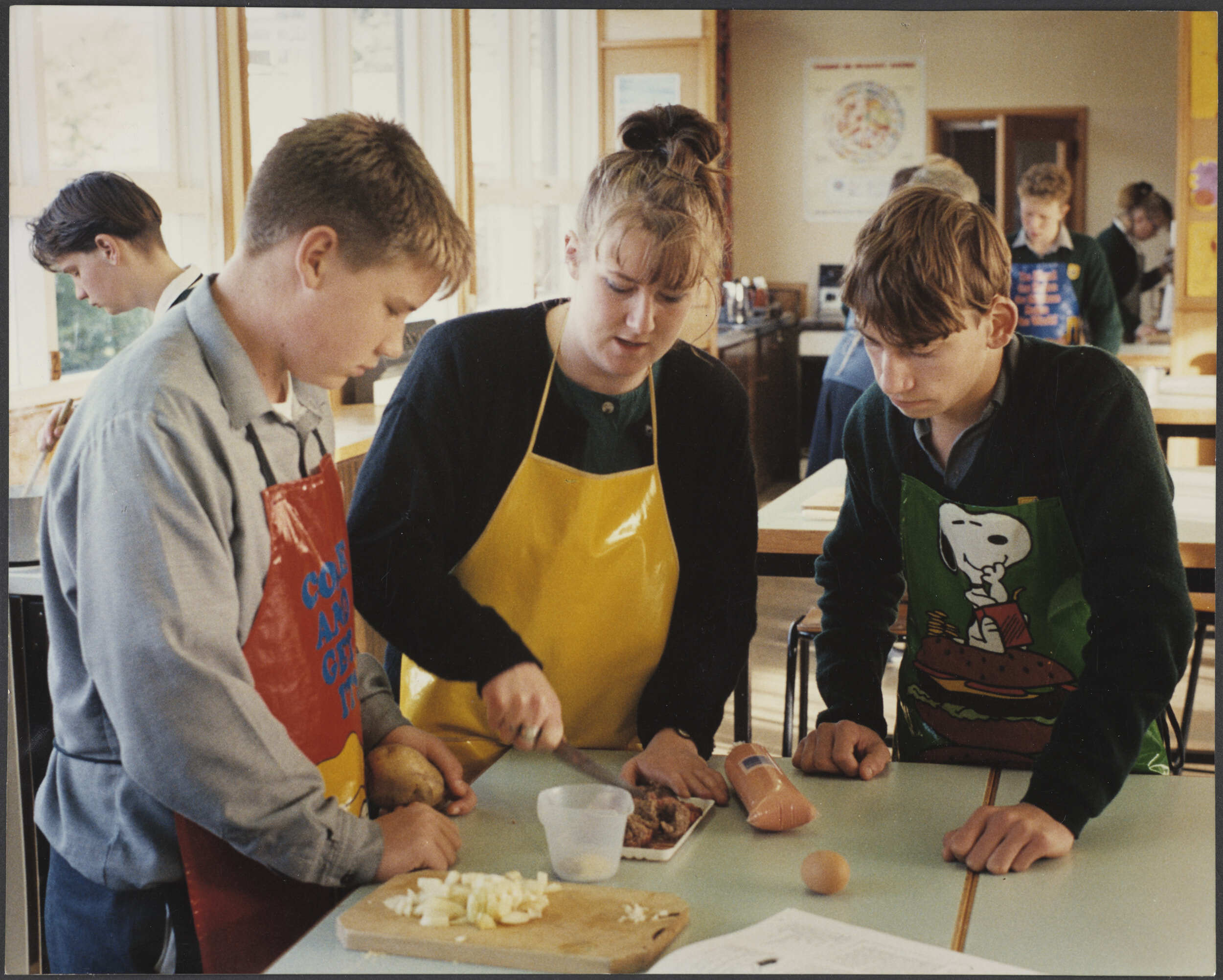
Teacher and pupils in food technology classroom at Bayfield High School (1990s). Hocken Digital Collections.
This union would have pleased the college’s first rector, William Fitzgerald, who actively encouraged students to enrol in university papers to broaden their educational expertise.
In recent times the college sought to rebuild a partnership with mana whenua, and to further embed mātauranga and te reo Māori within its offerings.
Newly added Māori and Pacific leadership roles have cemented the college’s commitment to cultural capability and to attracting greater numbers of Māori and Pacific students. Vivienne says plans are afoot to honour the original intent behind Te Pōkai Mātauranga o te Ao Rua, the primary bicultural teacher education programme at the Invercargill campus, by reverting to bilingual delivery and extending access to the programme beyond Invercargill.
An impressive roll call
There have been many impressive teachers over the decades – like Gordon Tovey, the man who introduced innovative programmes in the 1940s that encouraged creative expression.
His teaching galvanised many art-minded trainees, including Ralph Hotere, Cliff Whiting and Para Matchett, all of whom became leading figures in the arts.
Gordon was eventually snapped up by the Department of Education where he continued to revolutionise art education at a national level.
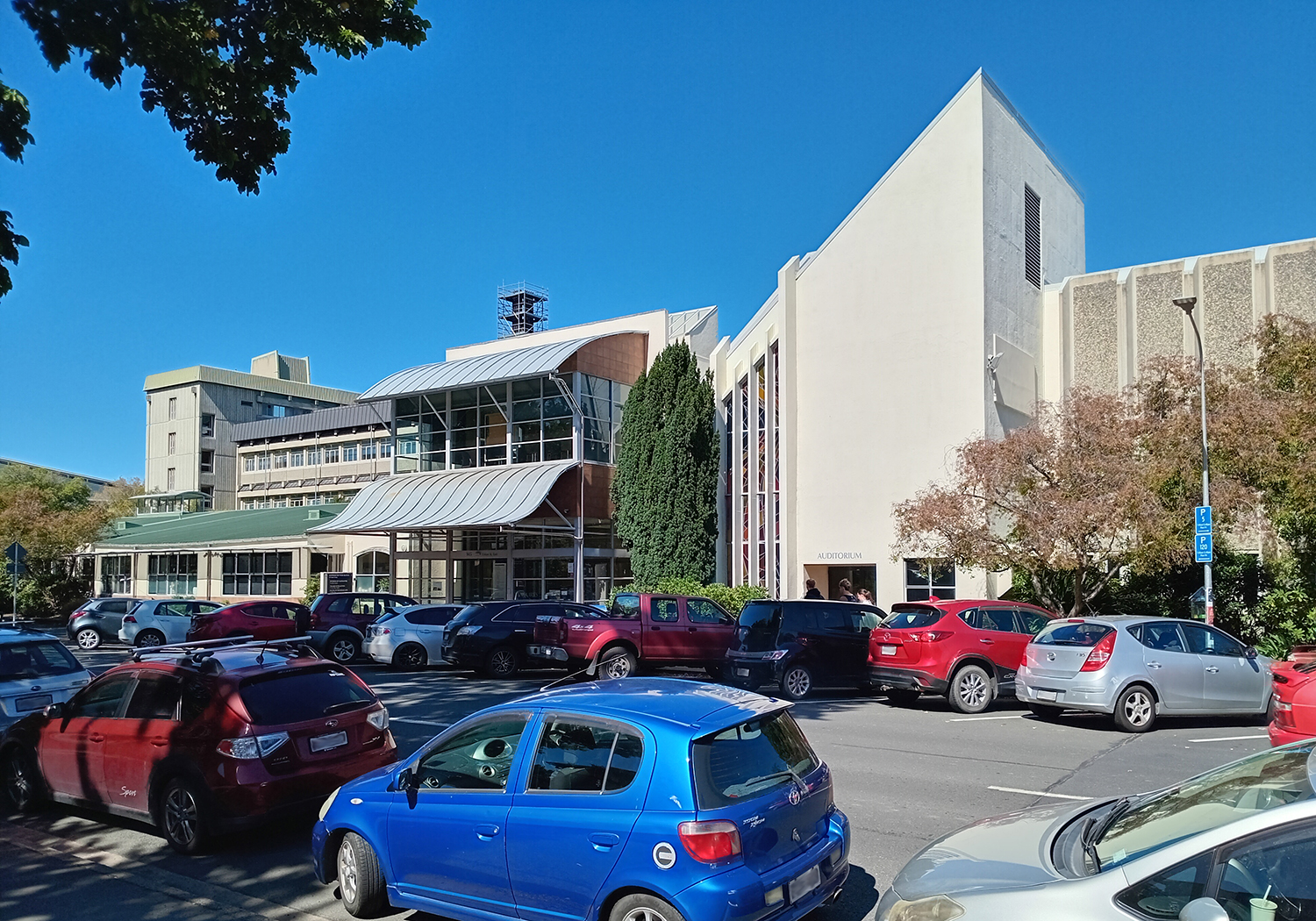
College of Education on Union Street, March 2026.
Many of the college’s more than 25,000 alumni used their education as a springboard for career paths beyond the classroom – people like Dame Kāterina Mataira, who helped revitalise te reo Māori, which in turn spurred the growth of kura kaupapa Māori; Phil Silva OBE, who went on to found the groundbreaking Dunedin Multidisciplinary Health and Development Study; and Bernice Mene, who deployed her skills on the netball court as captain of the Silver Ferns.
Saluting 150 years
Over the years, the college has shifted premises several times and tried on many different names. These included the Training Department of the Dunedin Normal School (1876); Dunedin Training College (1880); Dunedin Teachers’ College (1953); the Dunedin College of Education (1989), and finally, Te Kura Ākau Taitoka – the University of Otago College of Education (2007).
When those “teachable, empathetic and relational” alumni gather to celebrate the college’s 150th this October, they’ll likely toast their “humble, industrious and instructed” forebears and marvel at the distance travelled from the smudge-prone writing slates of the 19th Century to the slick iPads of today.
They’ll also salute the commitment common to all college graduates across 150 years: care for education, care for the child.
The college alumni reunion weekend will be held on the weekend of 16-18 October 2026.
More information and registration details are on the University of Otago website: