Wairarapa College shares success in structured literacy
A Wairarapa College literacy programme has become a model for secondary schools nationwide. Rachel Harvey, teacher and learning support coordinator (LSC), leads the initiative alongside the school’s English department.
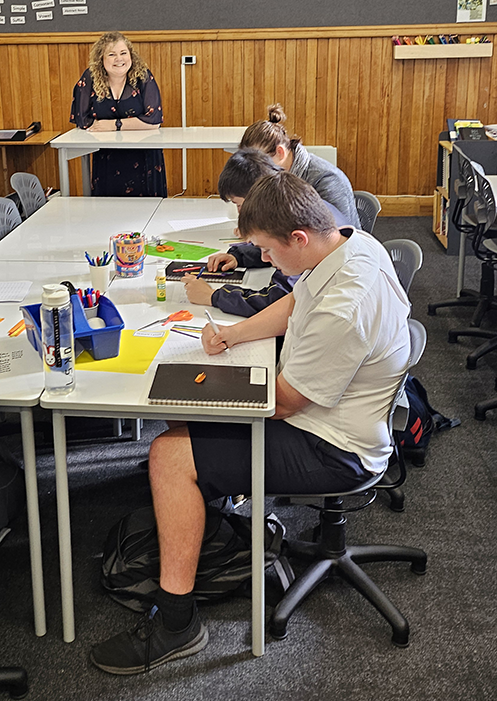
Literacy is the key area to succeed in life from education,” says Rachel Harvey, whose literacy programme has gained the attention of schools around New Zealand.
The programme acknowledges trauma and neurodivergent learning needs, effectively identifies struggling ākonga, and guides students to functional literacy through a carefully structured curriculum.
Through her mahi, Rachel hopes to make a real difference for school leavers.
Neurodivergent ākonga are especially vulnerable, says Rachel, particularly after primary school. Lower literacy skills can cause feelings of trauma in ākonga, she adds.
“Some ākonga are arriving at high school at 14 with a reading age of six or seven. That alone is trauma. They’ve spent years in school where everything is reading and writing and they can’t do it. They learn to avoid work – anything to avoid the feeling of not being able to do something.
“Then there’s trauma from family situations: poverty, abuse, neglect, no food. They come to school and learning is their last priority.
”Relationships, predictability and routine, intellectual respect and trust ground Rachel’s practice. She says these attributes help ākonga unlearn behaviours and mindsets that impacted on their ability to read and write.
Intervention supported by data
Identifying students for intervention is Rachel’s first step. For this, she uses hard data from standard Schonell spelling tests and Burt reading tests. Test delivery is important, she explains.
“We don’t want to bring all the Year 8 students into the hall to do all this testing for a day because that is the opposite of trauma informed.
”Rachel sends tests to Wairarapa College’s 22 feeder schools in term 3, asking teachers to make the assessments part of their class programme.
“We make it low-stakes and the kids give it their best shot,” says Rachel. “We also ask them to do a reading fluency test, and we use Dynamic Indicators of Basic Early Literacy Skills (DIBELS) for that.
”With reading age, spelling age and fluency assessment data, Rachel identifies students in need of a structured literacy intervention, then takes them to the next stage.
The stages of success
Structured literacy is a step-by-step approach to teaching language. Informed by neuroscience, it focuses on core concepts like phonics, spelling rules, grammar and meaning. Rachel’s gradual approach means ākonga feel confident when challenged. She works alongside students, slowly removing support when it’s clear they can work alone.
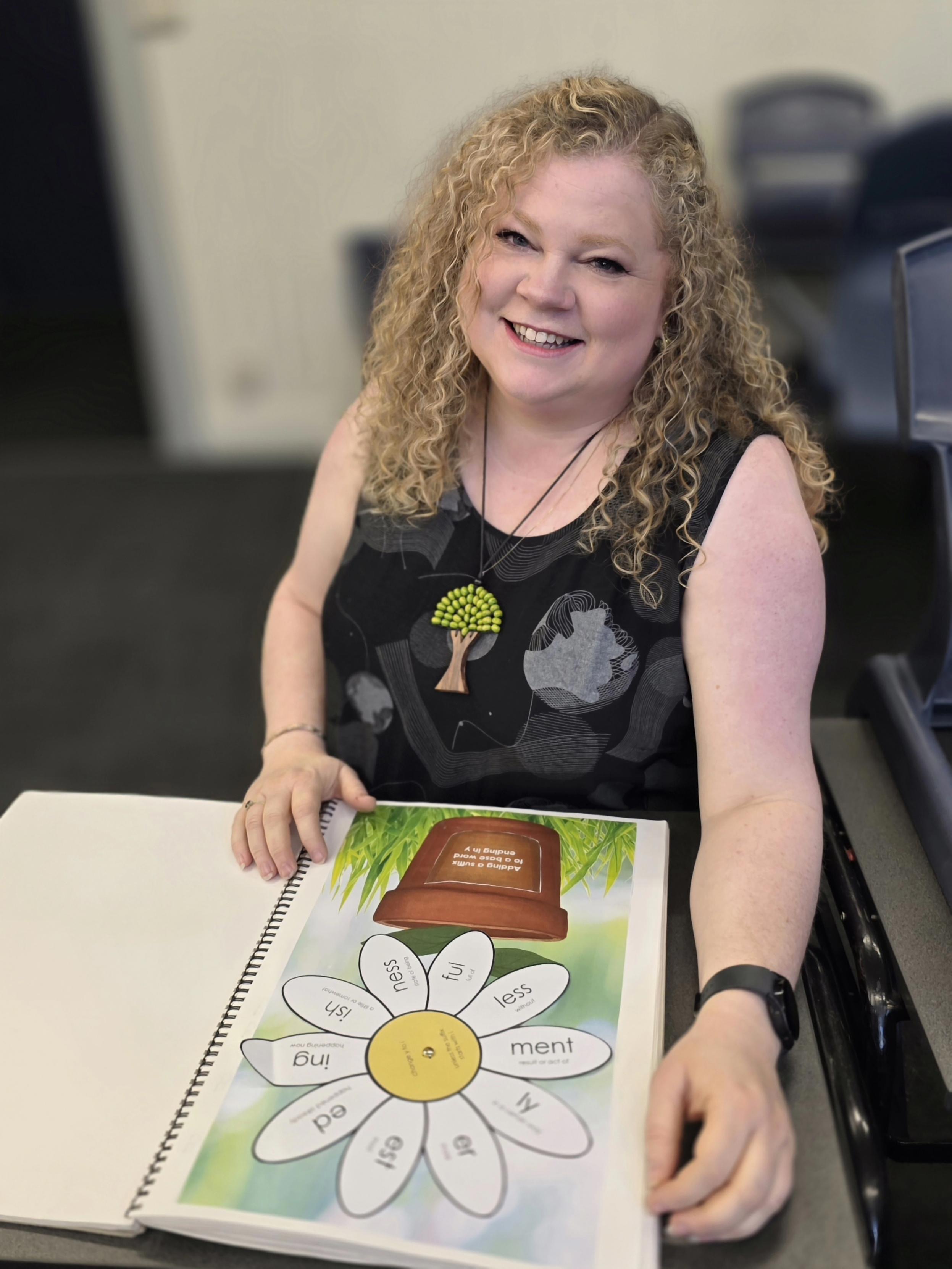
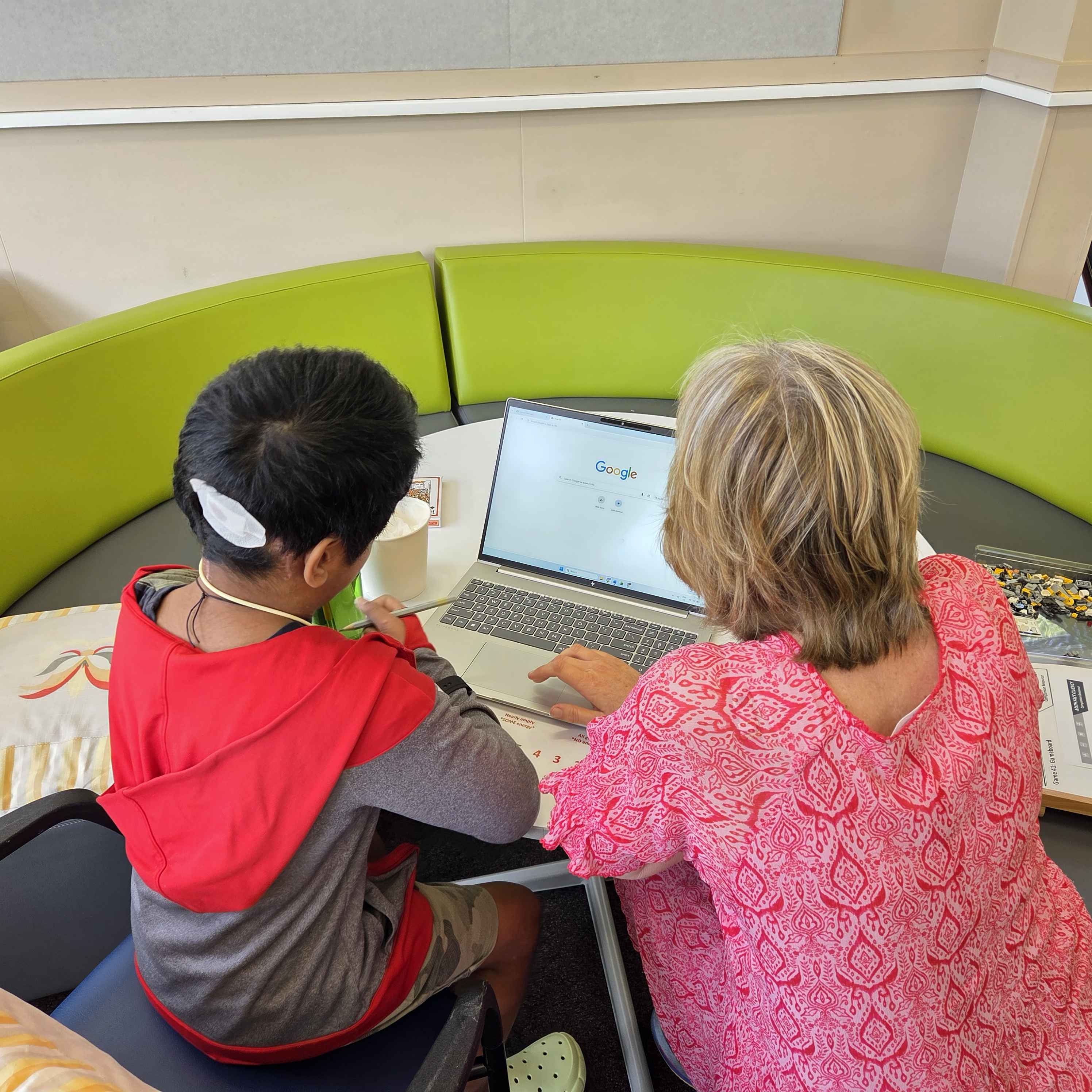
Rachel explains how English code concepts are taught visually.
Her scope and sequence includes five stages that take roughly two years to complete at four lessons per week. The five stages are broken into two sections: English code, covering spelling rules, syllables and word structure; and writing, covering punctuation alongside sentence and paragraph structure.
Rachel carefully tailors her content so that students feel confident and understand that struggling with literacy is not a reflection of their intellectual ability.
“We explain that many students in intervention are some of the brightest in school,” says Rachel. “It’s not about IQ, it’s about how their brains learn.”
Positive progress to share
Wairarapa College was completely onboard when Rachel started her initiative, and she says her approach led to remarkable progress among ākonga last year. School data shows almost all students increased in reading age after one year in her literacy programme, and some ākonga by as many as four years.
Student feedback has also been positive, she adds.“This course was really helpful, because whenever I needed help I would get it in a way that I would understand,” says one student.
Another student says: “When I came into this class it was a lot better. I knew what I was doing and I felt prepared.
”Rachel shares her materials and ideas with teachers across the motu. This year, a Zoom conference in which she laidout the core principles of her programme attracted 29 live participants. A further 100 educators requested the recording.
High school teachers find her material especially useful as, not being primary school trained, they may have limited experience teaching literacy to students with low literacy levels, says Rachel.
LSCs key to initiative
Rachel says literacy support, informed by initiatives like hers and guided by LSCs, is in demand among high school educators.
This year, 474 full-time teacher equivalents (FTTEs) are starting in schools around New Zealand, benefitting more than 100,000 students. During the next three years, all schools with Year 1 to 8 students will have access to an LSC, bringing dedicated learning support closer to the students who need it most.
Rachel supports a senior literacy class at Wairarapa College.
Rachel says LSCs are vital to the success of programmes like hers.
“Collecting assessment information, choosing the students, analysing the data, going into the classes, seeing how they’re going,” she continues. “That’s all LSC.
”Ultimately, Rachel believes awareness of trauma and neurodiverse needs is the best way English teachers can make sure ākonga are supported towards functional literacy.
“We know […] that everyone is capable of reading and writing if they’re taught the right way,” says Rachel.
“We can’t just accept an 80 percent literacy rate among students. It needs to be 100 percent.”
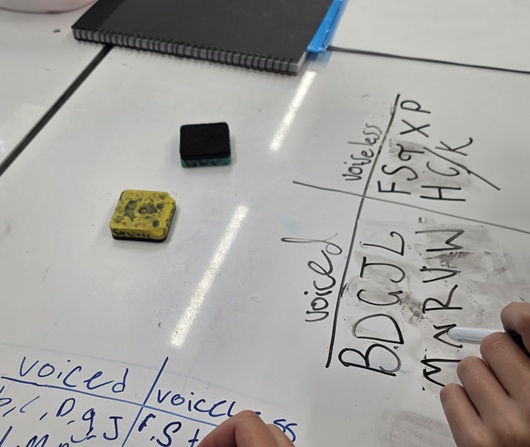
Examples of students’ ‘English code’ work, and planning.
The Ministry of Education website has more information about LSCs.