Tournament gives rural students a stage to shine
Hosting this year's Top of the South Island (TOSI) Tournament gave Tapawera Area School students the chance to compete, lead and represent their community, while continuing a tradition that has inspired rural young people for more than 30 years.
From wearable arts to rugby matches and netball games, cooking competitions and art shows, almost every year since 2004, seven schools from the top of the South Island compete. Known as the TOSI Tournament, this year’s event was held at Tapawera Area School. Participating schools also included Rai Valley Area School, Collingwood Area School, Murchison Area School, Karamea Area School, Reefton Area School and South Westland Area School.
Held over four days, football, volleyball, netball, touch, basketball and Kī o Rahi are the core events, with other competitions woven throughout. These usually reflect the host school’s own traditions and environment.
It was Year 12 student Hunter’s third time representing his school in the competition, with past TOSI Tournaments taking him to South Westland and Murchison.
“The home tournament was quite exciting this year,” the keen rugby player says. “The result we had was quite a shock.”
Tapawera won this year’s tournament by three points. Hunter was chosen to be the male team captain, an opportunity to lead he thought was a “pretty cool opportunity”.
“We went into the tournament thinking we’d just try our best as we’d lost quite a lot of our older students,” he adds.
Although the school took losses during the main sporting events like basketball, Hunter explains his team did “exceptionally well” in the minor sports and cultural events, like technology challenges, quizzes, paddle boarding and shooting. He even got to try Ultimate Frisbee for the first time, one of the specialty events at Tapawera's tournament.
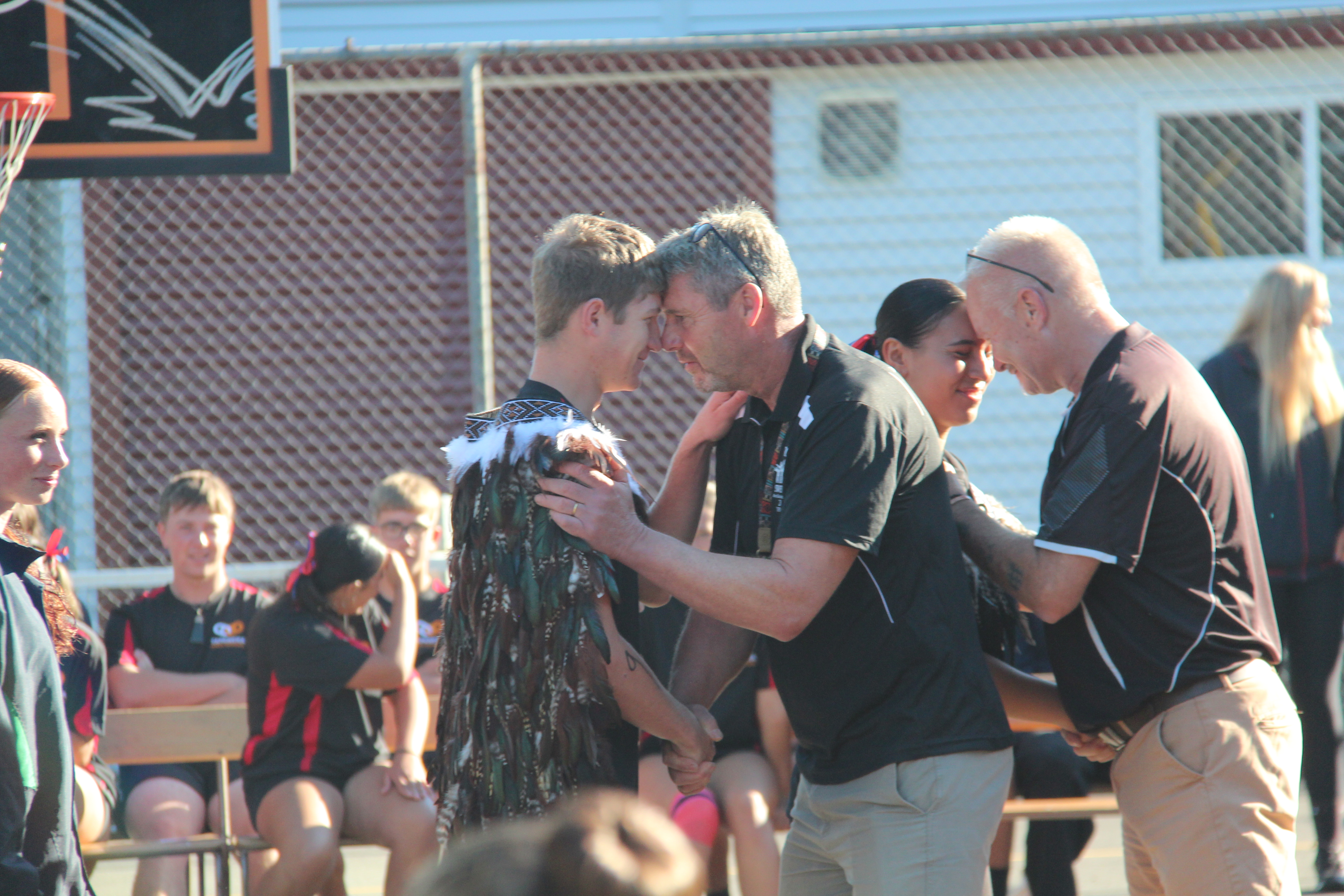
Students Hunter and Jade hongi Tapawera teacher and event organiser Steven Haunch and principal Andy Ashworth.
More than just sport
Social science teacher and TOSI community liaison Susan Fenemor says the addition of cultural and recreational events has broadened the tournament’s appeal.
“Including these cultural events has expanded the size of the tournament and allows more students to take part,” she says.
More than 140 students participated in this year’s event, proudly donning T-shirts with ‘Eat, compete, sleep, repeat’ emblazoned across the back.
Susan has lived in Tapawera for almost 40 years. Her own children participated in the tournament during the mid 2000s, so she has seen firsthand the positive impact it has on rural students.
“It’s more of an even playing field,” she says.
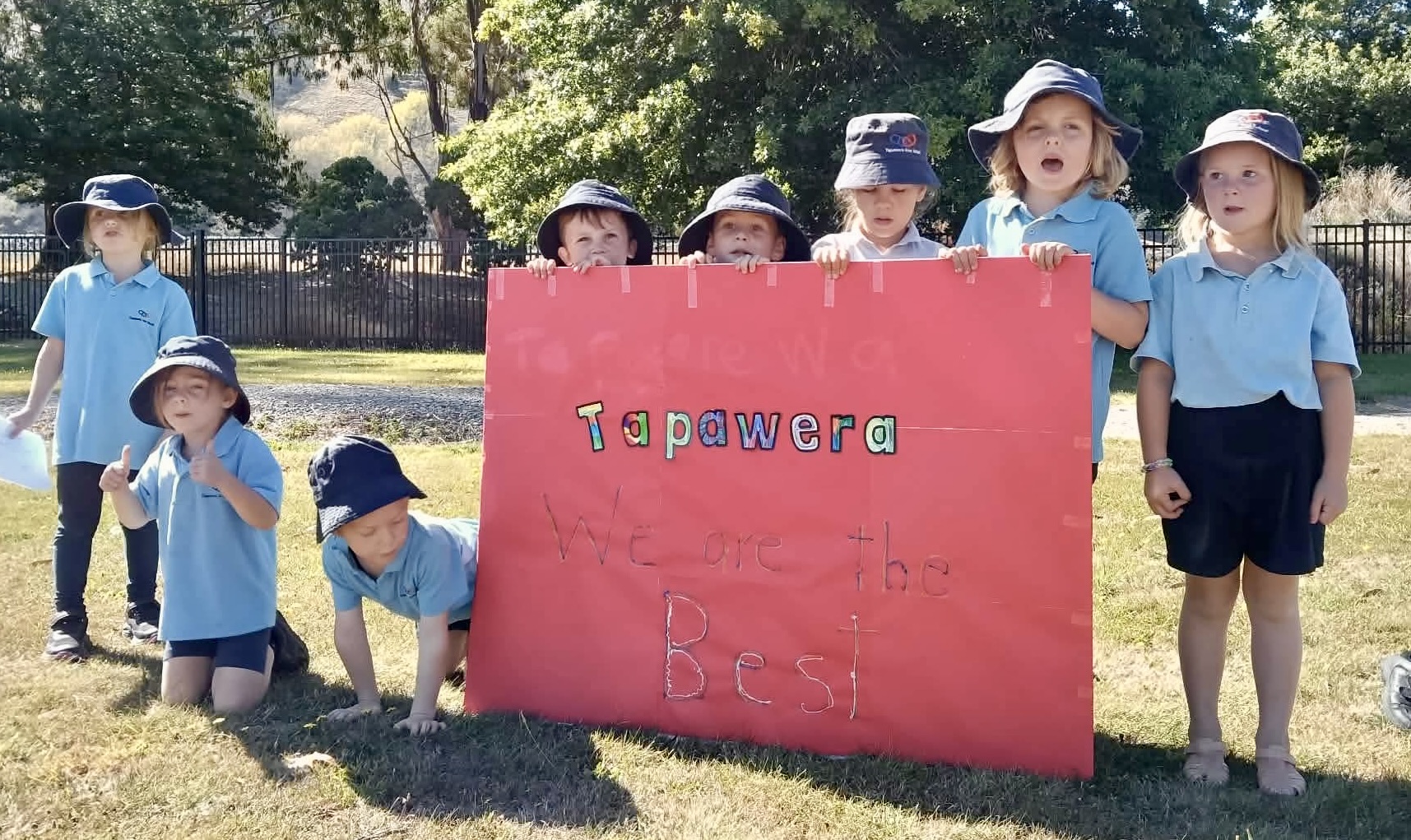
Younger Tapawera Area School students with their homemade sign.
At the TOSI Tournament, the teams can be mixed gender depending on numbers. If there are not enough older children, school’s children from the vertical age groups from Year 8 and up to Year 13 join the team.
“This event gives students a chance to mix with like-minded students who enjoy the competition, but also to get to know each other over the years,” Tapawera teacher Stephen Haunch shares.
“It gives many students a focus, and for some, keeps them coming to school. It opens connections, with such good experiences on and off the field for the students.”
This is the third tournament that Stephen Haunch has been involved in organising at the school since 2009.
Building confidence and connections
Students take the event extremely seriously. From the start of term 1, knowing the event will be held near its end, students practise a variety of activities to work on their fitness and sport strategies at every lunch hour, even repeating the dreaded beep test each week to stay fit.
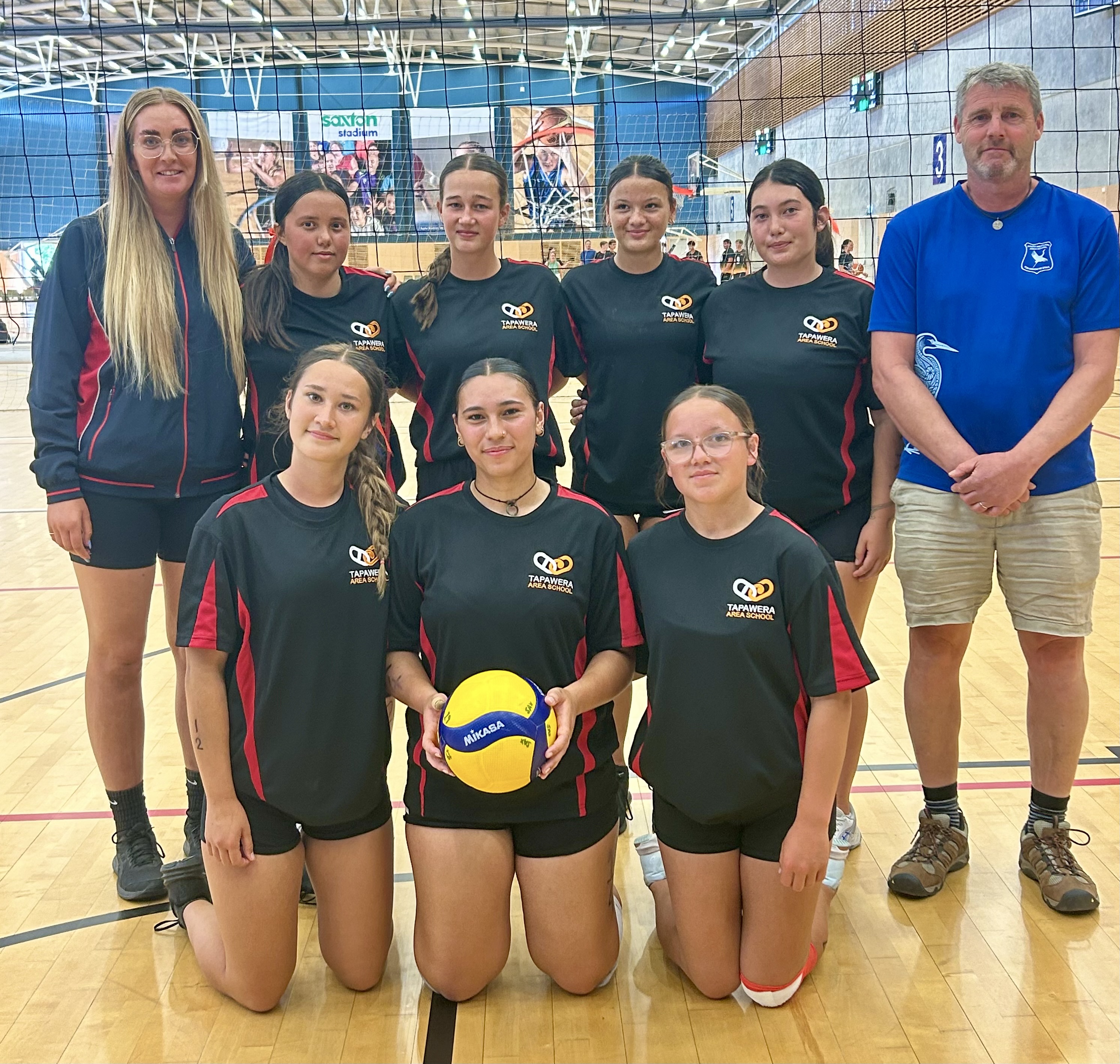
Tapawera Area School competitors.
“It’s physically demanding, but they’re building up their strength,” says Susan. The whole school community then gets involved during tournament week. At Tapawera’s event, each class supported a team and helped out with scoring and catering. Some students acted as reporters and photographers.
“As area schools, we tend to compete against each other a lot, so we get to know each other quite well, and so coming to these tournaments is pretty cool,” says Hunter.
“It’s a social event; you get to meet a lot of new people too. It’s a great opportunity to make a lot of friends.”
A whole-community effort
The huge event is not without its challenges, though, explains Susan. Finding billets for all the visiting students can be difficult.
“You need the entire community to help you,” she says. “The experience they can bring is essential, especially as referees. The calibre of the players and the reputation of the whole school is on view.”
Everyone from the school and wider community steps up and volunteers their time, propelling the event forward.
Susan ran three events and helped organise speakers, support, sponsorship and public relations.
The Tapawera team chosen for indoor bowls had actually never played before. But in preparation for the tournament, several indoor bowls players who have participated at the national competition level helped them practice.
Opening doors beyond school
Talented students from the tournament are chosen to take part in trials with the mid-Canterbury tournament students. Winners are then chosen as the TOSI squad, who travel and compete with other students from around New Zealand at the Area Schools National Tournament.
It will be Hunter’s first time competing at nationals.
“I’m quite nervous. I don’t actually really know a lot of the people I’m going with,” he says. “But I think it will be a pretty cool experience to go somewhere different.”
The tournament encourages rural students to dream of competing on bigger fields.
“The seed is planted at the tournament for many students to go and explore a sport or art practice,” shares Susan.
Pathways to future success
A professional rugby player for Matatū, the South Island Super Rugby Aupiki team, Sarah Jones attended Tapawera from 2011 to 2024. She competed in the TOSI Tournament from Year 9.
“Getting the opportunity to take part in TOSI Tournaments and being selected to go to nationals was a big thing for me,” she says.
She travelled from her “little country town” to Christchurch, Dunedin, Whangārei and Te Awamutu. “It was such a cool experience. Meeting people along the way and pushing yourself out of your comfort zone was a big thing coming from such a small area school.”
Sarah’s first high-performance placement was with Tasman Mako.
“It was daunting joining their team as a 16-year-old from an area school, but having had that experience of mingling with others from area schools, talking and expressing ourselves during the tournaments, definitely helped me,” she says.
“By competing from such a young age, often against older students, it gave her the perseverance and resilience to keep trying at the sport,” adds Susan.
Sarah came back to the school this year to share her journey from the TOSI Tournament to now. She told the students that it does not matter where they come from; they can still go as far as they can dream.
Another student, Natasha Bannister, competed in the volleyball events for Tapawera. She later gained a scholarship to play volleyball at the University of Florida in the USA.
“TOSI grew my love for volleyball so much and grew my want to progress through seeing the levels I could get to,” she says.
“If I wasn’t the best player on the court, I’d then find the best player and do what they were doing.”
After taking part in nationals, Natasha realised it was something she could pursue professionally after school.
“TOSI opened up so many opportunities for me. It was a door that showed me the pathways I could go down,” she says.
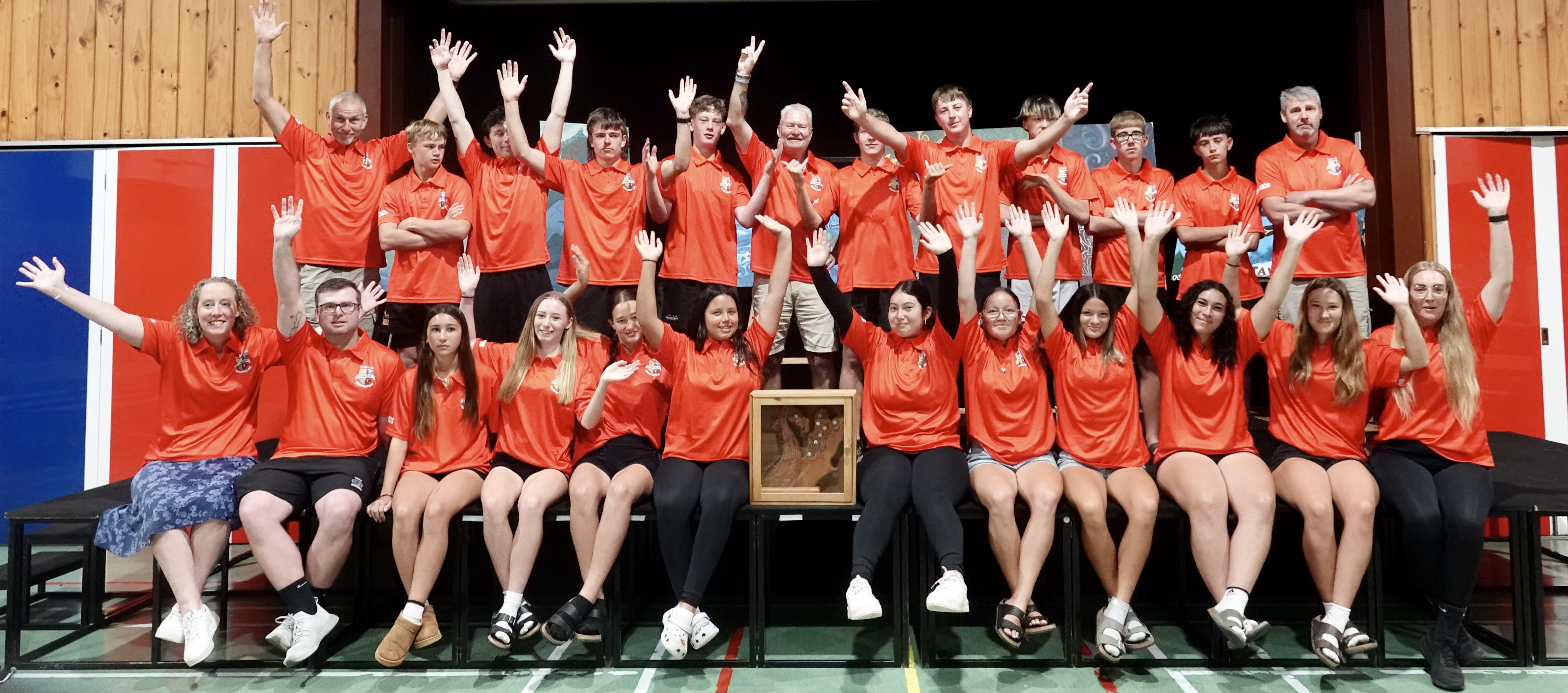
Tapawera Area School winners of the 2026 Tournament.
Looking ahead
Hunter says he’s already looking forward to his fourth and final TOSI Tournament, to be held in Karamea next year.
He hopes to continue his rugby journey as well.
“I want to take it as far as I can, and if it doesn’t work out, I’ll still play for a local club.”