The power of asking deep questions: peer coaching
When school kaimahi pause to ask deep questions of one another, powerful learning can follow. Auckland primary school teacher Jessica Vader is a big advocate of peer coaching. With the support of a TeachNZ study award, she set out to research how this approach can be embedded and sustained at primary school level.

Every teacher has moments when they wonder if their teaching practice is effective, or if their approach to a situation is the best.

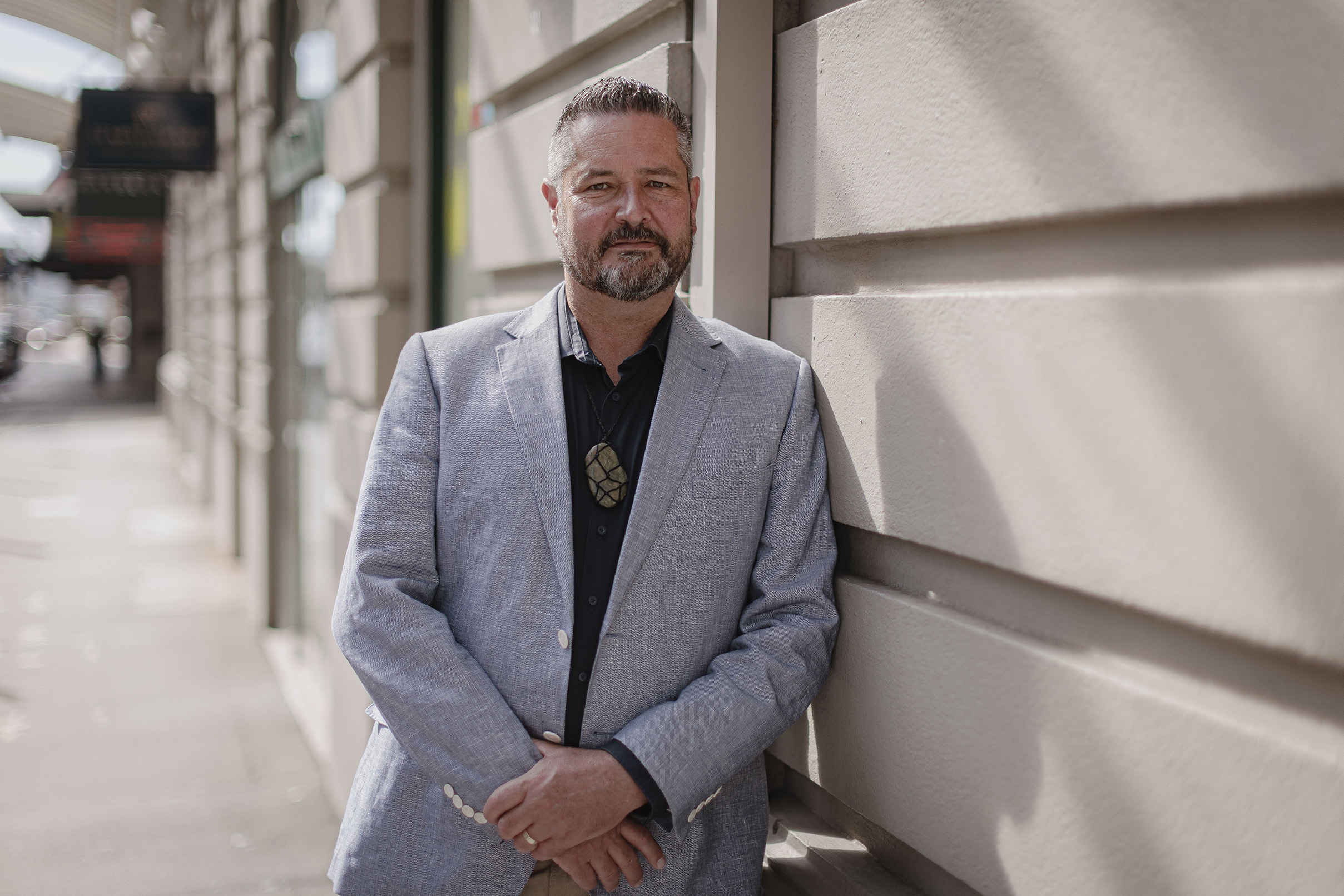
Jessica's dissertation focused on ways to build and sustain peer coaching at primary school level. Photo: Simona Graszl.
Turning to a colleague is a natural inclination, but passing practice conversations in the staffroom may lack the depth they deserve.
While mentoring can be helpful, Jessica Vader, a teacher at Chelsea Primary School in Tāmaki Makaurau, is a big supporter of peer coaching – a reciprocal, non-evaluative conversation with a trained colleague.
Jessica recently completed a graduate diploma in peer coaching and her dissertation focused on ways to build and sustain peer coaching at primary school level.
“I already knew how powerful coaching was with helping people to find their own answers, to name what their current problem is and work on a future-focused solution.
“Because it’s not digging into the past, it’s very much this is where we are now, this is where we want to go, what are we going to do to get there?”
Her research found peer coaching training is patchy in primary schools, and less accessible to the average teacher than those at the start or at the top of their careers.
So for her dissertation, Jessica sought and received a TeachNZ Study Award to explore how a culture of peer coaching could be embedded at primary school level. The study award gave her classroom release two days a week over the course of the school year.
Jessica is a teacher at Chelsea Primary School in Auckland. Photo: Simona Graszl.
Building coaching into yearly goals
In a case study involving a school given the pseudonym ‘Harbour View Primary’, Jessica surveyed 14 teachers and conducted four in-depth interviews to tease out the reasons why peer coaching was not used more widely at primary school level.
She knew there was plenty of grounding for it in educational theory: Lave and Wenger’s ‘community of practice’ concept, Vygotsky’s constructivism and Bass’ transformational leadership theory.
There was strong support from the Ministry of Education and Teaching Council for peer coaching, which is also aligned well with the teaching sector’s professional growth cycle: effective dialogue, inquiry, and evidence-informed improvement.
But collaborative practices do not always happen naturally. Although Jessica says her own school is quite a collaborative environment, she acknowledges other teachers may not be in that situation, or have the time for professional conversations.
“A lot of teachers are working in a single cell environment where they won’t see other educators all day.
“So coaching is a really good way to establish dialogue between teachers to improve their practice. They might say, ‘I’m struggling with this in the classroom at the moment, I just need someone to bounce ideas off about where I could go to next and make a bit of a plan for that’,” says Jessica.
“We create goals for every year for ourselves to develop, and I think building coaching into that, beyond a team leader and teacher relationship, just provides a chance for different coaching conversations.”
Mentoring versus peer coaching
With fewer than 40 percent of surveyed teachers reported as being formally trained in peer coaching, Jessica says misconceptions about the practice remain common.
It’s not mentoring, which is more top-down, and it’s not performative assessment, she explains.
“Coaching is more along the lines of deep listening, asking reflective questions and the coachee is coming up with solutions themselves.
“In coaching, you believe the person holds the right answers even if that answer is going to someone to find out x, y and z. It’s not like they know everything, it’s about empowering them to find solutions rather than be told, ‘Oh, you should do it like this’.”
Jessica’s research also noted that while leaders or beginning teachers received opportunities for mentoring or coaching, most others were reliant on a schoolwide initiative, or if their team leader had training.
“So this research was based on what can we do to potentially implement peer coaching where there’s a sustained and embedded approach within schools.”

Jessica’s research identified key ways to support successful peer coaching in New Zealand primary schools. Photo: Simona Graszl.
Sustaining a culture of coaching
Jessica’s study found several factors kept a peer coaching culture going: protecting coaching time; the right structure; leadership modelling; and prioritising principles of trust. She found time and workload were issues for everyone, as were unclear expectations of coaching or role anxiety. However, coaching did succeed when it was scheduled regularly, such as within meetings.
“It’s not that coaching is undervalued but that it is not sustained, amid workload and shifting priorities,” says Jessica.
Coaching conversations also needed structure, and Jessica recommended using shared models such as the GROW (goal, reality, options and will) model, buddy systems, and cross-team pairing.
It was also clear that teachers wanted their leaders to model peer coaching. Seeing it used visibly and consistently by school leaders was a big factor in its success, prompting other staff to seek refresher training to rebuild their consistency.
Finally, establishing ground rules on confidentiality and listening were key. Trust was built on conversations being a two-way street, without evaluation.
“A good coach listens and helps me think things through,” one participant told Jessica.
In fact, there was only one report of a negative experience which Jessica says showed the danger of “evaluation creep” and the need for clear boundaries.
With the right conditions in place, 79 percent of the survey respondents said they felt peer coaching was safe and respectful.
A community of practice
With time, trust and structure addressed, Jessica says coaching dovetails beautifully with educational theory. The widely used ‘community of practice’ model, for example, portrays teachers learning through interacting and trusting each other. Coaching also reflects key cultural values for teaching such as manaakitanga, whanaungatanga and ako.
The trick is to make peer coaching “an embedded professional norm, not an add-on”, says Jessica.
“If every school made time twice a term for peer coaching, I think it would be really powerful with regards to the results that it could bring about for the teachers themselves and for their learners.
“There’s a lot of power in asking deep questions and inviting others to explore their own solutions.”
Keys to coaching success
Jessica’s research found the key ways to support successful peer coaching are:
- Two coaching sessions a term (with at least an 80 percent participation goal).
- The adoption of a GROW model, or a variation, and template.
- Refresher training for all staff.
- Leadership modelling at a staff hui.
- Co-constructed safety and confidentiality guidelines.
- Pairing staff across teams with guided choice.
- Embedding the principles of ako, manaakitanga and whanaungatanga.
The GROW model: A roadmap for professional growth
Jessica Vader says the GROW model shifts the coaching focus from ‘giving advice’ to ‘facilitating reflection’. This helps teachers find their own way forward through four clear stages:
- Goal: Identifying what success looks like; moving to a specific focus, such as improving student engagement.
- Reality: A ‘pulse check’ on the current situation; an honest look at what is happening in the classroom right now.
- Options: The brainstorming phase; using open-ended questions to explore different strategies and ‘what ifs’.
- Will (way forward): Turning talk into a plan; committing to specific next steps and identifying the support needed to succeed.
Core Education offers mentor support as part of their professional learning development programmes. You can find more information on their website.
Te Poipoi Kaiako | Mentor support programme – Tātai Aho Rau Core Education