The Day of AI: A teacher’s drive for responsible AI literacy in New Zealand schools
It all began with one Auckland teacher’s burning question: How can we build artificial intelligence (AI) literacy in Kiwi ākonga and kaimahi quickly and effectively? Susana Tomaz’s question led to a Day of AI pilot at nine New Zealand schools, resulting in a localised, culturally responsive resource designed to help build foundational AI literacy in schools.
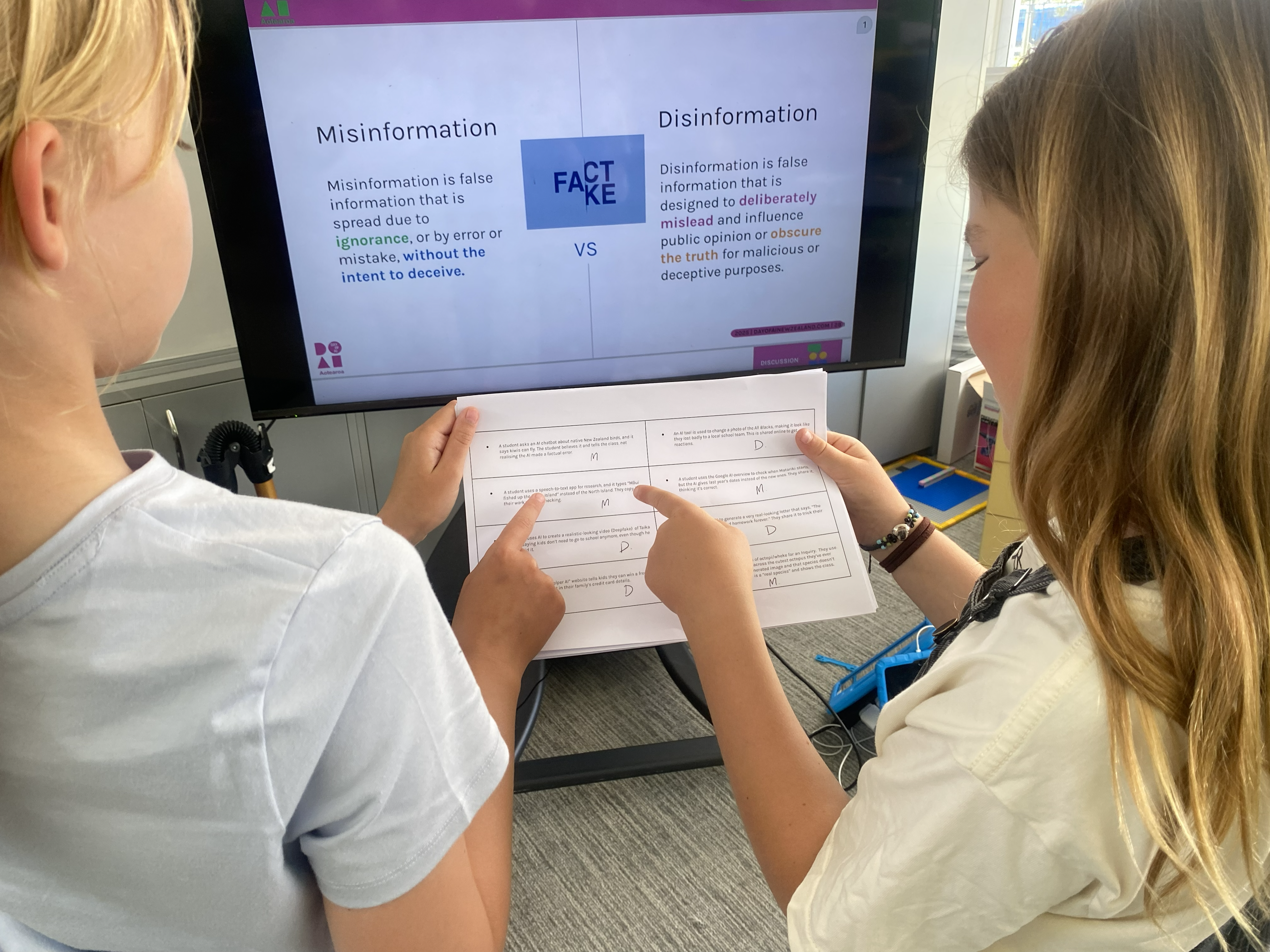
The Day of AI is an international initiative developed by experts from the Massachusetts Institute of Technology (MIT) Responsible AI for Social Empowerment and Education (RAISE) programme. It provides teachers with AI literacy resources to help students understand what AI is, how it works, and its ethical and societal impacts.
Day of AI has now been localised to New Zealand.
“It’s a kit-in-a-box for teachers to deliver in class,” says Susana Tomaz, director of futures and AI strategy at Westlake Girls’ High School and coordinator of Day of AI Aotearoa New Zealand.
Susana led the inaugural Day of AI Aotearoa pilot in term 4 last year with nine schools from diverse communities. Tailored to the New Zealand education context, the programme was adapted from Day of AI Australia in collaboration with Technology Education New Zealand and Westlake Girls' High School, and the support of the Educational Partnership and Innovation Trust (EPIT). It was independently evaluated by David Coblentz from the New Zealand Council for Educational Research.
Flexibility and localisation of the programme were key to its success, with modules integrating te ao Māori values and exploring how those values intersect with AI through a reflective and critical lens, says Susana.
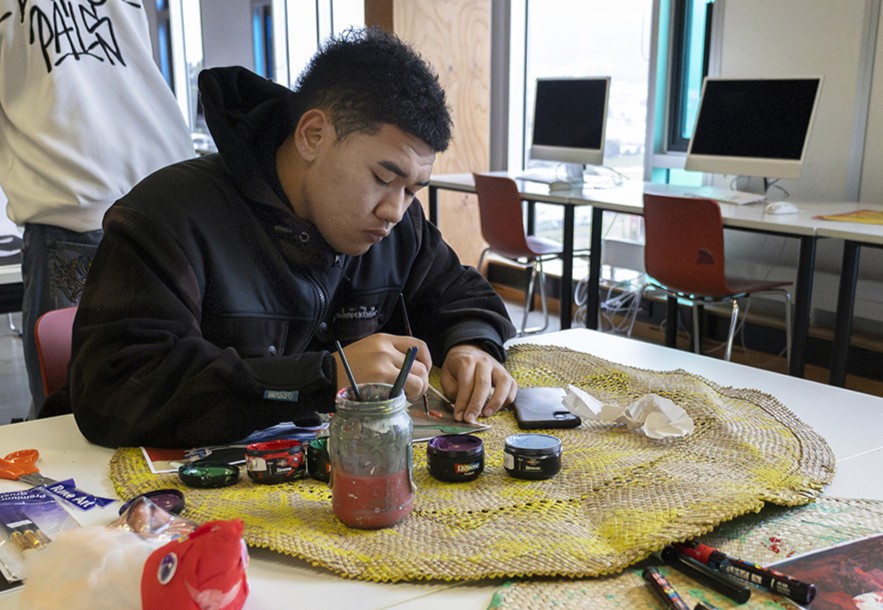
“Some schools delivered the four lessons across a term, others across a single week. It’s highly adaptable to the learning needs and priorities of each school.”

Director of futures and AI strategy at Westlake Girls’ High School, Susana Tomaz.
What pilot schools said
Pilot schools found particular relevance in connecting AI applications to the New Zealand context, such as the farming industry, helping students see how the technology intersects with their local contexts.
Students were also curious and concerned about digital safety and data use. They asked thoughtful questions about image ownership and control over personal data, adds Susana.
“The programme builds not just AI literacy, but critical thinking around AI use. We need students to understand both the benefits and the drawbacks. The biggest risk of AI isn’t cheating – it’s cognitive offloading and a lack of AI literacy.”
The pilot found that at baseline, 92 percent of students had tried AI tools, yet almost none could explain how AI works – and only one of the nine schools had received formal training in AI education. But after participating, students demonstrated greater ethical awareness. One student cautioned an adult, saying, “Oh, you can’t put that into AI – it’s personal data".
A system to be questioned and checked
In one primary school, the proportion of students who felt they could explain what AI is rose from 20 percent to 64 percent; in a secondary school, it increased from 50 percent to 82 percent. Students shifted from seeing “AI as a magic helper” to “AI as a system that can be questioned and checked”, says Susana, with 93 percent recognising after the programme that AI can make mistakes or be unfair.
The programme’s cultural responsiveness has also resonated strongly. The pilot showed that Māori and Pacific students valued discussions around data sovereignty and diverse cultural perspectives, and connection to their values and identity. Across all pilot schools, agreement that Māori and Pacific ideas matter in how AI is used in Aotearoa increased.
One pilot teacher observed unexpectedly high engagement among previously disengaged students. This included Māori and Pacific students. Another pilot teacher said: “The classes are optional, and we consistently have our ākonga returning. One student said it’s his favourite class." The teacher enjoyed the robust discussion and ‘removing the veil’ from AI. "I really valued the comparison between humans and AI, highlighting our ability to think critically.”
The programme also functioned as professional learning for teachers. Pilot teachers reported substantial growth in confidence explaining AI concepts and leading ethical discussions.
One said, “I went from about a two out of 10 to a six or seven. I now feel confident having these conversations with my students.”
Another teacher said, “My own knowledge probably increased more than maybe the kids'… lots of aspects I hadn’t actually even considered.”
One teacher also reinforced the impact on learners: “The kids no longer saw AI as this all-knowing thing… and that changed everything.”
AI at Westlake Girls’ High School
Susana, who established Westlake Girls’ science, technology, engineering and mathematics (STEM) programme, says it was her own students who prompted her move into the AI space in 2023. Several of her Year 9 students had asked her about a new AI feature on a social media platform.
“They weren’t just curious. They were confused, intrigued and slightly unsettled,” she recalls. “They didn’t know what it was, whether it was a real person, or how it seemed to know their location, even with location settings switched off. They couldn’t block it.”
That conversation stayed with Susana long after the school bell rang.
“It was obvious; whether we were ready or not, AI was already shaping our young people’s lives,” she says. “AI is not just another tool. For the first time in history, a ‘machine’ is becoming a human-in-the-loop actor in the thinking process. It is quietly reshaping how students learn and seek help, how teachers guide thinking, and how trust is built in the learning process itself.”
Since then, Susana has completed a master’s degree focused on integrating AI into education. She is now a fellow at the International Research Centre for Artificial Intelligence (IRCAI) under UNESCO, and mentors educators across regions on ethical and responsible AI in education with the Asia Europe Foundation.
The Day of AI programme builds AI literacy and critical thinking around its use.
Why it matters
At Westlake Girls’, Susana has translated her learnings into a schoolwide AI strategy, policy and guidelines grounded in pedagogy, ethics and equity.
When introducing AI literacy at the school, Susana knew the school community needed to understand why it mattered. Education futurist Frances Valintine was invited to speak to parents, teachers, students and leadership teams.
“Her talk was a catalyst,” says Susana. “She spoke about the disruption emerging in the workforce – and then tracked backwards to how we prepare young people to thrive as school leavers.”
From there, Susana designed an AI integration roadmap and developed, in consultation with the school community, the Westlake Girls’ AI Policy and Guidelines for teachers and students.
“It was important to move fast,” explains Susana. “When teachers become confident in this space, they can pass that knowledge to their students.”
This was a key finding from the pilot – that by empowering teachers to facilitate AI literacy, students engage with the content more deeply compared to if they were completing modules as self-study.
Westlake Girls' ākonga now complete AI literacy using the Day of AI Aotearoa New Zealand programme. The aim is to help students engage with it critically, ethically and responsibly, in ways that strengthen rather than replace their thinking.
This includes making sure teachers remain central to relational, educative interactions with students in an AI-infused learning environment.
“There’s emerging data suggesting that without AI literacy, some young people are replacing friendships and real-world conversations with chatbot interactions,” says Susana.
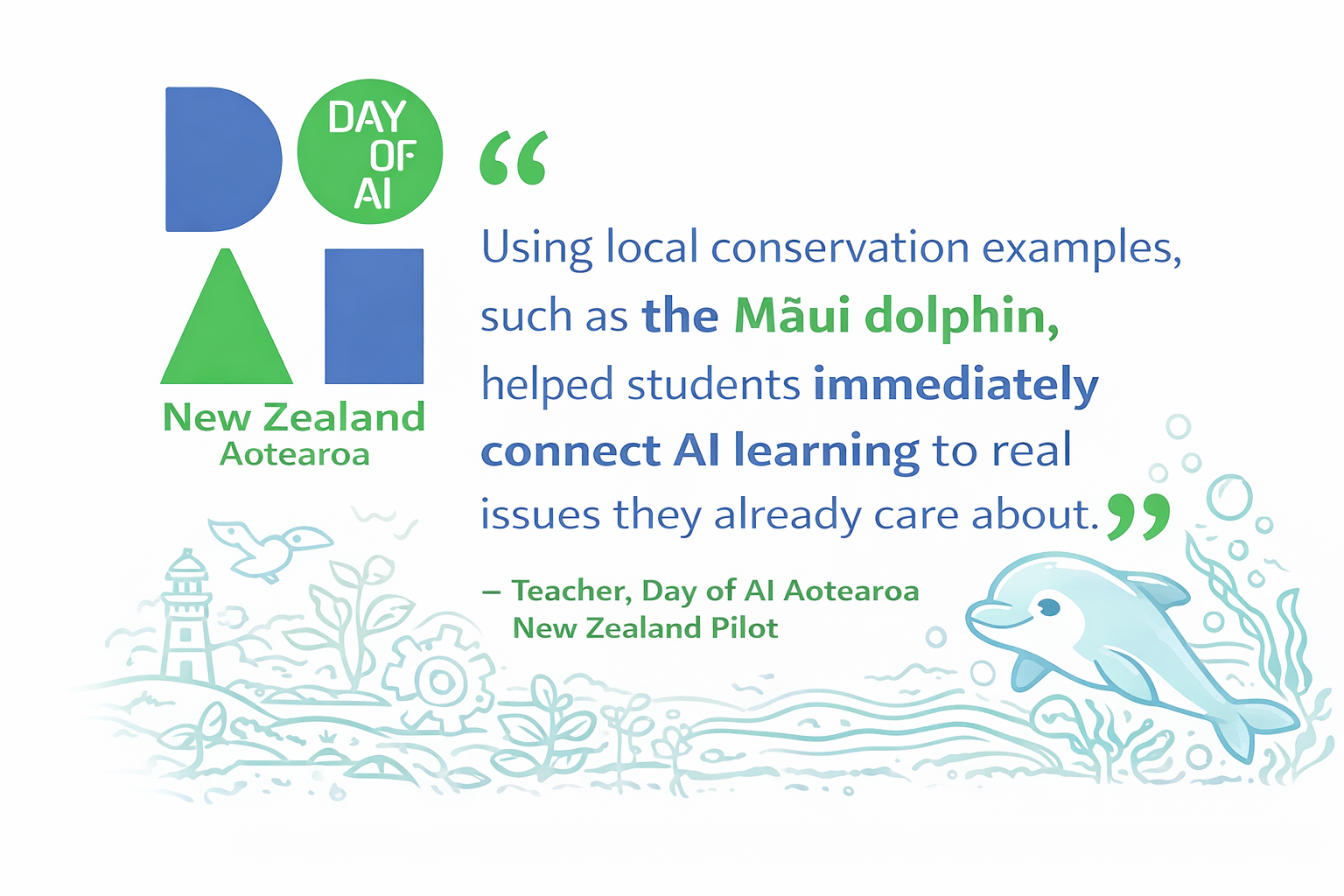
Equity in AI
Susana believes AI literacy has become an equity issue. “AI is already part of our learners’ lives, yet many students are using these tools outside school with little or no guidance.”
There is increasing evidence that New Zealand’s digital divide is becoming an AI literacy divide, she says.
“Some schools have the resources to invest in AI capability. Others are being left behind. Day of AI is about closing that gap by giving schools free, high-quality, culturally grounded resources that empower teachers to build ethical and responsible use of AI in students.”
New Zealand’s first national AI strategy emphasises productivity and economic growth, says Susana.
“To achieve the economic benefits outlined in the national AI strategy, we need to invest in the future workforce – our young people,” says Susana “There are many AI platforms that aren’t fit for purpose in education. The Day of AI programme builds capability the right way making sure our students are equipped for a bright future.”
Access the programme
Register for the Day of AI Aotearoa New Zealand programme to access the resources.
Day of AI Aotearoa New Zealand
You can also email the Day of AI team: [email protected]
AI guidance and resources for schools
AI in education should improve teaching and learning by supporting knowledgeable and skilled teachers.
The Ministry of Education has guidance and resources for teachers on the use of AI in schools.