Digital animations encourage reading, writing and imagination
PhD student Gisela de Castro invited ākonga across Aotearoa to write letters to their town or city as if it were a person. She then turned their words and pictures into 22 animated films that celebrate young voices, creativity and inclusion around literacy and language. The project inspired students to write, and created a fully accessible digital reading platform.
Two years ago, Brazilian writer and theatre practitioner Gisela de Castro stood in front of students at Trident High School in Whakatāne and asked them to write a letter to their town.
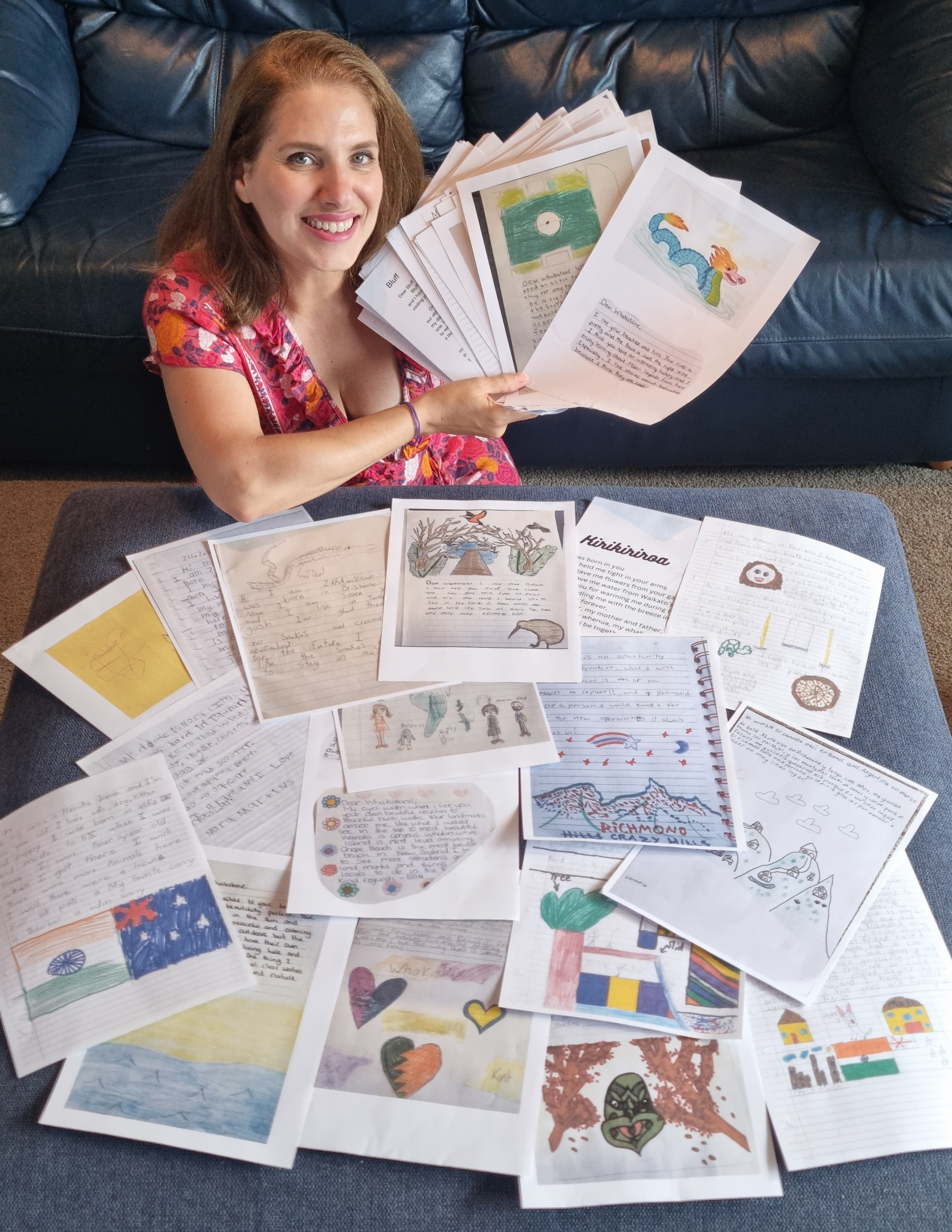
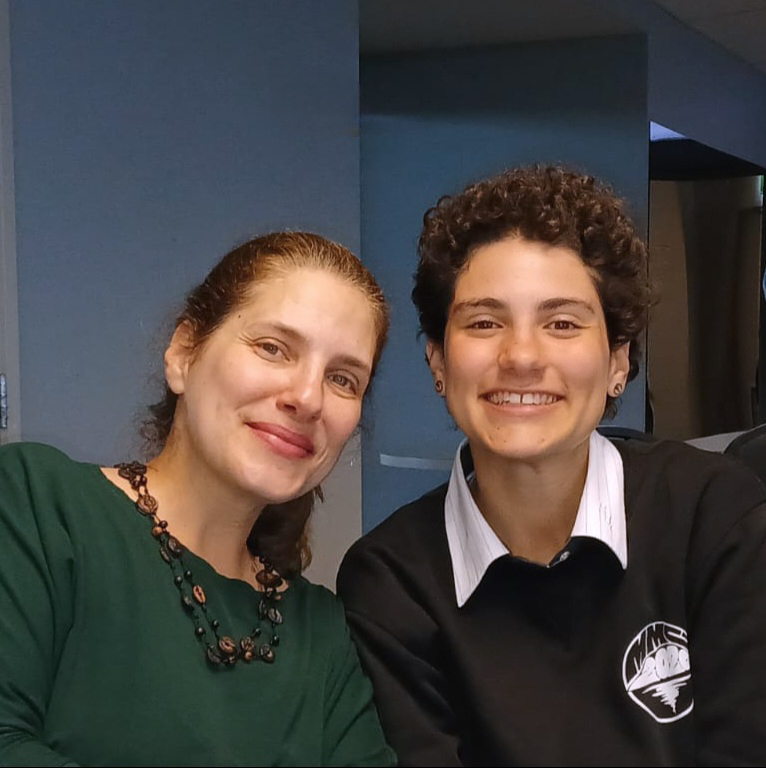
Brazilian writer and theatre practitioner Gisela de Castro with some of the 70 letters written by ākonga from all over Aotearoa.
She wanted them to imagine Whakatāne as a person and write what they loved most, as well as their hopes and dreams for the town’s future. The letters were for her PhD project at the University of Waikato in screen and media studies, that explores how children across New Zealand are thinking about climate, place and the future, while investigating how digital tools may reshape children’s literacy.
Gisela wanted to hear what the tamariki and rangatahi of Aotearoa thought about where they lived. So, she emailed every school in the country. The result was 70 letters by young writers aged between four and 15.
Those handwritten or typed letters about climate change, hometowns and the future, eventually became the foundation for 'A Flight Over Aotearoa New Zealand', a collection of 22 animations inspired by the children’s letters, which are now available to watch online.
Fun and authentic writing
Trident High School teacher Jess Harvey says students often do not write unless it’s for school and grades. That’s why this project felt different. “It wasn’t graded, so the pressure was off. It was just fun and interesting. “And it gave them an authentic audience – people other than their teacher who were going to read their work.”
Jess noticed the shift in her students straightaway. “It engaged them in a way I haven’t seen before.” Alongside her general Year 9 class, Jess included her class of around 12 students with lower literacy levels.
“They loved it too. Some students struggle with writing, and yet they were engaged and enthusiastic.” Ākonga were encouraged to use te reo Māori in their letters if they could, and two did, which Jess says was another meaningful way to draw students in.
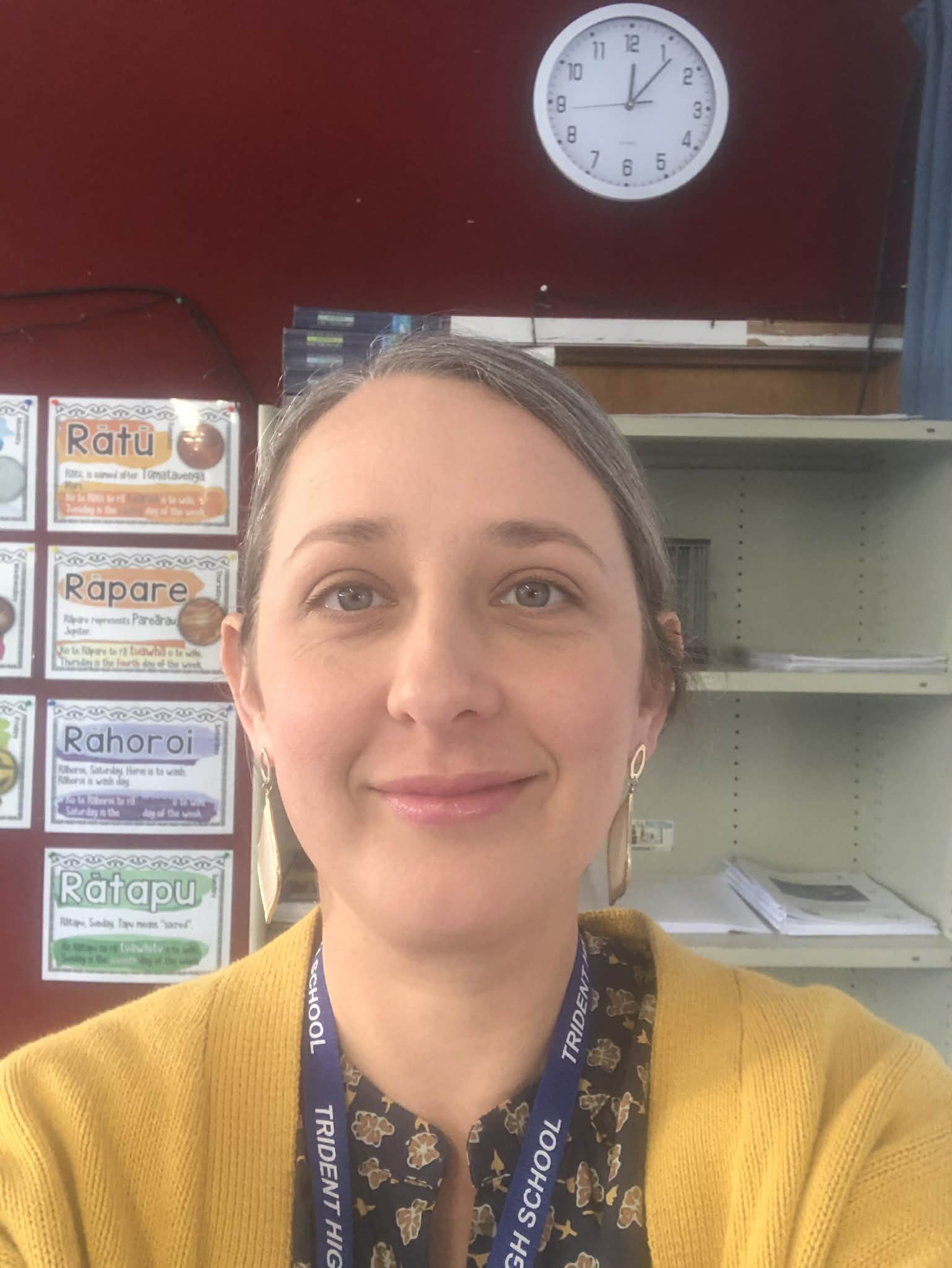
Trident High School teacher Jess Harvey’s students wrote letters for the project.
“It was such a good project.” Jess had put her hand up immediately for her students to take part when she read about Gisela’s request for help.
“I admired how genuine and open Gisela’s idea was.”
Students drafted the letter to their town or city in their books first, received feedback from their teacher if they wanted it, and then rewrote the letters on fresh lined paper with space for drawings and colour.
Some ākonga imagined new attractions for their communities, while others reflected on the places that hold personal memories.
After gaining permission from parents, because the letters would end up online, Jess sent them off.
She says the students who saw the finished project two years later were “blown away” at seeing their work on screen. “They absolutely loved it. There was giggling and carrying on seeing their words and pictures come to life.”
The confidence to speak up
Gisela hopes her finished project shows how digital storytelling can reshape literacy, language and creativity, while giving children confidence and a platform to speak for themselves.
“We should listen to their voices and what they’ve written,” says Gisela.
“I was mesmerised by their words. They’re so clever and intelligent. Their letters had social justice content and environmental awareness. If they were city planners, the country would be even more amazing.
“And when the students saw the results on the screen, they felt so proud of themselves, that they were able to do something to create.”
Gisela says the result shows students the possibilities for their future. “They can be web designers, writers, illustrators – they see the possibilities.
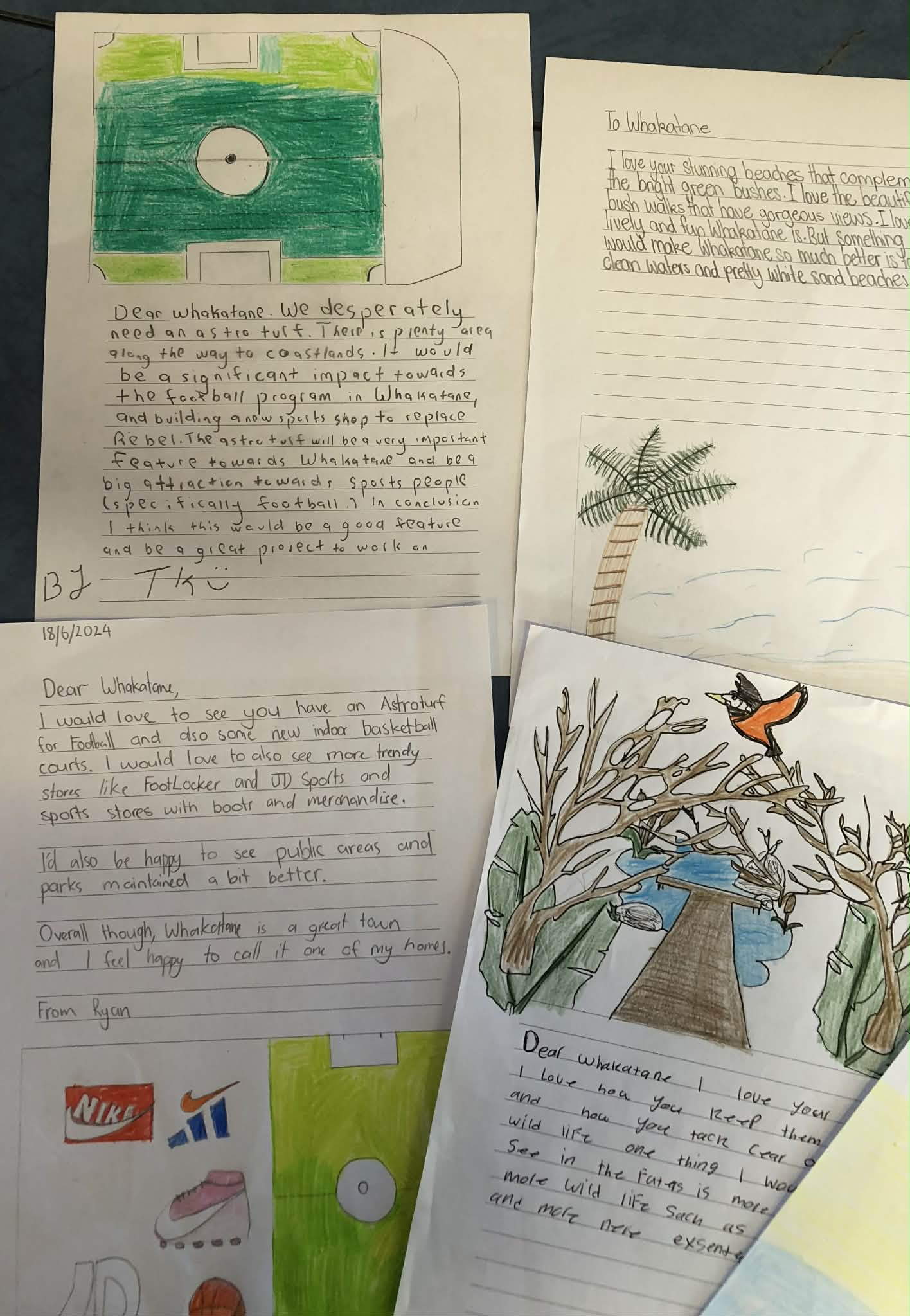
Some of the letters written by ākonga from Trident High School in Whakatāne.
“Every student can see their contribution; it was a whole project made by many hands, without judgement.”
In their letters, children’s concerns were wide‑ranging: care for pets and nature, environmental preservation, and also practical urban desires.
“Some wanted more local malls so families could avoid using expensive petrol,” says Gisela. “Others wanted housing and opportunities for homeless people because ‘we need to protect them.’ One student called ‘desperately’ for an astroturf, which demonstrates how sports can make a significant difference in a city’s quality of life.
“They were amazing. The world would be much better if they were in charge.”
A labour of love and volunteers
Because Gisela’s project was a scholarly one and non‑commercial, much of the creative work to pull it together came from volunteers. It took two years to create the 22 animations.
The process was so slow they joked it was like making sourdough, says Gisela, who contributed koha for the volunteer work and covered essential costs like software licences.
Gisela worked with seven animators, three musicians, an editor, a crochet artisan and a web designer to adapt the letters into digital stories combining text, illustration, narration and sound.
Gisela’s teenage daughter Lara also helped a lot, and one of her friends even submitted a poem about Aotearoa. Gisela says the result had to be accessible to everyone to watch, hear and enjoy.
“One of the animators told me about a type font that allows people with dyslexia to enjoy and read better, so we used that on the website and in some of the videos.”
The animations encourage children to view reading and writing as expressive acts and to see themselves as authors, artists and creators, says Gisela.
‘Ancestral intelligence’
Gisela says she uses a different type of AI – ‘ancestral intelligence’. “It’s where you mix the past, the knowledge, and old-fashioned technology with the future and new technological stuff and digital material to make content. This combination to me is really beautiful.”
Gisela was inspired by contemporary artists, two of whom were aged over 90.
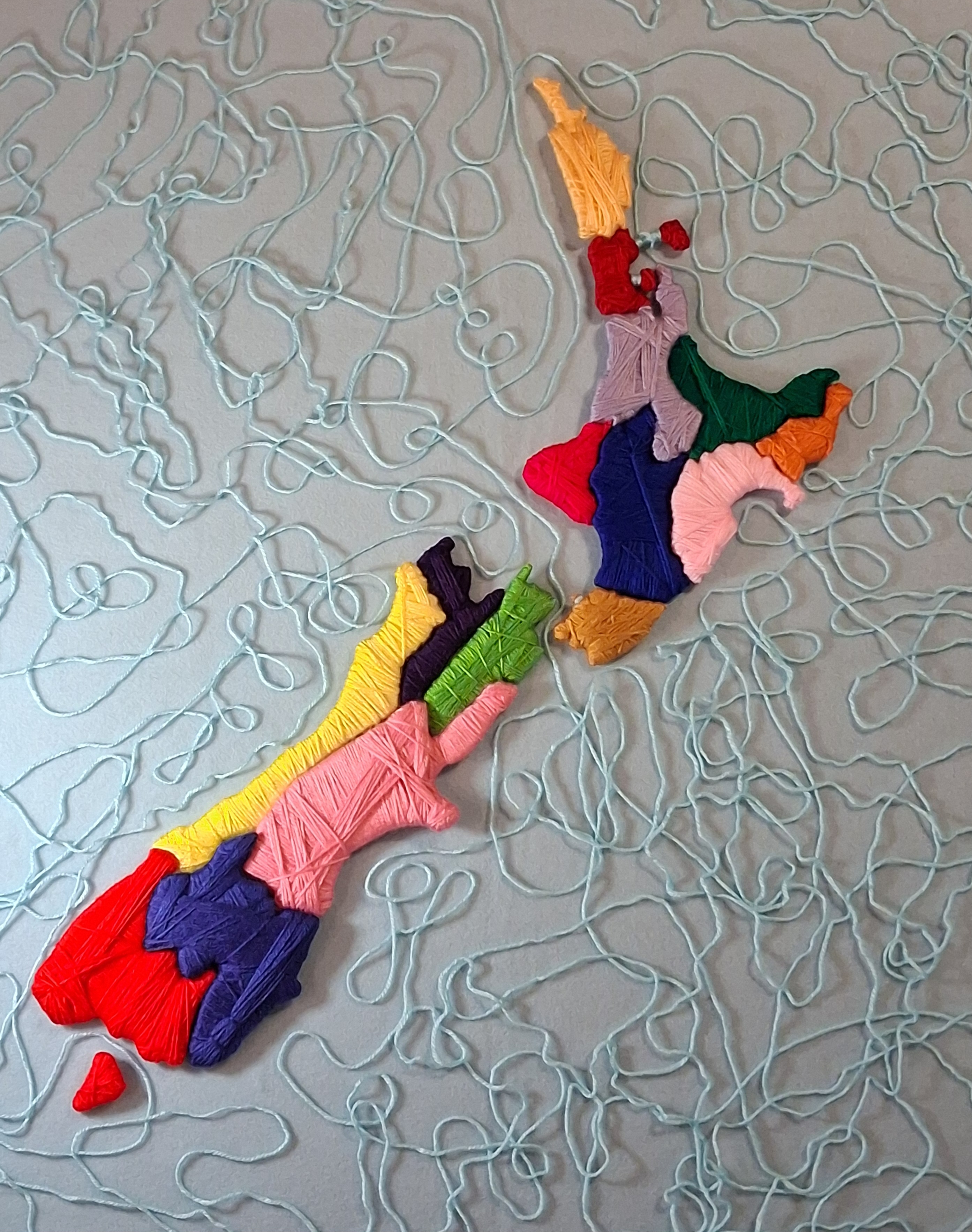
Gisela crafted a map of Aotearoa from wool, with regions fitting together like puzzle pieces.
In the films, the students’ own art comes to life, as well as their handwriting. A crocheted tara iti, or New Zealand fairy tern, is the avatar. The map of Aotearoa was made of wool, like handmade puzzle pieces, representing the regions of the country.
When the project was finished, Gisela held a screening of the stories and invited some students who had taken part.
“Teenagers were reading together, reading aloud, and playing together,” she remembers.
“It was a great experience.”
Lockdowns sparked accessible digital reading platforms
During the Covid-19 pandemic, Gisela and her daughter Lara were living in Rio de Janeiro, Brazil, where extended lockdowns were up to seven months long.
Gisela couldn’t stop thinking about the millions of children without school and libraries all this time.
So, she published a digital interactive book that had sign language, voice-overs, illustrations and subtitles to make it accessible for everyone.
“In Brazil, there are around 10 million [people] who are Deaf or hard of hearing and the children struggle to learn to read properly in Portuguese.”
Gisela also held workshops in Brazil to help children create physical books. “I could see how engaged and transformed they are when they saw their book handcrafted. They feel so proud.”
Now based in Aotearoa, Gisela is dedicating her thesis to her dream of creating online reading platforms that every student can access. That includes anyone who is Deaf or hard of hearing, is blind or has low vision, dyslexia or learning difficulties, Gisela says. She hopes all young people can develop literacy and language with confidence, wherever they are and whatever their circumstances.
The launch of 'A Flight Over Aotearoa' marks a milestone in Gisela’s doctoral research, with further analysis and academic outputs to follow as she prepares for thesis submission this year, and oral defence in 2027.
The digital platform is now live and available to watch. www.afoa.nz