Te Ara Whakamana building strong foundations in early learning
Last year, BestStart Willowpark Road in Hastings started using Te Ara Whakamana framework to embed Te Ao Māori in its local curriculum. A relationship-based kaupapa, it creates a learning environment where tamariki and whānau feel seen, heard and connected from the start.
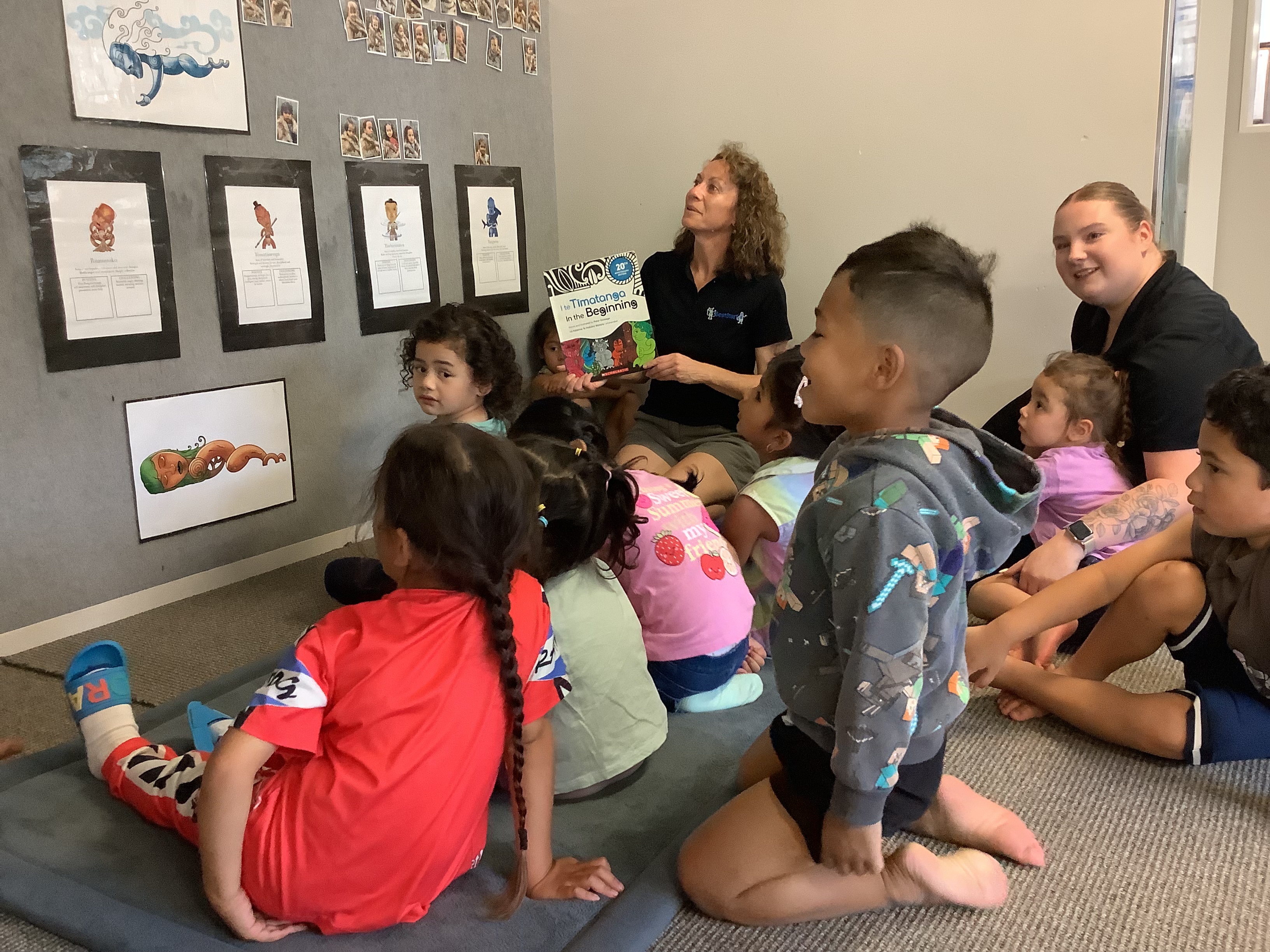
BestStart Willowpark Road kaiako designed a takiuru, or atua check-in space.
Te Ara Whakamana is an education kaupapa that is grounded in matauranga Māori and centred on pūrākau. Shenita Prasad, an educator for over 30 years who has worked with a range of approaches to learning, says she was called to Te Ara Whakamana in 2016 and is now a passionate advocate.
Dedicated to a student’s voice, mana and dignity, the kaupapa influenced Shenita’s teaching and provoked serious thought about school or early learning as a place where students are received, not sent.
“If we really believe in belonging, if we really believe in inclusion, if we really believe in diversity, then we create those spaces. Te Ara Whakamana does that for us.”
Shenita is now kaihuawaere awheawhe/client manager and Te Ara Whakamana facilitator with Ako Solutionz.
Last year, she introduced kaiako and leaders at BestStart Willowpark Road to the practice.
The centre had received Strengthening Early Learning Opportunities (SELO) funding through the Ministry of Education to provide professional learning development (PLD) to strengthen practice and create learning environments where every tamaiti can thrive.
Te Ara Whakamana: Mana Enhancement was chosen as the kaupapa to deliver this PLD.
BestStart Willowpark centre manager Juanita Taurerewa says they had three clear expected objectives:
- Deepen teachers’ understanding and application of local knowledge, pūrākau, waiata, karakia, protocols and practices.
- Support the development of a local curriculum that reflects the community the service operates within.
- Develop positive guidance strategies that are anchored by the culture of the whānau attending the centre.
Engagement through pūrākau
Pūrākau is central to Te Ara Whakamana. Pūrākau, or local stories, have a way of teaching ākonga about whakapapa, connection to the land and how atua provide us with lessons to support us through complex emotions, says Shenita.
BestStart Willowpark kaiako Natasha Timoti adds that the stories lay out the emotions associated with Te Ara
Whakamana.
Natasha, who also travels between early learning services in Hawke’s Bay to share pūrākau to take tamariki on their Te Ara Whakamana journeys, starts by familiarising tamariki with ngā atua.
“We talk about how sad Tāwhirimātea was,” she says. “He was pōuri because his parents were being separated, and he didn’t want to be a part of that. Tamariki relate to this story and the emotions being experienced by the atua.
“Then, of course, they start recognising that in themselves and what they’re feeling and then they start seeing it in their peers as well.”
Natasha says tamariki name their emotions and she encourages them to consider whether they’ve felt the same feelings and how they express them.
BestStart Willowpark Road kaiako designed a takiuru, or atua check-in space.
She explains that, while Tāwhirimātea expresses himself with raging winds, the root of his strife is sadness.
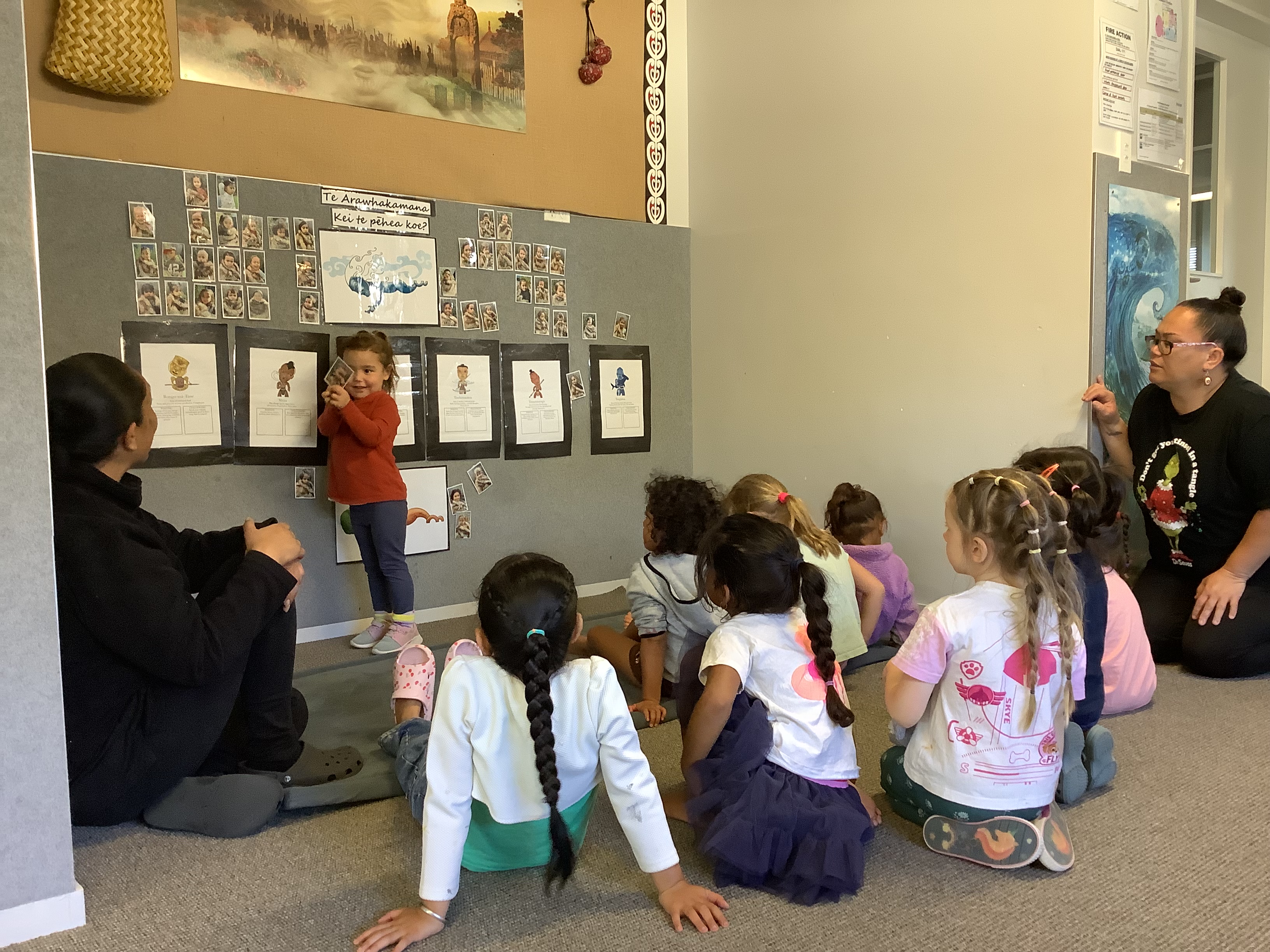
Pūrākau lay out the emotions associated with Te Ara Whakamana.
The story of Tāwhirimātea teaches that anger always comes from somewhere, and that such emotions are complicated, interconnected things, she adds.
“Our tamariki love pūrakau and learning about atua,” says Juanita. “We’ve actually had one of our tamaiti compose a waiata alongside Natasha about atua. This waiata helps our tamariki to become familiar with each atua.”
Checking in with whānau
BestStart Willowpark kaiako designed a takiuru, or atua check-in space, to help tamariki recognise, name, and express their emotions.
Juanita says this space supports the development of social and emotional capabilities, an approach that draws from Kōwhiti Whakapae theory.
With pūrākau depicted on the wall, she says tamariki proactively want to engage with the space.
“They like to sit there and look at each atua and kōrero about them.”
During morning drop-offs, if tamariki are feeling reluctant, Juanita says the takiura system creates an open atmosphere that has deepened kaiako relationships with whānau.
“Whānau can bring tamariki to the check-in wall and sit there for a bit and kōrero with them,” explains Juanita. “Whānau establish which atua their tamaiti is sitting with. This gives kaiako a clear understanding of how this tamaiti is feeling and what they can do to support them. This helps to create smooth transitions into the centre for the day.”
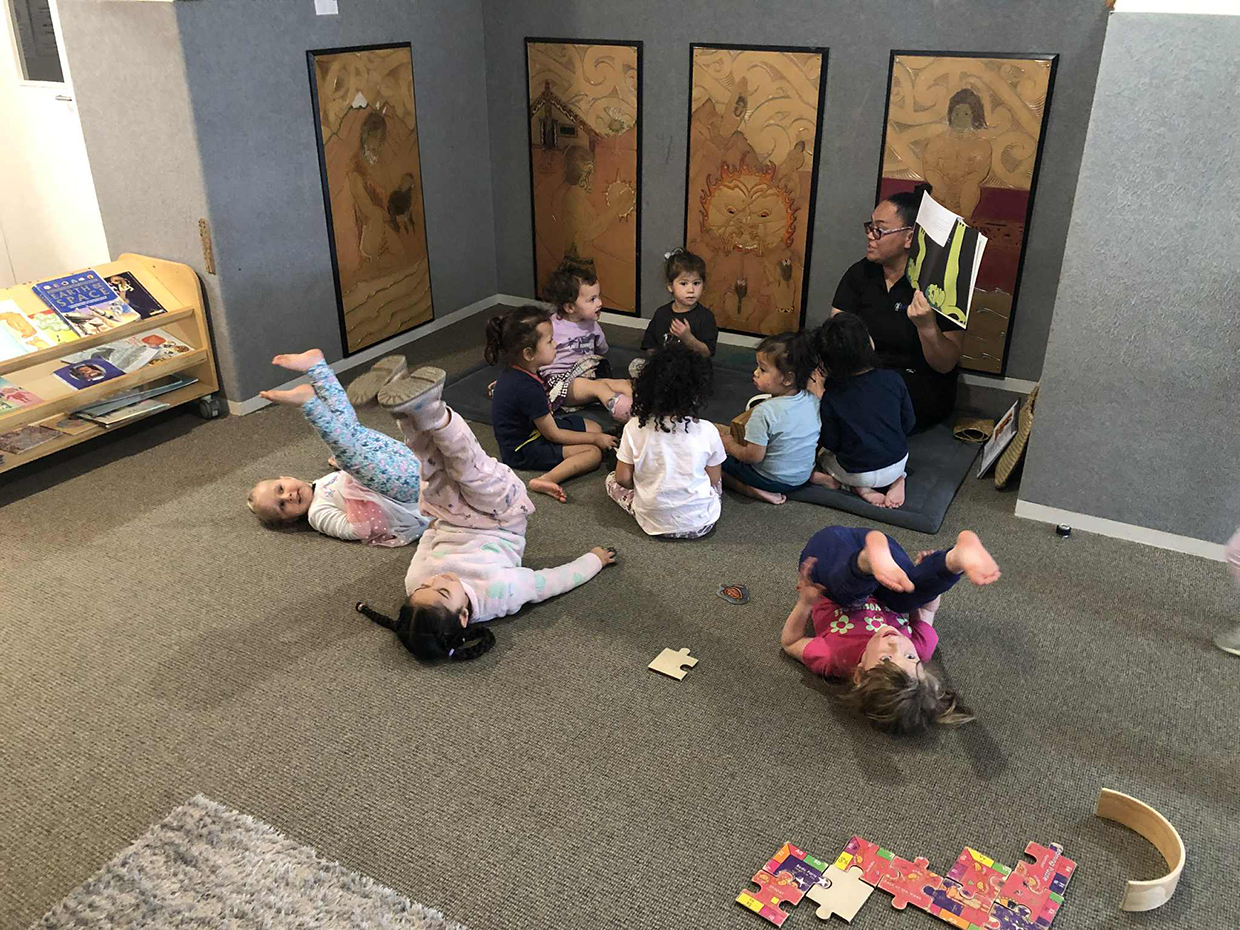
Tamariki listen to pūrākau about Tāne-mahuta lying on his back, told by Natasha.
Juanita has received positive feedback from whānau about Te Ara Whakamana.
She says whānau were able to attend information sessions, supporting kaiako to embed Te Ara Whakamana framework within their unique setting.
The sessions also aimed to extend the influence and benefits of the kaupapa beyond the learning space into the heart of whānau life.
Parent Hannah-Rose Walsh has two children at BestStart Willowpark Road, aged two and four. She has started implementing Te Ara Whakamana framework at home.
“I love it because it helps to support my boys in identifying their emotions so well... It aligns perfectly with our whānau values and belief.”
Hannah-Rose says her older child is now able to identify his emotions.
“He shows me with facial expressions how he is feeling and we talk about which atua aligns with this emotion. We discuss things we can do to support how he is feeling.
“This programme really brings centre life into our home life and vice versa.”
Spreading a kaupapa that has tamariki at its heart
Natasha, alongside Juanita and Shenita, now has plenty of practical advice teachers can follow that aligns with Te Ara Whakamana principles. Natasha suggests starting with pūrākau.
“It has all our atua in there,” she says. “It has the emotions of how those atua are feeling, and it connects straightaway to Te Ara Whakamana.”
“[Kaiako] can study how there are negative and positive dispositions that align with each emotion,” adds Juanita.
“I think we, as people, just want to make things better.
When actually, sometimes it’s really important for children to experience things for themselves, because that’s how they learn how to self-regulate.”
Shenita is primarily concerned with expanding Te Ara Whakamana to schools across the motu. She says this is important not just for introducing educators and tamariki to the kaupapa, but to make sure ākonga have the same experience across every stage of their schooling.
ach tamaiti has a ‘mana plan’ that could be shared with kura, so there is a clear, coherent, and culturally responsive pathway through education for them and their whānau.
This approach draws on the theory in Te Whāriki of pathways to school and kura, representing transition-to-school best practice.
“As educators, we play ‘the long game’,” explains Shenita.
“Imagine that young person being handed over to another Te Ara Whakamana school, and onto further Te Ara Whakamana spaces where we’re all speaking the same language, where [tamariki] are at the centre.”
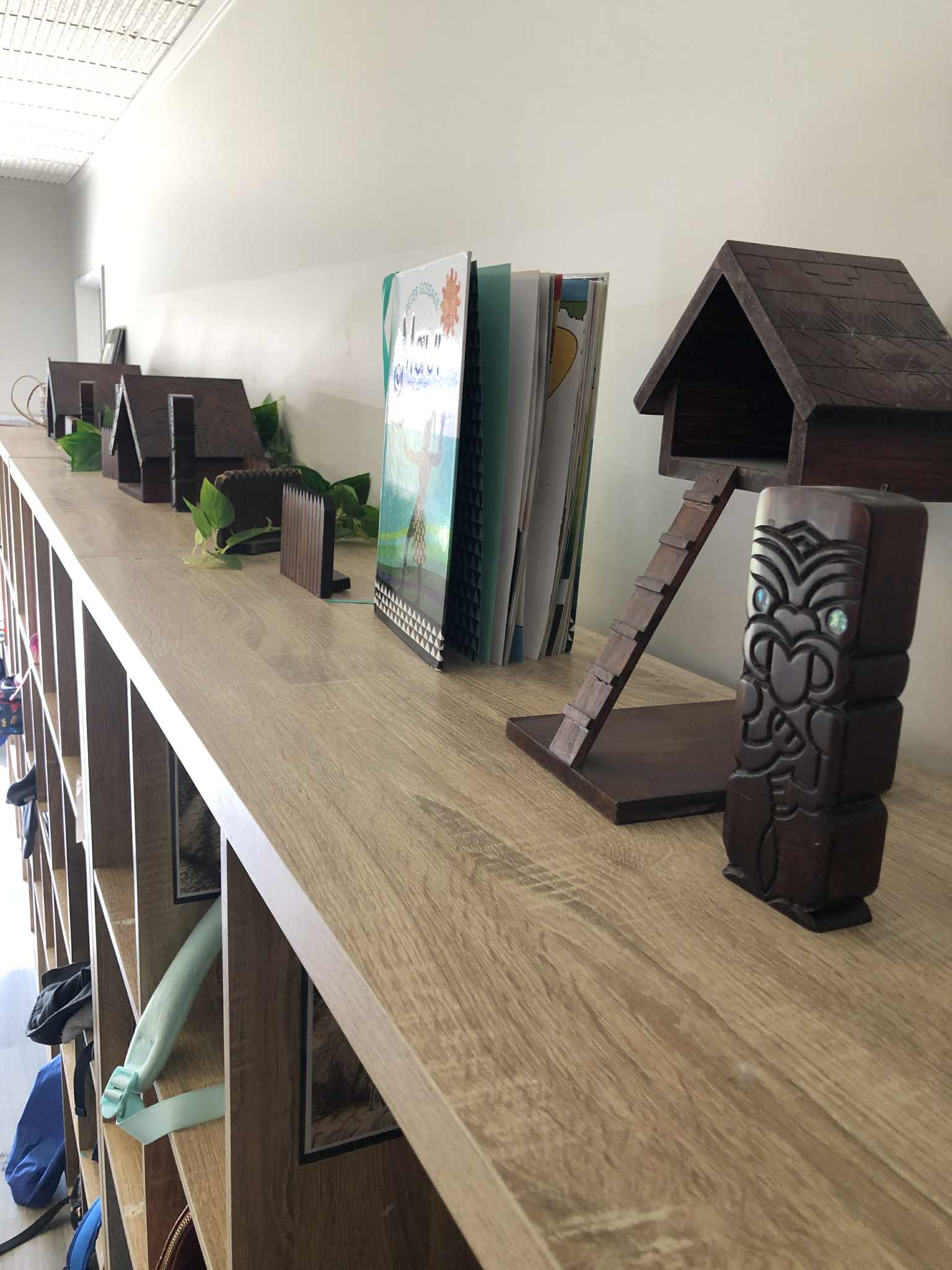
Shenita emphasises Te Ara Whakamana is an evolving kaupapa. Beyond expansion to other kura, maturation is another chief goal for her and other kaupapa practitioners, like Natasha and Juanita.
Part of that is improving access to Te Ara Whakamana professional development through a new self-directed online course, which was built and finished last year, says Shenita.
That long vision also involves encouraging ākonga, through Te Ara Whakamana, to return to their communities and give back once their education journey is complete, she says.
“In 20 to 30 years, if we get this right, they’ll come back to these communities and go, ‘Okay, now I’m a doctor and lawyer and climate change expert, and now I’m going to serve my community’.”
Te Ara Whakamana
Te Ara Whakamana, a New Zealand-designed tool by Ako Solutionz, is a holistic approach to education that seeks to enhance mana by meeting students’ emotional and spiritual needs. Mātauranga Māori informs the kaupapa, particularly through its emphasis on pūrākau.
Nigel Marshall and Susan Ngawati Osborne, alongside a multidisciplinary team of experts, developed the kaupapa in 2012. Since then, it’s found space in early learning services, schools and kura across the motu.
Shenita Prasad helps provide training for Te Ara Whakamana. She says its whakapapa is important to ākonga, because it was designed here.
Shenita says kaimahi and whānau report positive results from incorporating Te Ara Whakamana into their setting, noting increased emotional fluency and positive relationships both within and outside the classroom. You can find more information about Te Ara Whakamana on their website.
Te Ara Whakamana: Mana Enhancement
Takiuru, the atua check-in space
Every morning at BestStart Willowpark Road, kaiako ask tamariki how they’re feeling, and to identify that feeling with a range of atua. They are encouraged to imagine atua as complex beings, representing a range of feelings that are neither good nor bad.
BestStart Willowpark Road centre manager Juanita Taurerewa describes what a check-in looks like, in accordance with Te Ara Whakamana framework.
Brieana, four years old
Brieana puts her photo above tāwhirimatea.
Kaiako questions: “Kei te pēhea koe, Brieana?”
Brieana: “Pōuri”, Brieana answers while making the Makaton sign for sad.
Kaiako: “I wonder what is making you Pōuri, Brieana?”
Brieana: “My brother was sad.”
Kaiako: “Is there anything I can do to help you feel better, Brieana?”
Brieana moves towards kaiako and opens her arms, showing she wants a hug.
Ava, three years old
Kaiako: “ Kei te pēhea koe, Ava?”
Ava: “I sad.”
Kaiako: “Why are you feeling sad, Ava?”
There is no reply for a while, then Ava replies: “I had a bad dream.”
Kaiako: “Is there anything I can do to help you feel better, Ava?”
Ava: “No.