Short story competition offers one-on-one author feedback
Young writers are in to win valuable one-on-one feedback on their work from award-winning New Zealand authors. Years 9 to 13 ākonga are now invited to take part in a new speculative fiction (spec fic) short story writing competition, Te Pae Tawhiti, run by SpecFicNZ.
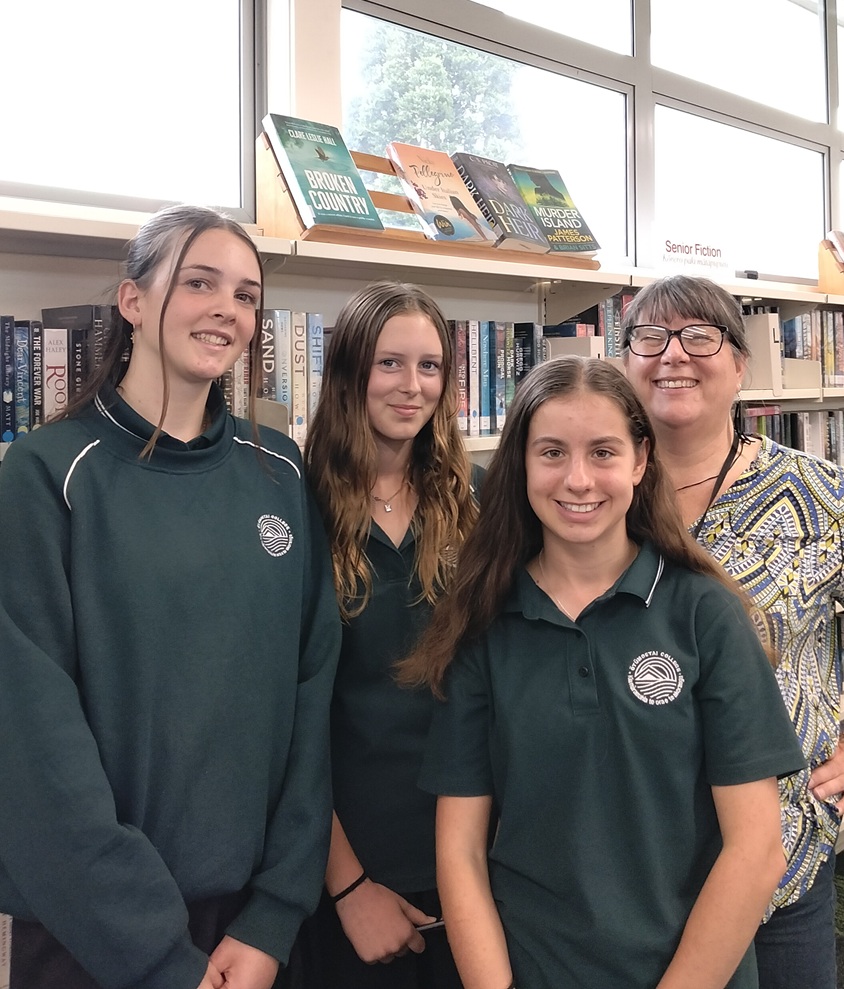
Ōtūmoetai College students, from left, Jaya, Leo and Ayla, are entering young writers’ competition Te Pae Tawhiti with the support of their English teacher and author Piper Mejia, far right.
Ōtūmoetai College English teacher and author Piper Mejia says giving real-world writing opportunities to young writers shows them their voice has value.
“You’ve got to grow and support young writers, because they grow up so quickly.
“Aotearoa is unique in many ways and we should cherish that. Never think our stories don’t matter.”
She encourages schools across Aotearoa and the Pacific Islands to put the details of Te Pae Tawhiti Awards into their school’s notices and English classes, because every 800-word entry from a young writer gets personalised feedback from the team of judges. And as every writer knows, after a cash prize, feedback is a valuable reward for their effort.
Piper hopes students who enter will share their feedback with their teachers so that they, in turn, can see the value of what they teach in the classroom outside of it.
“Then we can celebrate with them – having finished a story and sent it off is a fantastic achievement no matter who wins,” she says.
“Sometimes you need someone else’s voice besides your teacher’s to say, ‘Hey, you’re doing a good job’. And as a teacher it’s important to celebrate when students follow their passions.”
Creativity and confidence
Piper has authored two books, is a longtime member of Tauranga Writers, and in 2011 helped launch a young writers’ group that went on to run a national competition for 12 years.
She says some of those early entrants became award winners in other nationally recognised publications, like Emma Shi, who now has her work returning to the classroom as studied texts.
This year, SpecFicNZ has taken up the mantle, relaunching the short story competition under the new name Te Pae Tawhiti.
Speculative fiction (spec fic), is the umbrella term for fairy tales, Grimm tales, horror, science fiction and fantasy.
SpecFicNZ is made up of New Zealand authors, and friends of Piper’s, which is why she’s determined to make sure as many teachers as possible hear about this opportunity.
Tristin, a senior student at Ōtūmoetai College in Tauranga, is preparing work for Te Pae Tawhiti.
“Sharing your writing is scary and writing competitions help you face your fears,” he says. Other students from Ōtūmoetai College also told Piper why they’re giving it a go.
“Creative writing is how we learn to be creative thinkers, especially science fiction. Writing competitions are a good way of having a go at seeing what people will believe,” says junior student Luke.
“I like entering writing competitions because I want my writing to be seen by other people,” adds fellow junior student Jaya.
Senior student Sierra-Jane says writing competitions are a chance to gain new knowledge about writing. “And to have fun with our own stories.”
Meeting the interests of rangatahi
The theme Distant Horizons doesn’t encompass “normal novel” style, says Piper.
“Young people don’t write that way. The speculative fiction theme meets teenagers where they’re interested, to challenge their creativity and increase their scope for writing.”
Piper says Ōtūmoetai College’s English department have incorporated the competition into their creative writing teaching, with a focus on fairy tales.
“Then we can talk to them about the elements of creative writing, and speculative fiction.”
Speculative fiction covers many dark themes that teenagers enjoy, says Piper, but they can get overwhelmed by choice. That’s why the Ōtūmoetai College English department is focusing on just one theme: Grimm tales.
Piper says the teaching will cover what it is, why it’s speculative fiction, and why it is an important style of writing to engage modern audiences.
Because the creative writing is part of their teaching programme, Piper will read students’ writing entries first, give initial feedback, then allow them time to re-write if necessary.
“[We will] do the teachery things, like grammar, and speech marks, because that is also part of learning skills that need to be practised and feedback is so important.”
Lastly, she will make sure students are given time during class to enter the competition themselves.
Valuable feedback from top authors
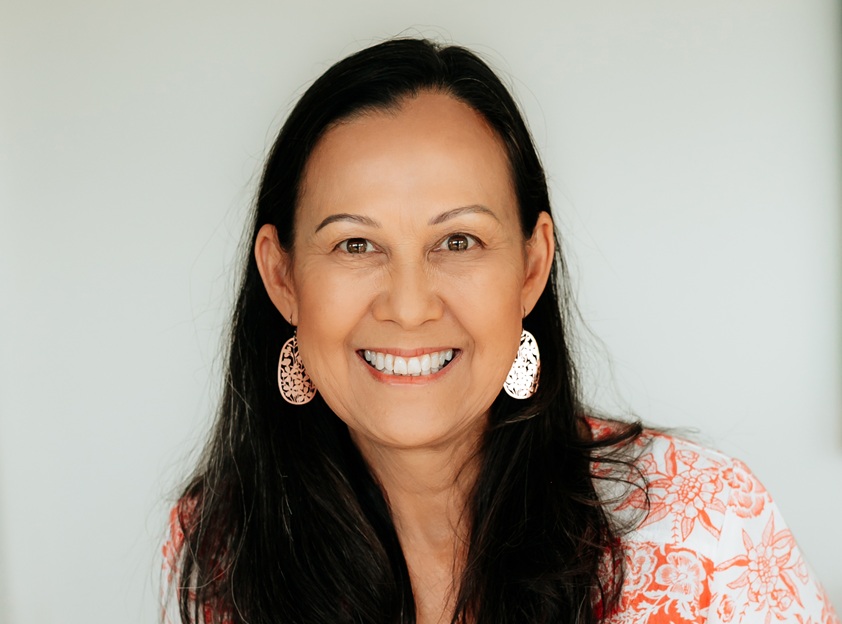
Encouraging young voices to be heard through the art of writing is behind the inaugural Te Pae Tawhiti Awards, with chief judge Lee Murray.
Accomplished writer Lee Murray, an Officer of theNew Zealand Order of Merit and chief judge of Te Pae Tawhiti, hopes this year’s competition will reveal some exciting new voices.
“Our young storytellers bring a unique perspective. I can’t wait to read what they want us to know,” says Lee.
“Te Pae Tawhiti Awards are inviting Aotearoa and Pacific secondary students to sharpen their storytelling skills and share their vision for the future through myth, metaphor and magical far-off worlds.
"Speculative fiction allows readers and writers to imagine the world they want to live in and the people they want to be.
"As chief judge, Lee will be given the top stories from each year group after a panel of readers has gone through each submitted work.
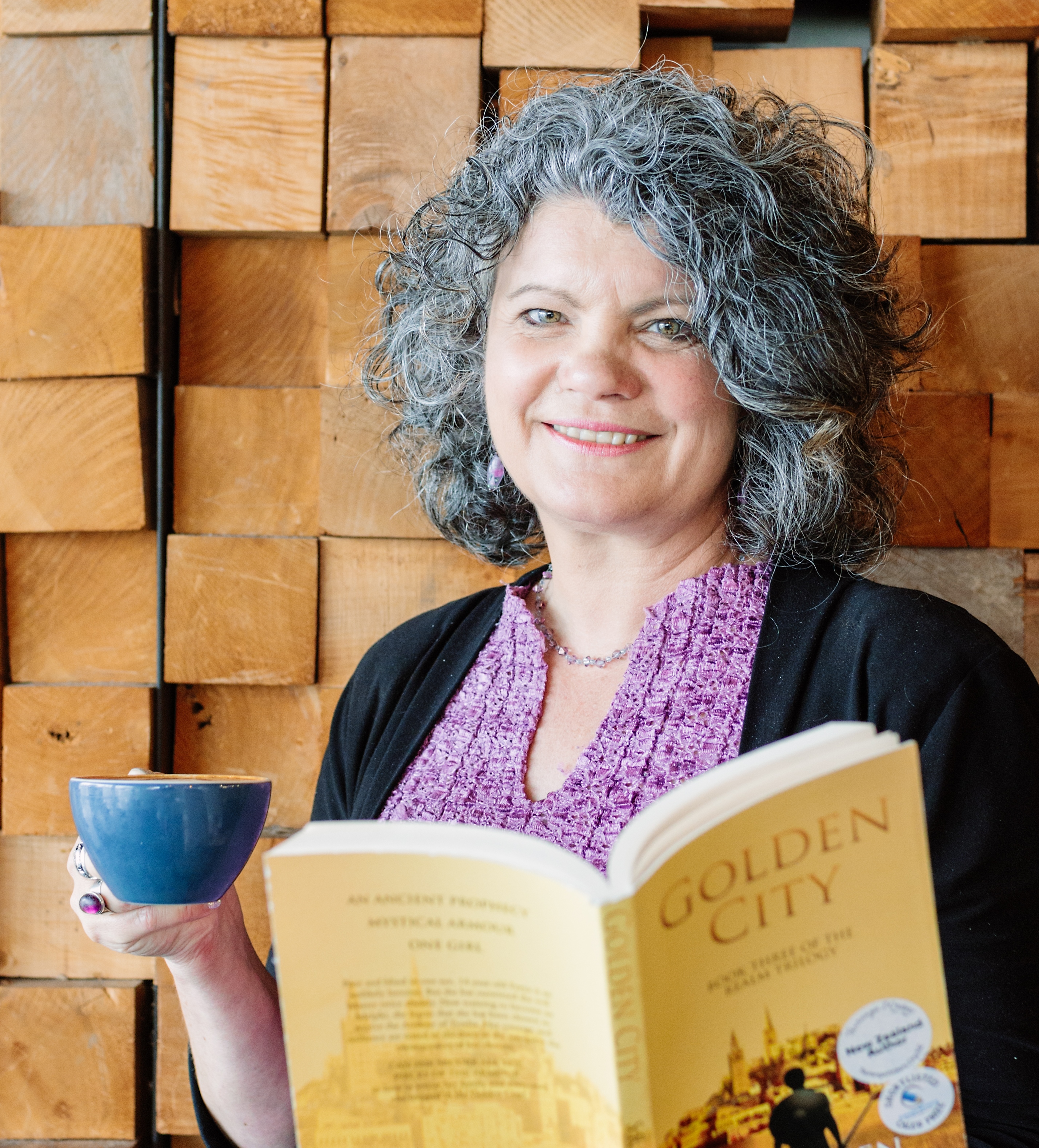
Sharon Manssen
SpecFicNZ president Sharon Manssen is on the panel, and is also the multi-award nominated author of The Realmshift Trilogy – a young adult fantasy fiction trilogy.
“So many fantastic budding writers never develop into amazing authors due to lack of opportunities to really learn the craft,” says Sharon.
“Te Pae Tawhiti Awards are offering a unique opportunity for Aotearoa and Pacific students to not only win prizes for their speculative short story, but along the way gain valuable feedback and mentoring from some of New Zealand's top authors.”
Te Pae Tawhiti Awards
The theme of the 2026 Te Pae Tawhiti Awards is Distant Horizons. The writing must be 800 words and original, not using artificial intelligence (AI).
It’s free to enter and open to anyone across two secondary year groups: Years 9 and 10 or Years 11 to 13.
Entries must be in by 3 July. There are cash prizes and writers receive author feedback.
Winning and place entries will also be published on SpecFicNZ’s website for a global audience.
Sponsored by Creative NZ, Te Pae Tawhiti Awards are being held as part of Hamilton Book Month.
You can enter the competition on Te Pae Tawhiti Awards' website.
Secondary School Speculative Fiction Competition – Te Pae Tawhiti Awards