Ōtūmoetai Playcentre weaves pakiwaitara into art and play
At Ōtūmoetai Playcentre in Tauranga, a new mural is doing more than brightening a wall. It’s helping tamariki step into local stories, sparking language, curiosity and a deep sense of belonging.
The walls of Ōtūmoetai Playcentre have come alive, turning a simple outdoor space into a vibrant telling of local history. But this isn’t just a backdrop for play. It’s become part of the learning itself.
Through a collaborative mural project with artist Millie Pidwell, tamariki are not only seeing art, they are engaging with pakiwaitara, asking questions and connecting with the stories of their place. For kaiako and whānau, it’s a powerful reminder of how literacy and language can live well beyond books and how the principles and strands of Te Whāriki are woven into the environment and everyday experiences.
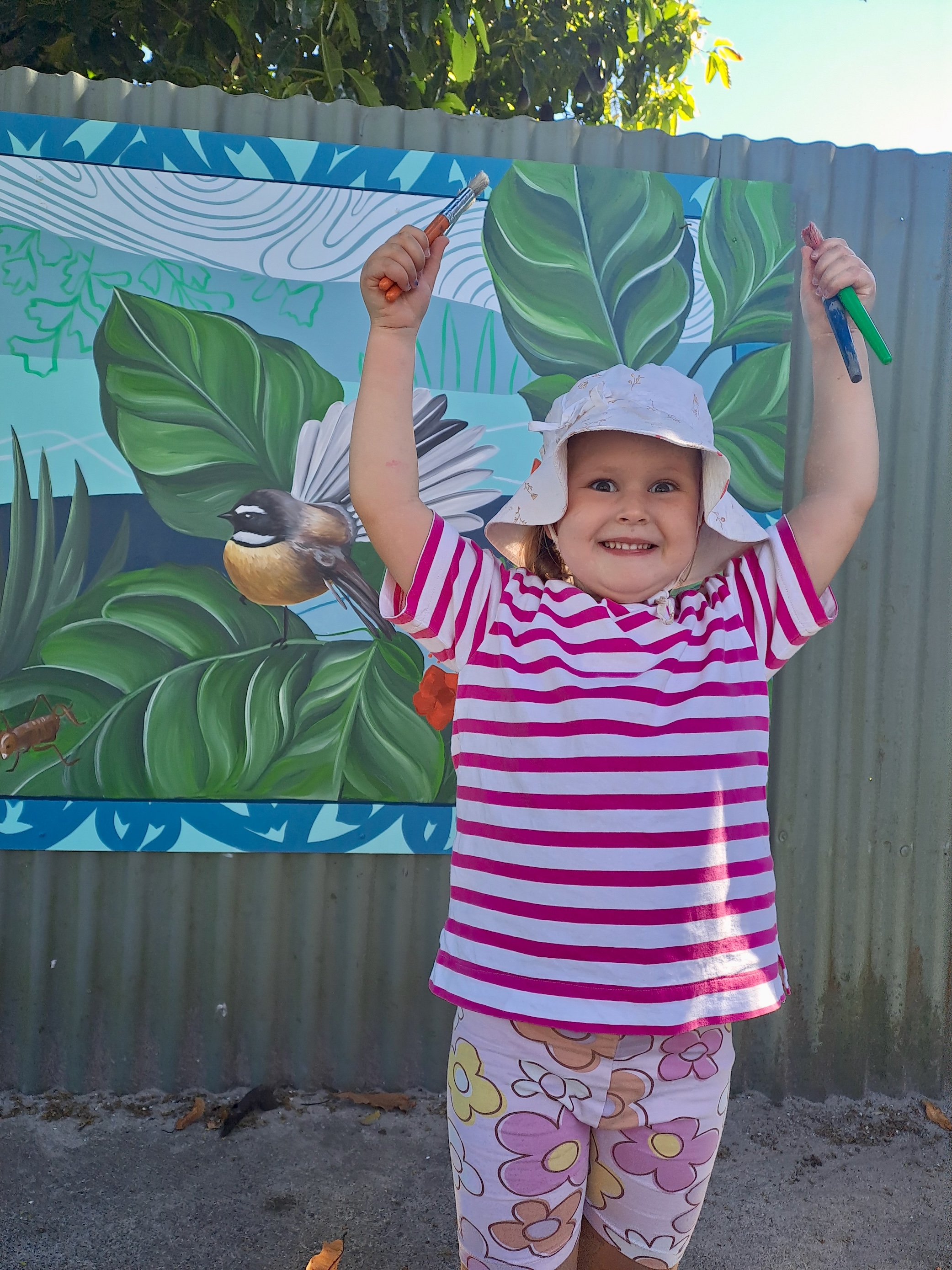
Emmie is excited to do some art at Ōtūmoetai Playcentre in Tauranga.
From the earliest stages, the project centred on storytelling. The mural draws on the legend of Taurikura, a chief's daughter who transforms into a tuatara and becomes a guardian of the land and water. It’s a story rich with meaning, and one that tamariki can return to again and again through play, conversation and imagination.
For Millie, who has worked on murals in schools across the region, that sense of ongoing connection is what matters most.
“I loved painting this mural for Ōtūmoetai Playcentre,” she says. “I feel so grateful to be part of projects like this one, to collaborate with staff and whānau to create something meaningful and long lasting for the community.
“The more murals I paint, the more I realise why I love painting them so much. It’s the story, community feeling and impact.”
A partnership with mana whenua
Rather than choosing a design in isolation, Ōtūmoetai Playcentre worked closely with Ngāi Tamarāwaho iwi to shape the mural. Takitimu kowhaiwhai patterns were woven through the artwork, grounding it firmly in local identity.
That collaboration sits at the heart of the project. It’s not just about representation, but about building relationships and understanding the stories behind the imagery.
For parent Jodie Moore, the mural reflects what the centre values most.
"It reflects our belonging to the local area. The story of Taurikura is about kaitiakitanga and manaakitanga – qualities we want to instil in our tamariki," she explains.
Moments like the blessing of the mural added another layer of meaning. Kaumātua Des Tata of Ngāi Tamarāwaho led the unveiling, bringing together whānau, tamariki and life members for a special day, says Ōtūmoetai Playcentre co-president Sheldon Macartney.
For kaiako, these experiences offer authentic contexts for language. Tamariki hear and use te reo Māori in meaningful ways, connected to people, place and story rather than isolated vocabulary.
Curiosity, creativity and child-led learning
While the finished mural is a masterpiece, much of the learning happened during the process.
Watching Millie at work sparked immediate curiosity. Tamaiti Sonny captured it perfectly: “Woah! How is she painting a tuatara?” and “How does she paint so big?”
Those questions became the starting point for rich conversations. Tamariki wondered about scale, technique, and the story unfolding in front of them.
Instead of keeping the process at a distance, the centre invited children to pick up brushes and create alongside the artist. That simple decision shifted them from observers to participants.
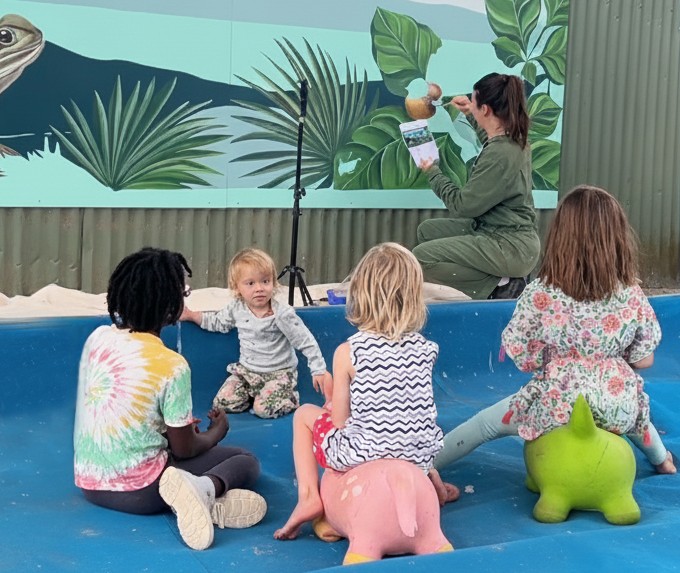
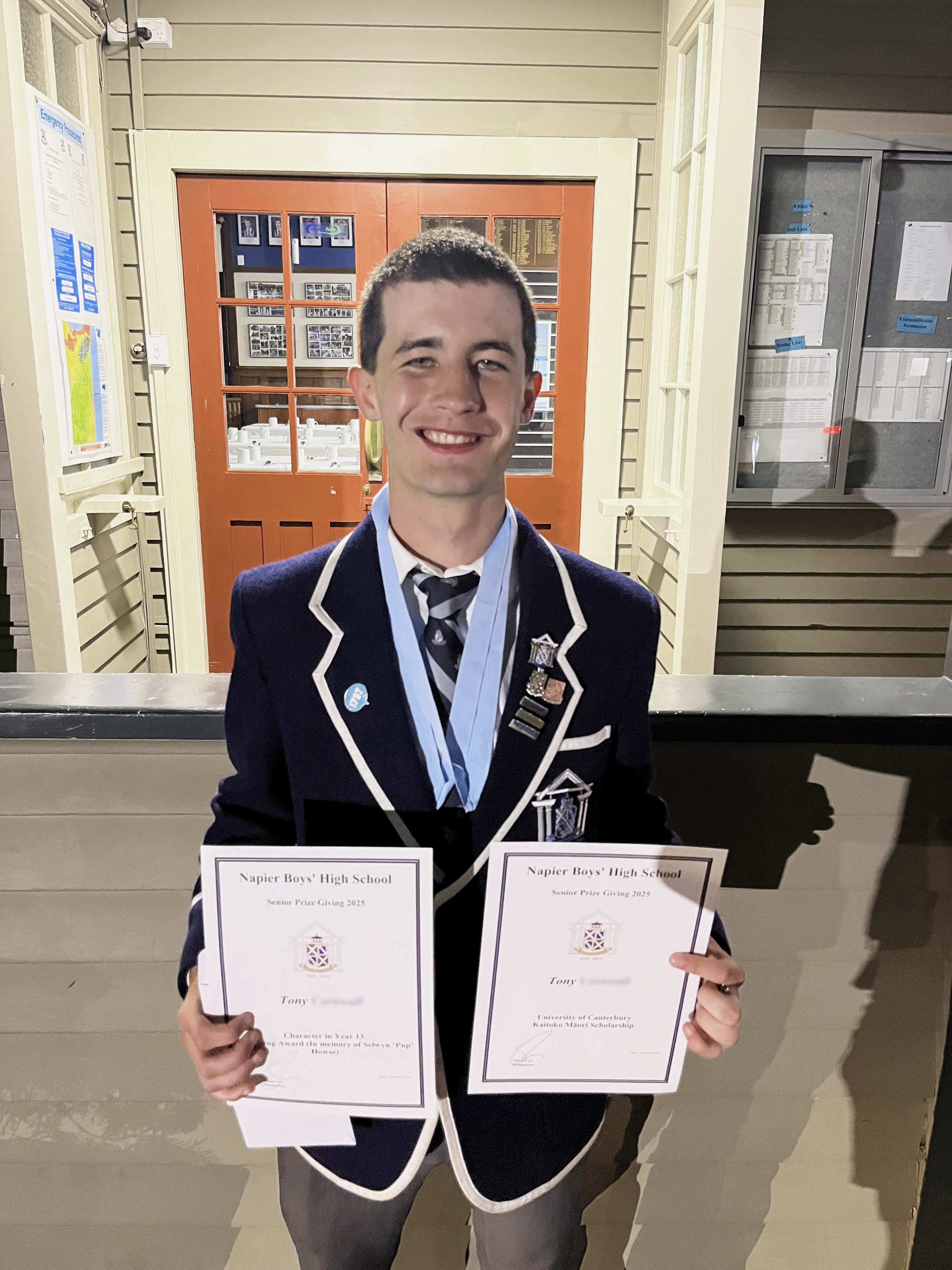
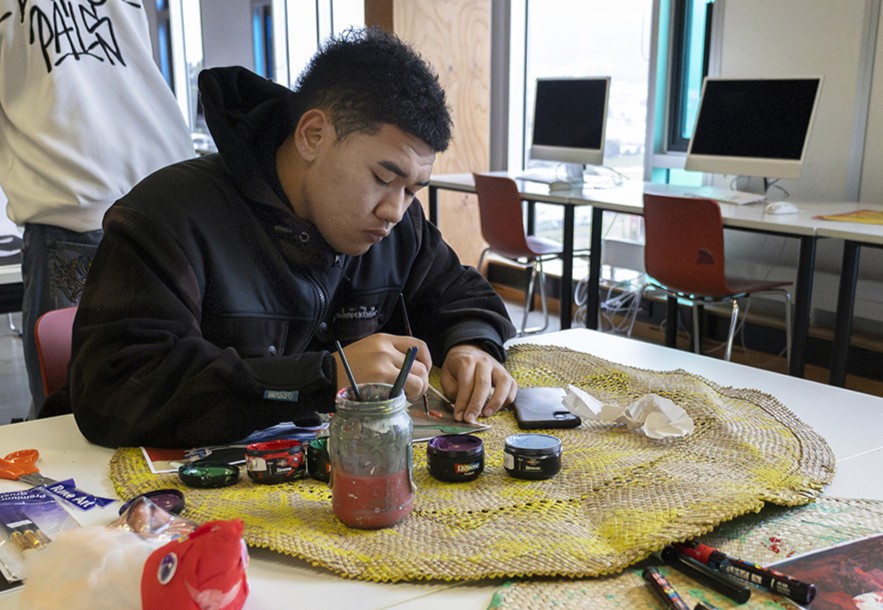
Artist Millie Pidwell with tamariki from Ōtūmoetai Playcentre.
Giving tamariki this time, space and trust saw their own questions and ideas come through. Language followed that curiosity, from describing what they saw to wondering how things worked and retelling the story behind it.
The mural continues to support this long after the paint has dried. It’s a prompt for storytelling, a visual cue for recalling the legend of Taurikura, and a shared reference point for conversations.
Strengthening the village
For Ōtūmoetai Playcentre, a sense of collective ownership is woven through the project.
From the initial design conversations to the unveiling, whānau were involved every step of the way. The result is more than an artwork. It’s something the whole community feels connected to.
“The artwork becomes part of students’ everyday lives,” explains Millie. “It adds to a sense of belonging and pride. It reflects shared values, history and community.”
That sense of belonging is especially important in early learning settings and is an important strand of Te Whāriki. When tamariki see their stories and environment reflected around them, it affirms who they are and where they come from.
The project was supported by a Tauranga City Council Creative Communities Scheme grant, but its impact goes well beyond the funding. It has strengthened relationships, created shared experiences, and left a lasting legacy for future generations.
For Sheldon, the unveiling brought that home. “To gather as a centre and take part in the blessing, guided by kaumātua Des, made the project feel truly complete.”