Notes of joy and connection: Exploring music therapy in a teen parent unit
In Wairarapa, a pilot programme in music therapy has shown measurable benefits for both teen parents and their tamariki. Trialled at Masterton’s Puawānanga teen parent unit in term 4 last year, the programme set out to see if starting a school day with big smiles, world music, waiata and dancing could improve learning for parents and their babies.
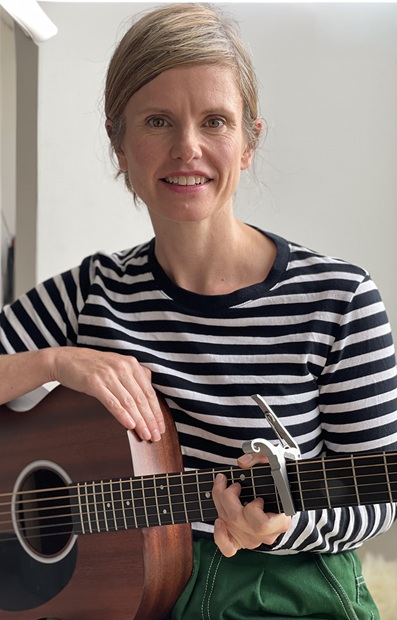
For the programme’s creator, Pip Algie, it was all about helping young parents to find a little joy amid the headwinds of parenthood, and to learn strategies around positive parenting through musical play. Music therapy is a clinical practice that uses music to support a person’s physical, emotional, cognitive and social wellbeing; as a music therapist, Pip works with a wide range of ages and abilities. “It’s a real tangible job and with my current caseload, no two days are the same,” she says.
Instruments for interaction and connection
More recently, Pip has been keen to explore how a music therapy service could be beneficial for teen parents with their pēpi.
She carefully considered what her goals were and decided they had to be centred around growing connections and developing confidence in play skills through musical play.
To explore the idea further, Pip secured funding for a pilot from Music Therapy New Zealand, which supports therapists and advances music therapy as a profession.
She then approached Masterton’s Puawānanga, which sits alongside Mākoura College, and after a little research, the unit’s manager, Prue Harawira-Smith, quickly came on board.
“We could see the possibilities, we were just curious to see how it would go, how the mums would interact with the children and how the children would enjoy it.”
Prue says Pip was an immediate hit with the young children, although some of the teenagers took time to adjust.
“Some of the mums found it challenging to let themselves be vulnerable enough to be silly and make the noises and get stuck in, but also through that, you’re just hoping they develop skills to connect with their kids in a positive way and also to manage them in a shared space.”
If their tamariki got frustrated, some parents thought that “everyone’s judging them but as you get older, you realise that everyone’s in the same boat”, says Prue.
A fun and relaxed space
Sessions were deliberately kept short at no longer than 45 minutes, with 30 minutes of actual musical play.
The emphasis was on creating a fun and relaxed space where young parents could develop play skills and learn new activities and games to support parenting and bonding.
Activities were easily replicated at home, like the 'parachutes game’ which can be played with a simple bed sheet.
As the pilot got established, Pip watched ākonga grow in confidence. They would take the lead with waiata, initiate play and respond to their babies in a more authentic and natural way, "rather than, 'I have to do this'."
One activity summed things up for Pip. Tamaiti sat on their parents’ laps watching the other children in a music and movement task. Pip then encouraged the parents “to turn the babies around and do it face-to-face so they could see the joy on their children’s faces”.
“I think the sessions and interactions felt really relaxed at the end, joyful and relational,” says Pip.
Pip Algie says music therapy supports wellbeing of both teen parents and tamariki, which underpins their learning.
“The sessions and interactions felt really relaxed at the end, joyful and relational.”
Participating and contributing
In music therapy, as in education, playing around with instruments, turn-taking games, waiata and dance moves have a secondary purpose.
The emphasis on relationships and responsiveness was closely connected to key competencies about managing self, participating and contributing, says Pip.
“Everyone’s input was valued; this pilot project supported hauora and wellbeing, which underpins learning across the whole curriculum. And it’s a positive start to the day as well.”
Music to their ears
Being the focus of so much creative attention had a notable effect on the young tamariki in the pilot, who were more settled and relaxed at childcare after one of Pip’s sessions.
Anonymised feedback from ākonga themselves has also been positive.
“I like the music. I wasn’t feeling much this morning ’cause I was in a rush but it made me feel happy my baby was loving it,’’ said one young parent.
Others expressed a sense of belonging in their feedback:
“I like seeing all the kids happy. I feel peaceful,” or “I feel happy and part of a family.”
Pip says she works to make sure she meets everyone where they’re at, and one student’s comment meant a lot. “I feel very included by you, even if my baby is shy,” the student said.
Teachers at the unit also said the sessions gave them time they did not usually have to observe the students with their babies, and to formulate strategies to support them.
“I love seeing the students interact positively with their babies. I hope it teaches them how to have fun with their kids,” said one teacher.
The pilot’s potential
The future for music therapy at Puawānanga is unclear and reliant on funding. But with 100 therapists and 25 teen parent units around the country, Pip sees real potential for the programme to be implemented elsewhere.
She is now busy writing a template of her pilot programme, with her strategies and resources, so other therapists can pick it up.
Prue also hopes the pilot will find some traction.
“It would be amazing if everyone had a chance to have a music therapist. I think that would be so fantastic.”
Written by Catherine Harris.