Murals spark a rohe-specific shift at Te Kura o Hanana
At Shannon School Te Kura o Hanana, a place-based approach is helping ākonga connect deeply with identity and whenua while opening new ways to think, create and share their stories into the future. Dr Ben Egerton from Te Whānau o Ako Pai School of Education at Victoria University of Wellington explains more.
What does it mean to design learning that connects past, present and future? At Shannon School Te Kura o Hanana in Horowhenua, it begins with a deep understanding of who and where ākonga are.
Several years ago, the school partnered with artist Wendy Hodder for a mural project aimed at strengthening the connection with Ngāti Whakatere whenua, identity and pūrākau.
Four years on, the kura, led by Rochelle Thorn (Ngāti Ruanui, Ngā Raururu Kītahi, Ngāruahine), is taking the murals as the focal point for refreshed whole-school planning to embed teaching and learning in rohe-specific place-based learning.
A loud and colourful identity
You can't miss the murals when you visit Te Kura o Hanana. Large, inviting and detailed, they occupy whole sides of the classrooms and face out onto the playground and extensive playing fields.
The murals showcase local identity loudly and colourfully.
One is a long, beautiful huruhuru, telling of the last of the huia which lived in the Tararua maunga overlooking the kura. Another centres the sacred maunga Te Ao Kaparangi.
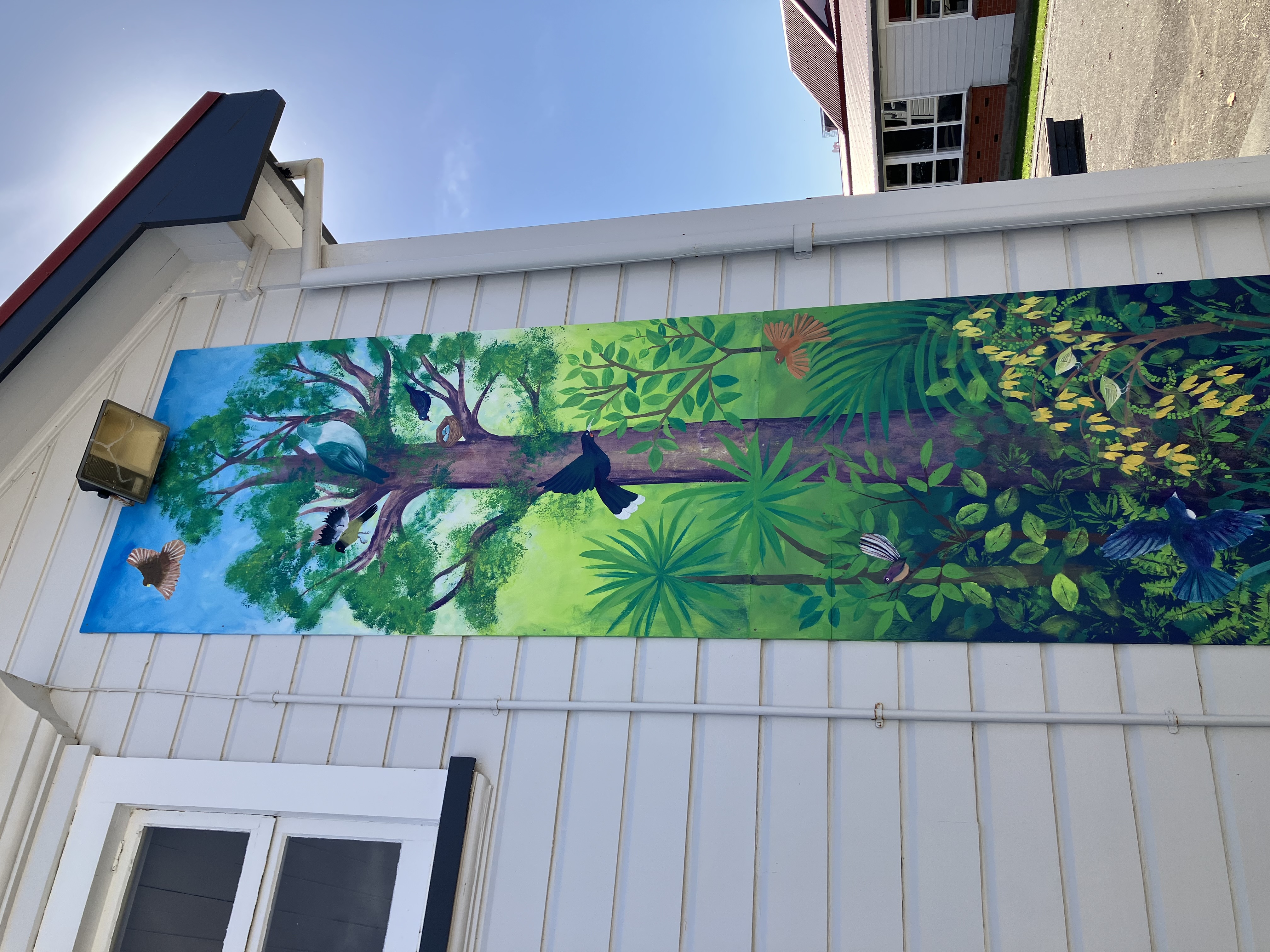
One depicts wai falling as rain on the maunga and flowing into the Manawatū awa, alongside harakeke. Another tells of kahikatea, abundant throughout the kura's rohe, surrounded by potatoes, crops and plants, a reminder that Hanana is an area perfect for growing kai.
Another is a braided image of tipare and tātau, each sharing further pūrākau of atua, kura and kete of mātauranga.
They, as the school website says, remind us of who we are, where we come from, and the pride we share in our community. But, as Rochelle says, they also remind us of where we are going.
Weaving symbols and stories
The murals depict the identity of the school; and to be central to teaching and learning, they must be central to everything the school does.
With the murals being so prominent on the school grounds, one of Rochelle's first actions as principal was to refresh their website, so the murals are prominent there too.
All the murals represent something different and speak to all aspects of who we are, says Rochelle.
The murals were co-created by our children, and they need to see them and themselves in their learning and online, as well as at our kura!
With identity and place now at the heart of the physical and online architecture, it was time to shift to teaching and learning.
The murals, with their depictions of who we are, ground and inspire us … and we wanted to find ways to build this into teaching and learning so our tamariki are deeply connected to who they are and where they're from.
A two-year learning journey begins Rochelle and her kaiako have begun the process of overhauling their planning. When finished, they will have written a two-year programme that connects to, and is underpinned by, the depictions of place in the murals.
In addition, each of the murals is accompanied by a theme, shaped by Pa Wylie Te Peeti (Ngāti Whakatere). These themes enable kaiako to connect place and tamariki identity to classroom programmes.
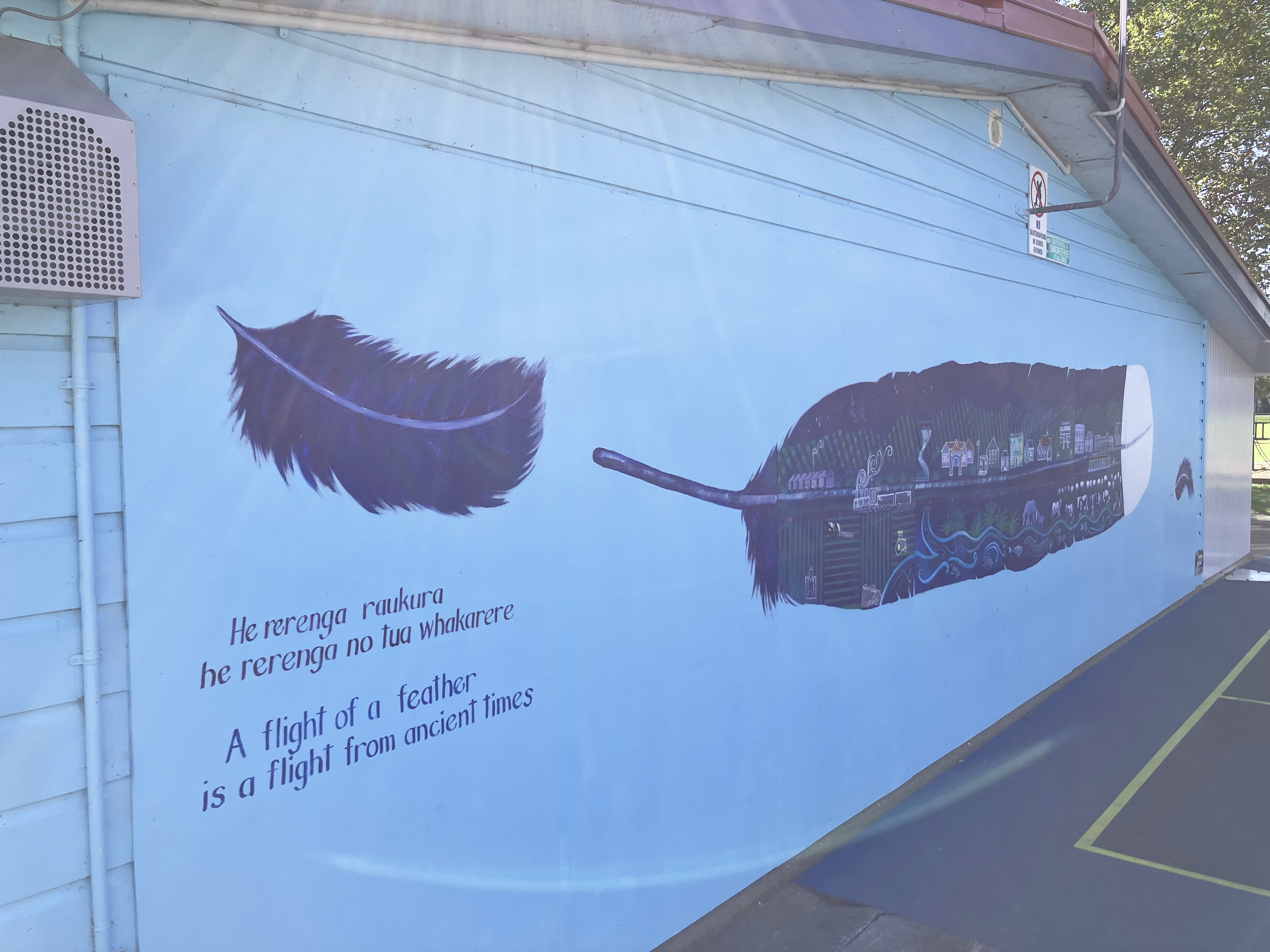
This mural shows the feather of the now-extinct huia bird, which some believe were last seen in the nearby Tararua ranges.
This term, drawing from the mural of the huia and Tararua maunga, the theme is He rerenga ruakura, he rerenga no tua whakarere. A flight of a feather is a flight from ancient times.
As kaiāwhina tumuaki and Year 2-3 kaiako Sarah puts it: It is a great opportunity to connect past and present with the future.
Across the kura, across year groups, kaiako have made conceptual connections in a multitude of ways.
This includes journeys, remembrance, Anzac commemoration, Matariki, time, maramataka, patterns of growth and harvest, and death and regeneration.
Woven in with reading, writing, mathematics, te reo Māori and science, it all connects to the murals and to the places they embody.
Our intention is to build a rich, local-context curriculum... and by having a local-context curriculum, we see how this supports engagement.
All their reading and writing and the rest of their learning is connected to place. Our tamariki see themselves in their learning every step of the way, and it's grounded in mātauranga Māori.
Taking advantage of digital technologies
When reviewing the school website, Rochelle and Sophia, kaiako of Year 2, started exploring how AI might bring the murals to life.
This mural depicts the kahikatea tree, as well as other native plants and birds seen around the school and across the region.
Taking the kahikatea mural, Rochelle and Sophia animated the whole thing; the manu in its branches, harakeke and the leaves rustling in the breeze, and the tree came alive!
This now inspires the next step for Rochelle and her kaiako: exploring digital technologies, and how tamariki can surface, show and share their own pūrākau and their own understanding of place.
Over the course of the rest of the year, kaiako and tamariki will be visiting Nōku te Ao Capital E in Wellington, one of the learning spaces under Wheako Pōneke Experience Wellington's umbrella of arts, education and cultural institutions.
With a first visit planned this term, they will learn the skills necessary for digital storytelling, and to use tools and hardware they're not exposed to at school.
An exciting partnership
Dr Andrea Milligan at Wheako Pōneke says the opportunity to learn with ākonga and kaiako is amazing.
[Their] kaupapa underpins careful, detailed and clear curriculum alignment. The clarity provides a supportive basis for connecting our experiences at Nōku Te Ao Capital E to classroom learning.
Ultimately, Andrea says it also supports them to learn more about how digital education experiences outside the classroom can better support curriculum in a diverse range of schools.
Rochelle and kaiako are excited for this partnership. As Sarah says, I'm really excited about the opportunities our learners will have to know more about the stories that connect them to their whenua.
The purpose of the partnership with Wheako Pōneke and Nōku te Ao is clear in Rochelle's mind.
It's about teaching and learning, and about our children. It's not replacing their own identity, their own understanding of place and pūrākau with someone else's.
It's good for them to visit places outside their immediate area and learn knowledge and skills there to apply and connect back to what they already know about themselves and where they're from.