How the Awakeri Wetlands is shaping learning and wellbeing at Kauri Flats School
At Kauri Flats School in South Auckland, wellbeing is not treated as a standalone initiative; it is embedded in the way students learn, move, play and interact with their environment.
Kauri Flats School in Takanini is built upon the site of a kauri swamp. This environment and its history are deeply embedded across teaching and learning programmes and spaces.
“Our learning environment is a physical manifestation of our history and our future,” says school principal Matt Williams.
He explains how the school uses a range of modern resources to support learning, but the true ‘driver’ of their development is the land itself.
“By anchoring our school identity in the strength and resilience of the kauri, we provide our students with a unique sense of place and belonging that informs every aspect of their academic journey.”
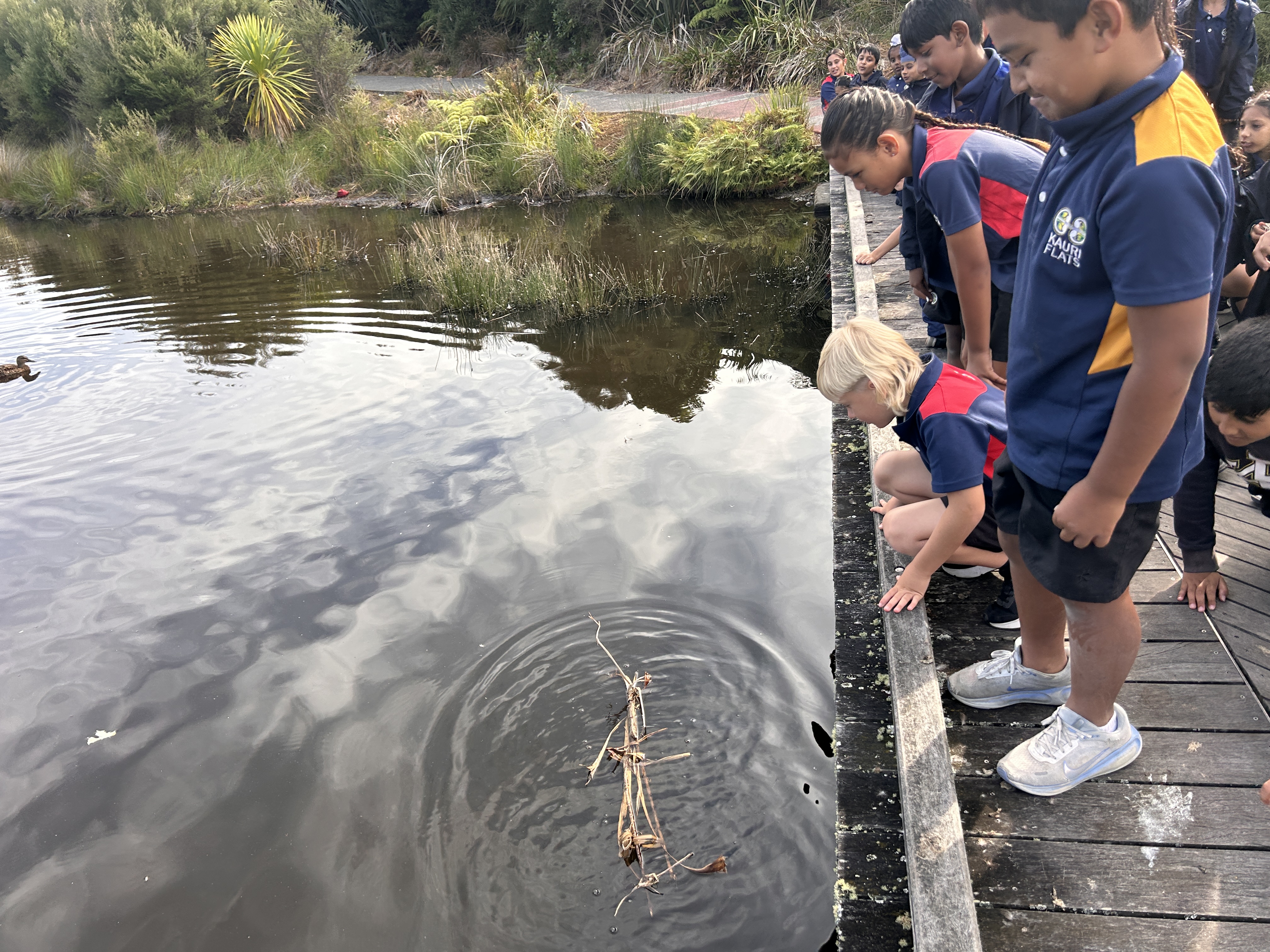
Kauri Flats students exploring the waterways.
This connection to local land aligns with Te Whare Tapa Whā, a holistic model of wellbeing. Matt explains how this model is brought to life.
“Students learn that their academic growth is deeply rooted in their personal wellbeing, which is made up of a delicate balance of their physical, mental and emotional health, alongside their sense of belonging within their school, whānau and natural environment.
“Just as a kauri requires a strong foundation to grow, our students thrive by recognising that their learning, their history and their wellbeing are all interconnected.”
Wellbeing in action
This approach to wellbeing has been brought to life through a recent learning project in the Awakeri Wetlands.
A large-scale stormwater and ecological restoration site, the wetlands offer green spaces, scenic walkways and waterways for both the school and wider community to enjoy.
For years, the school has been working with CLM Community Sport, Healthy Active Learning advisor Dr Tracey-Lee Dalton, play advisor Taylor Kamuhemu, and Professor Melody Smith from the University of Auckland, alongside researchers from Tampere University in Finland.
Together, they co-designed an initiative for students in Years 1 to 8 that reimagines how the Awakeri Wetlands can be used to support engagement with the curriculum, increase physical activity and deepen ākonga understanding of the local environment through walking audits, classroom workshops and collaborative design sessions.
Students have installed 10 nature homes in the Awakeri Wetlands, each themed around native flora and fauna.
A community vision
When the school was established in February 2017, the Awakeri Wetlands was identified as a key area for teaching and learning, and community integration.
Auckland Council wants to integrate the school with the channel’s open space as seamlessly as possible to unlock shared benefits.
With high-density housing dominating the surrounding landscape, there is a clear need for natural, community-focused play and learning spaces.
In response, the school has long held a vision for a whare within the wetlands, creating a space where both ākonga and the wider community can connect with nature and appreciate its unique features, including kauri stumps and biodiverse waterways.
This vision continues to guide the school’s direction in 2026 and beyond. As a practical first step, the project has introduced structures inspired by wetland creatures, created by the Boomer Shed at the Beautification Trust.
Redefining learning through movement
Matt explains that the school’s collaborative approach reflects a deliberate shift away from passive learning towards a more engaging, movement-based model connected to the environment.
“What makes the student cohort at Kauri Flats truly unique is the seamless integration of high-energy, kinaesthetic learning into their daily academic lives.
“Our students … they’re moved by their agility and engagement in a curriculum designed to get them moving,” says Matt.
Matt explains how the school prioritises Healthy Active Learning opportunities, an approach that supports ākonga to explore complex concepts through physical engagement and exploration.
Construction with natural materials.
He says they commit to learning opportunities outside the classroom from an early age, exposing ākonga to overnight camps and experiences in the outdoors from Year 2.
“This early exposure builds a specific type of independence and grit in our learners, making sure that by the time they reach the senior school, they’re seasoned explorers of their environment.”
Active in their learning
This philosophy underpins the Awakeri Wetlands project, where students are not simply consulted but actively involved in designing their learning spaces.
The partnership with CLM Community Sport, Matt explains, is driven by a shared focus on understanding how play and the surrounding environment can support learning and personal development.
Ākonga develop a strong understanding of navigating real-world constraints such as safety, teamwork, budget and time. For example, as part of the outdoor learning initiative, students are encouraged to design obstacle courses and climbing features, incorporating seating for older adults and areas for young families.
This requires them to consider materials, construction methods and collaboration with their peers to create safe, durable outdoor structures for community use.
“Our natural learning spaces get our kids physically moving and ready for the day ahead, while also giving them the opportunity to develop critical skills like problem-solving, working as a team and building structures with their hands.”
Reflection and what lies ahead
Kauri Flats School’s project in the Awakeri Wetlands highlights what is possible when the environment is integrated into student learning.
“We strive to look through a wider lens of change and how we can continue to bring learning to life. However, this isn’t easy and takes a great deal of time and effort, with a dedicated team to drive it. We’re fortunate to have our associate principal, Ezra Feau, who champions our nature spaces project.
“Having a supportive board is also critical, and we have been extremely fortunate to have their full support.”
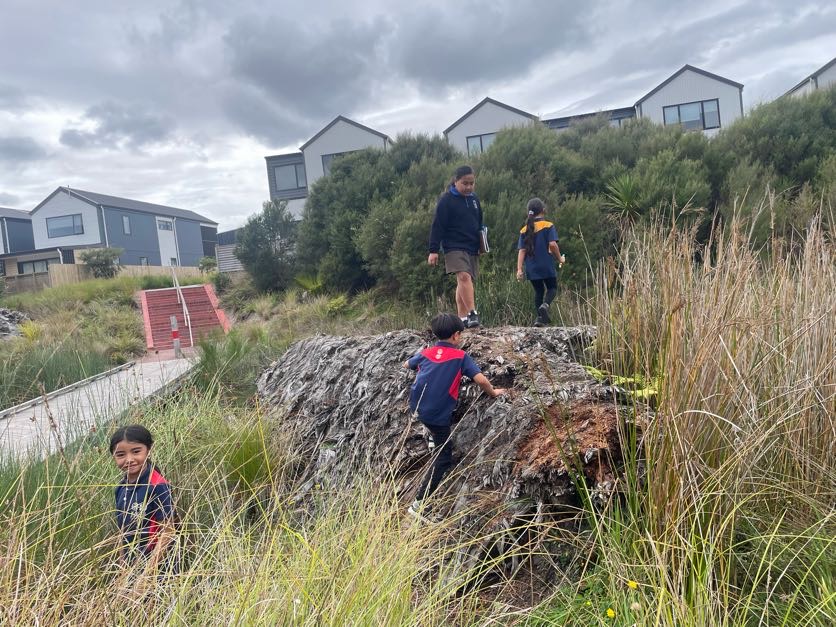
Playful engagement in the wetlands environment.
Looking ahead, Kauri Flats School is focused on expanding its unique approach to other parts of Tāmaki Makaurau Auckland.
“None of this would have been possible without the goodwill of the community, especially given our small budget.
“Our next phase of development will be focused on bringing learning to life for our growing number of neurodiverse learners and supporting outreach to local early childhood centres with similar needs.”